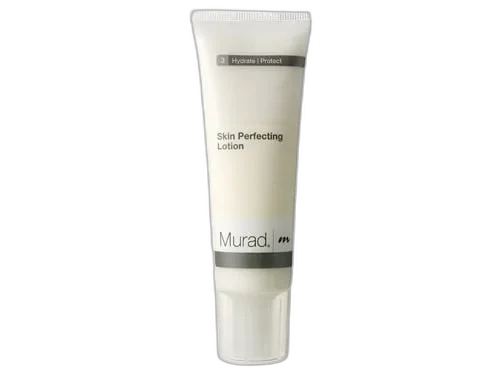
Skin Perfecting Lotion Blemish Control
Acne Control Workhorse
 Verified reviewer
Pros & cons.
- +Retinol addresses acne at the root cause — abnormal keratinization and excess oil
- +Ultra-lightweight texture absorbs in seconds with no greasy residue
- +Fragrance-free — responsible formulation for acne-stressed skin
- +Queen of meadow extract provides natural BHA-like pore clearing
- +Vitamin C derivative addresses post-acne hyperpigmentation simultaneously
- +Affordable at 8 — one of Murad's most accessibly priced products
- +Nearly two decades of real-world validation
- −Contains methylparaben and propylparaben — dated preservation system
- −Sorbitan stearate has some comedogenic potential in an acne product
- −Too lightweight for dry or dehydrated skin — provides minimal moisture
- −Formula hasn't been updated to include modern actives like niacinamide or ceramides
- −Retinol requires adjustment period with potential purging
The full review.
In a market where every other month brings a new acne “breakthrough” powered by influencer endorsements and TikTok virality, there’s something reassuring about a product that’s been doing the same job since approximately 2005 and is still available on shelves. The Murad Skin Perfecting Lotion isn’t exciting. It’s not photogenic. It doesn’t have a cult following or a waitlist. What it has is retinol, a smart botanical lineup, and two decades of quietly clearing skin.
The retinol-first approach to acne is what makes this product philosophically interesting. Most acne moisturizers reach for salicylic acid or benzoyl peroxide — effective surface-level treatments that address symptoms. Retinol takes a different path. It normalizes the keratinization process that causes pores to clog in the first place, reduces sebum production over time, and promotes the kind of healthy cell turnover that prevents new breakouts from forming. It’s the difference between mopping up a leak and fixing the pipe.
The supporting botanical cast is thoughtfully chosen for acne skin. Spiraea ulmaria (queen of meadow) provides natural salicylic acid derivatives for gentle pore-clearing exfoliation. Green tea extract brings its well-documented anti-inflammatory and anti-sebum properties. Arnica flower extract soothes the redness and irritation that accompany active breakouts. Oat kernel protein calms reactive skin. Together, these botanicals create an environment where the retinol can do its work without leaving the skin feeling punished.
The hydration strategy is deliberately lightweight. Hyaluronic acid, panthenol, and glycerin provide water-binding moisture without the heavy occlusion that acne-prone skin objects to. Squalane — a skin-identical lipid — contributes emollient benefits without comedogenic risk. The texture reflects this philosophy: the lotion is so lightweight it’s nearly watery, absorbing in under 30 seconds and leaving virtually no trace on the skin. For oily-skinned users who have historically viewed moisturizer as the enemy, this barely-there texture is a welcome revelation.
The vitamin C derivative (magnesium ascorbyl phosphate) addresses the aftermath of acne rather than the acne itself. Post-inflammatory hyperpigmentation — those dark marks that linger long after a breakout heals — is often as frustrating as the acne itself. Having a brightening agent built into the moisturizer means you’re treating both the active problem and its residual marks simultaneously.
The honest limitation is the formula’s age. Methylparaben and propylparaben are effective preservatives that remain regulatory-approved, but they’ve fallen out of favor with consumers who prefer paraben-free products. Murad’s newer products have largely moved away from parabens, making this lotion feel like a holdover from an earlier era of formulation. The presence of sorbitan stearate, which has some comedogenic potential, is also worth noting in a product designed for acne-prone skin.
The fragrance-free formulation is a genuine positive. In a product containing retinol — which already increases skin sensitivity — omitting fragrance shows the kind of clinical discipline that should be standard for acne-targeted products. This is the approach Murad should take across all its treatment products.
At 8 for 1.7 ounces, this is one of the most accessibly priced products in the Murad lineup. For a retinol moisturizer from a dermatologist-developed brand, the value is solid. It’s not as cheap as drugstore options, but the formulation quality — the retinol, the botanical complex, the lightweight vehicle — justifies a moderate premium.
The expected retinol adjustment period applies here. New users should start with every-other-night application, and mild purging during the first 2-4 weeks is normal as the retinol accelerates the turnover of pre-existing clogged pores. Morning SPF is absolutely mandatory — retinol increases photosensitivity, and UV exposure without protection will counteract the anti-acne benefits.
The Skin Perfecting Lotion is proof that a good formula doesn’t need to be reinvented every season. It’s clinically sound, reasonably priced, fragrance-free, and focused. The parabens deserve an update, and the formula could benefit from the ceramide or niacinamide additions that newer Murad products include. But as a retinol-based acne moisturizer that prioritizes function over fashion, it continues to earn its place on the shelf.
Ingredient analysis.
Full INCI list
Water (Aqua), Dicaprylyl Maleate, C12-15 Alkyl Benzoate, Butylene Glycol, Glycerin, Sorbitan Stearate, Squalane, Stearic Acid, Retinol, Caprylic/Capric Triglyceride, Arnica Montana Flower Extract, Epilobium Angustifolium Flower/Leaf/Stem Extract, Palmitoyl Hydroxypropyltrimonium Amylopectin/Glycerin Crosspolymer, Vitis Vinifera (Grape) Seed Extract, Camellia Sinensis Leaf Extract, Avena Sativa (Oat) Kernel Protein, Hydrolyzed Soy Flour, Spiraea Ulmaria Flower Extract, Honey Extract (Mel), Cetearyl Alcohol, Ceteareth-20, Talc, C9-15 Fluoroalcohol Phosphate, Glycolipids, Sodium Hyaluronate, Panthenol, Lecithin, Tocopherol, Magnesium Ascorbyl Phosphate, Algae Extract, Dimethicone, Sodium PCA, Allantoin, Sclerotium Gum, Carbomer, Tetrasodium EDTA, Aminomethyl Propanol, Phenoxyethanol, Methylparaben, Propylparaben, Citrus Aurantium Dulcis (Orange) Fruit Extract.
Skin match.
The science.
The Science
Retinol is a well-established acne treatment in dermatology. Research in the Journal of the American Academy of Dermatology shows topical retinoids normalize follicular keratinization—the process where dead skin cells accumulate in pores to form acne-initiating comedones. Retinol promotes orderly desquamation of keratinocytes to prevent the microcomedone formation that precedes breakouts.
Retinol also modulates sebum production by interacting with retinoid receptors in sebaceous glands. A study in the British Journal of Dermatology confirmed retinol reduces sebocyte proliferation and lipid synthesis, which lowers the excess oil that lets acne-causing bacteria thrive.
Queen of meadow (Spiraea ulmaria) extract provides salicin, a natural precursor to salicylic acid. The conversion efficiency is lower than synthetic salicylic acid, but this botanical delivery offers gentle, sustained BHA-like activity that complements retinol's deeper cell-turnover effects.
Research in the Journal of Investigative Dermatology shows green tea's EGCG (epigallocatechin-3-gallate) suppresses sebum production via the AMPK-SREBP-1 signaling pathway and kills Cutibacterium acnes directly. Inhibiting the NF-kB pathway also reduces the erythema and swelling of inflammatory acne lesions.
Dermatologist Perspective
Dermatologists view retinoids as the gold standard for acne treatment. This product's retinol-first approach follows American Academy of Dermatology clinical guidelines. Board-certified dermatologists often recommend retinol-containing moisturizers as maintenance therapy after prescription retinoids, or as an introduction for patients not ready for prescription-strength tretinoin. The lightweight, oil-free formulation suits the oily skin types most affected by acne. Dermatologists note that while parabens are safe at regulatory-approved concentrations, they use an outdated preservation approach that Murad has abandoned in newer formulations.
Where it fits in your routine.
Apply a pea-sized amount to clean, dry skin at night as your last skincare step (or before a heavier night cream if needed). Use it every other night for the first 2 weeks to build retinol tolerance. Use it nightly as tolerated. Always apply SPF 30+ the next morning. Do not use benzoyl peroxide or strong acid treatments on the same evening.
At $8 for 1.7 fl oz, this dermatologist-developed retinol moisturizer offers high value. The per-ounce price is lower than many premium retinol products and includes a clinically meaningful concentration of retinol and a botanical complex. This provides value for budget-conscious acne-prone users who want a dermatologist-developed formula without the higher Murad prices. The formula lacks modern actives like niacinamide or ceramides, so you may need supplementary products, but the core retinol delivery works well.
Oily and acne-prone skin types want a retinol-based moisturizer that targets breakout causes and provides lightweight hydration. This works for those seeking affordable, dermatologist-developed retinol products and acne sufferers who want retinol anti-aging benefits plus blemish control.
Dry or dehydrated skin types — this lotion lacks sufficient moisture. People following a strict paraben-free policy. Pregnant or nursing individuals because of the retinol content. Sensitive skin types that react to retinol should use a gentler retinoid form.
Product details.
Fragrance-free. Minimal scent — faint, neutral lotion smell.
Squeeze tube with a flip-top cap. The clean, simple packaging matches Murad's clinical aesthetic.
The lotion feels lightweight and watery on first application. It absorbs within 30 seconds without residue. Most users feel no stinging or burning during initial use, but retinol sensitivity can develop over the first 1-2 weeks. Some users experience mild purging as the retinol accelerates cell turnover.
2-3 months with nightly facial application
12 months
All Year
The backstory.
The Skin Perfecting Lotion has been a quiet mainstay of Murad's Acne Control line for nearly two decades. It represents Dr. Murad's clinical approach to acne — treating it as a skin health issue requiring retinoid-based cell renewal rather than just a surface problem requiring harsh drying agents. The product's longevity speaks to its effectiveness, even as newer, flashier acne products have entered the market.
About Murad
Legacy Brand (20+ years)Dr. Howard Murad, a board-certified dermatologist and trained pharmacist who treated over 50,000 patients, founded Murad in 1989. The brand pioneered clinical-grade skincare for direct-to-consumer sales and has a strong reputation in professional dermatology settings.
Common myths.
Acne-prone skin does not need moisturizer — moisturizing causes breakouts.
Dehydrated skin produces more oil to compensate for moisture loss, which worsens acne. This lotion uses hyaluronic acid and panthenol for lightweight hydration without heavy occlusives that clog pores. Hydrating the skin while treating acne works better than aggressive drying alone.
Retinol only treats anti-aging and does not treat acne.
Retinol is a well-established acne treatment in dermatology. It normalizes the keratinization process that causes pore blockages, reduces sebum production, and promotes healthy cell turnover. Retinol addresses the root cause of acne instead of just its symptoms, providing anti-aging benefits as a bonus.
What the community says.
"Ultra-lightweight texture perfect for oily skin"
"Noticeably reduces oil production and pore size over time"
"Fragrance-free — gentle on acne-stressed skin"
"Affordable compared to other Murad products"
"Retinol inclusion provides anti-aging benefits alongside acne control"
"Contains parabens which some users prefer to avoid"
"Can cause irritation and redness initially from retinol"
"Some users experienced itchy reactions"
"Not moisturizing enough for combination skin's dry areas"
"Older formula that hasn't been updated in years"