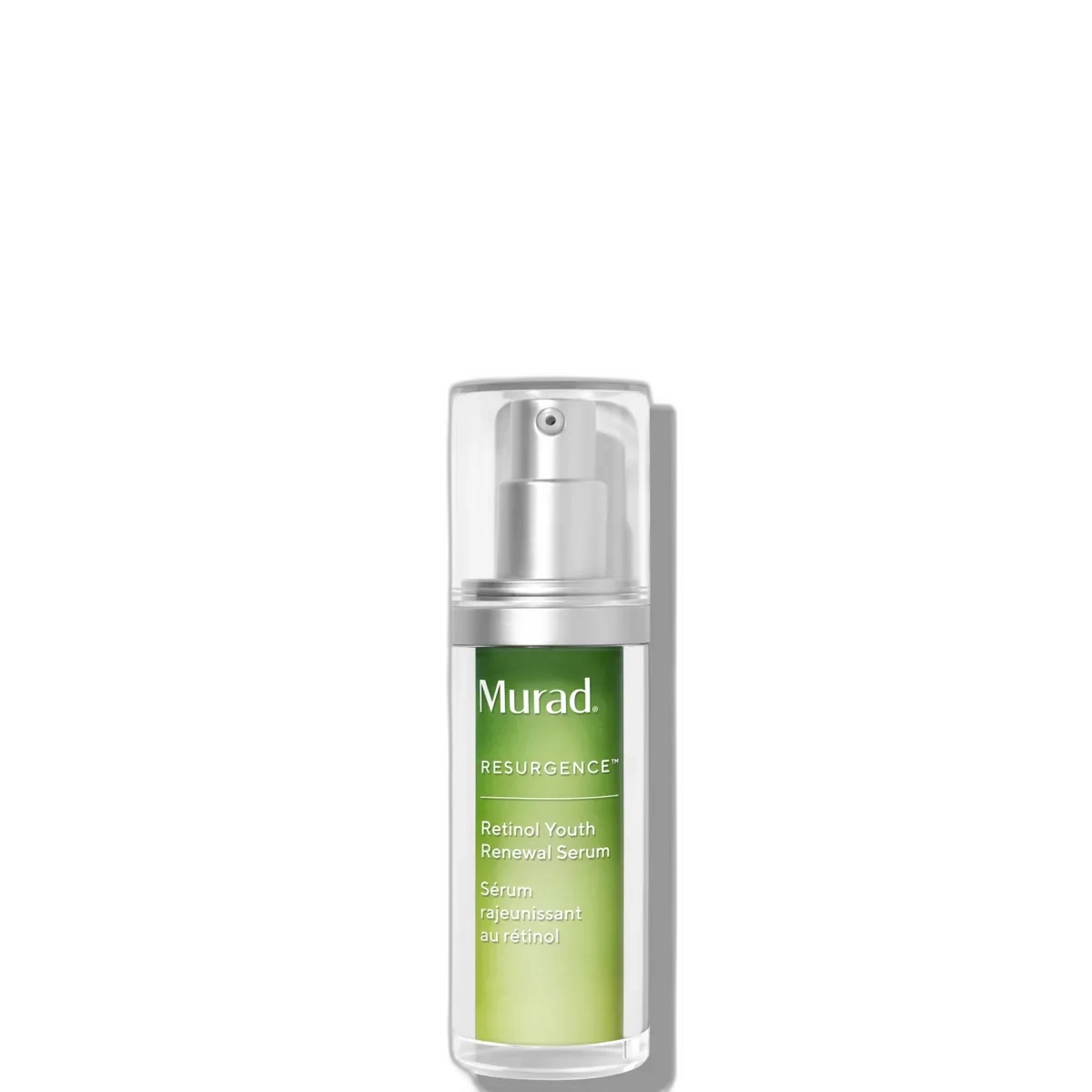
Retinol Youth Renewal Serum
Dual-Retinoid Powerhouse
 Verified reviewer
Pros & cons.
- +Dual-retinoid system with HPR provides both fast-acting and sustained anti-aging benefits
- +Built-in barrier support from ceramide NP, squalane, and hyaluronic acid minimizes retinol irritation
- +Silky, fast-absorbing texture makes nightly application genuinely pleasant
- +Visible improvement in fine lines and radiance within 2-4 weeks for most users
- +Suitable for retinol beginners with gradual introduction schedule
- +Cruelty-free with Leaping Bunny and PETA certification
- +Airless pump packaging protects retinol from oxidation and degradation
- +Time-released delivery prevents the concentration spikes that trigger peeling
- −At $92 for 1 oz, the cost per use is significantly higher than drugstore retinol options
- −Contains fragrance despite being marketed toward sensitive skin and beginners
- −Isopropyl palmitate in the formula has comedogenic potential for acne-prone skin
- −Silicone-heavy base may not suit users who prefer silicone-free formulations
- −Retinol concentration is not disclosed, making it hard to compare potency directly
The full review.
Dr. Howard Murad has treated over 50,000 patients, many of whom complained about retinol. Retinol’s anti-aging efficacy is settled science, but the application often feels like a punishment due to peeling, redness, and a two-month adjustment period where skin looks worse before it looks better. The Retinol Youth Renewal Serum addresses these complaints with a solution more sophisticated than simply diluting the active.
The formula uses Retinol Tri-Active Technology. This approach pairs standard retinol with hydroxypinacolone retinoate, a next-generation retinoid. Unlike retinol, hydroxypinacolone retinoate binds directly to skin receptors without needing multi-step enzymatic conversion. This provides one ingredient that works on contact and another on a slow, sustained-release schedule. It works like an extended-release medication: immediate relief plus long-term treatment.
The texture shows the formulation’s sophistication. This silicone-forward serum uses cyclopentasiloxane and polymethylsilsesquioxane to create a silky, primer-like slip that smooths skin and blurs fine lines. If you avoid silicones, skip this serum. If you want a formula that glides on like liquid satin with zero sticky residue, the application is pleasant. It absorbs fast enough to layer moisturizer immediately.
Unlike retinol serums that only list a percentage, this includes built-in damage control. Ceramide NP, squalane, sodium hyaluronate, and shea butter esters act as a deliberate barrier support system. Retinoids compromise the lipid barrier during accelerated turnover. While most serums leave barrier repair to your moisturizer, this one handles it internally. This distinction matters if you experience desert-dry flaking when starting new retinol.
Botanical antioxidants—tomato fruit extract, pomegranate extract, and soybean extract—provide free radical defense. Swertia chirata extract is an unusual inclusion; this Ayurvedic herb may support skin resilience, though the evidence is less robust than the retinoid science. Urea, trehalose, and betaine complete the humectant profile to prioritize hydration alongside renewal.
Users consistently report results faster than expected. The immediate glow is partly cosmetic from the silicones, but actual skin changes appear at the 2-week mark. Fine lines soften, skin tone evens, and luminosity increases. By 8-12 weeks, the retinol component’s collagen-stimulating effects improve firmness and reduce wrinkle depth.
Tolerability is high for most users. Severe irritation is uncommon, and the 5-7 day purging period is shorter than many pure retinol serums. However, this is irritation-managed, not irritation-free. The formula contains potent retinoids, so sensitive skin types should build up usage gradually.
The limitations are clear: this $92 serum comes in a 1 oz bottle, lasting about 2-3 months of nightly use. The value depends on whether you compare it to drugstore retinols or clinical retinoid treatments. The formula contains fragrance, which is a miss for a serum marketed toward sensitive and retinol-beginner skin. Also, isopropyl palmitate has comedogenic potential; oily, acne-prone users should patch test first.
Murad’s decades of formulating retinol products show in the details. This isn’t a trendy launch; it reflects thousands of patient interactions and an understanding of why retinol fails in practice despite clinical success. The dual-retinoid approach is clever, the barrier support is thoughtful, and the texture makes nightly application easy to endure.
Ingredient analysis.
Full INCI list
Water, Cyclopentasiloxane, Isopropyl Palmitate, C14-22 Alcohols, Polymethylsilsesquioxane, Dimethicone, Propanediol, Glyceryl Stearate, PEG-100 Stearate, Shea Butter Ethyl Esters, Retinol, Hydroxypinacolone Retinoate, Ceramide NP, Sodium Hyaluronate, Solanum Lycopersicum (Tomato) Fruit Extract, Swertia Chirata Extract, Squalane, Punica Granatum Extract, Tocopheryl Acetate, Glycine Soja (Soybean) Extract, Urea, Yeast Amino Acids, Trehalose, Inositol, Taurine, Betaine, Glycerin, Caprylic/Capric Triglyceride, Dimethyl Isosorbide, Silica, Ethylhexyl Palmitate, Silica Dimethyl Silylate, Butylene Glycol, Lecithin, Ammonium Acryloyldimethyltaurate/VP Copolymer, C12-20 Alkyl Glucoside, Cetyl Palmitate, Laureth-23, Polysorbate 20, Trideceth-6 Phosphate, Synthetic Fluorphlogopite, Phenoxyethanol, Ethylhexylglycerin, Chlorphenesin, Disodium EDTA, Sodium Hydroxide, Tris(Tetramethylhydroxypiperidinol) Citrate, Sodium Benzotriazolyl Butylphenol Sulfonate, Titanium Dioxide (CI 77891), Red 4 (CI 14700)
Skin match.
The science.
The Science
This formula combines two retinoid forms with different activation pathways. Retinol, the gold standard, needs a two-step enzymatic conversion in the skin—first to retinaldehyde, then to retinoic acid—to bind to retinoic acid receptors and stimulate collagen synthesis and cellular turnover. This conversion is well-documented and effective, but it takes time and can cause irritation during skin adjustment.
Hydroxypinacolone retinoate (HPR) uses a different route. A 2018 study in the Journal of the American Academy of Dermatology (Zasada & Budzisz, 2019) shows HPR binds directly to retinoid receptors without enzymatic conversion. This provides more immediate biological activity and potentially less irritation than retinol at equivalent concentrations. Using both forms in one product creates a staggered activation timeline: HPR works immediately while retinol builds effect over days and weeks.
The barrier support system is also evidence-based. Ceramide NP is one of the three essential ceramides (NP, AP, EOP) found in skin barrier research. Its inclusion addresses the lipid disruption retinoids cause when accelerating epidermal turnover. A landmark study by Imokawa et al. (Journal of the Society of Cosmetic Chemists, 1991) proved ceramide supplementation significantly improves barrier function in compromised skin—the exact scenario retinol creates.
Sodium hyaluronate provides hydration by drawing water from the dermis and environment into the epidermis. Combined with the occlusive properties of squalane and the lipid-replenishing action of ceramide NP, this creates a moisture retention system that helps the skin tolerate retinoid activity without typical dryness and flaking.
References
- Retinoids: active molecules influencing skin structure formation in cosmetic and dermatological treatments — Postepy Dermatologii i Alergologii (2019)
- Decreased level of ceramides in stratum corneum of atopic dermatitis — Journal of the Society of Cosmetic Chemists (1991)
Dermatologist Perspective
Dermatologists often recommend multi-retinoid formulations to patients who struggle with retinol tolerability. Clinical practice increasingly recognizes the combination of retinol and hydroxypinacolone retinoate as a way to provide retinoid benefits at lower individual concentrations, lowering the irritation threshold while maintaining efficacy. Board-certified dermatologists note that adding ceramide NP and hyaluronic acid to the formula addresses why patients most often abandon retinol treatment: barrier disruption and dryness. This product often serves as a bridge between over-the-counter retinol and prescription-strength tretinoin for patients wanting anti-aging results without the adjustment severity of prescription retinoids.
Where it fits in your routine.
Apply 1-2 pumps to clean, dry skin in the evening after cleansing and toning. Press it into the face and neck using upward motions; avoid the immediate eye area. Retinol beginners should use 2-3 nights per week for the first 2 weeks, then increase to nightly use as tolerated. Use a moisturizer if you need more hydration. Apply broad-spectrum SPF 30 or higher every morning because retinoids increase photosensitivity. Do not use other retinoids, AHA/BHA exfoliants, or benzoyl peroxide on the same evening.
At $92 for 1 oz, this serum costs more than Neutrogena or CeraVe drugstore options ($20-30), but stays well below luxury brands like Dr. Dennis Gross or SkinCeuticals ($80-150+). The dual-retinoid technology and built-in barrier support system justify the higher price, alongside Murad's decades of formulation expertise under Dr. Howard Murad. One bottle lasts 2-3 months, making the cost roughly $1-1.50 per night for a treatment-level product. A mini size lets users test tolerance before buying the full bottle.
This retinol serum delivers anti-aging results without typical retinol initiation misery. It works for retinol beginners needing a gentle entry point, or experienced retinol users who find other formulas too drying or irritating but want to avoid prescription tretinoin.
Effective retinol serums cost much less for those on a tight skincare budget. This formula is for anyone who strictly avoids fragrance in their skincare. Pregnant or breastfeeding individuals should avoid this formula entirely because of the retinoid content. Acne-prone skin types should patch test carefully because isopropyl palmitate has comedogenic potential.
Product details.
Subtle, lightly fragranced — not overpowering but noticeable upon application.
An opaque pump bottle protects the retinol from light and air degradation. The airless pump dispenses a controlled amount with each press.
The silicone base provides a smooth, silky application and immediate skin-smoothing effects. Some users feel mild tingling during the first week. A 5-7 day purging period occurs, especially for retinol newcomers. Skin usually adjusts within 2 weeks, showing visible improvement in radiance and texture.
2-3 months with nightly face and neck application
12 months
All Year
The backstory.
Dr. Howard Murad spent decades treating patients at his dermatology practice and became convinced that retinol's side effects were the biggest barrier to its widespread adoption. The Retinol Youth Renewal line was developed to solve that exact problem — delivering clinical-grade retinoid results with a tolerability profile gentle enough for nightly use, even for retinol beginners.
About Murad
Established Brand (5–20 years)Dr. Howard Murad, a board-certified dermatologist and Associate Clinical Professor of Medicine at UCLA, founded Murad in 1989. Unilever acquired the brand in 2015. Murad uses decades of formulation expertise to market a clinically driven skincare line.
Common myths.
Build up to using retinol slowly over months to see results.
This formula uses a dual-retinoid system with hydroxypinacolone retinoate. This ingredient works immediately and skips the conversion steps retinol requires. Users report visible glow and improved texture within the first two weeks, even at 2-3 times per week.
Retinol serums always cause peeling and redness.
This formula uses ceramide NP, squalane, and hyaluronic acid to buffer retinoid activity. The time-released delivery prevents the concentration spikes that cause irritation in many pure retinol products.
FAQ.
Is Murad Retinol Youth Renewal Serum good for sensitive skin?
The dual-retinoid system with hydroxypinacolone retinoate usually tolerates better than pure retinol formulas. Ceramide and hyaluronic acid help minimize irritation. The formula contains fragrance and silicones, so patch testing is recommended for highly reactive skin.
What age should I start using Murad Retinol Youth Renewal Serum?
Most dermatologists recommend starting retinol in your mid-to-late 20s for prevention. This formula's gentle delivery system works for younger users starting their first retinol, while the dual-retinoid concentration has enough potency for mature skin treating established wrinkles.
Can I use vitamin C with Murad Retinol Youth Renewal Serum?
Yes, but use them at different times. Apply vitamin C serum in the morning for antioxidant protection and UV defense, then use this retinol serum at night. Using both at once causes irritation and reduces the efficacy of each active.
How long does it take to see results from Murad Retinol Youth Renewal Serum?
hydroxypinacolone retinoate shows a visible glow and smoothing effect within 1-2 weeks. Fine lines, firmness, and tone evenness improve at 4-8 weeks, and continue to improve through 12 weeks of consistent use.
Is Murad Retinol Youth Renewal Serum safe during pregnancy?
No. This serum contains retinol and hydroxypinacolone retinoate. These retinoid derivatives are not recommended during pregnancy or breastfeeding. Ask your OB-GYN or dermatologist for pregnancy-safe alternatives like bakuchiol.
Does Murad Retinol Youth Renewal Serum cause purging?
Retinol accelerates cell turnover and brings existing congestion to the surface, causing a 5-7 day purging period for some users. This is normal and usually ends within 2 weeks. If irritation lasts longer, use it less often or consult a dermatologist.
What the community says.
"Visibly reduces fine lines within 2-4 weeks"
"Gentle enough for nightly use without peeling or redness"
"Lightweight silky texture absorbs quickly"
"Delivers noticeable glow and radiance"
"Works well for retinol beginners"
"Expensive at $92 for 1 oz"
"Contains silicones which some users prefer to avoid"
"Initial purging period of about 5-7 days for some users"
"Not fragrance-free"
People also looked at.