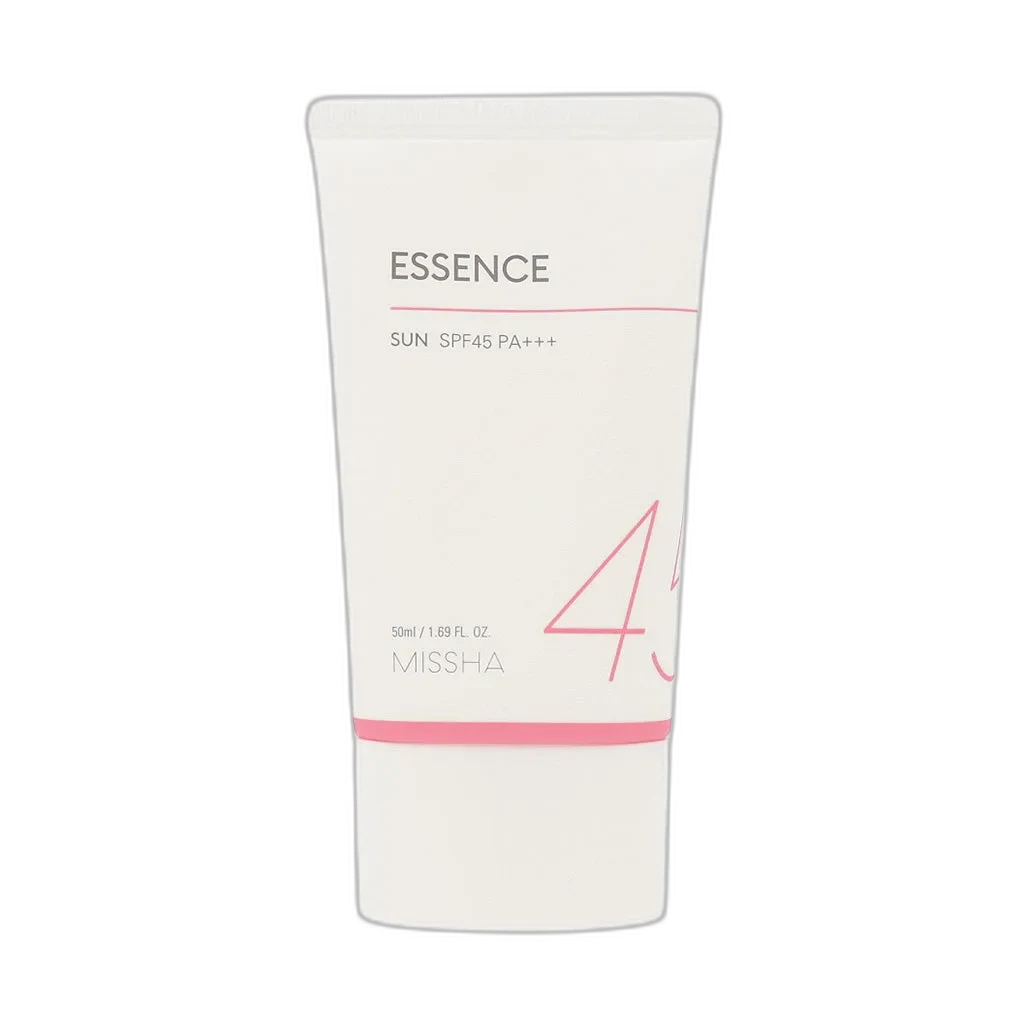
All Around Safe Block Essence Sun SPF 45
K-Beauty Sun Essential
 Verified reviewer
Pros & cons.
- +Five-filter UV system with Tinosorb S and Uvinul A Plus delivers genuinely broad-spectrum protection
- +Lightweight essence texture absorbs in seconds with zero white cast on any skin tone
- +Exceptional value at roughly $14 for next-generation UV filter technology
- +Works beautifully under makeup without pilling or separating when applied correctly
- +Botanical extracts and panthenol give it a skincare-like feel rather than pure sunscreen
- +Over a decade of market validation with 4,000+ positive reviews confirms real-world performance
- +Hydrating enough to double as a light moisturizer in warm weather
- −Contains octinoxate which raises environmental reef-safety concerns
- −Fragrance and cinnamomum cassia extract may irritate very sensitive skin
- −PA+++ rating is one tier below the PA++++ now standard in newer K-beauty sunscreens
- −Can pill when layered over heavy multi-step skincare routines
- −Several botanical extracts increase the allergen profile for highly reactive skin
The full review.
American sunscreen regulation is ironic. The FDA has approved no new UV filters since the late 1990s, while Korean and European formulators use next-generation filters with better photostability and broader UVA coverage. Missha’s All Around Safe Block Essence Sun fills this gap. This $14 tube contains five UV filters, including two that most American consumers do not know but European and Asian dermatologists have recommended for over a decade.
Tinosorb S (bis-ethylhexyloxyphenol methoxyphenyl triazine) is the star. This broad-spectrum filter absorbs UVA and UVB radiation with high photostability. Unlike avobenzone, the common UVA filter in Western sunscreens, Tinosorb S does not degrade under UV exposure; it stays protective throughout wear. Uvinul A Plus (diethylamino hydroxybenzoyl hexyl benzoate) provides dedicated UVA filtration, covering gaps the three FDA-listed filters in this formula — octinoxate, octisalate, and ensulizole — cannot fill alone. This five-filter cocktail delivers broad-spectrum protection across the entire UV range.
The texture earns a cult following. Missha calls it an “essence sun,” which fits. It dispenses as a thin cream that becomes almost gel-like when blended, absorbing in seconds to leave skin looking and feeling bare. There is no white cast, even on deeper skin tones. The finish is between natural and subtly luminous, making skin look healthy rather than greasy or matte. If American drugstore sunscreens feel like a mask, this product feels different.
The botanical extract roster is large — green tea, licorice root, aloe vera, lotus flower, chrysanthemum, mulberry — but at these concentrations, they are supporting players. Panthenol adds skin-conditioning benefits to offset potential dryness from the chemical filters. This sunscreen feels like skincare and mostly succeeds.
This is one of the better sunscreens under makeup. Fast absorption and a non-tacky finish let foundation sit smoothly without sliding or separating. However, layering this over heavy skincare (multiple serums, thick moisturizer) may cause pilling. To avoid this, keep your morning routine minimal or wait extra minutes between layers.
The limitations are clear. This product contains 7% octinoxate, which is not reef-safe. If you swim in ocean water or care about environmental impact, consider this. It also contains fragrance — a light floral scent that fades quickly but remains a dealbreaker for those with fragrance sensitivities. The PA+++ rating is one tier below the PA++++ standard in many newer Korean sunscreens, meaning the UVA protection is good but not the highest available.
Cinnamomum cassia bark extract matters for sensitive skin. Cassia bark contains cinnamaldehyde, a known sensitizer. While the concentration is likely minimal, reactive skin should patch test first. Other botanical extracts (artemisia, witch hazel water) add to the allergen profile, making this a poor choice for skin that reacts to everything.
Value is high. At approximately $14 for 50 ml, you get a five-filter sunscreen with next-generation UV technology for the cost of a basic American drugstore SPF. The cost per milliliter competes with products using simpler filter systems and less UVA coverage. The photoprotection technology is hard to beat.
Missha has refined this formula since its 2013 launch. The product has over 4,000 reviews with a 4.6-star average, suggesting efficacy rather than hype. It is a K-beauty staple because it protects skin from UV damage and feels pleasant enough to wear every day.
The bottom line is simple. If you want a lightweight, affordable, broad-spectrum sunscreen and do not have extreme fragrance sensitivity or reef-safety concerns, this product offers UV filter technology most American sunscreens cannot match at any price. It is not perfect — the fragrance, the octinoxate, and the PA+++ instead of PA++++ are legitimate issues — but for most people needing a daily sunscreen they enjoy wearing, Missha’s Essence Sun is one of the smartest buys in the category.
Ingredient analysis.
Full INCI list
Water, Ethylhexyl Methoxycinnamate, Ethylhexyl Salicylate, Phenylbenzimidazole Sulfonic Acid, Butylene Glycol, Diethylamino Hydroxybenzoyl Hexyl Benzoate, Methyl Methacrylate Crosspolymer, C12-15 Alkyl Benzoate, Cetearyl Alcohol, Bis-Ethylhexyloxyphenol Methoxyphenyl Triazine, Glyceryl Stearate, Cetearyl Olivate, Cyclopentasiloxane, Acrylates/Dimethicone Copolymer, VP/Hexadecene Copolymer, Rosa Davurica Bud Extract, Nelumbium Speciosum Flower Extract, Chrysanthemum Indicum Flower Extract, Camellia Sinensis Leaf Extract, Artemisia Princeps Leaf Extract, Diospyros Kaki Leaf Extract, Cinnamomum Cassia Bark Extract, Morus Alba Fruit Extract, Pueraria Lobata Root Extract, Aloe Barbadensis Leaf Juice, Glycyrrhiza Glabra Root Extract, Morus Alba Root Extract, Cucumis Sativus Fruit Extract, Portulaca Oleracea Extract, Hamamelis Virginiana Water, Limonia Acidissima Extract, Centaurea Cyanus Flower Water, Thymus Vulgaris Leaf Water, Helichrysum Italicum Flower Water, Sorbitan Olivate, Sodium Hydroxide, Polysorbate 60, Dimethicone, Polyacrylate-13, PEG-100 Stearate, Polyisobutene, Sorbitan Sesquioleate, BHT, Sorbitan Isostearate, Polysorbate 20, Panthenol, Disodium EDTA, Caprylyl Glycol, Ethylhexylglycerin, 1,2-Hexanediol, Fragrance
Skin match.
The science.
The Science
This sunscreen uses a multi-filter approach for UV protection. The formula combines three FDA-listed filters — octinoxate (7%), octisalate (4.8%), and ensulizole (4%) — with two next-generation filters approved in Korea and Europe: Tinosorb S (bis-ethylhexyloxyphenol methoxyphenyl triazine) and Uvinul A Plus (diethylamino hydroxybenzoyl hexyl benzoate).
Tinosorb S has exceptionally high photostability. While avobenzone degrades under UV exposure and needs stabilizers to work, Tinosorb S keeps its UV-absorbing capacity during long sun exposure. A 2024 study in Pharmaceutics on nanostructured lipid carrier sunscreen formulations found that combining Uvinul A Plus, Tinosorb S, and Uvinul T150 at optimized ratios achieves UVA/UVB protection ratios of 1:1 — much higher than the 1:3 ratio minimum in COLIPA guidelines (Pharmaceutics, 2024). This balanced UVA and UVB coverage makes multi-filter Korean sunscreens like this one more protective than many American formulations using older, less photostable filters.
Green tea extract (Camellia sinensis) adds biological photoprotection. EGCG, the main polyphenol in green tea, reduces UV-induced oxidative damage by scavenging free radicals. A systematic review in the Journal of the American Academy of Dermatology found evidence that topical green tea polyphenols provide photoprotective effects when used with traditional UV filters (JAAD, 2012). In this formula, green tea acts as a secondary defense — neutralizing free radicals that pass the UV filter barrier.
Panthenol (provitamin B5) supports the skin barrier. Research shows panthenol improves skin hydration and reduces transepidermal water loss, which matters in a chemical sunscreen where filters can mildly dry certain skin types.
References
- NLC-Based Sunscreen Formulations with Optimized Proportion of Encapsulated and Free Filters Exhibit Enhanced UVA and UVB Photoprotection — Pharmaceutics (2024)
Dermatologist Perspective
Dermatologists agree the best sunscreen is the one you wear every day; this product's cosmetic elegance helps with daily SPF compliance. Board-certified dermatologists familiar with global UV filter technology note that formulations with Tinosorb S and Uvinul A Plus offer better UVA protection than products using only FDA-approved filters. The lightweight, non-comedogenic texture works for acne-prone and oily skin types who often skip sunscreen because it feels heavy. Dermatologists typically recommend using this type of chemical sunscreen with an antioxidant serum (such as vitamin C) in a morning routine for photoprotection against direct UV damage and oxidative stress.
Where it fits in your routine.
Apply a nickel-sized dollop to the face as your last morning skincare step. Spread it evenly over the face, neck, and ears, but avoid the eye area. Let the formula set for 2-3 minutes before applying makeup. Reapply every two hours in direct sun, or after swimming, sweating, or toweling off. For evening double cleansing, use an oil-based cleanser to break down the sunscreen filters, then use a water-based cleanser.
At about $14 for 50 ml, this sunscreen offers great value. The five-filter system with Tinosorb S and Uvinul A Plus uses UV protection technology that luxury brands sell for $40-60. Daily application costs roughly $0.15-0.20 per day, so consistent sun protection stays affordable. Only the 50 ml size exists, but the price makes repurchasing easy. For budget-conscious consumers who want high-quality UV filters, this is one of the best deals in the sunscreen category — you get K-beauty prices for European-caliber photoprotection.
This sunscreen is lightweight, affordable, and uses advanced UV filter technology with zero white cast. It works well for oily and combination skin types, K-beauty enthusiasts, and anyone who avoids daily sunscreen due to heavy formulations.
People with fragrance sensitivity, reactive skin prone to contact allergies, or those prioritizing reef-safe ingredients should look elsewhere. If you need PA++++ rated UVA protection, newer formulations in Missha's own lineup work better.
Product details.
Thin, creamy texture turns into a gel-like feel when blended into skin. It is lightweight, non-sticky, and absorbs fast.
Light floral fragrance dissipates within a minute of application. It lacks the heavy, chemical sunscreen smell many people dread.
White plastic squeeze tube with a nozzle dispenser. The minimalist Korean design uses blue-teal accents. A cardboard outer box includes English and Korean labeling.
The thin, creamy texture applies smoothly and turns invisible on the skin quickly. There is no adjustment period; the lightweight, moisturized feel is immediate. The light floral scent fades in moments. The skin shows a very subtle luminous quality once it sets.
Apply to the face daily for 2-3 months and reapply every 2 hours during sun exposure.
12 months
All Year
The backstory.
Missha's All Around Safe Block line was developed to bring advanced Korean UV filter technology to a mass-market price point. While Western sunscreens were limited to older FDA-approved filters, Missha incorporated Tinosorb S and Uvinul A Plus — filters that had been approved in Europe and Asia for years but remain absent from the US market — making it a cult favorite among K-beauty enthusiasts who wanted better UVA protection.
About Missha
Established Brand (5–20 years)Missha launched in 2000 as a pioneer in Korean beauty and has a strong following after two decades. The brand uses accessible pricing and advanced formulations with next-generation UV filters not yet FDA-approved in the US.
Common myths.
SPF 45 offers significantly less protection than SPF 50
SPF 45 blocks about 97.8% of UVB rays, while SPF 50 blocks 98%. This difference is negligible. This product uses Tinosorb S and Uvinul A Plus to provide more meaningful broad-spectrum protection than many SPF 50 products using only older filters.
Chemical sunscreens like this one work less effectively than mineral sunscreens
This product uses newer-generation chemical filters (Tinosorb S, Uvinul A Plus) that are among the most photostable UV filters globally. These filters stay protective longer than some older chemical filters and provide broader UVA coverage than many mineral formulations.
FAQ.
Does Missha All Around Safe Block Essence Sun leave a white cast?
No — this sunscreen uses only chemical UV filters, so it blends clear on all skin tones. The essence texture absorbs fast and leaves a natural, skin-like finish without white residue.
Is the Missha sunscreen reef-safe?
This product contains 7% octinoxate. Hawaii and some other regions ban this UV filter because it harms coral reefs. If reef safety is a priority, use mineral-only or octinoxate-free formulations.
Can I use this sunscreen under makeup?
Yes — the lightweight essence texture and fast absorption make it an excellent makeup base. It sets to a natural, non-greasy finish that works with most primers and foundations. Wait 2-3 minutes for it to set before applying makeup to prevent pilling.
What's the difference between the Missha Essence Sun and the Sun Milk?
The Essence Sun has a creamier, more hydrating texture suited for normal to combination skin, while the Sun Milk has a thinner, more fluid consistency with a mattifying finish designed for oily skin types. Both share the same SPF 45 PA+++ protection level.
Does this sunscreen contain alcohol?
It contains cetearyl alcohol, a fatty alcohol that works as an emollient. This is not the drying denatured alcohol (alcohol denat.) that irritates sensitive skin. This formulation has no drying alcohol.
How often should I reapply this sunscreen?
Reapply every two hours during continuous sun exposure, or immediately after swimming, sweating, or towel-drying. For daily commuting and indoor work with minimal sun exposure, a single morning application provides adequate protection for most people.
Is this sunscreen safe for sensitive skin?
It works for many sensitive skin types. However, fragrance, cinnamomum cassia bark extract, and several botanical extracts can irritate very reactive skin. Patch test before full-face application. ---
Community
What the community says.
"Leaves no white cast on any skin tone"
"Lightweight, non-greasy texture that feels like skincare"
"Works beautifully as a makeup primer"
"Absorbs quickly with no tacky residue"
"Excellent value for a multi-filter sunscreen"
"Pleasant light floral scent that fades fast"
"Hydrating enough to skip separate moisturizer in summer"
"Can pill when layered over heavy skincare products"
"Contains octinoxate which raises reef-safety concerns"
"Fragrance may irritate very sensitive skin"
"PA+++ rating is a step below the PA++++ now standard in newer K-beauty sunscreens"
"Some users report slight drying on very dry skin types"
People also looked at.