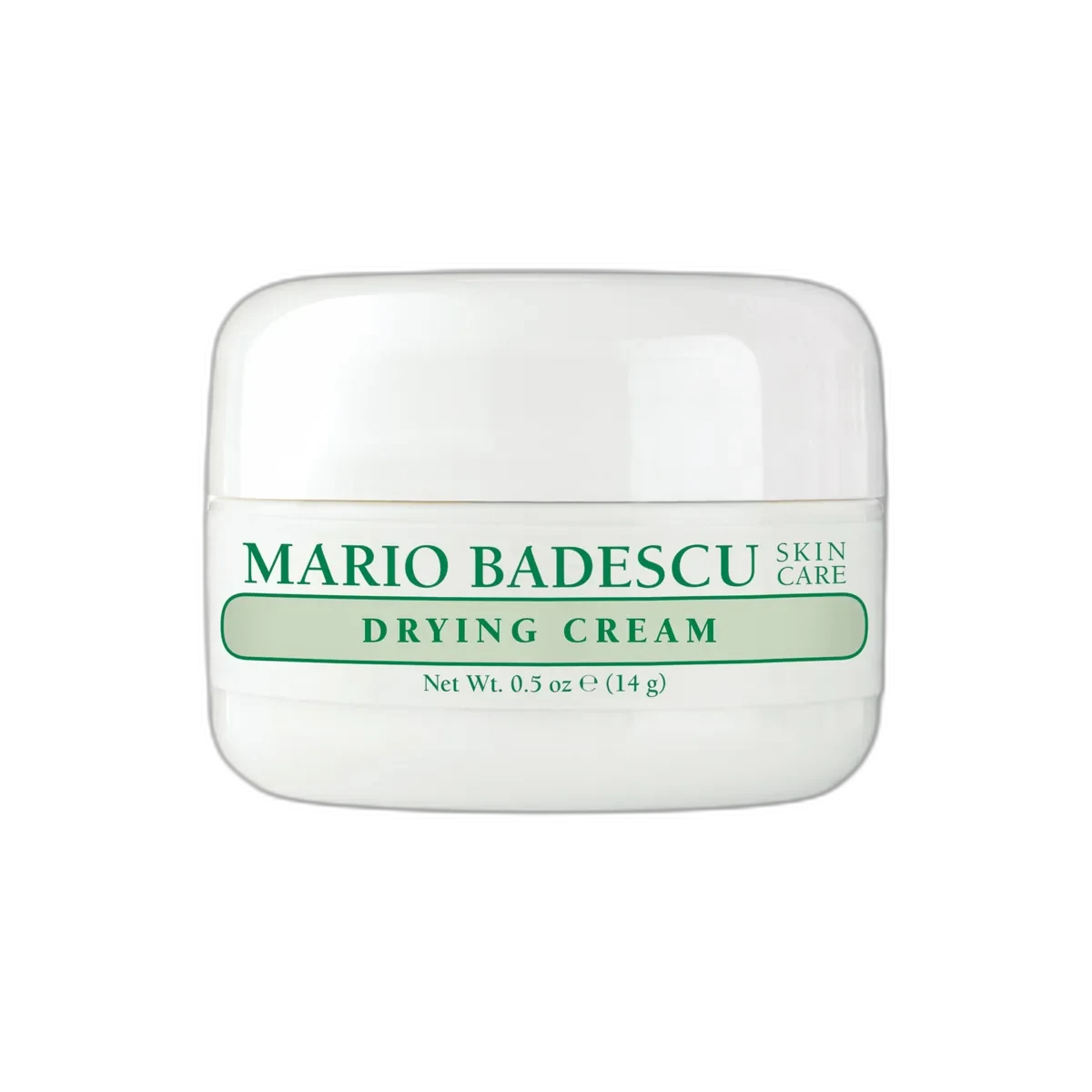
Drying Cream
Old-School Apothecary Spot Fix
 Verified reviewer
Pros & cons.
- +Sulfur-ichthammol-zinc combination effectively flattens surface blemishes within one to two nights
- +Alcohol-free cream formula is less stripping than the brand's Drying Lotion
- +Spreadable format works better than dab treatments for clusters of small bumps
- +Affordable at fourteen dollars with two to four months of use per jar
- +Opaque mineral layer absorbs oil and covers redness overnight as it treats
- +Traditional apothecary ingredients backed by over a century of dermatological use
- +Contains supporting B vitamins and allantoin to aid post-blemish recovery
- −Contains fragrance allergens (Parfum, Limonene, Linalool) that may irritate breakout-prone skin
- −Strong medicinal sulfur smell that the added fragrance does not fully mask
- −Opaque white finish restricts use entirely to nighttime — cannot be worn during the day
- −Ineffective on deep cystic or nodular acne that lacks a visible surface component
- −Contains methylparaben and propylparaben, flagged for endocrine disruption concerns
- −Small 0.5 oz jar at fourteen dollars works out to a premium per-ounce cost
The full review.
Ichthammol is rare on modern labels. Derived from shale oil and used in European pharmacy since the 1880s, it was a dermatological compounding staple—a drawing agent for boils, carbuncles, and inflamed skin. Most brands replaced it with more marketable actives. Mario Badescu kept it.
The Drying Cream comes in a small white jar that hides its contents. The lid reveals a thick, opaque white paste and a sulfur smell tempered by a faint floral fragrance—the brand’s attempt to civilize a medicinal product. The fragrance fails. If you have used sulfur-based skincare, you know this smell. If not, prepare yourself.
Application is simple but requires nighttime use. Dab a small amount onto surface blemishes—whiteheads, small pustules, or clusters of bumps—and the cream stays as a visible white layer. This product does not disappear. It marks its territory and works. Zinc oxide and titanium dioxide provide opacity, acting as treatment actives and a physical barrier that absorbs oil and covers redness while you sleep.
The treatment mechanism reflects the brand’s apothecary heritage. Sulfur acts as a keratolytic, loosening compacted cells in the pore and providing antimicrobial action against inflammation-driving bacteria. Zinc oxide absorbs excess sebum and adds anti-inflammatory benefits. Ichthammol—the formula’s signature—works as a drawing agent, softening the skin over the blemish to speed resolution. It is an old approach, but it works.
Niacinamide, panthenol, and allantoin round out the actives, acting as damage control rather than headliners. They soothe, repair, and temper the drying effects of the sulfur and zinc to prevent the treated skin from becoming parched or flaky overnight. Hydrolyzed yeast protein, amino acids, and burdock root extract suggest a formulator focused on skin recovery after the blemish resolves.
Results arrive quickly. Most users see visible flattening and reduced redness within one to two nights. Surface pimples with a head respond best—sulfur accelerates resolution and zinc oxide absorbs the oily aftermath. For clusters of small bumps, the spreadable cream format is more practical than dabbing spots with a cotton swab and the brand’s Drying Lotion.
The limitations are clear. This formula contains fragrance, limonene, and linalool—three potential allergens in a product for already-irritated skin. The inclusion of methylparaben and propylparaben concerns those avoiding preservatives with endocrine disruption flags. The beeswax base means it is not vegan. The 0.5-ounce jar lasts months via spot application, but fourteen dollars does not feel generous for the size.
Deep cystic acne is beyond this product’s reach. If breakouts are painful, pressurized bumps under the skin with no visible head, the Drying Cream sits on the surface without addressing root inflammation. The brand’s Buffering Lotion targets that specific problem.
The white cast is also a factor. This is a nighttime product. The opaque finish that makes it an effective overnight treatment layer makes it impossible to wear under makeup or in daylight without looking like calamine lotion. Plan accordingly.
The Drying Cream earns its shelf space because it works for its specific purpose using ingredients most brands have forgotten. The sulfur-ichthammol-zinc combination is not glamorous, it does not photograph well, and it smells like a chemistry lab in a flower shop. But it flattens surface blemishes overnight with a reliability that keeps a loyal audience returning to that small white jar.
Ingredient analysis.
Full INCI list
Aqua (Water), Zinc Oxide, Cetyl Alcohol, Cera Alba (Beeswax), Polysorbate 80, Glycerin, Ethylhexyl Palmitate, Titanium Dioxide, Propylene Glycol, Sulfur, Oleth-10, Paraffinum Liquidum (Mineral Oil), Ichthammol, Hydrolyzed Yeast Protein, Triticum Vulgare (Wheat) Starch, Arctium Lappa Root Extract, Cysteine, Niacinamide, Panthenol, Nasturtium Officinale Flower/Leaf Extract, Aloe Barbadensis Leaf Juice, Citrus Limon (Lemon) Fruit Extract, Tocopherol, Allantoin, Biotin, Arginine, Leucine, Lysine, Tyrosine, Valine, Glutamic Acid, Cellulose Gum, Polysorbate 20, Maltodextrin, Zinc Chloride, Glyceryl Acrylate/Acrylic Acid Copolymer, Pyridoxine HCl, Parfum (Fragrance), Sodium Chloride, Methylparaben, Propylparaben, Limonene, Linalool
Skin match.
The science.
The Science
The Drying Cream uses three ingredients with different levels of clinical support. People have used sulfur topically for acne since the Roman era, but modern evidence is sparse. A 2020 Cochrane abridged review in the Journal of Evidence-Based Medicine analyzed 49 randomized controlled trials with 3,880 participants. It found low-to-very-low-quality evidence for topical sulfur in acne and labeled its effects as uncertain. Still, sulfur's keratolytic mechanism is well understood: it breaks disulfide bonds in keratin to loosen cells that block pores. Its century-plus pharmacopeial use provides empirical support despite the lack of modern RCTs.
Ichthammol (ammonium bituminosulfonate) has a similar evidence gap. Boyd's 2010 review in the International Journal of Dermatology calls ichthammol a useful topical medicament with good tolerability. It notes over a century of use for inflammatory skin conditions like furuncles, psoriasis, and eczema. No controlled trials exist specifically for acne, but dermatological pharmacology texts document its anti-inflammatory, antibacterial, and drawing properties.
Niacinamide has the strongest evidence in this formula. A 2017 review by Walocko and colleagues in Dermatology and Therapy found that six of eight clinical studies on topical niacinamide showed significant acne improvement versus baseline or efficacy comparable to standard care. Niacinamide's anti-inflammatory mechanism—suppressing IL-8, TNF-alpha, and leukocyte migration—complements the antimicrobial activity of sulfur and zinc.
References
- Evidence-based topical treatments for acne: an abridged version of a Cochrane systematic review — Journal of Evidence-Based Medicine (2020)
- Ichthammol revisited — International Journal of Dermatology (2010)
- The role of nicotinamide in acne treatment — Dermatology and Therapy (2017)
Dermatologist Perspective
Dermatologists trained in traditional compounding see sulfur and ichthammol as time-tested topical agents. However, modern evidence-based acne guidelines favor retinoids, benzoyl peroxide, and antibiotics over these ingredients. Board-certified dermatologists say sulfur's keratolytic properties make it a reasonable choice for mild surface acne in patients who cannot tolerate first-line treatments. The cream format's slow-release vehicle is better than alcohol-based sulfur formulations for minimizing barrier disruption. Still, dermatologists would flag the fragrance allergens as an unnecessary irritation risk for inflamed skin, and the lack of controlled trial data for this specific formulation limits clinical endorsement.
Where it fits in your routine.
Cleanse your face and finish your nighttime routine (toner, serum, moisturizer) on untreated areas. For the final step, dab a small amount of Drying Cream onto surface blemishes — whiteheads, small pustules, or clusters of bumps. Do not rub it in; let it sit as a visible layer. Leave it on overnight and rinse in the morning. Use nightly on active breakouts until they resolve. Avoid broken skin or open wounds. Do not use around the eye area.
At fourteen dollars for 0.5 ounces, the per-ounce price exceeds many drugstore spot treatments. But the spot-application format means one jar lasts most users two to four months, lowering the effective cost. The pricing is reasonable for a product with nearly sixty years of brand history and domestic manufacturing. No additional size option exists, so there are no bulk-purchase savings. The brand's heritage and the formula's unique ichthammol inclusion add value mass-market competitors do not offer.
Use this for surface-level breakouts—whiteheads, small pustules, or clusters of bumps—if you want an overnight treatment using a traditional approach. If benzoyl peroxide or salicylic acid failed, the sulfur-ichthammol combination uses a different mechanism.
Skip this if you have dry or sensitive skin, fragrance allergies, or paraben concerns. Skip this if your acne is mostly deep cystic bumps — this formula works on the surface and does not reach inflammation under the skin. Those needing a daytime-wearable treatment should look elsewhere.
Product details.
Thick, opaque white cream with a chalky mineral feel from the zinc oxide and titanium dioxide. Not silky or lightweight — it sits as a visible paste on the skin and absorbs slowly.
It smells medicinal, with a sulfur note and a faint floral fragrance. Reviewers often cite the smell as a drawback.
Small white screw-top jar holds 0.5 oz of product. It is simple and functional but lacks an applicator for precision targeting.
The thick cream applies visibly white and does not blend invisibly. A slight sulfur smell fades as the product dries. The cream sits as an opaque layer overnight by design. The first application causes no stinging or tingling. Rinse off in the morning.
2-4 months with nightly spot application on occasional breakouts
12 months
All Year
The backstory.
The Drying Cream is the quieter half of Mario Badescu's acne treatment duo, designed to complement the cult-favorite Drying Lotion. While the Drying Lotion targets individual whiteheads with a bi-phase calamine-sulfur dip, the Drying Cream was formulated for broader surface breakout areas where a spreadable format makes more sense. Its ichthammol inclusion reflects founder Mario Badescu's Romanian roots and his affinity for European apothecary traditions.
About Mario Badescu
Legacy Brand (20+ years)Mario Badescu started in 1967 in New York City. It built its reputation via a professional skincare salon and accessible products. The brand makes all products domestically and has nearly six decades of market presence, though estheticians lead it instead of dermatologists.
Common myths.
The Drying Cream and Drying Lotion are interchangeable — just different formats of the same product.
The formulations and strengths differ. The Drying Lotion uses calamine and sulfur in a bi-phase alcohol-water solution for individual whiteheads. The Drying Cream uses sulfur, zinc oxide, and ichthammol in a cream base for clusters of surface blemishes. They have different purposes and work best together.
You can use this cream under makeup during the day.
This thick, opaque white cream does not blend invisibly and works only overnight. It sits poorly under makeup and stays visible on the skin until washed off.
FAQ.
What is the difference between Mario Badescu Drying Cream and Drying Lotion?
The Drying Lotion is a bi-phase liquid. Use a cotton swab to apply calamine and sulfur to individual whiteheads. The Drying Cream is a thick, spreadable cream with sulfur, zinc oxide, and ichthammol for clusters of surface blemishes. These products complement each other for different breakout patterns.
How to Use ---
Can I use Mario Badescu Drying Cream during the day?
No — this cream dries to an opaque white finish that shows on the skin. Use it only overnight. Apply it as the last step in your PM routine and rinse it off in the morning.
Works for ---
Does the Mario Badescu Drying Cream work on cystic acne?
This formula targets surface blemishes and small bumps, not deep cystic lesions. For under-the-surface cystic acne, the brand's Buffering Lotion (now called Deep Blemish Solution) uses a different active system to target deep inflammation.
Scent
Is the Drying Cream fragrance-free?
No. The formula has Parfum (Fragrance), Limonene, and Linalool, which are potential fragrance allergens. People with fragrance sensitivity should patch test or use an alternative spot treatment.
How to Use ---
How long does a jar of Drying Cream last?
The 0.5 oz jar lasts two to four months if you apply it nightly to occasional breakouts. A small amount works because you apply it only to active blemishes, not the full face.
What the community says.
"Visibly shrinks and flattens surface blemishes overnight"
"Effective on hormonal and surface acne spots"
"Affordable spot treatment at fourteen dollars"
"Alcohol-free formula is less stripping than the brand's Drying Lotion"
"Opaque cream provides visual coverage of redness overnight"
"Strong medicinal sulfur smell that lingers"
"Leaves a visible white cast unsuitable for daytime wear"
"Small 0.5 oz jar feels expensive per ounce"
"Ineffective on deep cystic or nodular acne"
"Contains fragrance allergens and parabens"
People also looked at.