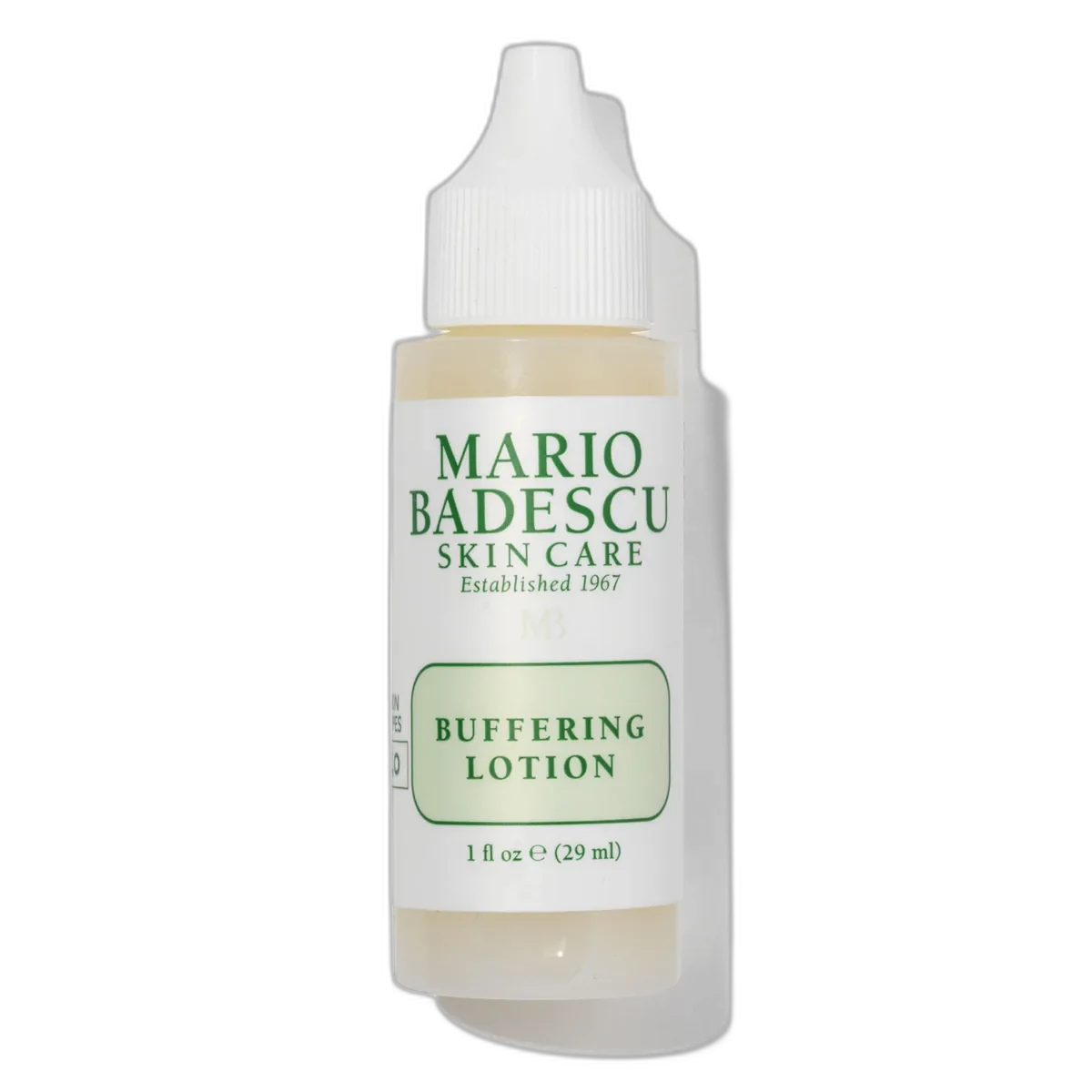
Buffering Lotion
Cystic Acne Underground Favorite
 Verified reviewer
Pros & cons.
- +Unique zinc-and-B-vitamin formula targets cystic acne without relying on standard actives like benzoyl peroxide
- +Deep bumps noticeably flatten within two to five days for many users
- +Dries completely invisible with no white cast or residue on any skin tone
- +Exceptional value — one bottle lasts three to six months at pennies per application
- +Cruelty-free, vegan, and manufactured in the USA at Mario Badescu's own facility
- +Fragrance-free formulation avoids unnecessary sensitizers beyond the functional alcohol base
- +Niacinamide and zinc combination backed by published clinical research for acne
- −Isopropyl alcohol as the first ingredient causes notable stinging and drying on application
- −Isopropyl myristate has a high comedogenic rating, contradicting the product's anti-acne purpose
- −Runny liquid in a basic glass bottle with no applicator makes precise spot targeting difficult
- −Only effective for cystic and nodular acne — does not address surface whiteheads or blackheads
- −Contains methylparaben despite some retailers incorrectly marketing it as paraben-free
- −Limited independent reviews make it harder to assess consistency across diverse skin types
The full review.
There is a very specific kind of acne frustration that the Mario Badescu Buffering Lotion was built to address. You know the feeling: a painful, pressurized bump deep under the skin, no head in sight, impossible to extract, and seemingly immune to every salicylic acid pad and benzoyl peroxide gel in your medicine cabinet. The Buffering Lotion exists for that moment, and it has been quietly solving that problem for Mario Badescu salon clients since long before the brand’s pink Drying Lotion became a social media darling.
The formula itself is refreshingly unconventional. While the acne treatment aisle is dominated by benzoyl peroxide, salicylic acid, and sulfur, this product takes a different route entirely: zinc oxide suspended in isopropyl alcohol, backed by a supporting cast of B vitamins — niacinamide, panthenol, pyridoxine, and biotin. The idea is that the alcohol carrier delivers the zinc oxide directly into the follicle, where it provides bacteriostatic and anti-inflammatory action, while the B vitamins work to calm inflammation, regulate sebum, and support skin repair at the blemish site. Allantoin rounds things out with gentle keratolytic properties that help soften the hardened skin over a cystic bump.
Using it requires a small ritual. The zinc oxide settles to the bottom of the glass bottle, forming a visible white sediment that you need to shake back into suspension before each application. Once mixed, the liquid is thin and watery — almost disconcertingly runny. You tilt the bottle, catch a drop on your fingertip, and dab it directly onto the offending bump. It stings. The alcohol is the first ingredient, and your skin will let you know. Within seconds, though, it dries down completely, leaving no visible residue, no white cast, nothing. It vanishes into the skin and gets to work.
The results, for those it works for, are genuinely impressive. Many devoted users report that deep cystic bumps begin to deflate within 24 to 48 hours, with noticeable flattening within three to five days of nightly application. For a product that costs seventeen dollars and contains no prescription-strength actives, that is a meaningful claim. The niacinamide-zinc combination has legitimate research behind it — a 2006 study in Cutis documented their synergistic anti-inflammatory mechanisms, and a 2017 review in Dermatology and Therapy found topical niacinamide effective for acne in six of eight clinical studies examined.
But let us be honest about the trade-offs, because they are real. Isopropyl alcohol as a first ingredient is a harsh delivery choice. It is effective at ensuring rapid penetration and evaporation, but it comes at the cost of significant drying potential. Used too frequently or too liberally, the Buffering Lotion can leave the surrounding skin parched and irritated, which can paradoxically trigger more oil production and breakouts. The inclusion of isopropyl myristate — rated 3 to 5 on the comedogenic scale — in an anti-acne product is a genuine head-scratcher. It functions as a spreading agent, but its pore-clogging potential seems at odds with the product’s purpose.
The packaging is also dated. A simple glass bottle with a twist cap offers no precision for a product that demands spot-level accuracy. Without a dropper, applicator tip, or pump, you are left tilting and hoping that the right amount lands on your fingertip. The runny consistency makes this more art than science.
The Buffering Lotion also contains methylparaben, which some retailers confusingly market as paraben-free. If paraben avoidance matters to you, check the INCI list. It is there.
Where this product genuinely earns its place is in the gap it fills. If you have tried benzoyl peroxide and found it bleaches your pillowcases. If salicylic acid addresses your surface congestion but does nothing for the deep, angry bumps along your jawline. If sulfur products irritate you. The Buffering Lotion offers an alternative pathway to the same destination, and for a specific subset of acne sufferers, it is the only thing that works.
The value proposition is strong. At seventeen dollars for a one-ounce bottle, and given that you use only a drop per spot per night, a single bottle can last three to six months. Cost per use is pennies. For a product manufactured in the brand’s own New Jersey facility with a legacy stretching back to 1967, you are getting genuine formulation thought at a drugstore price point.
This is not a product for everyone. It is not even a product for most people with acne. But for the narrow audience it serves — those dealing with recurring cystic breakouts who need a targeted, non-standard approach — the Buffering Lotion is a quiet workhorse that has earned its decades-long cult following.
Ingredient analysis.
Full INCI list
Isopropyl Alcohol, Propylene Glycol, Zinc Oxide, Hydrolyzed Yeast Protein, Stearalkonium Hectorite, Isopropyl Myristate, Niacinamide, Panthenol, Pyridoxine HCl, Glycerin, Allantoin, Biotin, Propylene Carbonate, Phenoxyethanol, Chlorphenesin, Potassium Sorbate, Methylparaben, Disodium EDTA
Skin match.
The science.
The Science
The Buffering Lotion works through the synergy of niacinamide and zinc oxide, a pairing with clinical support. A 2006 review by Fivenson in Cutis shows that niacinamide and zinc together inhibit leukocyte chemotaxis, suppress lysosomal enzyme release, and reduce mast cell degranulation. This dampens the inflammatory cascade that drives cystic acne formation. The zinc component provides bacteriostatic activity against Cutibacterium acnes and reduces sebaceous gland output via anti-androgenic mechanisms.
A 2017 review by Walocko and colleagues in Dermatology and Therapy examined eight clinical studies on topical niacinamide for acne. Six studies showed significant improvement with no major adverse effects. Niacinamide uses a multi-pronged mechanism: it suppresses sebum production, reduces inflammatory mediators like IL-8 and TNF-alpha, and strengthens the stratum corneum lipid barrier—all relevant to the environment around a cystic lesion.
A 2020 systematic review and meta-analysis by Yee and colleagues in Dermatologic Therapy supports zinc's role in acne management. The review found that acne patients have significantly lower serum zinc levels and that zinc treatment reduces inflammatory papule counts.
The allantoin component provides keratolytic and wound-healing properties. Research in the Journal of the American Academy of Dermatology (2017) shows allantoin stimulates fibroblast proliferation and promotes extracellular matrix synthesis, which helps resolve tissue damage from deep cystic lesions.
The hydrolyzed yeast protein is the formula's most speculative ingredient. A small double-blind study by Heymann (1989, Hautarzt) found Saccharomyces cerevisiae preparations effective against acne, but that study used oral and topical whole preparations rather than hydrolyzed protein fragments.
References
- The mechanisms of action of nicotinamide and zinc in inflammatory skin disease — Cutis (2006)
- The role of nicotinamide in acne treatment — Dermatology and Therapy (2017)
- Serum zinc levels and efficacy of zinc treatment in acne vulgaris: A systematic review and meta-analysis — Dermatologic Therapy (2020)
Dermatologist Perspective
Dermatologists recognize the anti-inflammatory benefits of topical niacinamide and zinc for acne, though the Buffering Lotion is not a common prescription or widely discussed product in clinical literature. Board-certified dermatologists note the zinc oxide and niacinamide combination has a legitimate evidence base for reducing inflammatory acne. However, they often flag the isopropyl alcohol vehicle as suboptimal; alcohol can compromise the skin barrier over time and worsen the inflammatory cycle. For frequent or severe cystic acne, dermatologists typically recommend prescription-strength options like topical retinoids, oral antibiotics, or hormonal treatments. As an adjunct spot treatment for occasional deep breakouts, the Buffering Lotion's mechanism is sound if the user tolerates the alcohol base.
Where it fits in your routine.
Shake the bottle thoroughly before each use to redistribute the settled zinc oxide. After cleansing and applying toner, tilt the bottle to dispense a small drop onto a clean fingertip. Dab gently onto active cystic bumps; do not rub or spread it over larger areas. Let it dry completely before sleeping. Do not layer moisturizer or other products directly over treated spots. Apply to untreated areas of your face as normal. Use nightly until the blemish resolves, then stop. Limit use to three to four active spots per session to avoid over-drying.
At $17 for a one-ounce bottle, the Buffering Lotion offers high value per use. Since this spot treatment requires only one drop per blemish per night, one bottle lasts most users three to six months. The cost per application is pennies. For a brand with nearly sixty years of formulation history and domestic manufacturing, this is strong value. The only caveat is the narrow use case: if your acne is primarily surface-level whiteheads or blackheads, the Buffering Lotion will not address it, making the purchase a waste.
Use the Buffering Lotion if you have occasional deep, under-the-surface cystic bumps that resist standard spot treatments. It is an affordable, unconventional alternative if benzoyl peroxide irritates you or salicylic acid fails to reach deep enough.
Skip this if your skin is dry, sensitive, or barrier-compromised; the high alcohol content worsens these conditions. Skip it if your acne consists of surface-level whiteheads, blackheads, or mild congestion, as this product does not target those concerns.
Product details.
A thin liquid suspension with zinc oxide sediment that settles at the bottom. Shake before each use to redistribute the active minerals. The texture is watery and runny when dispensed.
The product has a noticeable isopropyl alcohol smell despite being fragrance-free. This scent disappears once the product dries.
Small glass bottle with a twist-off cap. It has no built-in applicator; tilt the bottle to dispense the product onto a fingertip for dabbing.
The alcohol base causes a stinging or warming sensation on first application. This product dries within seconds. Zinc oxide sediment settles at the bottom of the bottle; shake well before use. During the first week, some users see mild flaking around treated spots as the blemish dries.
3-6 months with nightly spot application on occasional breakouts
12 months
All Year
The backstory.
Born from Mario Badescu's New York City salon, where estheticians needed a targeted solution for clients dealing with painful cystic breakouts that surface-level treatments couldn't reach. The product has remained largely unchanged for decades, earning quiet devotion from a niche audience who swear it's the only OTC product that addresses their deep hormonal bumps. It was recently rebranded as the 'Allantoin & Niacinamide Deep Blemish Solution' in a brand refresh.
About Mario Badescu
Legacy Brand (20+ years)Mario Badescu started in 1967 in New York City. It has a loyal following from its esthetician-led salon and accessible skincare line. The brand is not dermatologist-developed, but it has nearly six decades of market presence and makes all products in-house at its Edison, New Jersey facility.
Common myths.
The Buffering Lotion has sulfur, just like the Drying Lotion.
People often confuse these two products, but Buffering Lotion contains no sulfur. Its active system uses zinc oxide and B vitamins, which works differently than the sulfur-and-calamine approach of the Drying Lotion.
Apply this all over your face to prevent acne.
This is strictly a spot treatment. The high isopropyl alcohol base and isopropyl myristate dry skin and cause comedogenicity if applied to large areas. It works for targeted application on active cystic lesions only.
FAQ.
What is the difference between Mario Badescu Buffering Lotion and Drying Lotion?
The Buffering Lotion uses a zinc oxide and B-vitamin suspension in an alcohol base to target deep, under-the-surface cystic bumps. The Drying Lotion uses sulfur and calamine to target surface-level whiteheads and pustules. They use different active ingredients to address different blemish types.
How long does it take for the Buffering Lotion to work on cystic acne?
Most users see visible inflammation reduction within 24-48 hours. Deep cystic bumps flatten noticeably within 2-5 days of nightly application. Full resolution takes 1-2 weeks, depending on lesion severity.
Can I use the Buffering Lotion with retinol or other acne treatments?
Apply retinol or other treatments to the rest of your face, but do not layer additional actives directly over spots treated with Buffering Lotion. The alcohol base increases irritation if you combine it with other potent actives on the same area.
Why does the Buffering Lotion have sediment at the bottom?
The white sediment is zinc oxide, the primary active ingredient. The formula is a mineral suspension — the zinc oxide naturally settles when the bottle sits still. Shake the bottle thoroughly before each use to redistribute the zinc evenly throughout the liquid.
Is the Mario Badescu Buffering Lotion safe for sensitive skin?
This product is not ideal for sensitive skin. Isopropyl alcohol is the first ingredient, which causes drying, stinging, and irritation. People with sensitive skin, rosacea, or a compromised barrier should use a gentler spot treatment.
What the community says.
"Effectively reduces deep cystic bumps within a few days"
"Small bottle lasts many months due to spot-only application"
"Dries quickly with no visible residue"
"Affordable and accessible at multiple retailers"
"Unique B-vitamin approach avoids common acne actives like benzoyl peroxide"
"Strong alcohol smell during application"
"Very runny consistency makes precise application difficult"
"Can cause excessive dryness and irritation with frequent use"
"Results are inconsistent across different acne types"
"Cannot layer other skincare products over treated spots"
People also looked at.