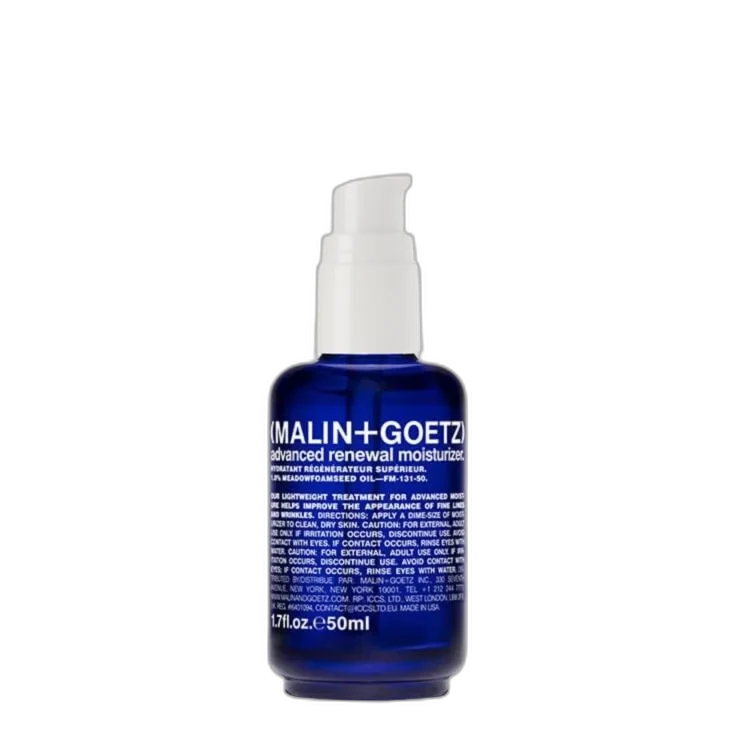
Advanced Renewal Moisturizer
Gentle Peptide Pick
 Verified reviewer
Pros & cons.
- +Genuinely fragrance-free and gender-neutral in a perfumed category
- +Non-greasy silky finish layers under SPF without pilling
- +Squalane and meadowfoam base is well tolerated by sensitive skin
- +Compatible with prescription retinoids as a daytime buffer
- +Pregnancy-compatible anti-aging option with no retinoids
- +Lightweight enough for combination and oil-prone skin
- +Twenty-year brand track record of minimalist formulating
- +Clean ingredient list with no essential oils or alcohol
- −Jar packaging exposes peptide and antioxidants to light and air
- −Apple stem cell claim is marketing-forward with limited evidence
- −Anti-aging results are gentle rather than dramatic
- −Price is high for a peptide cream without retinol
- −Too lightweight for very dry winter skin as a standalone
The full review.
Ask for a peptide anti-aging moisturizer at any prestige beauty counter and you get heavily perfumed jars with flower lids, marketed mostly to women in their forties. The Malin + Goetz Advanced Renewal Moisturizer occupies a different space: fragrance-free, gender-neutral, and uses ingredients a pharmacist recognizes. You can place this cream next to a husband’s razor and a wife’s retinoid without complaints. This positioning is intentional. Matthew Malin and Andrew Goetz opened their Chelsea apothecary in 2004 with a minimalist philosophy. When they developed a proper anti-aging cream more than a decade later, they skipped fragrance and the retinol bandwagon. Instead, they built the formula around dipalmitoyl hydroxyproline, a lipid-soluble plant-derived peptide that targets elastin fibers instead of collagen synthesis. Squalane and meadowfoam seed oil carry the peptide; both are stable emollients that also deliver the formula’s fat-soluble actives. Beta-glucan, sodium hyaluronate, and trehalose provide the humectant layer. Tocopherol and meadowfoam oil act as antioxidants. That is the formula: no retinoid, no exfoliating acid, no niacinamide, and no fragrance. It is a narrow, confident formula. The texture feels expensive. It scoops out as a soft white cream, melts into a silky emulsion in seconds, and finishes as a satin cushion between a traditional moisturizer and a gel-cream. It sits under sunscreen without feeling heavy. You smell nothing but a faint natural note from the meadowfoam oil and a whisper of chamomile. For those tired of prestige anti-aging creams leaving a perfumed haze on pillowcases, this restraint matters. Performance results are gentle and cumulative. Within the first week, the main effect is comfort: a more even surface, fewer tight spots after cleansing, and calmer skin around the cheeks and jawline. Over four to eight weeks, some users report modest bounce or firmness consistent with what peptide literature promises at this concentration—real but incremental. This is not tretinoin. The goal is a cream that improves the baseline without an adjustment period, without competing with an evening retinoid, and without triggering rosacea or peri-oral dermatitis. It meets that brief. The limitations are structural. First, the jar packaging: a peptide-plus-antioxidant formula needs airless delivery, but a twist-off jar exposes the tocopherol and the peptide to light and oxygen every morning. Malin + Goetz is not alone here, and the dark opaque glass helps, but in 2026, this is a noticeable omission at this price. Second, the anti-aging roster lacks depth; if you are in your fifties and want serious wrinkle work, this cannot be your whole routine. You will need a retinoid, a vitamin C, or both, making this a daytime buffer rather than a hero. Third is price. Seventy-six dollars for 1.7 ounces is a prestige-tier price. While the formula is well-built, it is not clearly more effective than a $30 to $45 mid-range peptide cream. You pay for the fragrance-free positioning, the apothecary packaging, and the twenty-year track record of a brand that practices formulation restraint. For some, that justifies the premium. For others, cheaper peptide-plus-squalane creams exist. This earns its place with the sensitive-skin anti-aging crowd and the men’s prestige-grooming market. If you cannot tolerate fragranced creams, use a prescription retinoid at night and want a stabilizing daytime option, or shop for a partner who refuses scents, this is a top pick. If you primarily want measurable wrinkle reduction, buy a retinoid and use this over it.
Ingredient analysis.
Full INCI list
Water/Aqua/Eau, Glycerin, Hydrogenated Polyisobutene, Pentylene Glycol, Octyldodecyl Stearoyl Stearate, Squalane, Dipalmitoyl Hydroxyproline, Limnanthes Alba (Meadowfoam) Seed Oil, C14-22 Alcohols, 1,2-Hexanediol, Caprylyl Glycol, Xanthan Gum, C12-20 Alkyl Glucoside, Isomalt, Carbomer, Linum Usitatissimum (Linseed) Seed Extract, Trehalose, Sclerotium Gum, Tocopherol, Lecithin, Pullulan, Ormenis Multicaulis Oil, Sodium Phytate, Beta-Glucan, Hordeum Vulgare Seed Extract, Sodium Hyaluronate, Sodium Hydroxide, Silica, Malus Domestica Fruit Cell Culture Extract.
Skin match.
The science.
The Science
The anti-aging claim relies on dipalmitoyl hydroxyproline, a lipid-soluble synthetic peptide derived from hydroxyproline—an amino acid abundant in dermal elastin. In vitro and small human panel studies in cosmetic science literature suggest it stabilizes elastin fibers and reduces fine lines over 8-12 weeks of twice-daily use, though independent large-scale clinical trials are limited. Palmitoylation is mechanistically important: attaching two palmitic acid chains makes the peptide fat-soluble so it enters the stratum corneum via a lipid carrier like squalane. This formula uses that synergy—squalane and meadowfoam seed oil act as the vehicle for the peptide, not just emollients. Squalane is a well-studied skin lipid in cosmetic chemistry that repairs the barrier and reduces transepidermal water loss. Beta-glucan, from oats or yeast, has published evidence for reducing low-grade cutaneous inflammation and stimulating localized fibroblast activity, complementing the peptide's elastin-focused action. Tocopherol provides lipid-phase antioxidant protection. The apple stem cell extract (Malus Domestica Fruit Cell Culture Extract) is a lyophilized plant cell culture popularized in the late 2000s. Original in vitro data suggested effects on human skin stem cell longevity, but subsequent independent replication is weaker; current cosmetic chemistry consensus treats it as a mild antioxidant rather than a functional anti-aging active. It sits at the end of the list for a reason.
Dermatologist Perspective
Dermatologists often recommend peptide-and-lipid creams like this as daytime companions to a prescription retinoid instead of standalones. Board-certified dermatologists note dipalmitoyl hydroxyproline is a reasonable, gentle anti-aging active with a plausible mechanism and no known safety concerns, though the evidence base is thinner than for retinoids or signal peptides like Matrixyl. The squalane-and-beta-glucan base works well for patients with rosacea, eczema, or retinoid-induced irritation. Clinicians also note that a fragrance-free, alcohol-free anti-aging cream helps patients who developed fragrance allergies later in life—a group poorly served by the prestige anti-aging category. The main clinical caveat is the jar packaging, which shortens the formula's effective antioxidant life.
Where it fits in your routine.
Use as a moisturizer morning and/or night. Apply after cleansing and water-based serums. Scoop a pea-sized amount with a clean fingertip, warm it between your hands for a few seconds, then press it onto the face, neck, and upper chest. Apply broad-spectrum SPF in the morning. In very dry weather, follow with a facial oil or thicker night cream if desired. Do not layer over silicone primers or tinted mineral sunscreens immediately; wait 60 seconds for the cream to absorb to prevent pilling. Use clean fingers or a small spatula to preserve the formula since the packaging is a jar.
At $76 for 1.7 fl oz, this is a prestige product. The ingredient roster is solid, but a comparable peptide-and-squalane cream from a mid-range brand costs $30-$45. Much of the price pays for the brand, the apothecary packaging, and the fragrance-free positioning rather than the actives. However, the brand has two decades of minimalist formulating and no history of aggressive reformulation. This means the jar you buy today is the same cream that built the reputation. The price is defensible for buyers who need a fragrance-free, gender-neutral peptide cream and will pay for that niche. For buyers seeking maximum anti-aging value, a retinoid plus a cheaper peptide cream is a better choice.
Sensitive-skin readers seeking a fragrance-free anti-aging cream, men and gender-neutral buyers avoiding perfumed prestige creams, and anyone using a prescription retinoid at night who wants a boring, stabilizing daytime moisturizer that does not compete with their actives.
If you want measurable wrinkle reduction on a budget, a retinoid and a mid-range peptide cream cost less and work more. Skip this if you have very dry winter skin and need a standalone cream; the texture is a gel-cream rather than a traditional thick anti-aging moisturizer.
Product details.
This medium-weight white cream turns into a silky, fast-absorbing emulsion when it touches warm skin. The finish sits between a gel-cream and a traditional cream — cushioned but not heavy.
Fragrance-free. meadowfoam oil and trace chamomile provide a faint natural scent. Not perfumed.
A 50ml white glass jar has a matte silver screw lid and the brand's signature apothecary label. It lacks an airless pump, which is a drawback for the peptide and antioxidants inside.
The first use provides a soft, cushioned layer of hydration within 30 seconds without tackiness. The first week typically results in a calmer, more even surface. There is no tingle, no purging, and no adjustment period. This low-stakes cream works for day one tolerance, so the anti-aging effect is gradual rather than dramatic.
Use once daily on the face and neck for 3-4 months, or 6-8 weeks if used twice daily.
12 months
All Year
The backstory.
Malin + Goetz built its catalog around a simple idea: unisex apothecary skincare with the kind of pared-back ingredient list a chemistry-minded pharmacist would approve of. The Advanced Renewal Moisturizer was developed as the brand's flagship anti-aging option for customers who wanted peptide-level claims without retinoids, fragrance, or the heavy floral feel of legacy prestige anti-aging jars. It has quietly become one of the brand's best sellers in the men's grooming channel, where fragrance-free anti-aging creams remain in short supply.
About Malin + Goetz
Established Brand (5–20 years)Matthew Malin and Andrew Goetz founded the NYC apothecary brand Malin + Goetz in 2004. The brand has two decades of minimalist unisex formulations. Its anti-aging line uses plant-derived peptides and antioxidants instead of retinoids, making it a gentler, fragrance-conscious option in the prestige space.
Common myths.
Apple stem cell extract in an anti-aging cream rejuvenates human skin cells.
Plant stem cells do not replicate in human skin. The Malus Domestica extract in this formula is a lyophilized plant cell culture that provides mild antioxidant activity. The peptide, squalane, and beta-glucan do the actual anti-aging work.
Anti-aging creams require a retinoid to work.
Retinoids are the gold standard for measurable wrinkle reduction. However, a well-formulated peptide-and-lipid cream like this one improves barrier function and surface smoothness — the qualities people usually mean when they say skin looks younger.
FAQ.
What is the difference between Malin + Goetz Advanced Renewal Moisturizer and Advanced Renewal Cream?
The Moisturizer is a light daily peptide cream using squalane, beta-glucan, and dipalmitoyl hydroxyproline for normal to combination skin. The Advanced Renewal Cream is the thicker version with more occlusive emollients for mature or very dry skin. Use The Moisturizer if you layer a facial oil at night. Use the Cream if you skip oils.
Does Malin + Goetz Advanced Renewal Moisturizer contain retinol?
No — this anti-aging cream is retinoid-free. It uses dipalmitoyl hydroxyproline, beta-glucan, and antioxidants instead of retinol or retinal. This makes it safe for pregnancy and for use during the day with existing prescription retinoid routines.
Is Advanced Renewal Moisturizer good for sensitive skin?
Yes. It is fragrance-free, alcohol-free, and uses squalane and beta-glucan—both work well for sensitive and rosacea-prone skin. No essential oils and a low-irritation peptide make this one of the gentler prestige anti-aging options.
Can men use the Malin + Goetz Advanced Renewal Moisturizer?
This product is designed for all genders. Its fragrance-free, non-greasy finish and gender-neutral packaging make it a bestseller in the men's grooming channel, especially for beard-adjacent sensitivity after shaving.
How long does a jar of Advanced Renewal Moisturizer last?
The 50ml jar lasts about 3-4 months with once-daily face and neck use. Twice-daily use lasts 6-8 weeks. The lightweight texture requires only a pea-sized amount per application; using too much causes pilling under sunscreen.
Is this moisturizer enough on its own, or do I need a serum underneath?
Younger or normal skin can use it alone. For dark spots, fine lines, or acne, layer a treatment serum underneath—use vitamin C in the morning or a niacinamide/peptide serum at night. The cream layers cleanly without pilling.
What the community says.
"non-greasy finish"
"fragrance-free"
"calms sensitive skin"
"gender-neutral packaging"
"layers well under makeup and SPF"
"expensive for the size"
"no dramatic anti-aging results"
"jar packaging not airless"
"feels light for very dry winter skin"