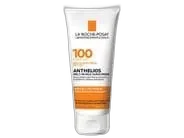
Anthelios Melt-In Milk Sunscreen SPF 100
Maximum Protection Everyday
 Verified reviewer
Pros & cons.
- +SPF 100 provides maximum commercially available UV protection with real-world proven benefits
- +Melt-in milk texture blends invisibly despite extreme filter concentration
- +Versatile face-and-body formula eliminates the need for separate sunscreens
- +80 minutes water resistance for pool, beach, and athletic activities
- +Oxybenzone-free and octinoxate-free addresses common chemical filter concerns
- +Glycerin and panthenol provide hydration during extended sun exposure
- +HSA/FSA eligible and available in two sizes
- −Chemical UV filters can cause significant eye stinging during heavy sweating
- −Too dewy and rich for oily facial skin — not a matte formula
- −Contains homosalate and octocrylene which draw regulatory scrutiny
- −Goes on slightly white and thick before blending — requires rubbing
- −Not reef-safe due to chemical UV filter content
- −Requires thorough double cleansing to remove high-concentration filters
The full review.
A 2019 randomized, double-blind study in the Journal of the American Academy of Dermatology sent participants to a ski resort with two sunscreens: SPF 50+ on one side of the face and SPF 100+ on the other. After one day of outdoor exposure, the SPF 100+ side showed significantly less sunburn. The study proves SPF 100 works better in real-world use, where people typically under-apply sunscreen.
La Roche-Posay’s Anthelios Melt-In Milk SPF 100 uses this finding. It shows that the highest available SPF, in a formula people enjoy wearing, is the most effective sun protection strategy.
The UV filter system uses the same four chemical filters as the Clear Skin formulation but at higher concentrations—octocrylene increases from 7% to 10%, reaching the maximum combined filter load for a comfortable formula. Avobenzone handles UVA, octocrylene stabilizes the avobenzone and adds UVB absorption, and homosalate plus octisalate provide UVB coverage. The system is oxybenzone-free and octinoxate-free, avoiding the two chemical filters with the most consumer and environmental scrutiny.
The melt-in milk texture is the product’s signature. SPF 100 requires high concentrations of UV filters, which usually results in thick, white, paste-like products. La Roche-Posay’s formulation team uses a silicone-based matrix (polymethylsilsesquioxane and dimethicone) to create a vehicle that starts as a thick, slightly white milk and becomes a nearly invisible layer within seconds of rubbing. Glycerin and panthenol in the base provide hydration and soothing, so the product feels like a moisturizing lotion rather than a UV shield.
This versatility works for face and body use. You can apply the same product to your face after moisturizer and to your arms, chest, and legs at the pool without separate facial and body sunscreens. On the face, the finish is satin rather than matte (this is not for oily-skin oil control like the Clear Skin); it is comfortable for most skin types but may be too dewy for those preferring a dry-touch finish.
The 80-minute water resistance matters for the beach, pool, or outdoor exercise. Combined with SPF 100, it provides a safety margin—even after partial wash-off from swimming, protection likely stays above SPF 50. This is the practical benefit of extreme SPF: a buffer against sweating, rubbing, and under-application that erodes protection during the day.
Consider these factors before buying. The chemical UV filter system means this is not for people wanting mineral-only protection. Eye stinging during heavy sweating is a reported issue—high concentrations of chemical filters can migrate with sweat into the eyes. For athletic outdoor use, wear a headband or visor to redirect forehead sweat, or use a mineral sunscreen stick around the orbital area.
This is not the right Anthelios for oily facial skin. The glycerin and silicone base that feel comfortable on the body create a dewy, potentially greasy finish on oily faces. The Clear Skin SPF 60 is designed for that skin type. The Melt-In Milk suits normal, dry, or combination facial skin, or as a body sunscreen for all skin types.
At approximately $31 for 3 ounces (also available in a 5 oz size), this offers strong value for a dermatologist-recommended SPF 100 sunscreen. You get maximum UV protection from the #1 derm-recommended European skincare brand in an HSA/FSA eligible formula. The per-ounce price competes with mid-range body sunscreens while delivering higher protection and a more elegant texture.
The Anthelios Melt-In Milk SPF 100 is the highest SPF in La Roche-Posay’s lineup and proves maximum protection and wearable texture can coexist. For sun-sensitive individuals, fair-skinned families, outdoor enthusiasts, and anyone prioritizing UV defense, this removes the excuse for not using the highest protection available. The science shows SPF 100 makes a difference. La Roche-Posay made it easy to wear.
Formula
Ingredient analysis.
Full INCI list
Active Ingredients: Avobenzone 3%, Homosalate 15%, Octisalate 5%, Octocrylene 10%. Inactive Ingredients: Water, Polymethylsilsesquioxane, Glycerin, Dimethicone, Poly C10-30 Alkyl Acrylate, Styrene/Acrylates Copolymer, Silica, Caprylyl Methicone, Acrylates/Dimethicone Copolymer, Diethylhexyl Syringylidenemalonate, PEG-100 Stearate, Glyceryl Stearate, Phenoxyethanol, Potassium Cetyl Phosphate, Tocopherol, Caprylyl Glycol, Panthenol, Acrylates/C10-30 Alkyl Acrylate Crosspolymer, Triethanolamine, PEG-8 Laurate, Inulin Lauryl Carbamate, Chlorphenesin, p-Anisic Acid, Caprylic/Capric Triglyceride, Xanthan Gum, Disodium EDTA, Cassia Alata Leaf Extract, Maltodextrin, Sodium Dodecylbenzenesulfonate
Skin match.
The science.
The Science
The Anthelios Melt-In Milk SPF 100 uses the strongest evidence for high-SPF efficacy — a 2019 randomized, double-blind study showing SPF 100+ outperforms SPF 50+ in the real world.
The Williams et al. (2019) study, published in the Journal of the American Academy of Dermatology, randomized 199 participants at a ski resort. They applied SPF 100+ sunscreen to one side of the face and SPF 50+ to the other. After one day of outdoor exposure, the SPF 50+ side had significantly more sunburn than the SPF 100+ side (55.3% vs 40.7%, p<0.001). This study answers the critique that SPF values above 50 lack clinical meaning. In practice, under-application and uneven distribution mean nominal SPF rarely matches actual skin protection. Higher SPF provides a safety margin for these application deficits.
The four-filter system maximizes total UV filter concentration within FDA regulatory limits. Octocrylene at 10% (the maximum allowed) has two roles: it acts as a UVB filter for the 280-320nm range and photostabilizes avobenzone. Research in Photochemistry and Photobiology shows octocrylene absorbs triplet-state energy from photoexcited avobenzone. This prevents the photodegradation that reduces UVA protection over time.
Combining avobenzone (3%, maximum allowed) for UVA protection with three UVB filters reaches the Critical Wavelength of 370nm or higher required for broad-spectrum designation. This ensures protection across the full UV damage spectrum. The oxybenzone-free formulation follows consumer preference and regulatory trends — Hawaii banned oxybenzone-containing sunscreens due to coral reef concerns, and the FDA requested more safety data for this ingredient.
Panthenol addresses a common issue with high-SPF formulas: the drying effect of concentrated UV filters during long exposure. Research shows topical panthenol improves stratum corneum hydration and reduces transepidermal water loss. This supports barrier function during the long outdoor activities where SPF 100 is most useful.
References
- Randomized, controlled, double-blind study of a sunscreen of SPF 100+ compared with a sunscreen of SPF 50+ in prevention of sunburn — Journal of the American Academy of Dermatology (2019)
Dermatologist Perspective
Dermatologists recommend the Anthelios Melt-In Milk SPF 100 for patients at highest UV damage risk: those with fair skin, a history of skin cancer, photosensitizing medication use, or sun-sensitive conditions. Board-certified dermatologists use the Williams et al. (2019) study to show SPF 100 provides clinically meaningful protection in real-world conditions, especially since most patients apply only 25-50% of the amount used in SPF testing. The melt-in milk texture helps patient compliance by avoiding the discomfort of typical high-SPF formulas — dermatologists note the best sunscreen is the one patients use consistently. The oxybenzone-free formulation lets dermatologists recommend maximum protection without the common patient objection to that ingredient.
Where it fits in your routine.
Apply a thick, even layer to all exposed skin 15 minutes before sun exposure. Use a nickel-sized amount on the face after moisturizer. Use one ounce (a shot glass) for full body coverage. Reapply every 2 hours, and immediately after swimming, sweating heavily, or toweling off. The 80-minute water resistance works during water activities, but reapply after exiting the water. Double cleanse in the evening — use an oil-based cleanser first to dissolve the silicone-based formula, then a water-based cleanser.
At about $31 for 3 ounces (or a 5 oz option for better per-ounce value), this offers excellent value for the highest SPF commercially available in an elegant formula. Most SPF 100 products are rare and poorly formulated, but the Anthelios Melt-In Milk has a much better texture. La Roche-Posay's five-decade sun protection heritage and peer-reviewed evidence for SPF 100 efficacy add credibility. HSA/FSA eligibility lowers the effective cost. For face-and-body sun protection during outdoor activities, the per-application cost competes with mid-range SPF 50 sunscreens while providing higher protection.
Anyone seeking maximum UV protection: fair-skinned individuals, people with a personal or family history of skin cancer, those on photosensitizing medications, outdoor workers, athletes, and families wanting high-level protection for beach and pool days. It works well for anyone wanting one versatile sunscreen for both face and body.
Those with very oily facial skin who need a matte finish — use the Clear Skin SPF 60 for your face instead. Anyone requiring mineral-only UV protection. Those who experience severe eye stinging from chemical sunscreens during sweating should use a mineral sunscreen stick around the eye area and reserve this for body and lower face.
Product details.
Fragrance-free. A faint chemical sunscreen base scent dissipates after application.
Squeeze tube comes in 3 oz and 5 oz sizes. The 3 oz size is easy to dispense and travel-friendly.
The melt-in texture is immediate. The formula starts as a slightly thick white milk but turns into a nearly invisible, comfortable layer seconds after rubbing. It feels neither heavy nor greasy despite the extreme SPF. Glycerin and panthenol leave skin feeling hydrated instead of coated.
1-2 months with regular face and body use during sun exposure season
12 months
spring summer
The backstory.
Developed after a landmark 2019 study published in the Journal of the American Academy of Dermatology demonstrated that SPF 100+ sunscreen provided significantly better protection against sunburn than SPF 50+ in real-world beach conditions. La Roche-Posay, with its decades of UV filter expertise, formulated a consumer-friendly SPF 100 that proved the highest protection level could be delivered in a cosmetically elegant format rather than the thick, white paste that maximum SPF typically requires.
About La Roche-Posay
Legacy Brand (20+ years)La Roche-Posay launched in 1975 near the thermal springs of La Roche-Posay, France. Dermatologists have recommended the brand for over four decades. L'Oréal owns La Roche-Posay, the #1 dermatologist-recommended skincare brand in Europe, which uses extensive clinical research for its formulations.
Common myths.
SPF above 50 provides no meaningful extra protection.
SPF 50 blocks about 98% of UVB and SPF 100 blocks about 99%. The real-world difference exceeds this 1% gap. A 2019 JAAD study shows SPF 100+ results in less sunburn during actual beach conditions than SPF 50+. This happens because people apply less sunscreen than tested amounts; higher SPF creates a safety margin for real-world under-application.
High-SPF sunscreens are always thick, white, and uncomfortable.
This formula reaches SPF 100 with a melt-in milk texture that blends invisibly. Modern formulation technology delivers high filter concentrations in elegant textures — the thick, paste-like SPF 100 products of the past result from formulation limitations, not physical laws.
FAQ.
Is SPF 100 really better than SPF 50?
Yes — a 2019 randomized study in JAAD shows SPF 100+ results in significantly less sunburn than SPF 50+ in real-world conditions. SPF 100 blocks about 99% of UVB versus 98% in lab tests, but the practical gap is wider because people apply less sunscreen than the tested amount. Higher SPF provides a safety margin for real-world under-application.
Can I use La Roche-Posay Anthelios SPF 100 on my face?
Yes — it works for both face and body. On the face, it leaves a satin, hydrating finish. If you have oily skin and want a matte finish, use the Anthelios Clear Skin SPF 60 on your face instead. Apply the Melt-In Milk after your moisturizer.
Does this sunscreen leave a white cast?
The texture is thick and looks slightly white during initial application, but it melts into skin and becomes virtually invisible within 30-60 seconds of rubbing. Most users report no lasting white cast once fully blended, though very generous application may leave residue on darker skin tones.
Is La Roche-Posay Anthelios SPF 100 waterproof?
It is water-resistant for up to 80 minutes, the FDA's maximum rating. No sunscreen is waterproof. Reapply after swimming, heavy sweating, or toweling off, even with this water-resistance rating.
Why does this sunscreen sting my eyes?
High concentrations of chemical UV filters, specifically avobenzone and homosalate, migrate with sweat into the eyes and cause stinging. For sweat-prone activities, apply a mineral sunscreen stick around the eye area and use this formula on the rest of the face and body.
Is this sunscreen reef safe?
No — it is oxybenzone-free and octinoxate-free (the two ingredients banned in Hawaii), but it contains homosalate and octocrylene, which raise environmental concerns. For reef-safe protection, use mineral sunscreens with zinc oxide and/or titanium dioxide.
Community
What the community says.
"Melts into skin without white cast"
"Non-greasy despite SPF 100 rating"
"Effective — no sunburn even during extended outdoor activity"
"Suitable for sensitive skin"
"Works well on both face and body"
"Can feel greasy on very oily facial skin"
"Stings if it gets into eyes during sweating"
"Goes on slightly thick and white before blending in"
"Chemical UV filters concern some consumers"
"Premium price compared to basic body sunscreens"
People also looked at.