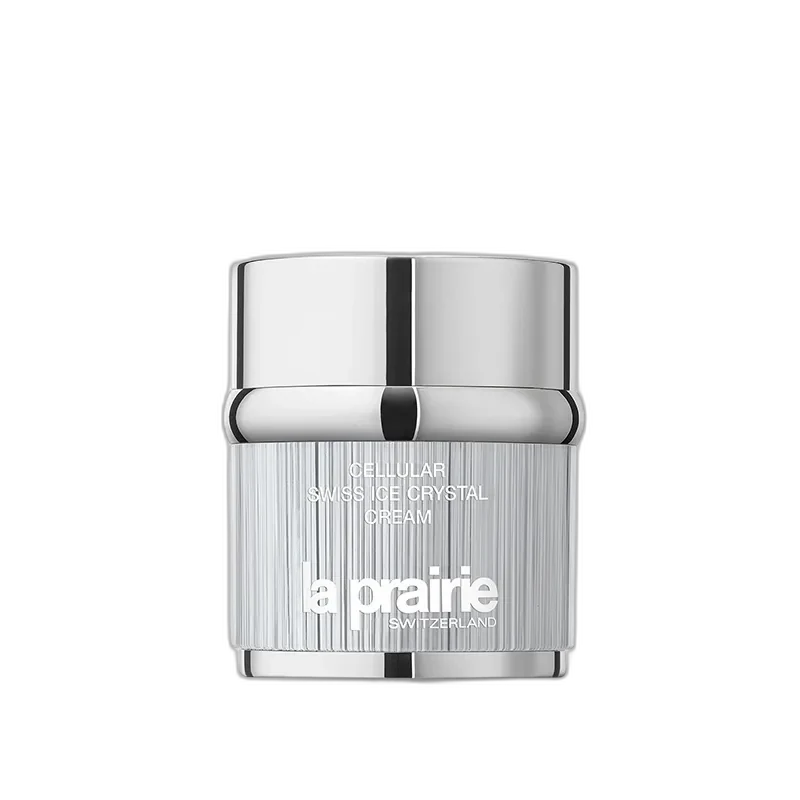
Cellular Swiss Ice Crystal Cream
Ultra-Luxury Alpine Indulgence
 Verified reviewer
Pros & cons.
- +Genuinely luxurious texture that absorbs beautifully without heaviness
- +Fragrance-free — unusual and welcome for a luxury moisturizer
- +Interesting alpine botanical complex with three extremophile plant extracts
- +Dual ferment lysates (Lactobacillus, Saccharomyces) provide microbiome support
- +Immediate visible hydration and luminosity improvement
- +Amino acid complex and multiple vitamins round out the formulation
- −Price of $335 bears no rational relationship to ingredient quality
- −Swiss Ice Crystal Complex claims are supported by proprietary, not peer-reviewed research
- −Contains PTFE (Teflon), which some consumers prefer to avoid
- −Jar packaging is less hygienic than airless pump alternatives
- −Botanical extract concentrations are unknown and may be negligible
- −Not cruelty-free — La Prairie does not carry cruelty-free certification
The full review.
There is a moment, after you unbox a La Prairie product for the first time, when the world makes a certain kind of sense. The weight of the glass jar. The precision of the lid. The cool, substantial feel of luxury that exists before you even open it. La Prairie has been perfecting this moment since 1978, and the Cellular Swiss Ice Crystal Cream delivers it with the kind of quiet confidence that only decades of practice produce.
Then you open the jar and apply the cream, and the sensorial experience continues to impress. The texture is rich without being heavy — a velvety, almost whipped quality that melts on contact with warm skin and absorbs into a comfortable, luminous finish. There is no greasiness, no sitting on the surface, no waiting for it to sink in. It just becomes part of your skin. Your face feels immediately hydrated, nourished, and subtly luminous in a way that is genuinely pleasant. This is not an exaggeration or marketing-speak — the texture engineering is real and evident from the first use.
The story La Prairie tells about this cream centers on the Swiss Ice Crystal Complex, a proprietary blend of three alpine botanical extracts. Saxifraga Oppositifolia — purple saxifrage — survives in Arctic and alpine environments by producing anthocyanins and other protective compounds. Soldanella Alpina — alpine snowbell — pushes through ice and snow to bloom, developing heat-generating mechanisms to melt the ice around it. Chlamydomonas Extract is derived from Swiss snow algae that thrives in glacial environments. The narrative is that these organisms have developed exceptional cellular protection mechanisms, and that applying their extracts to human skin can transfer some of that resilience.
It is a beautiful concept. Whether it works is a different question. The evidence for transferring extremophile resilience to human keratinocytes comes primarily from La Prairie’s own research programs rather than independent peer-reviewed studies. The individual extracts do have documented antioxidant properties — that is not in dispute. What is unproven is whether the specific combination at whatever concentration La Prairie uses produces effects meaningfully different from well-formulated antioxidant moisturizers at a fraction of the price.
Let us look at what else is in the jar. The base is built on glycerin, butylene glycol, caprylic/capric triglyceride, and shea butter — excellent, time-tested moisturizing ingredients that appear in products from every price tier. Sodium hyaluronate provides humectant activity. Lactobacillus Ferment and Saccharomyces Cerevisiae Extract add a fermented ingredient dimension that is genuinely interesting — ferment lysates have emerging evidence for microbiome support and anti-inflammatory activity. Panax ginseng root extract, caffeine, and a complex of amino acids (arginine, lysine, threonine, glycine, histidine, serine) provide additional skin-conditioning benefits. Ascorbic acid and ascorbyl palmitate contribute vitamin C activity, though their low positions on the INCI suggest modest concentrations.
The PTFE ingredient warrants acknowledgment. Polytetrafluoroethylene — Teflon — is used here as a texture-smoothing agent that contributes to the cream’s silky, almost frictionless feel on skin. It is considered safe for topical use by regulatory agencies, and its inclusion is not unusual in luxury skincare. However, some consumers have environmental concerns about fluoropolymers, and this ingredient may be a dealbreaker for those who screen for it.
The absence of fragrance is a genuine positive that deserves recognition. Many luxury brands lean heavily on scent to create a sensorial experience, often at the expense of skin health. La Prairie’s decision to let the cream speak through texture rather than perfume is consumer-friendly and widens the potential user base to include fragrance-sensitive individuals.
Now for the uncomfortable math. This cream costs three hundred and thirty-five dollars for fifty milliliters. The core moisturizing system — glycerin, shea butter, caprylic/capric triglyceride, hyaluronic acid — is functionally identical to what appears in moisturizers costing thirty to sixty dollars. The botanical extracts and ferment lysates add genuine formulation interest, but products from brands with actual published clinical research behind their actives — think prescription-grade retinoids, or high-concentration vitamin C serums with peer-reviewed data — deliver more documented anti-aging efficacy for far less money.
What you are paying for, with full transparency, is the La Prairie experience: the Swiss heritage, the packaging, the texture engineering, the story of alpine resilience, and the privilege of using something that feels extraordinary. These are not nothing — luxury skincare exists because the experience itself has value to those who seek it. But the value is emotional and experiential, not pharmaceutical. The ingredient list suggests a perfectly competent sixty to eighty dollar moisturizer. The other two hundred and fifty dollars buys the glass jar and the story.
For those who can comfortably afford it and who derive genuine pleasure from the ritual of luxury skincare, the Swiss Ice Crystal Cream delivers on its experiential promise. For those making a considered investment in their skin’s health, the money is more impactfully spent on products with robust clinical evidence behind their active ingredients.
Formula
Ingredient analysis.
Full INCI list
Water (Aqua), Glycerin, Butylene Glycol, Caprylic/Capric Triglyceride, Coco-Caprylate/Caprate, Sorbitan Stearate, Butyrospermum Parkii (Shea Butter), Cetyl Alcohol, PTFE, Boron Nitride, Glycoproteins, Panax Ginseng Root Extract, Equisetum Arvense Extract, Lactobacillus Ferment, Saccharomyces Cerevisiae Extract, Saxifraga Oppositifolia Extract, Soldanella Alpina Extract, Chlamydomonas Extract, Saponaria Pumila Callus Culture Extract, Strelitzia Nicolai Seed Aril Extract, Nicotiana Sylvestris Leaf Cell Culture, Caffeine, Sodium Hyaluronate, Soluble Collagen, Arnica Montana Flower Extract, Chondrus Crispus Powder, Chitosan, Tocopherol, Lecithin, Arginine, Lysine HCl, Threonine, Glycine, Histidine, Serine, Calcium Pantothenate, Folic Acid, Tryptophan, Ascorbic Acid, Sodium Chondroitin Sulfate, Lactic Acid, Ascorbyl Palmitate, Propylene Glycol, PEG-8, Sodium Hydroxide, Citric Acid, Magnesium Sulfate, Sodium Chloride
Skin match.
The science.
The Science
The Swiss Ice Crystal Complex uses extremophile biology — the study of organisms in extreme environments. Saxifraga Oppositifolia produces anthocyanins, flavonoids, and other polyphenolic compounds to protect against UV radiation and oxidative stress at high altitudes. Research in Phytochemistry shows Saxifraga species extracts have antioxidant capacity and radical-scavenging activity. Chlamydomonas nivalis (snow algae) produces astaxanthin and other carotenoids as cryoprotectants; the Journal of Applied Phycology has studied these antioxidant properties.
Independent research supports the ferment lysate component more directly. Studies show Lactobacillus ferment produces antimicrobial peptides and strengthens the skin barrier via microbiome modulation. Saccharomyces Cerevisiae extract has beta-glucans, amino acids, and vitamins that support cellular metabolism. A 2017 study in the International Journal of Cosmetic Science shows fermented yeast extracts improve skin barrier function and reduce transepidermal water loss.
Concentration makes scientific evaluation difficult. The INCI list shows what is present but not the amount. Many botanical extracts appear in the lower half of the ingredient list, suggesting concentrations below therapeutically meaningful levels. Without published concentration data or independent efficacy testing of the finished product, the cream's anti-aging claims rely on ingredient potential rather than demonstrated performance.
Dermatologist Perspective
Board-certified dermatologists view ultra-luxury skincare with nuance. The core moisturizing system in this cream — glycerin, shea butter, hyaluronic acid — is dermatologically sound and provides hydration and barrier support. Dermatologists note the proprietary botanical complex lacks the independent clinical validation expected for anti-aging claims at this price point. For patients asking if this cream justifies its cost, dermatologists observe that proven anti-aging interventions with the strongest evidence base — retinoids, vitamin C at effective concentrations, and daily sunscreen — cost a fraction of the price. The cream's fragrance-free formulation and moisturizing efficacy are positives, but the anti-aging premium lacks the evidence dermatologists rely on.
Where it fits in your routine.
Apply morning and evening after cleansing, toning, and serums. Warm a small amount in your palms and press it into your face, neck, and décolletage, avoiding the eye area. The thick texture hydrates most skin types without needing more moisturizer.
At $335 for 50 mL, this is among the most expensive moisturizers in its category. The ingredient list shows a well-formulated but non-revolutionary cream. It uses standard moisturizing agents, botanical extracts at unknown concentrations, and a proprietary complex backed by the brand's own research instead of independent studies. Well-formulated products at $30-80 offer comparable hydration and barrier support. The premium price pays for Swiss heritage branding, luxury packaging, and the experience of using a high-end product — this provides value for some consumers, but is not a dermatological investment in skin health.
This is for people who enjoy the luxury skincare ritual and can afford the price without expecting clinical results to justify the premium. It also works for those with dry, mature skin who want a thick, fragrance-free moisturizer with botanical ingredients and will pay for the Swiss heritage and packaging experience.
Value-conscious consumers, people seeking evidence-based anti-aging results, those screening for PTFE or non-cruelty-free brands, and oily or acne-prone skin types for whom this thick formula is too heavy.
Product details.
Thick, velvety cream melts into skin on contact. It is not heavy or greasy; it absorbs to a comfortable, nourished finish.
No added fragrance. Subtle, clean cream scent from the base ingredients.
50 mL glass jar with a heavy, substantial lid. The packaging is thick and heavy — La Prairie sells this experience. This format is less hygienic for a cream, but fits the brand's aesthetic.
The cream feels silky and thick, melting into the skin upon application. It provides immediate hydration and leaves skin looking luminous and nourished within minutes. The experience feels premium, even if the ingredient list does not explain why.
2-3 months with twice-daily face and neck application
12 months
fall winter
The backstory.
The Swiss Ice Crystal collection draws on La Prairie's brand mythology — Swiss alpine science, extreme environment adaptation, cellular rejuvenation. The concept of using extremophile organisms (plants and algae that survive harsh conditions) in skincare has some scientific basis, but La Prairie's specific application and concentration of these ingredients in this cream is not independently validated. The brand's Swiss heritage and decades in the luxury space give it credibility, but the premium is overwhelmingly about brand positioning and the luxury experience.
About La Prairie
Legacy Brand (20+ years)Beiersdorf has owned La Prairie since 1991, following its 1978 founding in Montreux, Switzerland. The brand uses Swiss science and alpine ingredients to target the luxury skincare market. Despite its long heritage, La Prairie spends more on marketing than research; most claims focus on proprietary complexes instead of peer-reviewed studies.
Common myths.
The Swiss Ice Crystal Complex moves cellular resilience from alpine plants to human skin.
The botanical extracts in the complex have documented antioxidant and protective properties, but transferring 'resilience' from plant cells to human skin cells is a marketing narrative, not a proven biological process. These extracts provide antioxidant and soothing benefits, but independent peer-reviewed research does not support specific claims about cellular adaptation.
Luxury skincare products always contain better ingredients than affordable alternatives.
This cream's INCI reads like a well-formulated $60-80 moisturizer. The core hydrating ingredients — glycerin, shea butter, hyaluronic acid, caprylic/capric triglyceride — match products costing a tenth of the price. The botanical extracts add interest but use unknown concentrations.
FAQ.
What is the Swiss Ice Crystal Complex?
La Prairie uses a proprietary blend of three alpine botanical extracts: Saxifraga Oppositifolia (purple saxifrage), Soldanella Alpina (alpine snowbell), and Chlamydomonas Extract (Swiss snow algae). These plants and algae survive extreme alpine conditions. La Prairie markets the complex to transfer cellular resilience to skin, but no independent scientific validation supports this claim.
Does the La Prairie Swiss Ice Crystal Cream contain PTFE?
Yes. PTFE (polytetrafluoroethylene, commonly known as Teflon) is on the ingredient list. It smooths texture and gives the cream a silky feel. Regulatory agencies consider it safe for topical use, but some consumers avoid it because of environmental concerns about fluoropolymers.
Is the La Prairie Swiss Ice Crystal Cream good for sensitive skin?
The cream is fragrance-free, which benefits sensitive skin. However, it contains Arnica Montana (a potential allergen), PTFE, and PEG-8, which can cause reactions in some sensitive individuals. The thick formula works best for normal to dry skin types.
How does the La Prairie Swiss Ice Crystal Cream compare to cheaper moisturizers?
With core moisturizing ingredients (glycerin, shea butter, hyaluronic acid), the cream matches well-formulated products priced at $30-80. The botanical extracts (Swiss Ice Crystal Complex, ginseng, ferment lysates) add differentiation, though concentrations are unknown. The luxury experience, packaging, and brand heritage are the primary differentiators.
What the community says.
"Luxurious, rich texture that absorbs without heaviness"
"Noticeable improvement in skin hydration and luminosity"
"Elegant packaging and overall luxury experience"
"Skin feels softer and smoother within days of use"
"Extreme price makes it inaccessible and hard to justify"
"Difficult to distinguish results from less expensive moisturizers"
"PTFE (Teflon) as an ingredient concerns some consumers"
"Botanical concentrations are unknown — may be at trace levels"