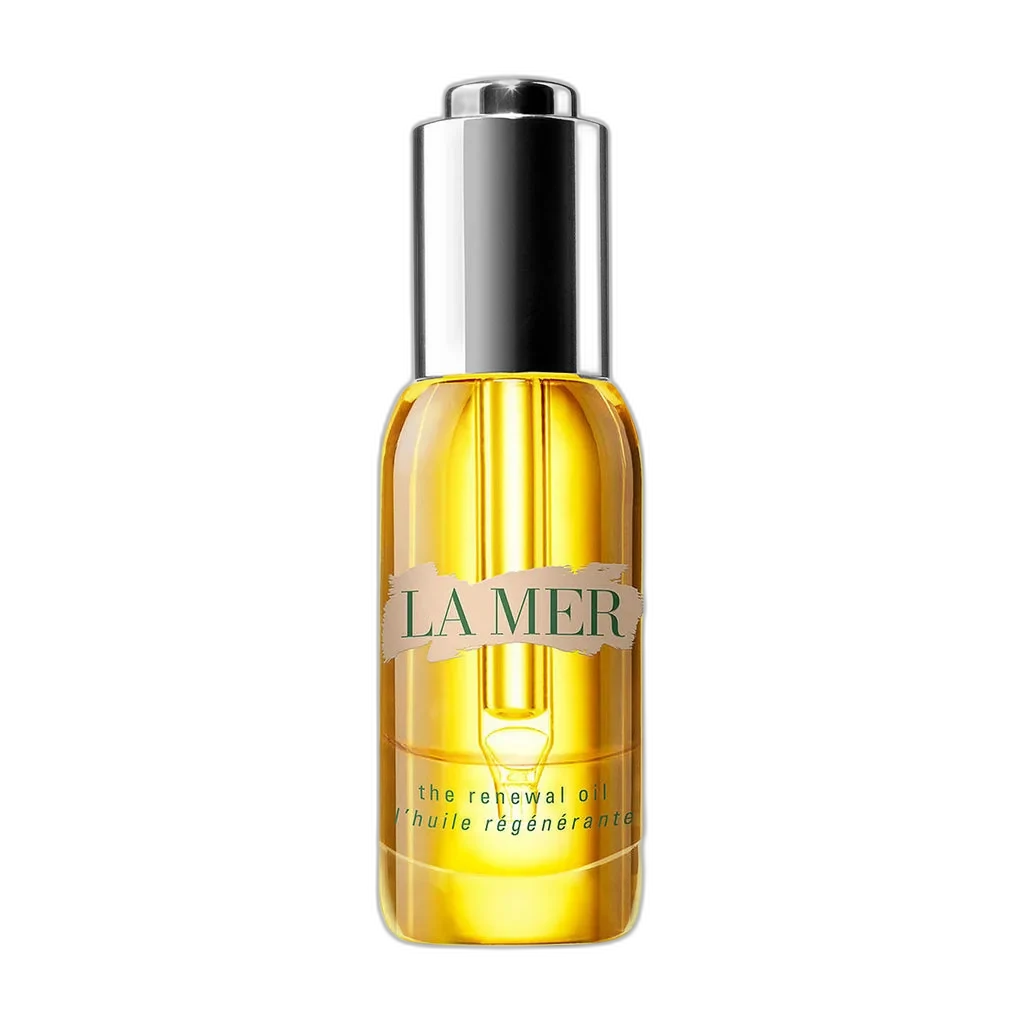
The Renewal Oil
Luxury Glow Oil
 Verified reviewer
Pros & cons.
- +Nine thoughtfully curated botanical oils spanning diverse fatty acid profiles and antioxidant properties
- +Remarkably fast absorption with virtually no greasy residue thanks to the meadowfoam-dimethicone base
- +Immediate visible luminosity and glow from the first drop
- +Oil-soluble vitamin C in its ideal lipid-based delivery environment
- +Versatile use across face, body, cuticles, and hair ends
- +Sea buckthorn oil contributes rare omega-7 fatty acids and natural carotenoid antioxidants
- −Nine individually listed fragrance allergens — the highest of any La Mer product
- −At $295 per ounce, the price vastly exceeds the raw material value of even premium botanical oils
- −Synthetic dyes (Yellow 5, Yellow 6) are unnecessary in a product with natural golden pigments
- −Alcohol denat serves no clear purpose in a nourishing facial oil formula
- −Olive oil inclusion may cause congestion in acne-prone individuals
- −The heavy fragrance makes this unsuitable for sensitive, rosacea-prone, or eczema-affected skin
The full review.
La Mer launched The Renewal Oil in 2015 with a proposition that was, at the time, almost paradoxical: take the brand’s densely mythologized Miracle Broth and dissolve it in plant oils. For a house built on creams and lotions, an oil was a significant departure — an acknowledgment that the facial oil boom of the mid-2010s had created a new category La Mer could not afford to ignore.
The result is, by any sensory measure, beautiful. The oil pours from its dropper in a luminous golden stream, tinted naturally by sea buckthorn’s carotenoid pigments. It smells unmistakably luxurious — a complex herbal-citrus-floral composition that is richer and more perfumey than any other La Mer product. And on the skin, it performs a trick that few facial oils manage: it absorbs quickly, leaves virtually no greasy residue, and imparts an immediate candlelit glow that makes you understand why the facial oil category exploded in the first place.
The oil blend itself is thoughtfully curated. Meadowfoam seed oil leads the formula — an intelligent choice, as its exceptionally long carbon chains (C20-C22) create a stable, fast-absorbing base with natural moisture-locking properties. Jojoba seed oil, a liquid wax ester that mimics human sebum, provides skin compatibility. Sweet almond oil adds vitamin E and oleic acid for softening. Camelina sativa, a lesser-known seed oil rich in omega-3 fatty acids, brings anti-inflammatory properties. Cranberry seed oil contributes a rare balance of omega-3, -6, and -9 fatty acids. And sea buckthorn oil, with its distinctive orange hue, delivers palmitoleic acid (omega-7) and potent carotenoid antioxidants.
The Miracle Broth appears at position 14, suspended within the oil matrix rather than in its usual aqueous environment. This is an interesting formulation choice — delivering fermented algae extract through a lipid base may actually enhance absorption through the lipid-rich stratum corneum. Whether this translates to meaningful efficacy remains unproven, but the delivery logic is sound.
Tetrahexyldecyl ascorbate, the oil-soluble vitamin C also found in The Moisturizing Soft Cream, is perfectly suited to this lipid environment. And Acetyl Hexapeptide-8 makes its now-familiar appearance, adding La Mer’s signature anti-wrinkle peptide to the botanical oil cocktail.
Texture
The texture is the product’s strongest asset. Where many facial oils sit on the skin in a slick, heavy layer, The Renewal Oil essentially vanishes within sixty seconds. The dimethicone component acts as a spreading agent that distributes the oils evenly and promotes absorption, while the meadowfoam base’s natural affinity for skin ensures rapid uptake. What remains is a soft, luminous sheen — not oily, not matte, but genuinely glowing.
Scent
But then there are the nine individually listed fragrance allergens. Nine. Linalool, geraniol, limonene, benzyl benzoate, coumarin, citronellol, hydroxycitronellal, citral — plus the blanket “Fragrance (Parfum)” listing. This is the most heavily fragranced product in La Mer’s entire lineup, and it transforms what should be a pure, nourishing oil treatment into something that doubles as a fragrance product. For an oil designed to sit on your skin overnight, this is a meaningful sensitization exposure.
Packaging
The yellow dyes (CI 19140 and CI 15985) are equally puzzling. The oil’s natural golden color from sea buckthorn and botanical pigments is beautiful on its own — the synthetic dyes add nothing of value and introduce unnecessary synthetic additives to an otherwise botanical-forward formula.
Best for
At $295 for one ounce — with a 0.5 oz size available for $150 — the value proposition requires the same uncomfortable honesty applied to every La Mer product. Meadowfoam seed oil costs approximately $2-4 per ounce wholesale. Jojoba oil runs $3-5 per ounce. Sea buckthorn oil, the most expensive in the blend, might reach $15-20 per ounce for high-quality, cold-pressed versions. A skilled formulator could blend these nine oils with vitamin C and peptide for a raw material cost that represents a tiny fraction of the retail price.
What La Mer adds is the Miracle Broth, the specific formulation expertise, the sensory experience, and the packaging ritual. For those who have built La Mer into their self-care identity, The Renewal Oil delivers genuine nourishment and a beautiful nightly ritual. For the ingredient-focused consumer doing the math, there are extraordinary facial oils from Drunk Elephant, Herbivore, and Sunday Riley at one-third to one-fifth the price with equally impressive botanical blends.
Ingredient analysis.
Full INCI list
Limnanthes Alba (Meadowfoam) Seed Oil, Dimethicone, Caprylic/Capric Triglyceride, Water/Aqua/Eau, Trisiloxane, Prunus Amygdalus Dulcis (Sweet Almond) Oil, Simmondsia Chinensis (Jojoba) Seed Oil, Polydecene, Hydrogenated Polydecene, Butylene Glycol, Propanediol, Glycerin, Brassica Campestris (Rapeseed) Seed Oil, Algae Extract, Helianthus Annuus (Sunflower) Seed Oil, Sesamum Indicum (Sesame) Seed Oil, Eucalyptus Globulus (Eucalyptus) Leaf Oil, Camelina Sativa Seed Oil, Oxycoccus Palustris (Cranberry) Seed Oil, Olea Europaea (Olive) Fruit Oil, Hippophae Rhamnoides Oil, Medicago Sativa (Alfalfa) Seed Powder, Helianthus Annuus (Sunflower) Seedcake, Prunus Amygdalus Dulcis (Sweet Almond) Seed Meal, Sodium Gluconate, Copper Gluconate, Calcium Gluconate, Magnesium Gluconate, Zinc Gluconate, Tocopheryl Succinate, Niacin, Sesamum Indicum (Sesame) Seed Powder, Laminaria Ochroleuca Extract, Laminaria Saccharina Extract, Hydrolyzed Algin, Sea Salt/Maris Sal/Sel Marin, Chlorella Vulgaris Extract, Salicornia Herbacea Extract, Sigesbeckia Orientalis Extract, Laminaria Digitata Extract, Rosmarinus Officinalis (Rosemary) Leaf Extract, Magnolia Officinalis Bark Extract, Yeast Extract/Faex/Extrait De Levure, Crithmum Maritimum Extract, Commiphora Mukul Resin Extract, Citrus Aurantifolia (Lime) Peel Extract, Molasses Extract/Saccharum Officinarum, Sucrose, Acetyl Hexapeptide-8, Acetyl Glucosamine, Caffeine, Tocopheryl Acetate, Phenyl Trimethicone, Sodium Chloride, Tetrahexyldecyl Ascorbate, Alcohol Denat, Fragrance (Parfum), Linalool, Geraniol, Limonene, Benzyl Benzoate, Coumarin, Citronellol, Hydroxycitronellal, Citral, BHT, Phenoxyethanol, Potassium Sorbate, Yellow 5 (CI 19140), Yellow 6 (CI 15985)
Skin match.
The science.
The Science
The Renewal Oil's botanical blend has a diverse fatty acid profile with documented skin benefits.
Meadowfoam seed oil (Limnanthes alba) is unique among seed oils because of its long-chain fatty acids. Over 95% of its composition is C20-C22, whereas C16-C18 fatty acids dominate most botanical oils. This long-chain profile makes the oil stable and resistant to oxidation, which extends shelf life and protects other unstable ingredients in the blend.
Sea buckthorn oil (Hippophae rhamnoides) is a top plant source of palmitoleic acid (omega-7), a fatty acid found naturally in human skin that decreases with age. A 2012 review in the Journal of Ethnopharmacology documented the anti-inflammatory, wound-healing, and antioxidant properties of sea buckthorn, citing its combination of omega-7, carotenoids, and tocopherols.
Jojoba seed oil is structurally similar to human sebum (wax esters). Unlike true oils, jojoba is a liquid wax that does not go rancid. It offers excellent skin compatibility and helps regulate sebum production, which may make it better tolerated by combination skin than heavier botanical oils.
The oil solubility of Tetrahexyldecyl ascorbate improves its delivery in this formula. Research shows oil-soluble vitamin C penetrates the stratum corneum more efficiently than water-soluble L-ascorbic acid because the skin barrier is mostly lipid-based.
Dermatologist Perspective
Dermatologists generally support facial oils for dry and dehydrated skin, as plant-derived oils can strengthen the barrier and reduce transepidermal water loss. Board-certified dermatologists would value the meadowfoam-jojoba base for its skin compatibility and fast absorption. However, the nine listed fragrance allergens are a concern; dermatologists routinely advise patients with sensitive or reactive skin to avoid products with this level of fragrance complexity. For patients seeking a nourishing facial oil, dermatologists would likely recommend fragrance-free alternatives that provide the same botanical benefits without the sensitization risk.
Where it fits in your routine.
Dispense 3-4 drops from the dropper into your palms. Warm the oil between your hands for a few seconds, then press it into a clean, slightly damp face and neck. Use this as the final step of your evening routine to seal in prior layers. For added glow, mix 1-2 drops into your moisturizer or foundation. You can apply it morning or evening, but the thick texture and strong fragrance make it best for nighttime use.
At $295 for 1 oz (and $150 for 0.5 oz), this is one of the most expensive facial oils available. Wholesale botanical oils, even premium cold-pressed versions, cost much less. The price pays for the Miracle Broth, the specific formulation, and the La Mer brand ritual. Multi-oil blends from Drunk Elephant, Herbivore, and Sunday Riley retail at $30-72 per ounce and offer similar botanical diversity.
La Mer devotees with dry to normal, non-reactive skin who want a nightly oil ritual. It works best for immediate radiance and deep nourishment, especially in cold, dry months. This oil suits those who view skincare as a sensory experience and will pay for the La Mer ritual.
Fragrance-sensitive users should note that this product contains more of the nine listed allergens than any other La Mer product. Oily, acne-prone, or fungal-acne-prone skin types should avoid this entirely. Budget-conscious consumers can find equally nourishing botanical oil blends for much less.
Product details.
La Mer's most fragranced product has a complex herbal-floral-citrus bouquet. Nine individually listed fragrance allergens create a thick, aromatic scent that some find spa-like and others find overwhelming.
An elegant glass bottle uses a dropper for controlled application. The amber-tinted glass protects light-sensitive ingredients like vitamin C and sea buckthorn oil. The dropper dispenses a controlled amount to prevent waste.
The first application is sensory: the golden color, the aromatic scent, and the oil's transition from liquid to a barely-there finish. Skin looks luminous and feels soft immediately. This product gives instant gratification with no adjustment period. The scent intensity may bother those sensitive to fragrance.
2-3 months with nightly use of 3-4 drops
12 months
fall winter
The backstory.
Launched in 2015, The Renewal Oil was La Mer's entry into the facial oil category — translating the Miracle Broth into a lipid-based delivery system for the first time. The formula represented a departure from La Mer's traditionally silicone-and-water-based textures, embracing the clean beauty movement's appreciation for plant oils while maintaining the brand's signature marine fermentation technology.
About La Mer
Legacy Brand (20+ years)La Mer was created in 1965 by aerospace physicist Dr. Max Huber after a lab accident, following 12 years and over 6,000 experiments with sea kelp fermentation. Acquired by Estée Lauder in 1995, the brand commands luxury pricing but its proprietary Miracle Broth has limited independent clinical validation.
FAQ.
Is La Mer The Renewal Oil worth $295?
The multi-oil blend uses nine botanical oils, oil-soluble vitamin C, and Miracle Broth in a fast-absorbing base. But individual botanical oils (meadowfoam, jojoba, sea buckthorn) cost $10-20 per ounce. You pay for the Miracle Broth, the formulation expertise, and the La Mer experience. Excellent facial oils cost $30-60.
Can I use La Mer Renewal Oil on oily skin?
Not recommended. The meadowfoam-jojoba base is lighter than many facial oils, but the formula contains olive oil (comedogenic for some) and is too thick for oily skin. This oil works best for dry, normal, or dehydrated combination skin, especially during fall and winter months.
When should I apply La Mer Renewal Oil in my routine?
Apply this as your final evening step — after cleansing, toning, serums, and moisturizer. Use 3-4 drops, warm them in your palms, and press into skin. Or, mix 1-2 drops into your moisturizer for more glow. The oil seals in everything applied beneath it.
Does La Mer Renewal Oil contain real sea buckthorn?
Yes — Hippophae Rhamnoides Oil (sea buckthorn) is in the formula. It gives the oil its golden hue and provides omega-7 fatty acids and carotenoids. Its 21st position in the INCI list shows it has a lower concentration than primary oils like meadowfoam and sweet almond.
Can La Mer Renewal Oil be used on hair and body?
Yes — many users use the oil on dry hair ends, cuticles, and dry body patches. The lightweight, fast-absorbing formula works as a multi-purpose oil. However, at $295 per ounce, using it beyond the face is expensive.
What the community says.
"Lightweight texture that absorbs quickly without greasiness"
"Immediate visible glow and radiance from first use"
"Deeply nourishing without feeling heavy"
"Multi-use — works on face, body, nails, and hair ends"
"Skin looks healthier and more luminous over time"
"At $295 for 1 oz, the price is extreme even for a luxury oil"
"Nine listed fragrance allergens is excessive for a facial product"
"Results don't dramatically outperform less expensive facial oils"
"Contains dyes that serve no skin benefit"
"Alcohol denat seems counterproductive in a nourishing oil"
People also looked at.