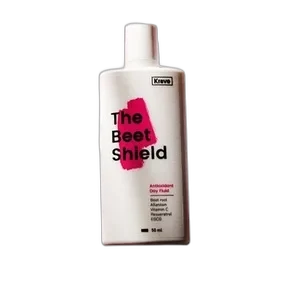
Beet The Sun SPF 47
Reformulation Deep Cut
 Verified reviewer
Pros & cons.
- +Same next-generation UV filters as the original Beet Shield without the alcohol
- +Nourishing base with rice bran extract and macadamia oil for dry skin comfort
- +Multi-layered antioxidant system with beet extract, EGCG, resveratrol, and vitamin C
- +No white cast and natural finish suitable for all skin tones
- +Fragrance-free and significantly gentler than the alcohol-containing original
- +Outstanding value for the UV filter technology and antioxidant complex included
- −Discontinued — no longer available for purchase anywhere
- −Lauric acid may trigger breakouts in acne-prone skin
- −Slightly richer texture felt heavy to some oily skin users
- −UV filters not FDA-approved, limiting regulatory status in the US
- −Limited review data due to short market lifespan
The full review.
In KraveBeauty’s short sunscreen history, Beet The Sun SPF 47 PA++++ holds a unique spot: it was likely the best version ever made, yet few people used it. Released as a mid-cycle reformulation around 2020, it fixed the main Beet Shield criticism—high alcohol content—while keeping the original’s strengths. Less than a year later, the same SPF testing controversy that ended the original pulled it from shelves.
The formula shows a brand that listened. The core UV filter system matches the original Beet Shield: Diethylamino Hydroxybenzoyl Hexyl Benzoate (Uvinul A Plus) for UVA, Bis-Ethylhexyloxyphenol Methoxyphenyl Triazine (Tinosorb S) for broad-spectrum, and Ethylhexyl Triazone plus Isoamyl p-Methoxycinnamate and Polysilicone-15 for UVB. These next-generation filters are photostable, broad-spectrum, and more elegant than older FDA-approved filters.
Everything else changed. The alcohol that was fourth on the original’s INCI list is gone. Ethanolamine now acts as a pH adjuster at a much lower concentration. The formula added Lysolecithin (an emollient phospholipid), Lauric Acid (a fatty acid skin conditioner), Oryza Sativa Rice Bran Extract (antioxidant and soothing), and Macadamia Ternifolia Seed Oil (nourishing, rich in palmitoleic acid). This made the sunscreen feel creamier, more comfortable, and more nourishing than the original, while keeping the lightweight, fast-absorbing feel of the Beet Shield.
The antioxidant complex stayed the same. Beta Vulgaris beet root extract, EGCG, resveratrol, and sodium ascorbyl phosphate all transitioned, maintaining the multi-layered photoprotection: UV filters block most damage, while four antioxidant pathways clean up the rest. Allantoin adds soothing support for gentle cell-turnover.
Texturally, the SPF 47 sits between the ultra-light, dewy original and a traditional moisturizing sunscreen. Without alcohol to drive rapid evaporation, it takes a few seconds longer to absorb, but it settles into a comfortable, natural finish that is neither greasy nor matte. This is an ideal compromise for dry skin types who found the original too drying. For oily skin types who liked the original’s quick-dry feel, it feels slightly heavier—a trade-off based on preference.
The use of lauric acid requires caution. Lauric acid has antimicrobial properties and works as a skin conditioner, but it is rated as moderately comedogenic and can cause breakouts in acne-prone skin. This is a real consideration for congestion-prone skin.
At the same $20 price point as the original, this offered great value—next-generation UV filters and a multi-antioxidant complex in a gentler base for the price of a basic drugstore sunscreen. The sustainable, compact packaging kept KraveBeauty’s environmental commitments.
The Beet The Sun SPF 47 failed due to timing. It fixed the right issues and kept the right innovations just as KraveBeauty was building trust with ingredient-savvy consumers. Then the third-party SPF testing results arrived. KraveBeauty chose to pull all products rather than defend a potentially compromised formula. It is unclear if the SPF 47 version specifically underperformed—the controversy mainly targeted the original SPF 50+ formula—but the brand chose a clean break.
Historically, this was a good sunscreen: modern filters, antioxidant support, alcohol-free comfort, and an honest price. Its short life reflects sunscreen market volatility and the courage to prioritize consumer safety more than any formula flaw.
Formula
Ingredient analysis.
Full INCI list
Water, Butyloctyl Salicylate, Dibutyl Adipate, Beta Vulgaris (Beet) Root Extract, Ethanolamine, Diethylamino Hydroxybenzoyl Hexyl Benzoate, Bis-Ethylhexyloxyphenol Methoxyphenyl Triazine, Ethylhexyl Triazone, Glycerin, Lysolecithin, Lauric Acid, Oryza Sativa (Rice) Bran Extract, Macadamia Ternifolia Seed Oil, Isoamyl p-Methoxycinnamate, Polysilicone-15, Inulin Lauryl Carbamate, Methyl Methacrylate Crosspolymer, Sodium Acrylate/Sodium Acryloyldimethyl Taurate Copolymer, Acrylates/C10-30 Alkyl Acrylate Crosspolymer, Tromethamine, Methylpropanediol, Isohexadecane, Caprylyl Glycol, Glyceryl Caprylate, Polymethylsilsesquioxane, 1,2-Hexanediol, Polysorbate 80, Sorbitan Oleate, Ethylhexylglycerin, Allantoin, Epigallocatechin Gallate, Sodium Ascorbyl Phosphate, Butylene Glycol, Resveratrol
Skin match.
The science.
The Science
The SPF 47 version uses a UV filter system functionally identical to the original Beet Shield, using three next-generation organic filters. Bis-Ethylhexyloxyphenol Methoxyphenyl Triazine (Tinosorb S) provides the broadest coverage, absorbing from 280-400nm with high photostability — BASF data shows 98.4% filter integrity after 50 minimal erythemal doses. Diethylamino Hydroxybenzoyl Hexyl Benzoate (Uvinul A Plus) adds UVA absorption in the 320-400nm range, while Ethylhexyl Triazone delivers UVB coverage. All three filters are photostable, so they keep their protective capacity without degrading under UV exposure — unlike avobenzone-based systems that require stabilizers.
The reformulation replaces alcohol with emollient carriers. Lysolecithin — a phospholipid emollient — can enhance UV filter penetration and even distribution across the skin surface, which improves on-skin protection. Oryza Sativa rice bran extract contains gamma-oryzanol, a compound with antioxidant and UV-absorbing properties studied in the Journal of Cosmetic Dermatology. The antioxidant complex — EGCG, resveratrol, sodium ascorbyl phosphate, and beet extract — is unchanged from the original, providing multi-pathway photoprotection against UV-induced oxidative damage.
Dermatologist Perspective
Dermatologists regard the Tinosorb S and Uvinul A Plus filter combination as one of the most effective and photostable options globally. Board-certified dermatologists note that removing alcohol from this reformulation makes it more suitable for patients with compromised skin barriers, eczema-prone skin, or those using irritating treatments like retinoids and AHAs. Adding emollient ingredients like macadamia oil and lysolecithin aligns with dermatological recommendations to pair sun protection with barrier support. Dermatologists often cite this formulation type — effective filters, antioxidant support, and minimal irritation potential — as the ideal approach to photoprotection.
Where it fits in your routine.
Apply this as the final skincare step before morning makeup. Use a nickel-sized amount for the face. The slightly creamy texture spreads easily and sets in about 45 seconds. Reapply every two hours during sun exposure.
At $20 for 50 mL, the SPF 47 version offers the same value as the original Beet Shield. It uses next-generation UV filters, a four-component antioxidant system, and skin-nourishing ingredients. The price undercuts most European pharmacy sunscreens using similar filter technology. The improved base formula with rice bran extract and macadamia oil makes this a better value than the original, as the gentler formulation expands the potential user base.
This product is no longer available. It worked best for skincare enthusiasts seeking cutting-edge UV filter technology in an alcohol-free, skin-nourishing base — specifically users with normal, combination, or dry skin who found the original Beet Shield too drying.
This product is discontinued and no longer manufactured. Any remaining stock is expired. People with acne-prone skin must be cautious because of the lauric acid content.
Product details.
No added fragrance. Minimal inherent scent from the formula base.
50 mL squeeze bottle. Standard KraveBeauty green and beet-colored branding.
It applies smoothly without the cooling alcohol sensation of the original Beet Shield. It sets into a comfortable, slightly dewy finish in about 45 seconds. It does not sting or tingle. The rice bran extract and macadamia oil make it feel more nourishing than a typical chemical sunscreen.
2-3 months with daily face application
12 months
All Year
The backstory.
The SPF 47 version was a mid-cycle reformulation that addressed the most common complaint about the original Beet Shield — the high alcohol content. By swapping alcohol for gentler carriers and adding rice bran extract and macadamia oil, KraveBeauty created a version that was both skin-friendly and technologically advanced. It was discontinued alongside the original during the 2021 SPF testing controversy.
About Krave Beauty
Emerging Brand (2–5 years)Liah Yoo, a former AmorePacific strategist and skincare YouTube educator, founded KraveBeauty in 2017. The brand earned B Corp certification in 2024 and focuses on a minimalist, essentials-based product lineup.
Common myths.
The SPF 47 version offers less protection than the SPF 50+ original.
SPF 47 and SPF 50 differ negligibly in real-world use, providing 97.9% vs 98% UVB filtration. The reformulation uses the same UV filter technology at similar concentrations.
Removing the alcohol from the formula weakened the sunscreen's UV protection.
Alcohol in sunscreens acts as a solvent and texture enhancer. It helps the formula spread and dry fast but does not provide UV filtration. The UV filters themselves were unchanged.
FAQ.
Is the Krave Beauty Beet The Sun SPF 47 still available?
No. KraveBeauty discontinued the SPF 47 version and the original Beet Shield in 2021. KraveBeauty now sells a reformulated Beet The Sun SPF 40 that uses FDA-approved UV filters.
What was different about the SPF 47 version compared to the original?
The SPF 47 reformulation replaces the alcohol in the original Beet Shield formula with a nourishing base of rice bran extract, lysolecithin, and macadamia oil. It uses the same next-generation UV filters (Tinosorb S, Uvinul A Plus, Ethylhexyl Triazone).
Why was the SPF 47 version discontinued?
KraveBeauty pulled this alongside the original Beet Shield in 2021 after independent SPF testing questioned the protection levels of KraveBeauty's sunscreen formulations. The brand reformulated using FDA-compliant filters.
Was the SPF 47 version better for sensitive skin than the original?
Yes. The SPF 47 version is gentler because it removes alcohol and adds soothing ingredients like allantoin and rice bran extract. However, lauric acid in the formula can cause breakouts in acne-prone skin.
Can I still find the Krave Beauty Beet The Sun SPF 47 anywhere?
The product is discontinued and no longer officially sold. Any stock from third-party sellers is expired and is not safe to use. Beet The Sun SPF 40 is the brand's current active sunscreen. ---
What the community says.
"Improved texture over the original without the alcohol sting"
"Excellent antioxidant-enriched formula"
"No white cast with a natural finish"
"Comfortable enough for daily wear on dry skin"
"Short market lifespan before discontinuation"
"Difficult to find after being pulled from shelves"
"Lauric acid may cause breakouts for acne-prone skin"
"Slightly richer texture than the original felt heavy to oily skin users"
Featured in.
People also looked at.