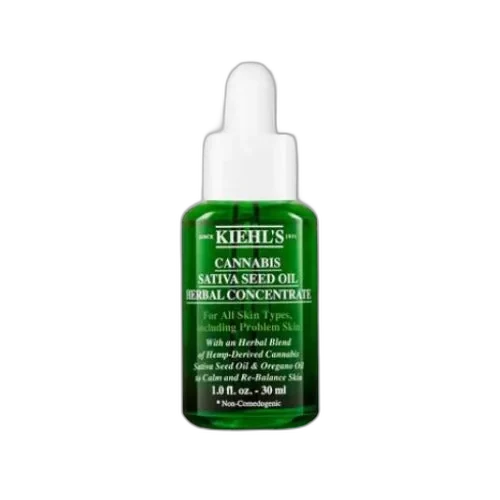
Cannabis Sativa Seed Oil Herbal Concentrate
Green Apothecary Pick
 Verified reviewer
Pros & cons.
- +60% cold-pressed hemp seed oil provides meaningful anti-inflammatory fatty acid dose
- +Remarkably lightweight texture absorbs in under a minute without greasy residue
- +Non-comedogenic formula tested for blemish-prone skin — won't clog pores
- +Only 13 ingredients — refreshingly minimal and transparent formula
- +Oregano oil adds genuine antimicrobial properties beyond simple moisturization
- +High linoleic acid content particularly beneficial for oily skin types
- −Essential oils and fragrance allergens contradict the sensitive-skin marketing positioning
- −Strong herbal scent from oregano and peppermint is polarizing among users
- −5 per ounce is premium pricing for a predominantly hemp seed oil formula
- −Dropper design has reported leaking issues that feel avoidable at this price
- −Not suitable for truly reactive skin types despite calming claims
The full review.
When the cannabis skincare wave crested in early 2019, brands faced a choice: chase the CBD buzzword or bet on the unglamorous but better-documented hemp seed oil. Kiehl’s — a 170-year-old apothecary not exactly known for chasing trends — chose the latter. The Cannabis Sativa Seed Oil Herbal Concentrate launched with 60% cold-pressed hemp seed oil sourced from German farms, zero CBD claims, and a quiet confidence that fatty acid science would outlast cannabinoid hype.
Six years later, that bet looks reasonably sound. The formula is almost aggressively simple: 13 ingredients total, with hemp seed oil comprising the majority, supported by a lightweight emollient (dicaprylyl ether), vitamin E for stability, sunflower oil for additional linoleic acid, and a carefully curated essential oil blend. There are no peptides, no hyaluronic acid, no retinol — just oil, doing oil things.
The hemp seed oil itself is the genuine article. Cold-pressed from seeds harvested in autumn, it delivers an omega-6 to omega-3 ratio of approximately 3:1, with significant gamma-linolenic acid (GLA) content. GLA is the interesting player here — a 2021 study found that creams containing just 1% hemp oil reduced inflammatory acne by 42.5%, and GLA’s anti-inflammatory mechanism through prostaglandin modulation is well-documented. At 60% concentration, this formula provides a meaningful therapeutic dose.
The texture will surprise anyone who expects face oils to feel, well, oily. This has the consistency of a very light dry oil — three drops spread easily across the entire face and absorb within a minute, leaving skin feeling soft and calm without any slickness. It does not pill under moisturizer, does not leave a visible sheen, and does not transfer to your pillowcase. For an oil product, it is remarkably well-behaved.
The scent, however, is less discreet. The oregano, geranium, and peppermint essential oils create a herbal aroma that lands somewhere between a natural apothecary and a Mediterranean kitchen. It fades within minutes, but the initial impression is strong enough to be divisive. You will either find it pleasantly earthy or mildly medicinal.
The oregano oil inclusion deserves attention beyond its scent contribution. Origanum heracleoticum has documented antimicrobial properties, and its presence transforms this from a simple moisturizing oil into something with a mild blemish-fighting angle. For oily and combination skin types dealing with both irritation and breakouts, that dual action is genuinely useful.
Here is where the formula creates its own contradiction, though. This product is marketed for stressed, reactive, blemish-prone skin — yet it contains five EU-regulated fragrance allergens (citral, citronellol, geraniol, linalool, limonene) derived from its essential oil blend. The peppermint oil can cause mild warming or irritation. For truly sensitive skin — rosacea, eczema, contact dermatitis — these essential oils represent a real risk, and it is somewhat disingenuous to position an essential-oil-laden formula as a calming treatment without prominent caveats.
For skin that is stressed or blemish-prone but not pathologically sensitive, this concern is largely theoretical. Most users tolerate the formula well and report visible calming within the first week. The linoleic acid-heavy profile makes it particularly well-suited for oily skin types, whose natural sebum tends to be low in linoleic acid — a deficiency linked to clogged pores and breakouts.
The value question is the elephant in the dropper bottle. At 5 for one ounce, you are paying premium prices for a formula that is primarily hemp seed oil — an ingredient available at a fraction of this cost from oil-focused brands. What Kiehl’s adds is formulation precision: the specific essential oil blend, the cold-pressed German sourcing, the non-comedogenic testing, and the decades of trust that come with a heritage brand. Whether those additions justify a 5-10x markup over pure hemp seed oil depends on how much you value curation over raw materials.
The dropper packaging works well enough for dosing but has drawn complaints about leaking — a minor quality control issue that feels avoidable at this price point. The amber glass does protect the light-sensitive polyunsaturated fatty acids from degradation, which is important for maintaining efficacy over the product’s life.
For oily and combination skin types who want a calming, non-comedogenic oil step without the heaviness of traditional face oils, this delivers. It is lightweight, fast-absorbing, and genuinely soothing for stressed skin. But truly sensitive types should approach with caution despite the marketing, and budget-conscious shoppers should know that the core ingredient — hemp seed oil — is not exclusive to this price bracket.
Ingredient analysis.
Full INCI list
Cannabis Sativa Seed Oil, Dicaprylyl Ether, Tocopherol, Pelargonium Graveolens Flower Oil, Origanum Heracleoticum Flower Oil, Helianthus Annuus Seed Oil, Cymbopogon Schoenanthus Oil, Mentha Piperita Oil, Citral, Citronellol, Geraniol, Linalool, Limonene
Skin match.
The science.
The Science
Hemp seed oil's skincare benefits come from its fatty acid profile. The oil has about 55-60% linoleic acid (omega-6), 15-20% alpha-linolenic acid (omega-3), and 1-4% gamma-linolenic acid (GLA). This composition mirrors healthy skin lipids. A 2024 review in Pharmaceutics (Martinović et al., 2024) listed hemp seed oil's anti-inflammatory, antioxidant, and barrier-repair properties. It notes that GLA modulates prostaglandin E1 synthesis, which suppresses inflammatory pathways linked to acne and dermatitis.
Linoleic acid matters for acne-prone skin. Research shows acne patients have sebum deficient in linoleic acid; topical linoleic-acid-rich oils help normalize sebum composition. A 2021 clinical study found formulations with 1% hemp oil reduced inflammatory acne lesions by 42.5%.
The oregano oil (Origanum heracleoticum) provides carvacrol and thymol. These phenolic compounds have documented antimicrobial activity against Cutibacterium acnes (formerly P. acnes), the bacterium central to inflammatory acne. This creates a dual mechanism: hemp seed oil addresses inflammation while oregano targets the microbial trigger.
Vitamin E (tocopherol) acts as an antioxidant and a stabilizer, protecting the polyunsaturated fatty acids in the hemp and sunflower oils from oxidation. Sunflower seed oil adds to the linoleic acid profile. A 2013 study in Pediatric Dermatology showed topical sunflower seed oil improved skin barrier function in preterm infants.
The formula's evidence-based limitation is the essential oil content. Oregano has documented antimicrobial properties, but the geranium, peppermint, and lemongrass oils contain fragrance allergens. These pose an irritation risk for some users and conflict with the calming claims for sensitive skin.
References
- Comprehensive Insight into Cutaneous Application of Hemp — Pharmaceutics (2024)
Dermatologist Perspective
Dermatologists often view hemp seed oil as a good option for oily and acne-prone skin because it is non-comedogenic and high in linoleic acid. Board-certified dermatologists note the omega fatty acid composition mirrors healthy skin lipids, which supports barrier repair. However, dermatologists warn that the essential oil content in this formula — including oregano, peppermint, and geranium — adds irritation risk for patients with rosacea, eczema, or contact dermatitis. For patients wanting a calming oil, dermatologists may suggest pure hemp seed oil or formulations without added essential oils. They may reserve this product for users with resilient skin who want the antimicrobial benefits of the essential oil blend.
Where it fits in your routine.
Apply 2-3 drops to clean, damp skin in the evening after water-based serums. Warm the oil between fingertips and press it into the face, targeting redness or irritation. Use it alone as a nighttime treatment for oily skin, or layer it under moisturizer for dry skin. Mix one drop into your moisturizer for extra calming. If new to face oils, start every-other-night and increase to nightly as tolerated. Use in your PM routine.
At 5 for 1 oz, this is positioned firmly in the prestige face oil category. The formula's simplicity — 13 ingredients, predominantly hemp seed oil — makes the price harder to justify on ingredients alone, since high-quality cold-pressed hemp seed oil is available from smaller brands at a fraction of this cost. What Kiehl's adds is sourcing transparency (German-harvested, cold-pressed), non-comedogenic testing, and the specific essential oil blend. A 1.9 oz size is also available, offering better per-ounce value for committed users. For those who value the Kiehl's name and the curated essential oil formula, the price is defensible. For ingredient purists, pure hemp seed oil delivers the core benefits for considerably less.
Oily and combination skin types with blemishes and redness who want a lightweight, non-comedogenic oil step. Users who prefer minimalist, naturally-derived formulas and herbal scents. Anyone seeking a calming treatment that absorbs quickly without heaviness.
Sensitive, rosacea-prone, or eczema-affected skin types that react to essential oils and fragrance allergens. Budget-conscious shoppers who can buy quality hemp seed oil for less. Anyone who dislikes strong herbal scents — the oregano and peppermint are prominent on application.
Product details.
This lightweight, fast-absorbing oil has a thin, fluid consistency. It feels lighter than most face oils. The formula acts like a dry oil that sinks into skin instead of sitting on top. It leaves a slight satin finish without visible oiliness.
The essential oil blend of oregano, geranium, and peppermint creates a green, slightly medicinal, herbaceous aroma. This scent is noticeable on application but dissipates within a few minutes.
Amber glass dropper bottle with a screw-top cap. The dark glass protects light-sensitive hemp oil from degradation. The dropper allows precise dosing, but some users report minor leaking.
The herbal scent is the first impression — earthy and green. The oil absorbs in 30-60 seconds. Skin feels soft and calm without heaviness. Most users feel no tingling or stinging, though peppermint oil causes mild warmth for those sensitive to essential oils. No purging or adjustment period occurs.
2-3 months with nightly use of 2-3 drops
6 months
All Year
The backstory.
Launched in February 2019 during the peak of the hemp-in-skincare movement, this was Kiehl's answer to the growing demand for cannabis-derived beauty products. Rather than jumping on the CBD bandwagon, Kiehl's went with cold-pressed hemp seed oil — sourced primarily from Germany, harvested September through October — focusing on the well-documented fatty acid profile rather than trendier cannabinoid claims.
About Kiehl's
Legacy Brand (20+ years)Kiehl's started in 1851 as a New York City apothecary. The brand has used pharmaceutical expertise to formulate skincare for over 170 years. L'Oréal acquired Kiehl's in 2000, and the brand keeps its apothecary heritage through dermatologist-recommended formulations and clinical testing.
Common myths.
This product contains CBD or has psychoactive properties.
Cannabis sativa seed oil comes from hemp seeds, not the flowers or leaves that concentrate CBD and THC. Cannabis sativa seed oil has no CBD or psychoactive compounds. Its benefits come from its fatty acid profile, specifically gamma-linolenic acid (GLA).
Face oils always clog pores and cause breakouts.
Hemp seed oil has a comedogenic rating of 0, making it one of the least comedogenic plant oils. Its high linoleic acid content regulates sebum production in oily skin. Kiehl's tests this formula as non-comedogenic.
FAQ.
Does Kiehl's Cannabis Sativa Seed Oil contain CBD?
No. This product uses hemp seed oil instead of CBD oil, despite the cannabis plant association. Cold-pressing seeds from the Cannabis sativa plant produces hemp seed oil without cannabinoids like CBD or THC. Its omega fatty acid profile provides skin benefits, specifically gamma-linolenic acid (GLA) for anti-inflammatory effects.
Will Kiehl's Cannabis Sativa Seed Oil cause breakouts?
This formula is non-comedogenic and Kiehl's tested it for blemish-prone skin. Hemp seed oil has a comedogenic rating of 0 and high linoleic acid levels; research shows linoleic acid helps regulate sebum production. The oregano oil provides antibacterial properties for acne-prone skin. People sensitive to essential oils should patch test first.
Is this face oil suitable for sensitive skin?
This formula markets itself for stressed and irritated skin, but contains essential oils (geranium, oregano, peppermint) and EU-regulated fragrance allergens (citral, linalool, limonene, geraniol). People with sensitive, eczema-prone, or rosacea-affected skin should patch test, as these essential oils trigger irritation in reactive skin.
How should I use Kiehl's Cannabis Sativa Seed Oil in my routine?
Apply 2-3 drops to clean skin after water-based serums but before or mixed into your moisturizer. It works best as a PM treatment. Add a drop to your moisturizer for extra calming. Use it every other night if your skin is new to face oils.
Is Kiehl's Cannabis Sativa Seed Oil worth the price?
At $5 for 1 oz, this premium-priced face oil uses a simple 13-ingredient formula. The 60% hemp seed oil concentration is real and the cold-pressed German sourcing adds quality, but cheaper hemp seed oils exist. The value comes from Kiehl's formulation expertise and the specific essential oil blend for blemish-prone skin.
What the community says.
"Visibly reduces redness within days of use"
"Lightweight and absorbs quickly without greasy residue"
"Effective at calming irritated and stressed skin"
"Pleasant herbal scent from natural essential oils"
"Non-comedogenic despite being an oil"
"Dropper design can be imprecise and leaky"
"Essential oils may irritate truly sensitive skin despite calming claims"
"Expensive for a 1 oz bottle of mostly hemp seed oil"
"Herbal scent is strong and not universally liked"