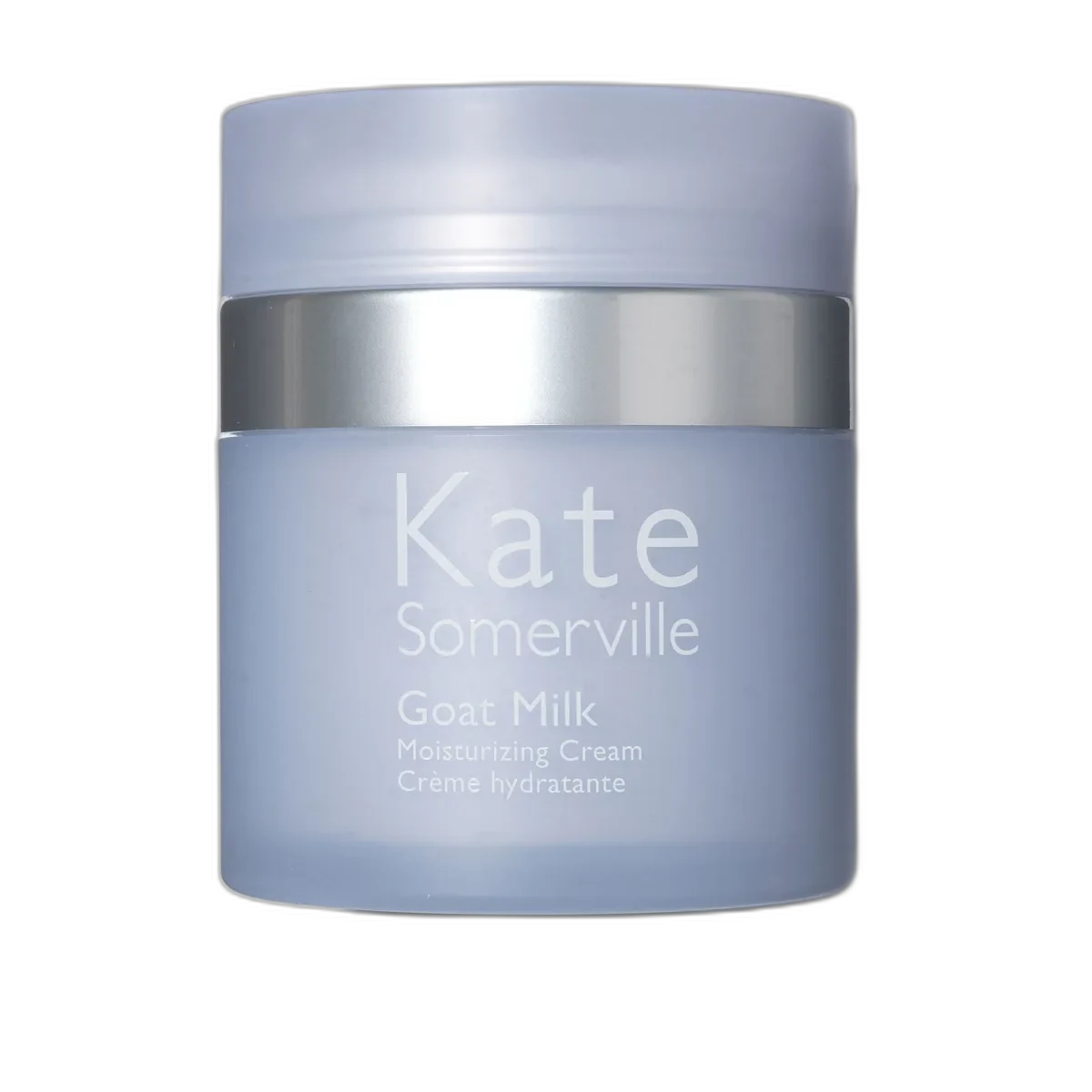
Goat Milk Moisturizing Cream
Sensitive Skin Soother
 Verified reviewer
Pros & cons.
- +Fragrance-free, silicone-free, and paraben-free — a rare combination in prestige moisturizers
- +Goat milk's skin-compatible pH works with the acid mantle rather than disrupting it
- +Five-oil botanical blend delivers rich nourishment without heavy or greasy texture
- +Absorbs quickly with an elegant satin finish suitable under makeup and sunscreen
- +PETA cruelty-free certified and clinically tested for sensitive skin
- +Immediate comfort and soothing relief on reactive, tight skin from first use
- −Price increased from $65 to $84 without a corresponding formula upgrade
- −Coconut oil and myristyl myristate pose comedogenic risk for acne-prone skin
- −Jar packaging is less hygienic than pump or tube for a sensitive skin product
- −1.7 oz size lasts only 2-3 months at twice-daily use — expensive per month
- −Not vegan due to goat milk, milk protein, and lactose content
The full review.
Every skincare founder has an origin story, and Kate Somerville’s is more personal than most. As a child struggling with eczema, she discovered that goat milk calmed her reactive skin when conventional products could not. Decades later, after building a West Hollywood clinic that counted Hollywood’s most photographed faces among its clients, she turned that childhood remedy into a jar. The question is whether personal mythology and clinical pedigree are enough to justify eighty-four dollars for 1.7 ounces of moisturizer.
The formula leads with goat milk — Caprae Lac on the INCI list — which is genuinely an unusual choice in prestige skincare. Most luxury moisturizers lean on ceramides, peptides, or botanical extracts. Goat milk brings something different to the table: a pH that closely mirrors human skin’s acid mantle, naturally occurring lactic acid for gentle surface renewal, fatty acids for conditioning, and vitamins A and E for antioxidant support. It is a multi-functional ingredient that does several things modestly rather than one thing dramatically.
Supporting the goat milk is a five-oil botanical blend that reads like a thoughtful cocktail. Jojoba oil mimics skin’s own sebum, providing conditioning that does not confuse the skin into producing more oil. Avocado oil contributes oleic acid and phytosterols for deeper barrier support. Grape seed oil adds lightweight, linoleic-acid-rich moisture and polyphenol antioxidants. Sunflower seed oil reinforces the linoleic acid content. And coconut oil rounds out the emollient profile with medium-chain fatty acids. Together, they create a cream that feels nourishing without the heaviness that oil-laden formulas often carry.
The texture is one of this product’s genuine strengths. It has a light-to-medium weight with a slightly whipped quality that melts into the skin with minimal effort. There is no greasy afterfilm, no heavy sit-on-top feeling that makes you reconsider your sunscreen choice. It absorbs quickly and leaves a satin finish that works beautifully under makeup or sunscreen. For a cream built on multiple oils, this textural elegance is not accidental — it takes skilled formulation to make oil-rich products feel this light.
The scent is subtle and milky — a faint dairy warmth that some compare to Aveeno products. There is no synthetic fragrance, which is a significant selling point for the sensitive skin audience this cream targets. For those with fragrance sensitivities who have spent years reading INCI lists with growing frustration, a prestige cream that smells like nothing much is a genuine relief.
Performance-wise, the Goat Milk Cream does what it promises for dry and sensitive skin. Users consistently report immediate comfort upon application — that sigh of relief when tight, reactive skin finally gets what it needs. Redness calms within days. Flakiness retreats within a week or two. The cream maintains hydration through the day without requiring reapplication, and it layers well under other products.
But here is where the honest assessment comes in. At eighty-four dollars — up from a previous sixty-five, a price increase that long-time users have noticed and commented on vocally — this cream is competing in a category where the ingredient bar is high. The botanical oils here are effective but not rare. Goat milk is unique as a hero ingredient but does not have the depth of clinical research behind it that ceramides, peptides, or even centella asiatica enjoy. You will not find patented complexes, encapsulated delivery systems, or cutting-edge actives in this jar. What you will find is a well-formulated, sensible, comfort-focused cream that does its job without irritating anyone.
The jar packaging is the other notable criticism. In a product designed for sensitive, reactive skin, asking users to dip their fingers into an open jar introduces bacteria with every use. A pump or tube would be more hygienic and would better preserve the antioxidant oils in the formula. For a prestige product at this price, the packaging choice feels like an aesthetic decision that came at a functional cost.
The comedogenic ingredient profile also warrants mention. Coconut oil at a comedogenic rating of 4 and myristyl myristate at 3 mean that acne-prone skin should approach with caution. Many users report no breakouts, which likely reflects the fact that comedogenic ratings are derived from rabbit ear assays and do not always predict human skin behavior accurately. But if you are breakout-prone, this is not the safest choice.
For its intended audience — people with dry, reactive, sensitive skin who want a fragrance-free, silicone-free cream that soothes without causing new problems — the Goat Milk Cream delivers. The goat milk angle is not just marketing; it provides genuine functional benefits for skin that struggles with most products. The botanical oil blend is well-constructed and pleasant to use. The texture is elegant for an oil-based cream.
Whether it delivers eighty-four dollars of value depends on how much you value the specific sensorial experience and the brand’s clinical heritage. The formula is good. But at this price point, good needs to be exceptional to justify the jar. And for most users, this cream is comfortably, reliably good — which may or may not be enough.
Texture
The texture is one of this product’s genuine strengths. It has a light-to-medium weight with a slightly whipped quality that melts into the skin with minimal effort. There is no greasy afterfilm, no heavy sit-on-top feeling that makes you reconsider your sunscreen choice. It absorbs quickly and leaves a satin finish that works beautifully under makeup or sunscreen. For a cream built on multiple oils, this textural elegance is not accidental — it takes skilled formulation to make oil-rich products feel this light.
Scent
The scent is subtle and milky — a faint dairy warmth that some compare to Aveeno products. There is no synthetic fragrance, which is a significant selling point for the sensitive skin audience this cream targets. For those with fragrance sensitivities who have spent years reading INCI lists with growing frustration, a prestige cream that smells like nothing much is a genuine relief.
Common Praise
Performance-wise, the Goat Milk Cream does what it promises for dry and sensitive skin. Users consistently report immediate comfort upon application — that sigh of relief when tight, reactive skin finally gets what it needs. Redness calms within days. Flakiness retreats within a week or two. The cream maintains hydration through the day without requiring reapplication, and it layers well under other products.
Common Complaints
The jar packaging is the other notable criticism. In a product designed for sensitive, reactive skin, asking users to dip their fingers into an open jar introduces bacteria with every use. A pump or tube would be more hygienic and would better preserve the antioxidant oils in the formula. For a prestige product at this price, the packaging choice feels like an aesthetic decision that came at a functional cost.
Not ideal for
The comedogenic ingredient profile also warrants mention. Coconut oil at a comedogenic rating of 4 and myristyl myristate at 3 mean that acne-prone skin should approach with caution. Many users report no breakouts, which likely reflects the fact that comedogenic ratings are derived from rabbit ear assays and do not always predict human skin behavior accurately. But if you are breakout-prone, this is not the safest choice.
Best for
For its intended audience — people with dry, reactive, sensitive skin who want a fragrance-free, silicone-free cream that soothes without causing new problems — the Goat Milk Cream delivers. The goat milk angle is not just marketing; it provides genuine functional benefits for skin that struggles with most products. The botanical oil blend is well-constructed and pleasant to use. The texture is elegant for an oil-based cream.
Ingredient analysis.
Full INCI list
Aqua/Water/Eau, Ethylhexyl Palmitate, Myristyl Myristate, Glyceryl Stearate, PEG-100 Stearate, Cetearyl Ethylhexanoate, Decyl Oleate, Glycerin, Propanediol, Caprae Lac (Goat Milk), Milk Protein, Lactose, Oryza Sativa (Rice) Bran Extract, Simmondsia Chinensis (Jojoba) Seed Oil, Persea Gratissima (Avocado) Oil, Vitis Vinifera (Grape) Seed Oil, Rosmarinus Officinalis (Rosemary) Leaf Extract, Helianthus Annuus (Sunflower) Seed Oil, Cocos Nucifera (Coconut) Oil, Aloe Barbadensis Leaf Juice Powder, Tocopherol, Tocopheryl Acetate, Lactic Acid, Hamamelis Virginiana (Witch Hazel) Water, Acrylates/C10-30 Alkyl Acrylate Crosspolymer, Caprylyl Glycol, Hexylene Glycol, Aminomethyl Propanol, Xanthan Gum, Disodium EDTA, Phenoxyethanol, Ethylhexylglycerin, Benzoic Acid
Skin match.
The science.
The Science
Goat milk's skincare potential comes from its unique composition. Its pH of approximately 5.0-5.5 matches the skin's acid mantle, which minimizes disruption. Research shows topical formulations with a pH near the skin's natural range support barrier integrity better than alkaline products.
Goat milk naturally contains lactic acid, an alpha-hydroxy acid with extensive skin benefit studies. Research in the Journal of the American Academy of Dermatology shows lactic acid at modest concentrations promotes ceramide synthesis in the stratum corneum and enhances skin barrier function. In this formula, the lactic acid from goat milk — supplemented by a small amount of added lactic acid listed in the INCI — provides gentle surface renewal without the irritation of higher-concentration AHA treatments.
The jojoba oil in this formula structurally resembles human sebum. Studies in the International Journal of Molecular Sciences show jojoba oil's wax ester composition integrates into the skin's lipid matrix, conditioning the skin without disrupting normal sebum production. This suits the reactive skin this cream targets.
Avocado oil provides oleic acid, phytosterols (particularly beta-sitosterol), and carotenoids. Research shows phytosterols promote collagen synthesis and improve skin elasticity with sustained use. Combined with the linoleic-acid-rich grape seed and sunflower oils, the formula provides a balanced fatty acid profile that supports barrier repair from multiple angles — oleic acid for deeper penetration and linoleic acid for stratum corneum integrity.
Dermatologist Perspective
Dermatologists value gentle, fragrance-free moisturizers for reactive and sensitive skin, and the Kate Somerville Goat Milk Cream follows these principles. Board-certified dermatologists note that goat milk's naturally compatible pH and lactic acid content offer functional benefits beyond simple emolliency. The botanical oil blend — specifically jojoba oil's sebum-mimicking properties — aligns with evidence-based approaches to barrier repair. However, dermatologists would caution acne-prone patients about the coconut oil and myristyl myristate content, and would generally prefer pump packaging over jar format for products targeting compromised skin barriers.
Where it fits in your routine.
Apply a pearl-sized amount to a clean, dry face and neck after serums and treatments. Press and smooth into the skin using upward motions. Use morning and evening. In the AM, follow with sunscreen SPF 30 or higher. Layer over a hyaluronic acid serum for extra hydration. Use a clean spatula instead of fingers to scoop from the jar to keep the product hygienic.
At $84 for 1.7 fluid ounces, the Goat Milk Cream is a prestige product. The ingredient quality — botanical oils, goat milk, aloe, vitamin E — is solid but lacks the proprietary complexes, peptides, or advanced delivery systems that justify luxury prices. You pay for Kate Somerville's clinical heritage, the fragrance-free silicone-free formulation, and the specific goat milk angle. Loyal users have noticed the price increase from $65. At the current price, the monthly cost of approximately $30-40 is high for a moisturizer without standout actives. The formula works for those needing its gentle profile, but budget-conscious shoppers can find comparable botanical oil creams for less.
This works for dry, sensitive, or reactive skin that reacts to other moisturizers with stinging or redness. It suits people seeking a fragrance-free, silicone-free cream who will pay more for a gentle, well-formulated product from a clinical skincare brand.
Oily or acne-prone skin types must use caution because of the comedogenic oil content. The $84 price may seem high for the ingredient quality. Vegan shoppers should skip this because it contains dairy-derived ingredients. The jar format may frustrate users who prefer pump or tube packaging for hygiene.
Product details.
All Year Certifications PETA cruelty-freeParaben-freeFragrance-freeSilicone-freeClinically tested
The backstory.
The Goat Milk Cream traces back to Kate Somerville's personal experience with eczema as a child and her discovery that goat milk soothed her reactive skin. She translated that insight into a prestige facial moisturizer from her LA clinic, where she had been treating celebrity clients with sensitive, camera-ready skin needs since 2004.
About Kate Somerville
Established Brand (5–20 years)Kate Somerville launched her clinical skincare line in 2004 from her West Hollywood medispa. As a licensed aesthetician, she has over 20 years of experience treating celebrity and high-profile clients. Unilever owned the brand from 2015 to 2025; Rare Beauty Brands owns it now.
Common myths.
Goat milk in skincare offers no benefits beyond regular moisturizers.
Goat milk has a pH of 5.0-5.5, close to human skin. It contains lactic acid, fatty acids, and vitamins A and E. This composition makes Goat milk a gentle, multi-functional moisturizing base, especially for reactive skin that reacts to synthetic ingredients.
People with a dairy allergy cannot use goat milk skincare products.
Topical dairy allergy reactions are rare but possible. Goat milk proteins differ from cow's milk, so most people with cow's milk allergies tolerate goat milk topically. People with severe dairy allergies should patch test before full-face application.
FAQ.
Is Kate Somerville Goat Milk Cream good for sensitive skin?
Yes — this cream targets sensitive and reactive skin. It is fragrance-free, silicone-free, and paraben-free, and uses goat milk's naturally skin-compatible pH. The botanical oil blend nourishes without common irritants. Most sensitive skin users report immediate comfort without stinging or redness.
Will Kate Somerville Goat Milk Cream clog pores?
The formula contains coconut oil (comedogenic rating 4) and myristyl myristate (rating 3), which can clog pores on acne-prone skin. Many users report no breakouts, but those with acne-prone or oily skin should patch test first. It works best for dry and normal skin types.
Is Kate Somerville Goat Milk Cream vegan?
No. The cream uses goat milk (Caprae Lac), milk protein, and lactose—all animal-derived dairy ingredients. The brand has PETA cruelty-free certification, but the dairy content makes this specific product not vegan.
Can you use Kate Somerville Goat Milk Cream with retinol?
Yes — this cream's gentle, nourishing formula works well with retinol treatments. Apply your retinol first, let it absorb, then layer the Goat Milk Cream on top to buffer dryness and irritation. The botanical oils and goat milk counteract retinol-induced dryness.
Is $84 worth it for Kate Somerville Goat Milk Cream?
The ingredient quality is solid but not exceptional for this price — the botanical oils and goat milk work well but are not rare or proprietary. You pay for the brand's clinical heritage, the fragrance-free formulation, and the specific sensorial experience. Budget-conscious shoppers can find similar botanical oil creams at lower price points.
---
What the community says.
"Deeply hydrating without feeling heavy or greasy on the skin"
"Soothes redness and irritation effectively for reactive skin"
"Lightweight texture that absorbs quickly into the skin"
"Excellent for sensitive skin that reacts to most moisturizers"
"Pleasant subtle milky scent without added synthetic fragrance"
"Price has increased significantly from original $65 to $84"
"Too lightweight for very dry skin in harsh winter conditions"
"Some find it underwhelming for the premium price point"
"Jar packaging is less hygienic than a pump dispenser"
"Small 1.7 oz size does not last long at twice-daily use"