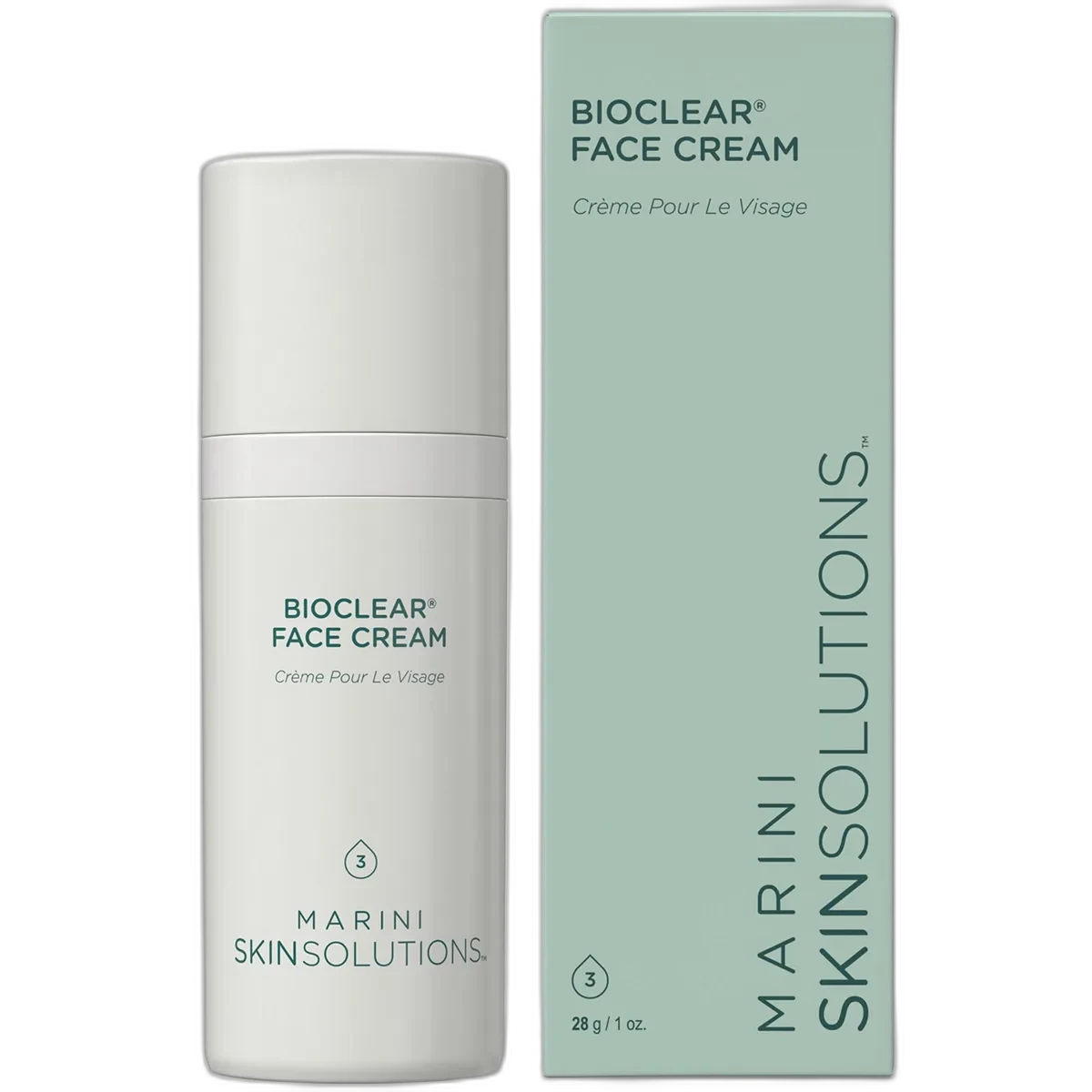
Bioglycolic Bioclear Face Cream
Derm Office Staple
 Verified reviewer
Pros & cons.
- +Rare three-acid combination of glycolic, salicylic, and azelaic in one cream
- +Glycolic is buffered so the actives work without peel-level stinging
- +Genuinely helps fade post-inflammatory hyperpigmentation over 6 to 8 weeks
- +Emollient base keeps drier adult skin from flaking while resurfacing
- +Designed specifically for adult hormonal breakouts, not teen acne
- +Proven two-decade track record in dermatology and medspa offices
- +Unscented and alcohol-free despite the acid load
- −Professional-tier price at $103 for only 1 ounce
- −Preservative system still uses the full paraben family
- −Open jar packaging exposes the acid blend to air and light
- −Contains ammonium lauryl sulfate as an emulsifier, which bothers some sensitive users
- −Not suitable for active rosacea or a compromised barrier
The full review.
About Jan Marini
Texture
This soft, satiny white emulsion is thicker than most treatments.
Packaging
The frosted glass jar looks lovely on a vanity, but a photoreactive acid blend prefers different storage; decanting a week’s worth into a smaller airless container works better.
Best for
This cream targets adults in their late twenties through their fifties who have hormonal breakouts along the jaw and chin, disliked tretinoin, or have skin too dry for a 2 percent BHA liquid twice a day.
Ingredient analysis.
Full INCI list · pH 3.8
Deionized Water, Glycolic Acid and Ammonium Glycolate, Glyceryl Stearate and PEG-100 Stearate, Glycerin, Hexyl Laurate, Caprylic/Capric Triglyceride, Butylene Glycol, Sorbitol, Sorbitan Stearate, Stearic Acid, Cetyl Alcohol, Azelaic Acid, Ammonium Lauryl Sulfate, Sodium Hyaluronate, Yeast Extract, Comfrey, Indian Plantain, Wheat Hydrolysate and Amino Acids, Wood Mallow, Ivy, Pellitory, Cucumber, Elder, Arnica Extracts, Phenoxyethanol (and) Butylparaben (and) Ethylparaben (and) Propylparaben (and) Methylparaben, Disodium EDTA, Xanthan Gum, Magnesium Aluminum Silicate, Tocopheryl Acetate. Active: Salicylic Acid.
Skin match.
The science.
The Science
The formulation logic of Bioclear rests on combining three acids with mechanistically distinct but complementary actions on acne pathogenesis. Glycolic acid, the smallest alpha hydroxy acid, has decades of peer-reviewed data supporting its ability to reduce corneocyte cohesion and accelerate epidermal turnover, with clinical studies in journals such as Dermatologic Surgery showing improvement in comedonal acne and post-inflammatory pigmentation at concentrations above 8 percent. Salicylic acid, lipophilic and comedolytic, has been studied extensively for its ability to penetrate the sebum-rich follicle and is an FDA-monographed active for acne treatment at 0.5 to 2 percent. Azelaic acid contributes a third pathway that the AHA/BHA combination cannot replicate: a 2011 review in the Journal of Drugs in Dermatology summarized its dose-dependent inhibition of tyrosinase and its activity against Cutibacterium acnes, which is why it has become a mainstay for papulopustular rosacea and post-acne pigmentation in dermatologic practice. What is unusual about Bioclear is not any single ingredient but the decision to buffer the glycolic with ammonium glycolate so the delivery system can hold all three acids in a moisturizing emulsion. Buffering raises the apparent pH without disabling activity, allowing leave-on use in a cream vehicle that also carries sodium hyaluronate and emollient esters. That design trade-off, rather than any novel molecule, is what the research-backed case for this product actually rests on.
Dermatologist Perspective
Dermatologists have recommended Jan Marini's Bioclear line for years as a bridge therapy for adult patients who cannot tolerate topical tretinoin or who need a less drying option than benzoyl peroxide for hormonal breakouts along the lower face. Board-certified dermatologists often note that the cream version is the one to reach for when the patient reports both active acne and tightness or flaking on their current regimen, since the glyceryl stearate and sodium hyaluronate base cushions the three-acid stack better than a plain gel would. It is also frequently used in post-acne hyperpigmentation protocols as a nightly complement to daily sunscreen, particularly in skin of color where azelaic acid is valued for its favorable profile around pigmentation changes. Dermatologists generally advise patients to start two to three nights a week, always apply to dry rather than damp skin, and pause use around chemical peels or waxing.
Where it fits in your routine.
Apply at night to clean, fully dry skin. Use two to three nights per week for the first two weeks to test tolerance, then increase to nightly as skin allows. Spread a pea-sized amount in a thin, even layer over the lower face and acne-prone areas, but avoid the eye area and the corners of the nose. Use a plain ceramide moisturizer afterward if needed. Do not layer with retinoids, benzoyl peroxide, or vitamin C on the same night until fully acclimated. Daily broad-spectrum SPF 30 or higher is required. Stop use 48 hours before and after waxing, peels, or laser treatments.
At $103 for 1 ounce, this is unambiguously a professional-tier purchase, and the value calculation depends entirely on whether you can get the same result more cheaply. If you can tolerate a drying 2 percent BHA liquid plus a separate azelaic acid product, you can approximate parts of the effect for a quarter of the price. What you cannot easily replicate is the buffered three-acid delivery in a single emollient cream, and for drier adult skin that genuinely cannot handle layering, that is worth real money. The 1 ounce size lasts about two to three months with full-face nightly use, which puts the running cost in the same neighborhood as a prescription dermatology visit. No larger size is offered, so there is no per-unit break for committed users.
Adults in their late twenties to fifties with hormonal or cystic breakouts on the jaw and chin, plus dry or normal skin that flakes from stronger acne products. It also works for those treating post-acne dark marks who want a non-prescription tretinoin alternative and will pay for a well-buffered professional formula.
Use this if you have active rosacea, eczema, or a compromised barrier. Avoid if pregnant or breastfeeding because the formula contains drug-facts salicylic acid. Oily skin types may prefer the lighter Bioclear Lotion version. Budget-conscious buyers can layer a BHA liquid and an azelaic acid serum to replicate most of the effect for less money.
Product details.
Virtually scentless with a faint, clean lactic note from the acids themselves.
A frosted glass jar with a screw-top lid. It looks good on a vanity, but every use exposes the acid blend to air and hands. This is a drawback for a photoreactive formula like this one.
Expect a mild tingle during the first few nights, mostly near the nose and chin. Some users purge in weeks 2 to 3 as clogged follicles clear. If you feel burning instead of tingling, apply a plain moisturizer first until skin acclimates.
Use nightly on the full face for 2 to 3 months, or longer if you spot-treat the lower face only.
12 months
All Year
The backstory.
Jan Marini built her company in 1994 around glycolic acid research at a time when most prescription acne care was topical antibiotics and tretinoin. Bioclear was developed as an in-office resurfacing step that adult patients could use at home between facials, and the Face Cream version was added for drier skin types who found the original lotion too stripping.
About Jan Marini
Legacy Brand (20+ years)Jan Marini Skin Research started in 1994 in San Jose, California. For three decades, the brand has built a physician-dispensed, clinically-oriented skincare line based on glycolic acid and growth factor research. Dermatology and medspa offices widely stock the brand, and the Bioglycolic and Bioclear lines are long-standing professional staples.
Common myths.
Three acids in one product is too harsh for adult skin.
Ammonium glycolate buffers the glycolic acid. This cream uses an emulsion with glycerin and sodium hyaluronate, so dry, mature, acne-prone skin tolerates it better than a single high-strength glycolic serum.
You need a prescription retinoid to fade post-acne marks.
The glycolic-plus-azelaic combination in this cream has evidence for fading post-inflammatory hyperpigmentation. For patients who cannot tolerate tretinoin, it is a credible non-prescription alternative.
FAQ.
What is the difference between Jan Marini Bioclear Face Cream and Bioclear Lotion?
They share the same glycolic-salicylic-azelaic acid core, but the Face Cream is built on a richer emollient base with glyceryl stearate and hexyl laurate for drier and more mature skin, while the Lotion runs lighter and is better suited for oilier complexions.
Can I use Bioclear Face Cream with a retinoid?
Don't use both on the same night until you know your tolerance. The cream has three resurfacing acids, so most users alternate it with their retinoid instead of layering both. Once skin acclimates, some people use Bioclear two to three nights a week and retinoid on the other nights.
Is Jan Marini Bioclear Face Cream safe during pregnancy?
No. It has salicylic acid at drug-facts level and glycolic acid. Most obstetricians recommend stopping leave-on BHA and strong AHA products during pregnancy and breastfeeding.
Will this cream help fade dark spots from old breakouts?
Yes, this is a strength. The combination of glycolic acid surface renewal and azelaic acid tyrosinase inhibition targets post-inflammatory hyperpigmentation. Users typically see fading around weeks 6 to 8.
Does Bioclear Face Cream cause purging?
It can. Acids accelerate follicular turnover, so pre-existing microcomedones may surface within the first two to three weeks. A true purge resolves by week 4; anything longer is likely a reaction, not purging.
Why does it cost over a hundred dollars for one ounce?
Jan Marini prices match physician-dispensed tiers. No OTC equivalent matches the Bioclear formula, which engineers have reverse-engineered for two decades. You pay for the three-acid delivery system and professional distribution, not rare raw materials.
Can I use Bioclear Face Cream every night?
Most people start two to three nights a week and increase to nightly as tolerated. Sensitive skin often stays at three to four nights a week long-term, which still maintains results.
What the community says.
"Clears stubborn adult hormonal breakouts"
"Fades post-acne marks within 6-8 weeks"
"Smooths bumpy texture on chin and jawline"
"Works without the dryness of a stronger prescription"
"Expensive for only 1 oz"
"Paraben preservative system feels dated"
"Initial tingling for sensitive users"
"The jar packaging exposes actives to air"
Featured in.
People also looked at.