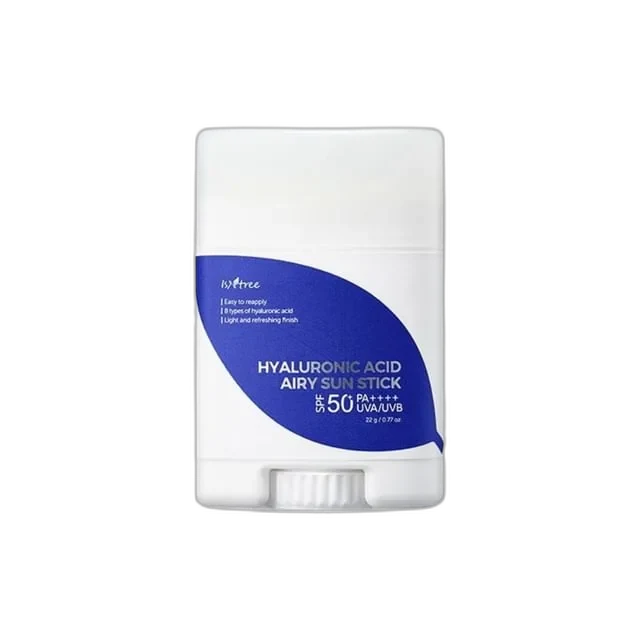
Hyaluronic Acid Airy Sun Stick SPF 50+
K-Beauty Reapplication Hero
 Verified reviewer
Pros & cons.
- +Modern hybrid filter system including Tinosorb S and DHHB for strong UVA coverage
- +Three molecular weights of hyaluronic acid support hydration
- +Centella and madecassoside add meaningful soothing
- +Non-chalky satin finish that works over makeup
- +Convenient pocket-friendly format for reapplication compliance
- +Minimal white cast compared to pure mineral sticks
- +Reasonable price for a modern-filter K-beauty sunscreen
- −Contains fragrance, ruling out strict sensitive-skin use
- −Beeswax base is not fungal-acne safe
- −Easy to underapply and miss labeled SPF coverage
- −Stick can soften in high summer heat
- −Not ideal as a single primary sunscreen for heavy exposure days
The full review.
Modern sunscreen use has a simple truth: application works, but reapplication fails. Most people apply a sufficient amount of sunscreen in the morning and then never touch their face with SPF again until after they shower. Labeled SPF assumes reapplication every two hours during sun exposure; without it, real-world protection drops below the labeled number. The industry uses powders, sprays, mists, and sticks to solve this compliance problem. Sun sticks have become the most popular solution in Korean and Japanese sunscreen markets over the last five years because they fit in a pocket, do not disrupt makeup, and avoid messy reapplication. However, most sun sticks feel bad. They feel dry, chalky, drag across skin, and leave a film like a rubbed candle. Isntree’s Hyaluronic Acid Airy Sun Stick attempts to fix this using modern filters and brand-signature hydration to make the stick pleasant to use.
The filter system makes this product interesting. The formula uses two mineral filters (titanium dioxide, zinc oxide) and four chemical filters: octinoxate, octisalate, Tinosorb S (BEMT), and Uvinul A Plus (DHHB). The last two are the most important. Tinosorb S is a modern photostable broad-spectrum filter that covers UVA and UVB; it is common in European and Asian sunscreens but the US FDA has not approved it. DHHB is a photostable, long-range, pure UVA filter. Together, these two modern filters provide stronger and more stable UVA coverage than almost any US-market sun stick. This matters because UVA causes most photoaging and deep pigmentation. The hybrid chemical plus mineral format delivers SPF 50+ without the heavy mineral load that causes white cast, while the multi-filter approach improves photostability and reduces reliance on any single filter.
The brand-signature hydration layer is the second key feature. Isntree built this sunscreen line around hyaluronic acid. The stick includes three molecular weights of HA — hydrolyzed, standard, and sodium hyaluronate — plus panthenol, centella extract, madecassoside, and allantoin. These are not cosmetically essential in a sun stick, but they change the experience. While most sticks feel dry and tight, this one glides on with a slight cushion and leaves a satin finish instead of a chalky one. During mid-day reapplication, especially over makeup, the stick does not drag or lift product. On bare skin, it integrates like a lightweight balm rather than a separate sunscreen layer. The centella and madecassoside add anti-inflammatory support for skin already exposed to the sun during long days outdoors.
The limitations are clear. The product contains a mild, powdery fragrance, making it unsuitable for anyone with confirmed fragrance sensitivity. Beeswax and fatty esters in the stick base mean it is not fungal-acne safe. Most importantly, application technique dictates efficacy: a single light swipe does not deliver the labeled SPF. You need three to four firm passes over each facial zone to apply enough product; most users underapply. This is a format-wide issue, not specific to Isntree, but if you treat this stick like lip balm, you will get lip-balm-level protection. Used correctly, it delivers SPF 50+.
View this product as a reapplication tool rather than a primary sunscreen. Use a liquid or lotion SPF in the morning where you can see and measure the application. At lunchtime and again in the afternoon, use this stick with a few firm passes across your face and exposed skin. The stick solves the compliance problem for beach days, car commutes with sun through the driver’s window, and outdoor lunches without feeling like smearing wax on your face. Isntree included modern filters and meaningful hydration, so you do not compromise on coverage or comfort. For the price and performance, it is one of the better K-beauty reapplication tools available.
Formula
Ingredient analysis.
Full INCI list · pH 6.5
Water, Titanium Dioxide, Zinc Oxide, Ethylhexyl Methoxycinnamate, Butylene Glycol, Ethylhexyl Salicylate, Bis-Ethylhexyloxyphenol Methoxyphenyl Triazine, Diethylamino Hydroxybenzoyl Hexyl Benzoate, Cetyl Ethylhexanoate, Octocrylene, Polymethyl Methacrylate, Glyceryl Stearate, Sodium Hyaluronate, Hydrolyzed Hyaluronic Acid, Hyaluronic Acid, Panthenol, Allantoin, Centella Asiatica Extract, Madecassoside, Tocopherol, Carnauba Wax, Candelilla Wax, Beeswax, Dimethicone, Polyglyceryl-2 Triisostearate, Disteardimonium Hectorite, Triethoxycaprylylsilane, Ethylhexylglycerin, Fragrance
Skin match.
The science.
The Science
Modern photoprotection research shows hybrid and multi-filter sunscreens outperform single-filter formulations. Tinosorb S (bis-ethylhexyloxyphenol methoxyphenyl triazine) has published evidence for broad-spectrum UVB and UVA coverage with high photostability and low reactivity; this makes it a standard filter in European, Asian, and Australian sunscreens. DHHB (diethylamino hydroxybenzoyl hexyl benzoate, marketed as Uvinul A Plus) also has evidence for long-wave UVA coverage, where older filters like avobenzone degrade faster. Combining these modern filters with small amounts of titanium dioxide and zinc oxide creates more robust protection than any single filter alone. The hyaluronic acid complex has documented humectant effects; using three molecular weights is a standard way to hydrate at different depths. Centella asiatica actives, specifically madecassoside, have published research for anti-inflammatory and wound-healing effects on sun-exposed skin. Photoprotection literature supports the reapplication hypothesis — that sunscreen compliance is the main gap between labeled and real-world SPF — so products that improve compliance through format and experience add practical value.
Dermatologist Perspective
Dermatologists say the best sunscreen is the one you actually use and reapply. Board-certified dermatologists often recommend sun sticks for mid-day reapplication because the format fixes the compliance gap that undermines most sun-protection efforts. Dermatologists familiar with European and Asian sunscreen formulations favor modern photostable filters like Tinosorb S and DHHB, as these filters offer better UVA coverage than the older alternatives dominant in US sunscreens. The most common clinical advice for sun sticks concerns application technique — use three to four firm passes instead of a single swipe — to achieve labeled SPF in real-world use.
Where it fits in your routine.
Apply a conventional liquid or lotion sunscreen first in the morning for adequate coverage. At midday and mid-afternoon, twist up 2-3mm of this stick and apply with 3-4 firm passes over each facial zone. Focus on forehead, nose, cheekbones, and any exposed skin in direct sun. Apply over makeup with gentle pressure to avoid disrupting foundation. Use on ears, neck, chest, and backs of hands — common missed reapplication zones.
At $22 for 22g, value depends on how you use it. As a primary sunscreen, the cost per application exceeds liquid alternatives because sticks dispense less product. As a reapplication tool — the intended use case — the value is high because it removes the friction that causes people to skip reapplication. Compared to Western sun sticks at similar price points, the Isntree product has a more modern filter system and a better hydration layer. If your sunscreen routine fails after 10am because reapplication is annoying, the value justifies this stick.
This works for people who skip liquid sunscreen reapplication, makeup wearers who need to protect skin without disrupting coverage, and anyone wanting modern-filter K-beauty sun protection in a pocket-friendly format. It also suits combination and oily skin types who find stick sunscreens feel too dry.
People with confirmed fragrance sensitivity, those with strict fungal-acne safety requirements, and anyone using this as their only sunscreen without knowing the application technique for the labeled SPF should avoid it. A liquid or lotion sunscreen works better for primary morning application.
Product details.
Solid balmy stick that glides on with slight warmth from skin contact
Soft clean powdery fragrance — present but mild
22g twist-up stick in a cylindrical tube — portable and pocket-friendly
Applies smoothly with a slight cooling feel and leaves a barely-visible satin finish. New stick users may underapply — use multiple passes over the same area until the product is visible.
Use regularly for 2-3 months, or longer if used only for touch-ups on exposed areas.
12 months
All Year
The backstory.
Isntree's Airy Sun Stick was developed as part of the brand's broader Hyaluronic Acid sunscreen line, positioned specifically for the mid-day reapplication problem that has become the biggest pain point in photoprotection. The stick format addresses reapplication compliance — most people skip reapplying because liquid sunscreens are messy over makeup — while the HA-forward formulation solves the dryness issue that typically accompanies stick sunscreens.
About Isntree
Established Brand (5–20 years)Isntree launched in 2016, focusing on hyaluronic-acid-centric K-beauty formulations and chemical exfoliants. The brand is a consistent performer in the Korean sunscreen category with several well-regarded SPF formats.
Common myths.
Sun sticks lack enough coverage to count as real SPF protection.
Sun sticks deliver the full labeled SPF if applied properly. You need 3-4 passes over the same area instead of one swipe. When used correctly, this stick provides the same UV protection as the liquid version of the same formula.
FAQ.
Can I use Isntree Airy Sun Stick as my only sunscreen?
Technically yes, but most dermatologists recommend liquid or lotion sunscreens for morning use. These make it easier to apply the full amount required for the labeled SPF. The stick works best for reapplication over makeup and touch-ups on exposed areas.
How to Use
Twist up 2-3mm of product and glide it across each facial zone 3-4 times. Apply firmly enough to leave a visible film. A single light swipe does not deliver the labeled SPF. Reapply every 2 hours during sun exposure.
Does this sun stick have a white cast?
Minimal uses a hybrid filter system of chemical filters and small amounts of mineral. This produces a satin finish that blurs instead of whitening. On very deep skin tones, the mineral filters cause a slight cast, but this is less noticeable than pure mineral sticks.
Is this fungal-acne safe?
No — the beeswax and fatty esters in the stick base make it unsuitable for strict malassezia-safe routines. If you manage fungal acne, choose a fungal-acne-safe reapplication option instead.
Can I use this sun stick over makeup?
Yes — this is a primary use case. Apply in several gentle passes over foundation or powder, then pat shine with a tissue if needed. The stick format disrupts makeup less than liquid reapplication.
Does this contain modern UV filters?
Yes. The formula includes Tinosorb S (BEMT) and Uvinul A Plus (DHHB) — two modern photostable broad-spectrum filters that are standard in Korean and European sunscreens but not yet approved in the United States. This gives the stick stronger UVA coverage than most US-market sun sticks.
Community
What the community says.
"Convenient for mid-day touch-ups"
"Doesn't feel chalky or dry"
"Gentler on makeup than most sticks"
"HA and centella support are meaningful"
"Contains fragrance"
"Sticks are prone to insufficient application"
"Product can feel warm and soft in summer heat"
"Beeswax makes it not fungal-acne safe"
Featured in.
People also looked at.