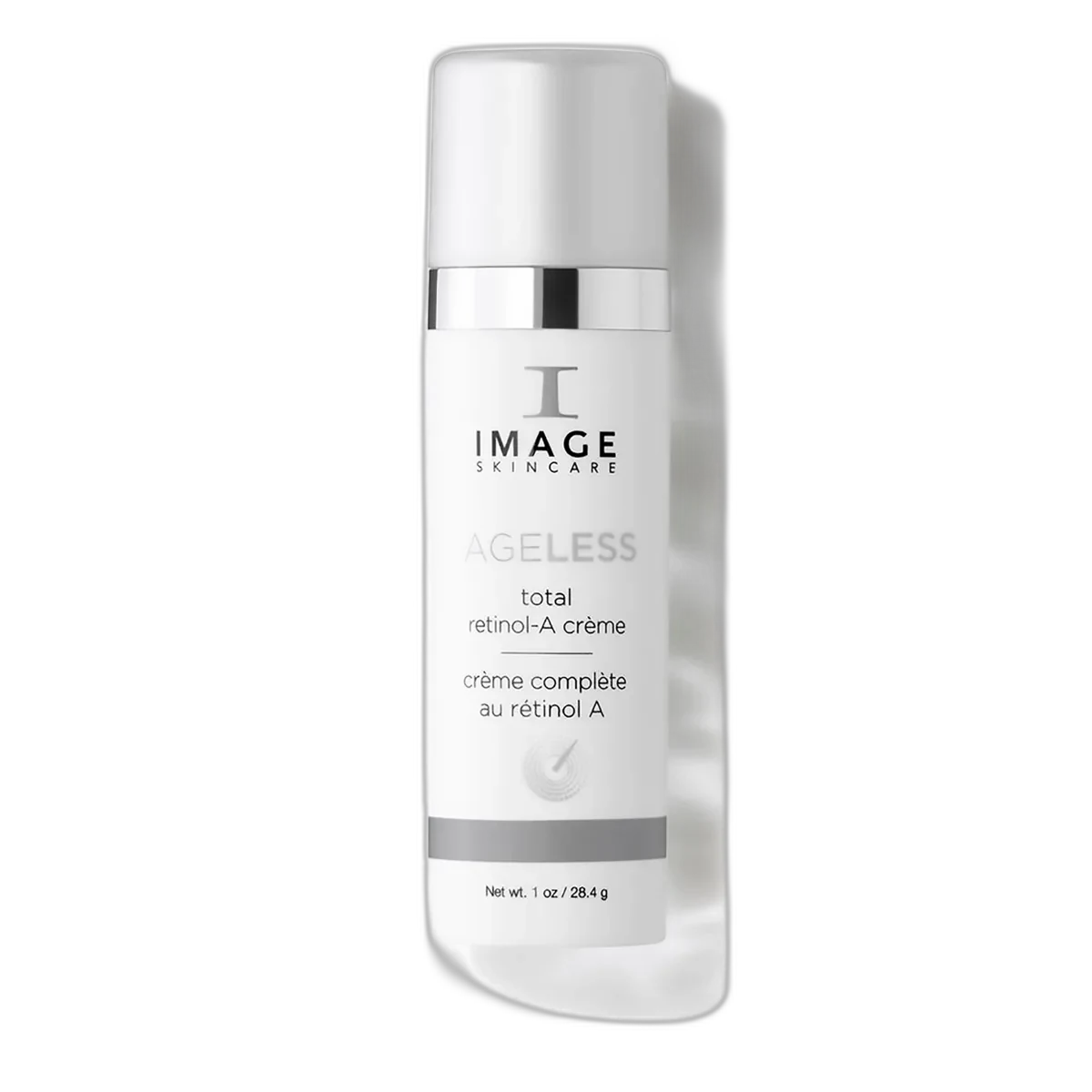
Ageless Total Retinol-A Crème
Professional-Strength Resurfacer
 Verified reviewer
Pros & cons.
- +Potent triple-active formula combining retinol, glycolic acid, and lactic acid for accelerated results
- +Matrixyl 3000 peptide complex adds collagen-stimulating benefits beyond retinol alone
- +Effective for both anti-aging and acne concerns simultaneously
- +Professional-grade formulation backed by a board-certified plastic surgeon's expertise
- +Squalane and shea butter help buffer the aggressive actives with barrier-supporting emollients
- +Visible improvement in texture, tone, and fine lines within 6-8 weeks
- +Silicone-free and paraben-free formulation
- −Contains orange peel oil and mentha leaf oil — unnecessary sensitizers in an already potent formula
- −High irritation potential makes it unsuitable for beginners or sensitive skin types
- −Premium price at $88 for just 1 oz of product
- −Significant purging period of 2-4 weeks can be alarming without professional guidance
- −Heavier cream texture feels dated compared to modern lightweight retinol delivery systems
- −Product appears to be transitioning to reformulated AGELESS+ line — availability may decrease
The full review.
Some skincare products sit between over-the-counter options and dermatologist prescriptions. These formulas use high concentrations to show results in weeks rather than months, but they can leave skin raw and peeling if used incorrectly. Image Skincare’s Ageless Total Retinol-A Crème occupies this space.
Janna Ronert, an aesthetician with rosacea, founded Image Skincare in 2003 because she lacked products combining clinical efficacy with clean formulation principles. She and her husband, board-certified plastic surgeon Dr. Marc Ronert, built a professional skincare line sold through licensed skincare professionals rather than drugstores or department stores. These professionals assess skin and guide usage. The Ageless line is a flagship range, and the Total Retinol-A Crème reflects the brand’s goal: providing professionals tools to transform skin and trusting them to manage the process.
The INCI list reveals the formula’s intent. Glycolic acid is second, retinol is third, and lactic acid follows. These three resurfacing actives sit at the top of the list, indicating high concentrations. The brand calls it a “20% blend of retinol, glycolic acid, and lactic acid,” a potent combination for a leave-on product. Most consumer retinol creams use soothing agents and barrier-repair ingredients to limit irritation. This formula pairs retinol with two exfoliating acids, forcing the skin to handle three simultaneous cell turnover mechanisms.
This aggressive approach is logical. Glycolic acid dissolves the intercellular glue between dead surface skin cells, helping retinol penetrate deeper. Lactic acid provides exfoliation and acts as a humectant to pull moisture into new skin layers. Retinol accelerates cell turnover, stimulates collagen synthesis, and regulates melanin production. Matrixyl 3000 (palmitoyl tripeptide-1 and palmitoyl tetrapeptide-7) adds an anti-aging mechanism by signaling fibroblasts to produce collagen directly.
The cream has a thick, heavy texture compared to the lightweight retinol serums currently on the market. It applies smoothly but feels heavy on the skin. The first application usually causes tingling from mild to uncomfortable, depending on skin tolerance and acid history. This is expected. However, the formula includes orange peel oil and mentha leaf oil—essential oils that add fragrance and potential sensitization to an already intense mix of actives. For a product requiring professional guidance due to irritation potential, adding known sensitizers is an error.
Results are impressive for those who manage the adjustment. The retinol and AHA combination improves skin texture, fine lines, and tone faster than retinol alone. Users who follow a gradual schedule—starting once or twice weekly and building to every other night over several weeks—report smoother, clearer, more luminous skin by the six-to-eight-week mark. The peptide complex adds subtle firming over time. For acne-prone skin, the formula clears pores while stimulating collagen repair, addressing both breakouts and aging.
The purging period can be significant. Expect two to four weeks of increased breakouts as accelerated cell turnover pushes microcomedones to the surface. Without professional guidance to distinguish purging from an adverse reaction, users may stop use right before seeing results. This is why Image Skincare originally sold this through professional channels; an esthetician can confirm “This is normal, keep going, here’s how to manage it.”
Value is complex. At $88 for one ounce, it is not inexpensive, but since you only need a pea-sized amount a few nights per week, the product lasts a long time. The real comparison is not against other one-ounce retinol creams, but against the cost of a multi-active resurfacing treatment or professional peel series in a dermatologist’s office. For experienced users with resilient, non-sensitive skin seeking aggressive results, the active concentrations justify the professional-tier price. For others, the risk-to-benefit ratio is unfavorable.
Image Skincare is transitioning the Ageless line to a new AGELESS+ range with reformulated retinol products, suggesting the brand recognizes the original formula’s limits for a broader market. The Total Retinol-A Crème is still available through various retailers, but its availability may decrease. If you are experienced with retinoids, comfortable managing irritation, and want maximum resurfacing quickly, it delivers. Otherwise, gentler options reach the same goal with less collateral damage.
Formula
PM routine
Ingredient analysis.
Full INCI list
Aqua, Glycolic Acid, Retinol, Palmitoyl Tetrapeptide-7, Palmitoyl Tripeptide-1, Lactic Acid, Glycerin, Neopentyl Glycol Dicaprylate/Dicaprate, Stearic Acid, Sorbitol, Glyceryl Stearate, PEG-100 Stearate, Sodium Hydroxide, Butylene Glycol, Phenoxyethanol, Sorbitan Stearate, Hamamelis Virginiana (Witch Hazel) Leaf Water, Caprylyl Glycol, Hydroxyethyl Ethylcellulose, Magnesium Aluminum Silicate, Xanthan Gum, Ethylhexylglycerin, Hexylene Glycol, Butyrospermum Parkii (Shea) Butter, Cucumis Sativus (Cucumber) Fruit Extract, Prunus Amygdalus Dulcis (Sweet Almond) Oil, Squalane, Tocopheryl Acetate, Bisabolol, Alcohol, Citrus Aurantium Dulcis (Orange) Peel Oil, Dipotassium Glycyrrhizate, Disodium EDTA, Oryza Sativa (Rice) Bran Oil, Persea Gratissima (Avocado) Fruit Extract, Carbomer, Mentha Arvensis Leaf Oil, Polysorbate 20, Sodium Hyaluronate, Avena Sativa (Oat) Kernel Extract, Potassium Sorbate, Zingiber Officinale (Ginger) Extract
Skin match.
The science.
The Science
Combining retinol with alpha hydroxy acids is a documented strategy with clear trade-offs. Retinol (vitamin A) binds to skin retinoid receptors to activate genes for cell differentiation, collagen synthesis, and melanin regulation. Retinol converts to retinoic acid within the skin; decades of research confirm its efficacy for photoaging, acne, and hyperpigmentation.
Glycolic acid is the smallest alpha hydroxy acid and penetrates deepest among AHAs. A study in Dermatologic Surgery (Bernstein et al., 2001) shows that 20-70% glycolic acid peels improve photodamaged skin over 24 weeks. When used with retinol, glycolic acid exfoliates the dead cell layer, which increases retinol bioavailability and penetration depth.
The peptide component — palmitoyl tripeptide-1 and palmitoyl tetrapeptide-7, known as Matrixyl 3000 — adds another mechanism. Research in the International Journal of Cosmetic Science (Robinson et al., 2005) shows this peptide combination stimulates collagen synthesis in vitro and improves wrinkle depth in clinical tests. The combination with retinol is synergistic: retinol accelerates cell turnover while the peptides stimulate structural protein production in the dermis.
Lactic acid provides exfoliation and humectant properties. At low concentrations, lactic acid stimulates ceramide production, which supports the skin barrier challenged by retinol and glycolic acid. However, this triple-acid leave-on product raises irritation concerns, especially alongside the formula's essential oils.
References
- Increased skin surface lipids and stratum corneum ceramides in AHA-treated skin — Journal of the Society of Cosmetic Chemists (1997)
Dermatologist Perspective
Dermatologists recognize that retinol combined with AHAs treats photoaging effectively, but most recommend using these actives separately. Board-certified dermatologists say this multi-acid retinol formula suits patients with demonstrated tolerance to retinoids who want aggressive results without prescription-strength tretinoin. The professional skincare channel positioning works; dermatologists and estheticians can monitor for irritation, adjust frequency, and ensure patients use sun protection. Most dermatologists consider the essential oils unnecessary, as fragrant plant oils act as potential sensitizers without adding therapeutic benefit to an active formula.
Guidance
Where it fits in your routine.
Apply a pea-sized amount to clean, dry skin at night. Applying to damp skin increases penetration and irritation risk. Use it once or twice per week for the first two weeks, then move to every other night as tolerated. Do not use with other exfoliating products, benzoyl peroxide, or vitamin C in the same routine. Follow with a gentle, ceramide-rich moisturizer. Mandatory: apply broad-spectrum SPF 30+ every morning. If irritation is excessive, reduce frequency or buffer by applying moisturizer first, then this product over it.
At $88 for 1 oz, this is a premium over-the-counter retinol treatment. Value depends on your view: the price matches professional skincare for a multi-active formula with retinol, dual AHAs, and a clinically studied peptide complex developed under medical direction. But the 1 oz size is small. While the concentrated formula requires less product per use, the total cost is high compared to newer direct-to-consumer retinol products that offer larger sizes for similar or lower prices. Image Skincare's 20+ years in the professional channel and Dr. Ronert's surgical background provide credibility, but the brand competes in a sophisticated retinol market where potency alone does not command a premium.
Experienced retinol users with resilient, non-sensitive skin want aggressive multi-active resurfacing for photoaging, stubborn texture, or combined acne and aging. This works best for those with esthetician guidance or those comfortable managing retinoid adjustment periods alone.
This is not a starter product for anyone new to retinol or active acids. Avoid this formula if you have sensitive, dry, or reactive skin, rosacea, eczema, or a compromised skin barrier. Skip this if you are sensitive to essential oils or fragrance; the orange peel and mentha oils increase irritation risk.
Product details.
This thick cream spreads easily but feels heavier than modern lightweight retinol serums. Essential oils give it a noticeable herbal-citrus scent.
Orange peel oil and mentha leaf oil create a noticeable herbal-citrus scent — it is not fragrance-free.
Standard 1 oz jar or tube uses Image Skincare's signature clinical branding. The packaging lacks airless pump protection, which affects retinol stability over time.
The glycolic and lactic acid causes tingling or mild warmth on first application. Use it 1-2 times per week, then increase to every other night. Some users experience a 2-3 week purging phase with more breakouts before skin improves. If burning occurs instead of mild tingling, reduce frequency or buffer with moisturizer first.
2-3 months with every-other-night use (pea-sized amount)
12 months
fall winter
The backstory.
Image Skincare's Ageless line was one of the brand's original product ranges, developed under the guidance of Dr. Marc Ronert, a board-certified plastic surgeon. The Total Retinol-A Crème was formulated for the professional skincare channel — meant to be recommended by estheticians and dermatologists who could guide patients through the adjustment period that such potent actives require. It represents the more aggressive end of over-the-counter retinol treatments.
About Image Skincare
Established Brand (5–20 years)Image Skincare was founded in 2003 by aesthetician Janna Ronert and her husband, board-certified plastic surgeon Dr. Marc Ronert. The brand has become the #1 professional skincare brand in the global spa and salon category, with formulations guided by a medical director and sold primarily through licensed professionals.
Common myths.
You need to use retinol every night to see results.
This formula combines retinol and dual AHAs. Use it every other night or 2-3 times weekly for results. The glycolic and lactic acids increase retinol penetration so much that nightly use causes excessive irritation for most skin types.
Professional-grade skincare outperforms consumer products.
Professional-grade products have higher active ingredient concentrations. This yields faster results but increases irritation risk. For sensitive or reactive skin, consistent use of a lower-concentration consumer retinol outperforms a professional-grade product that causes too much irritation for regular use.
FAQ.
How often should I use Image Skincare Ageless Total Retinol-A Crème?
Apply 1-2 times per week on clean, dry skin at night. This formula combines retinol with glycolic and lactic acid, making it more potent than single-active retinol products. Increase to every other night as your skin tolerates it. Use daily only if your skin is resilient and already adapted to the formula.
Can beginners use this retinol cream?
This is not ideal for retinol beginners. Combining retinol with two AHAs makes this a professional-strength treatment for experienced retinol users or those under esthetician guidance. First-time retinol users should start with a lower-concentration, single-active retinol product before moving to this potency.
Does this product cause purging?
Purging is common during the first 2-4 weeks because retinol and AHAs accelerate cell turnover. This pushes existing microcomedones to the surface faster, temporarily increasing visible breakouts. Purging differs from a reaction: it occurs in your usual breakout areas and resolves within 4-6 weeks. A true reaction appears in new areas and worsens over time.
Can I use this with vitamin C serum?
Do not use these in the same routine. The retinol, glycolic acid, and lactic acid in this cream already exfoliate and disrupt pH. Adding vitamin C serum to the same routine overwhelms the skin. Use vitamin C in the morning and this cream at night to get complementary benefits without overloading.
Is Image Skincare Ageless Total Retinol-A Crème being discontinued?
Image Skincare is transitioning the Ageless line to the new AGELESS+ range. This range includes reformulated retinol products with updated concentrations (0.3% and 1.2% retinol options). The original Total Retinol-A Crème may become harder to find as inventory depletes, but various retailers still sell it during the transition.
Why does this cream tingle when I apply it?
The glycolic and lactic acid in the formula cause the tingling sensation. These chemical exfoliants lower the skin's surface pH. Mild tingling that fades within a few minutes is normal. If burning, redness, or stinging persists, use it less often or apply it over a thin layer of moisturizer as a buffer.
Do I need sunscreen when using this product?
This is non-negotiable. Retinol and AHAs increase photosensitivity by thinning the outermost layer of dead skin cells that provides natural UV protection. Use a broad-spectrum SPF 30 or higher every morning, even on cloudy days, when using this product in your nighttime routine.
Community
What the community says.
"Visibly improves skin texture and reduces fine lines within weeks"
"Effective at clearing acne and reducing breakouts"
"Noticeable brightening effect on dull, sun-damaged skin"
"Professional-grade strength you can feel working"
"Significant irritation potential — burning and peeling reported by some users"
"Contains essential oils that add unnecessary sensitization risk"
"Expensive at $88 for just 1 oz of product"
"Not suitable for beginners or those new to retinol"
People also looked at.