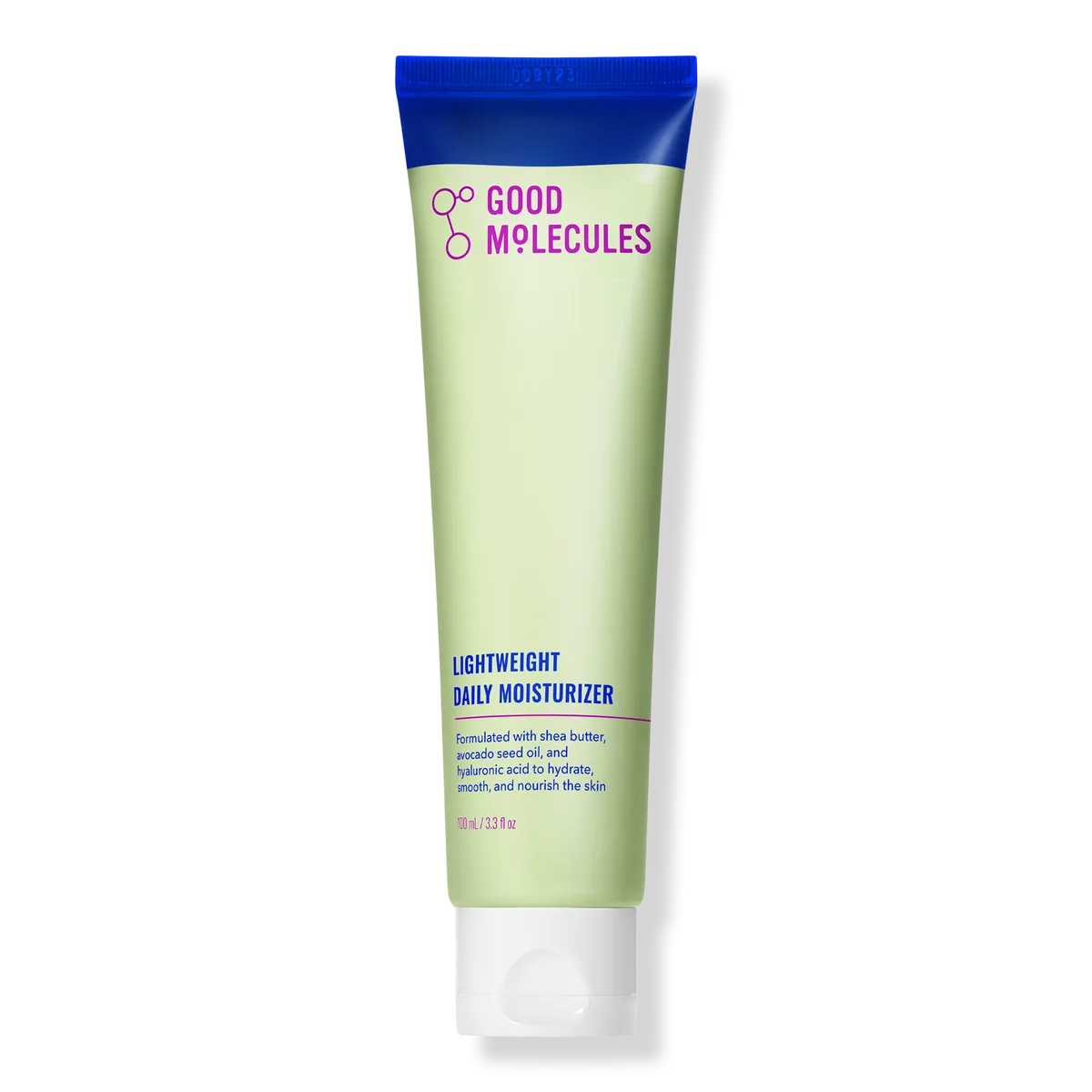
Silicone-Free Priming Moisturizer
Silicone-Free Primer Pick
 Verified reviewer
Pros & cons.
- +Plant-derived silicone alternative provides legitimate priming and smoothing effects
- +Dual-purpose formula replaces both morning moisturizer and primer at $12
- +Fragrance-free, silicone-free, and gentle enough for sensitive skin
- +Shea butter and macadamia oil provide nourishing emollient moisture
- +Velvety semi-matte finish creates an excellent canvas for makeup application
- +Green tea and vitamin E provide antioxidant protection for daytime wear
- −May feel too rich for very oily skin due to shea butter and macadamia oil
- −Priming effect is subtler than traditional silicone-based primers
- −No treatment-grade active ingredients — purely functional moisturizer and primer
- −Some silicone-based foundations may pill over the silicone-free base
- −Provides minimal oil control compared to mattifying silicone primers
The full review.
Silicones are one of skincare’s most polarizing ingredients. Dermatologists will tell you they’re perfectly safe for most people. And they’re right. But there’s a vocal segment of skincare enthusiasts who’ve noticed that their skin behaves better without silicone-heavy products — fewer clogged pores, less buildup, a more natural feel. Whether that’s attributable to the silicones themselves or to the heavy products they tend to appear in is debatable, but the preference is real and the demand for silicone-free alternatives has been growing steadily.
Good Molecules’ Silicone-Free Priming Moisturizer was one of the brand’s launch products, designed to fill a specific niche: people who want the smoothing, blurring, makeup-gripping benefits of a silicone-based primer but in a formula that doesn’t contain any silicones. The key ingredient making this possible is neopentyl glycol diheptanoate, a plant-derived ester that mimics several of silicone’s most desirable sensory properties — the slip, the smoothing, the slight blurring of texture — without being a silicone.
The difference is real but subtle. Traditional silicone primers have a distinctive ‘filling’ quality — they seem to physically settle into pores and fine lines, creating a literally smoother surface. Neopentyl glycol diheptanoate provides smoothing and slip, but it’s more of a surface-leveling effect than a pore-filling one. If you’ve been using a dimethicone-heavy primer and switch to this, you’ll notice the finish is slightly different — more velvety, less rubbery. Whether that’s better or worse is entirely personal preference.
Beyond the priming function, this is a genuinely decent moisturizer. Shea butter provides rich emollient moisture and barrier support. Macadamia seed oil adds lightweight, skin-compatible lubrication (palmitoleic acid in macadamia oil closely resembles the fatty acids in human sebum). Propanediol acts as a humectant solvent. Sodium hyaluronate provides water-binding hydration. And the olive-derived emulsifier system (cetearyl olivate and sorbitan olivate) creates a skin-friendly base. Green tea extract and vitamin E acetate add antioxidant protection — appropriate for a product designed for morning use when the skin faces environmental exposure.
Texture
The texture is where this product shines. It applies like a lightweight cream but transforms on the skin into something smoother and more velvety — the transition from moisturizer to primer happening as you blend it in. There’s a satisfying slip during application that makes you want to smooth it across your entire face, and it sets into a semi-matte finish that genuinely feels like a good canvas for makeup. Foundation glides on more evenly, sits more naturally, and tends to last a bit longer through the day.
Best for
For dry and normal skin types, this comfortably replaces both your morning moisturizer and your primer — two products in one step for twelve dollars. That’s genuinely useful simplification. For combination skin, it works well on most of the face, though the shea butter content means the T-zone might get a bit shiny by afternoon. For oily skin, honestly, this might be too rich. The shea butter and macadamia oil, while lightweight for their categories, still provide more emollient coverage than oily skin typically needs in a morning product.
Works for
The formula is fragrance-free, silicone-free, paraben-free, and vegan — checking all the major avoidance boxes. It’s gentle enough for sensitive skin, though the absence of specific soothing actives means it’s not actively calming. It’s a neutral, well-behaved moisturizer that doesn’t irritate but also doesn’t soothe — it just moisturizes and primes.
The honest assessment
The honest assessment is that this product excels at its dual purpose but doesn’t offer much beyond it. There are no standout active ingredients, no brightening agents, no anti-aging compounds worth noting. It hydrates and primes — that’s the entire job description, and it does both competently. If you want your morning moisturizer to also treat specific skin concerns, you’ll need to layer actives underneath this.
Value
At twelve dollars for 50 mL, with an upgraded 100 mL option becoming available, the value is strong for a functional primer-moisturizer hybrid. You’re saving both money and time by combining two routine steps, and the silicone-free formulation genuinely delivers on its promise rather than just being a marketing label.
Ingredient analysis.
Full INCI list
Water, Propanediol, Neopentyl Glycol Diheptanoate, Butyrospermum Parkii (Shea) Butter, Cetearyl Alcohol, 1,2-Hexanediol, Cetearyl Olivate, Macadamia Ternifolia Seed Oil, Glyceryl Stearate, Sorbitan Olivate, Cetyl Ethylhexanoate, Carbomer, Tromethamine, Butylene Glycol, Tocopheryl Acetate, Sodium Hyaluronate, Ethylhexylglycerin, Trisodium Ethylenediamine Disuccinate, Camellia Sinensis Leaf, Citric Acid
Skin match.
The science.
The Science
Neopentyl glycol diheptanoate is a plant-derived ester that works as an emollient and skin-conditioning agent. It has sensory properties similar to low-viscosity silicones. While dermatological literature lacks the extensive studies seen with dimethicone, cosmetic chemistry research shows it provides comparable slip, smoothing, and a non-greasy feel without a silicone molecular structure. Formulators increasingly use it as a functional alternative in 'silicone-free' products.
Shea butter (Butyrospermum parkii) is a well-studied emollient high in stearic and oleic fatty acids. Research in the American Journal of Life Sciences (2010) shows shea butter has anti-inflammatory properties and improves skin barrier function via its triterpene acetate content. In a priming moisturizer, these occlusive and emollient properties fill micro-irregularities in skin texture to create a smooth surface.
Sodium hyaluronate is a well-established humectant. It draws water into the stratum corneum to temporarily plump fine lines and smooth the skin surface. This creates a 'priming' effect by physically reducing the depth of surface texture irregularities that cause uneven makeup application.
The olive-derived emulsifier system (cetearyl olivate and sorbitan olivate) uses biomimetic properties. These emulsifiers form liquid crystal structures that resemble the lipid organization of the skin's barrier. This can improve skin tolerance and moisturization compared to synthetic emulsifier systems.
Dermatologist Perspective
Dermatologists note that silicones like dimethicone are safe and non-comedogenic for most skin types; avoiding them is usually personal preference, not medical necessity. However, board-certified dermatologists acknowledge some patients report clearer skin when they eliminate silicone-heavy products, and they support effective silicone-free alternatives for those users. For patients wanting a combined moisturizer and primer, dermatologists recommend products like this that provide hydration without relying on silicone's occlusive properties, especially for those with a history of silicone-related breakouts.
Where it fits in your routine.
Apply a dime-sized amount to clean, moisturized skin as your last morning step (after separate SPF or as a base under SPF-containing makeup). Smooth it evenly over the face, especially where makeup creases or settles into pores. Wait 1-2 minutes for absorption before applying foundation or concealer.
At $12 for 50 mL, this two-in-one product offers solid value by replacing a separate primer. Consolidating your morning moisturizer and makeup primer into this single product saves money and time. The formula lacks premium actives to justify a higher price, but the silicone-free priming technology and clean ingredient list provide honest value at this price point.
People who avoid silicones but want a moisturizer with priming benefits. Normal to dry skin types wanting to simplify their morning routine into one product. Makeup wearers wanting a smooth, even canvas without the heavy feel of traditional silicone primers.
Very oily skin types needing lightweight, oil-free hydration. Users wanting the strong, pore-filling priming effect of high-viscosity silicones. People who do not wear makeup and do not need priming benefits — a regular moisturizer works better.
Product details.
Lightweight cream with a smooth, slightly slippery feel like a traditional primer. It absorbs to a velvety, semi-matte finish.
Unscented — no detectable fragrance.
Squeeze tube with a pump dispenser. This design is hygienic and controls dispensing easily.
First application feels smooth and priming — the neopentyl glycol diheptanoate provides a silicone-like slip without the heavy, coating feeling. Skin immediately looks smoother and more even, creating a good canvas for foundation. No adjustment period needed.
2-3 months with daily morning application
12 months
All Year
The backstory.
This was one of Good Molecules' original products at launch, designed to address a specific gap: people who wanted the priming benefits of silicone but avoided the ingredient due to concerns about pore clogging, buildup, or personal preference. It's been reformulated and upgraded since its initial release, most recently with added hyaluronic acid and improved hydration.
About Good Molecules
Emerging Brand (2–5 years)Good Molecules launched in 2019 as the in-house skincare brand for Beautylish, the cosmetics e-commerce platform Nils Johnson founded. The brand offers affordable, ingredient-focused skincare and shows full concentration transparency.
Common myths.
Silicone-free moisturizers can't work as effective primers.
Plant-derived esters like neopentyl glycol diheptanoate mimic silicone's slip, smoothing, and pore-blurring properties without using the molecule. The finish differs slightly from silicone because it fills pores less, but it works as a functional priming canvas for most foundation types.
Silicones in skincare clog pores and cause breakouts.
Most cosmetic silicones like dimethicone are non-comedogenic and well-tolerated. Some people experience buildup or breakouts from silicone-heavy products, so silicone-free alternatives work for those who notice this pattern on their skin.
FAQ.
Can I use this as my only morning moisturizer?
Normal and combination skin get hydration and priming in one step. Dry skin needs a hydrating serum underneath. The texture feels thick on very oily skin; a lighter gel moisturizer works better.
Does this moisturizer work under all types of foundation?
It works best under water-based and silicone-free foundations. Silicone-based foundations may pill because of the silicone-free base. If you use a silicone-based foundation, let the moisturizer absorb for 2-3 minutes before applying.
Is Good Molecules Silicone-Free Priming Moisturizer good for oily skin?
It works for oily skin, but shea butter and macadamia oil feel heavy for very oily types. Use it sparingly or only on drier areas if you have oily skin. The brand's BHA Clarifying Gel Cream is a better morning option for oily skin.
Why would I choose a silicone-free primer over a traditional one?
Silicone-heavy products cause buildup, clogged pores, or a matte 'mask-like' feeling for some people. If you notice this, a silicone-free alternative provides similar smoothing benefits without those issues. Silicones are safe for most skin types; the choice is a preference.
Community
What the community says.
"Excellent silicone-free primer alternative"
"Makeup applies smoothly and lasts well on top"
"Lightweight and non-greasy despite shea butter content"
"Fragrance-free and gentle on sensitive skin"
"Good value as a 2-in-1 moisturizer and primer"
"May not control oil as well as silicone-based primers"
"Can feel slightly heavy for very oily skin"
"Priming effect is subtler than traditional silicone primers"
"Some foundations may not layer as smoothly without silicone"