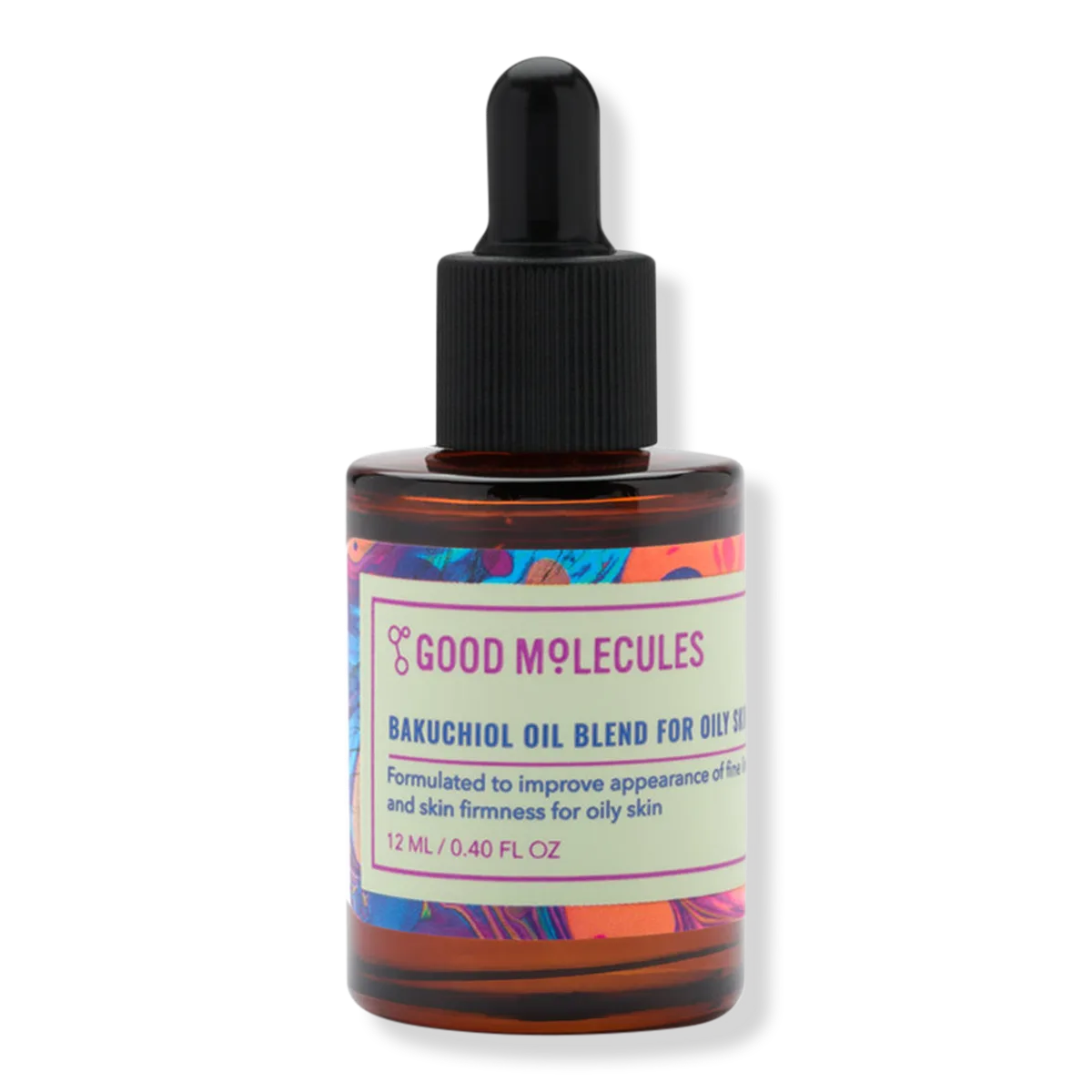
Bakuchiol Oil for Oily Skin
Budget Retinol Alternative
 Verified reviewer
Pros & cons.
- +Only 3 ingredients — zero fillers, fragrance, or unnecessary additives
- +Linoleic acid-rich rosehip oil actually helps rebalance oily skin sebum composition
- +Remarkably lightweight and fast-absorbing for a face oil — no greasy residue
- +Pregnancy-safe retinol alternative with no photosensitivity risk
- +Exceptional value at $10 — lowest price point for a bakuchiol product on the market
- +Fragrance-free with essentially zero irritation risk
- −12ml bottle is small and runs out in 2-3 months of nightly use
- −Bakuchiol at 1% delivers modest anti-aging results compared to retinoids
- −Not suitable for very dry skin types who need richer, more emollient oils
- −Glass dropper bottle requires careful handling
- −No larger value size option available
The full review.
Telling someone with oily skin to put oil on their face feels like telling someone with insomnia to drink coffee. But the science behind facial oils for oily skin is more nuanced than the instinct suggests, and Good Molecules has built a product that demonstrates why.
The key is linoleic acid. People with oily and acne-prone skin tend to produce sebum with a higher ratio of oleic acid to linoleic acid compared to those with balanced skin. This skewed ratio makes their sebum thicker and stickier, contributing to clogged pores and breakouts. Rosehip seed oil — which makes up 85% of this formula — is one of the richest plant sources of linoleic acid. Applying it topically can help rebalance the fatty acid composition of your natural sebum, making it flow more easily and reducing the likelihood of pore congestion. It sounds counterintuitive, but it’s supported by dermatological research.
The formula itself is almost aggressively minimalist. Three ingredients. That’s it. Rosehip seed oil, baobab seed oil, and bakuchiol. There are no emulsifiers, no preservatives, no fragrance, no silicones, no water — nothing that requires additional ingredients to stabilize. The anhydrous (water-free) format means the oils don’t need preservatives to prevent microbial growth, and the short INCI list means there are virtually no potential irritants or allergens to worry about.
Bakuchiol is the headline active, and Good Molecules claims a 1% concentration. This plant-derived compound made headlines after a 2019 British Journal of Dermatology study showed comparable anti-aging results to retinol over 12 weeks, without the irritation, peeling, or photosensitivity. It’s become the go-to recommendation for people who can’t tolerate retinoids — pregnant women, those with eczema or rosacea, and anyone whose skin rebels against even the lowest retinol concentrations.
At 1%, the bakuchiol concentration is at the threshold used in most clinical studies. It’s not a powerhouse dose, and the anti-aging effects will be subtle and gradual. If you’re expecting the kind of dramatic wrinkle reduction that tretinoin delivers, this isn’t it. But that’s not really the point. This product occupies the space between doing nothing and using retinoids — it provides gentle cell-turnover stimulation and collagen support without any of the retinoid baggage. For its target audience, that’s exactly the right position.
The rosehip oil brings its own retinoid credentials. It naturally contains small amounts of trans-retinoic acid (the active form of tretinoin) and beta-carotene, providing a trace retinoid effect that complements the bakuchiol’s mechanism. It’s not enough to cause retinoid-like side effects, but it adds a supporting layer of skin renewal activity.
Baobab seed oil, at 14.7%, is chosen for its texture properties. It’s one of the lightest plant oils available, with a dry touch that absorbs without leaving a greasy film. For a product targeting oily skin, the carrier oil weight matters enormously — a heavier oil like avocado or marula would defeat the purpose. Baobab also brings vitamins A, D, E, and F, plus a balanced fatty acid profile that contributes emollience without occlusivity.
On the skin, this oil does something genuinely surprising for skeptics: it absorbs fast. Within a minute or two of patting in 3-4 drops, the surface feels satiny rather than slick. There’s no heavy residue, no pillow staining, no mid-night greasy-face wake-up. The faint botanical scent of rosehip oil is present but fleeting. Skin looks balanced and gently luminous in the morning — not oily, not matte, just healthy.
Good Molecules was founded in 2019 as the in-house brand of Beautylish, the beauty retailer, and the brand’s approach mirrors its parent company’s editorial sensibility: give people effective, clearly labeled products without the marketing theatrics. At $10 for 12ml, this bakuchiol oil is priced to be an impulse add-on rather than a considered investment. It’s a low-risk entry point for oily-skinned people who are curious about face oils but understandably wary.
The small 12ml bottle is the one legitimate concern. At 3-5 drops per night, you’ll go through this in two to three months, which means the cost per use is reasonable but the volume feels modest. A larger size option would serve loyal users well.
What this product does, it does cleanly and unpretentiously. It’s not going to reverse deep wrinkles or replace your retinoid. But it will make your oily skin feel balanced, deliver a gentle retinol alternative through an evidence-backed plant compound, and do it all for the price of a mediocre lunch. That’s a hard value proposition to argue with.
Formula
About Good Molecules
Good Molecules was founded in 2019.
Texture
On the skin, this oil does something genuinely surprising for skeptics: it absorbs fast. Within a minute or two of patting in 3-4 drops, the surface feels satiny rather than slick. There’s no heavy residue, no pillow staining, no mid-night greasy-face wake-up.
Scent
The faint botanical scent of rosehip oil is present but fleeting.
Best for
It will make your oily skin feel balanced, deliver a gentle retinol alternative through an evidence-backed plant compound, and do it all for the price of a mediocre lunch.
Works for
For its target audience, that’s exactly the right position.
Not ideal for
If you’re expecting the kind of dramatic wrinkle reduction that tretinoin delivers, this isn’t it.
Common Praise
Skin looks balanced and gently luminous in the morning — not oily, not matte, just healthy.
Common Complaints
The small 12ml bottle is the one legitimate concern. At 3-5 drops per night, you’ll go through this in two to three months, which means the cost per use is reasonable but the volume feels modest. A larger size option would serve loyal users well.
Ingredient analysis.
Full INCI list
Rosa Rubiginosa (Rosehip) Seed Oil, Adansonia Digitata (Baobab) Seed Oil, Bakuchiol
Skin match.
The science.
The Science
Bakuchiol gained scientific attention after a 2019 Dhaliwal et al. study in the British Journal of Dermatology compared its efficacy to retinol over 12 weeks. This randomized, double-blind study shows that bakuchiol (0.5%, twice daily) and retinol (0.5%, once daily) both produce statistically significant improvements in wrinkles and hyperpigmentation, with no significant difference between groups. The retinol group experienced more scaling and stinging, but the bakuchiol group reported no side effects.
Rosehip seed oil benefits oily skin through its fatty acid composition—about 44% linoleic acid and 33% alpha-linolenic acid. Research in the Journal of the American Academy of Dermatology shows acne-prone skin produces sebum with lower linoleic acid levels; topical linoleic acid-rich oils can normalize sebum composition and reduce comedone formation. A 2010 study in Experimental Dermatology shows linoleic acid deficiency in the sebaceous gland contributes to comedone formation, justifying topical linoleic acid supplementation.
Food and cosmetic science literature characterizes Baobab (Adansonia digitata) seed oil as having a balanced fatty acid profile (palmitic ~25%, oleic ~35%, linoleic ~30%) and vitamin E for antioxidant stability. Its oleic acid content is lower than olive or argan oil, making it a lighter choice for oily skin.
References
- Prospective, randomized, double-blind assessment of topical bakuchiol and retinol for facial photoageing — British Journal of Dermatology (2019)
- Linoleic acid and the pathogenesis of acne — Experimental Dermatology (2010)
Dermatologist Perspective
Board-certified dermatologists often recommend bakuchiol to patients who cannot tolerate retinoids, especially pregnant patients and those with highly reactive skin. Dermatologists note that bakuchiol shows promise, though its evidence base is smaller than retinol's decades of research. The rosehip oil carrier is a dermatologically sound choice for oily skin because of its linoleic acid profile. Dermatologists typically advise that bakuchiol products work alongside most other actives without the layering restrictions required by retinoids—you do not need to avoid vitamin C, AHAs, or niacinamide.
Where it fits in your routine.
Apply 3-5 drops to clean skin after your evening routine. Warm the oil in your palms and press it into your face and neck. Use it on bare skin or layer it over serums and moisturizer; the lightweight formula absorbs well either way. If you have oily skin and worry about face oils, start with 2 drops mixed into your nighttime moisturizer. Use nightly. You do not need to avoid sunlight the next morning because bakuchiol does not cause photosensitivity.
At $10 for 12ml, this is among the most affordable bakuchiol products. The cost per application (roughly $0.10-0.15 per night) is low, making it a near-zero-risk way to try bakuchiol and face oils for oily skin types. Good Molecules uses direct-to-consumer and mass retail distribution (Ulta, Target) to keep prices low. If the product works for you, the main limitation is the lack of a larger size — a 30ml bottle would offer better long-term value.
Oily and combination skin types seeking a gentle retinol alternative work well here, especially those who are pregnant, breastfeeding, or retinoid-intolerant. It suits oily skin face oil skeptics who want oil-based skincare without a heavy, greasy feel. This option fits budget-conscious shoppers who want to try bakuchiol without a large investment.
Dry skin types needing more emollience should use the dry skin version of this product. Bakuchiol works more slowly and subtly than retinoids, so expect less intense anti-aging results. If you tolerate retinoids well, a dedicated retinol product delivers stronger results.
Product details.
Natural rosehip oil scent — faint, earthy, and botanical. No added fragrance. ***
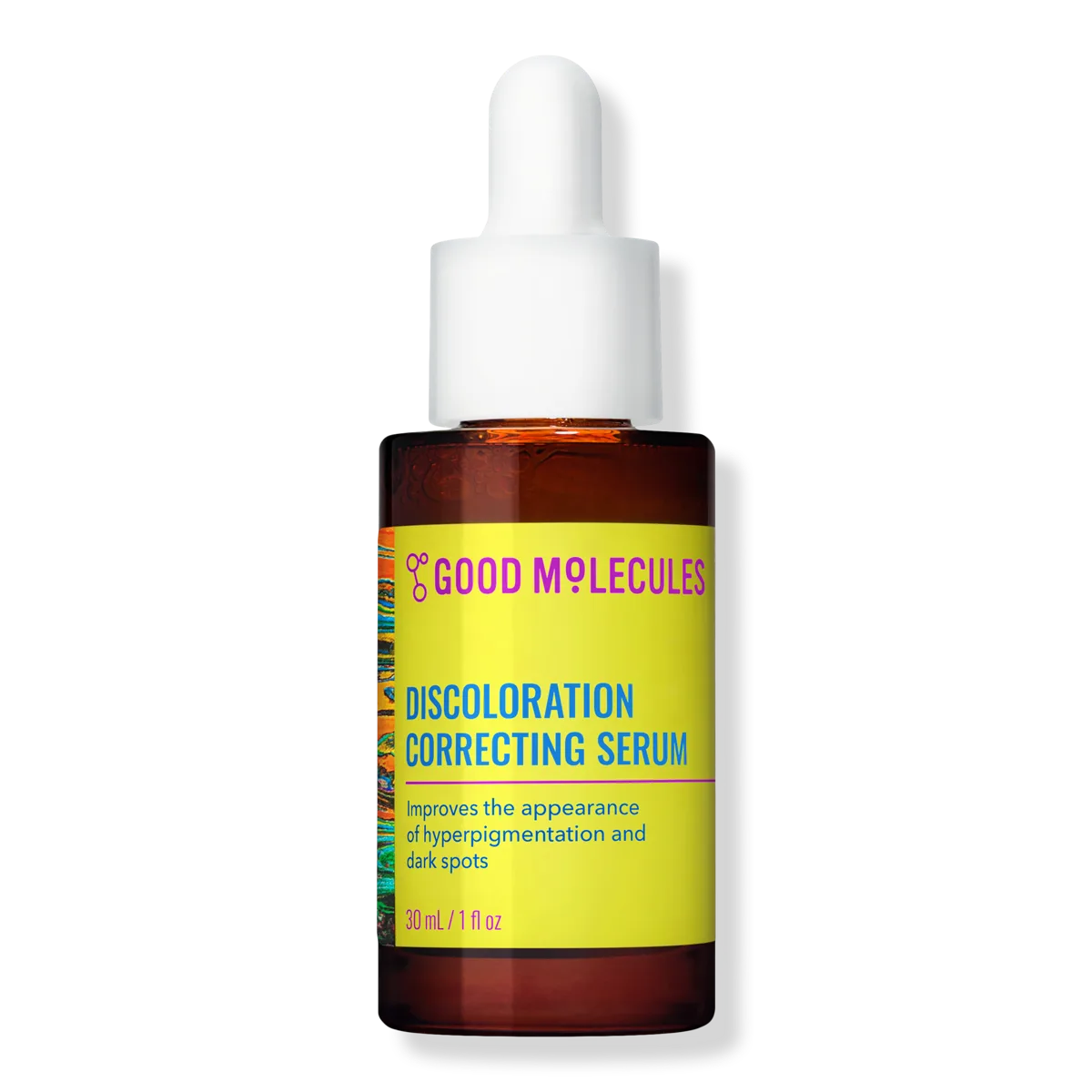
Small glass dropper bottle uses Good Molecules' clean, minimalist design. The dropper dispenses precisely. The compact 12ml size works for travel.
The oil drops out of the dropper with a thin, lightweight consistency that immediately signals this isn't a heavy facial oil. It absorbs remarkably quickly for an oil product — within a minute or two, the surface feels smooth and satiny rather than slick. There's a faint natural scent from the rosehip oil, earthy and botanical, that fades quickly. No irritation, tingling, or warmth on first use. ***
2-3 months with nightly use of 3-5 drops ***
12 months ***
All Year ***
The backstory.
Good Molecules built its brand on the premise that effective skincare shouldn't require a luxury budget. This bakuchiol oil exemplifies that philosophy — taking a trending ingredient (bakuchiol as retinol alternative) and delivering it in the simplest possible format at a price point that makes it accessible to anyone. The decision to create separate formulations for oily and dry skin, each with different carrier oil profiles, shows a level of formulation thoughtfulness that the $10 price tag doesn't immediately suggest.
About Good Molecules
Emerging Brand (2–5 years)Beautylish, the online beauty retailer, founded Good Molecules in 2019. The brand makes affordable, streamlined formulations with transparent ingredient lists. Good Molecules expanded to Target and Ulta Beauty in 2021, gaining a loyal following through accessible pricing and no-fuss product design.
Common myths.
Oily skin types avoid facial oils because they increase breakouts.
Rosehip oil contains high levels of linoleic acid. Research shows linoleic acid regulates sebum production in oily skin. Many people with oily skin lack linoleic acid. Topical application rebalances the oleic to linoleic acid ratio in sebum and reduces congestion.
Bakuchiol is just as effective as retinol.
Bakuchiol shows promise for anti-aging, but has less research than retinol's decades of data. One 2019 study showed results comparable to retinol over 12 weeks, but it was a single study. Bakuchiol is a gentler alternative, not an exact equivalent — it works best for those who cannot tolerate retinoids rather than as a replacement for everyone.
FAQ.
Is bakuchiol as effective as retinol for anti-aging?
Bakuchiol shows anti-aging results, but its evidence base is smaller than retinol. A 2019 study in the British Journal of Dermatology found comparable improvements in wrinkles and pigmentation over 12 weeks. This product uses a rosehip oil base to deliver bakuchiol; rosehip oil contains natural trans-retinoic acid, which adds retinoid-like activity. Use this as a gentler alternative for those who cannot tolerate retinoids, not a direct replacement.
Can I use this oil if I have acne-prone skin?
Yes — this formula targets oily and acne-prone skin. Rosehip oil has high linoleic acid, which rebalances sebum composition in oily skin. Bakuchiol lacks the purging or dryness of retinoids. The formula has no comedogenic ingredients, fragrance, or silicones. Use 2-3 drops to test your skin's response.
When should I apply this bakuchiol oil in my routine?
Apply this as the last step of your evening routine, after serums and moisturizer. The oil seals your other products. Mix 2-3 drops into your moisturizer for a lighter application. bakuchiol does not cause photosensitivity like retinol, but its antioxidant benefits pair well with nighttime skin repair cycles.
What's the difference between this and the Good Molecules Bakuchiol Oil for Dry Skin?
The oily skin version uses rosehip seed oil (high in linoleic acid to balance oily skin) and baobab oil (lightweight and fast-absorbing). The dry skin version uses different carrier oils with richer, more emollient profiles. Both have the same bakuchiol concentration. Choose based on your skin type for the most comfortable carrier oil experience.
Is this bakuchiol oil safe during pregnancy?
Yes — bakuchiol is pregnancy-safe, giving it an advantage over retinoids. Unlike retinol, tretinoin, and other vitamin A derivatives that are contraindicated during pregnancy, bakuchiol is a plant-derived compound with no known pregnancy risks. Expectant mothers use it to get anti-aging benefits without retinoid exposure.
Community
What the community says.
"Incredibly affordable for a bakuchiol product"
"Only 3 clean ingredients — no fillers"
"Lightweight and absorbs quickly without greasiness"
"Good retinol alternative for sensitive or pregnant skin"
"12ml bottle is quite small"
"Bakuchiol concentration may be too low for noticeable anti-aging results"
"Some oily skin users still find any facial oil too heavy"
"Results are subtle and require patience"
People also looked at.