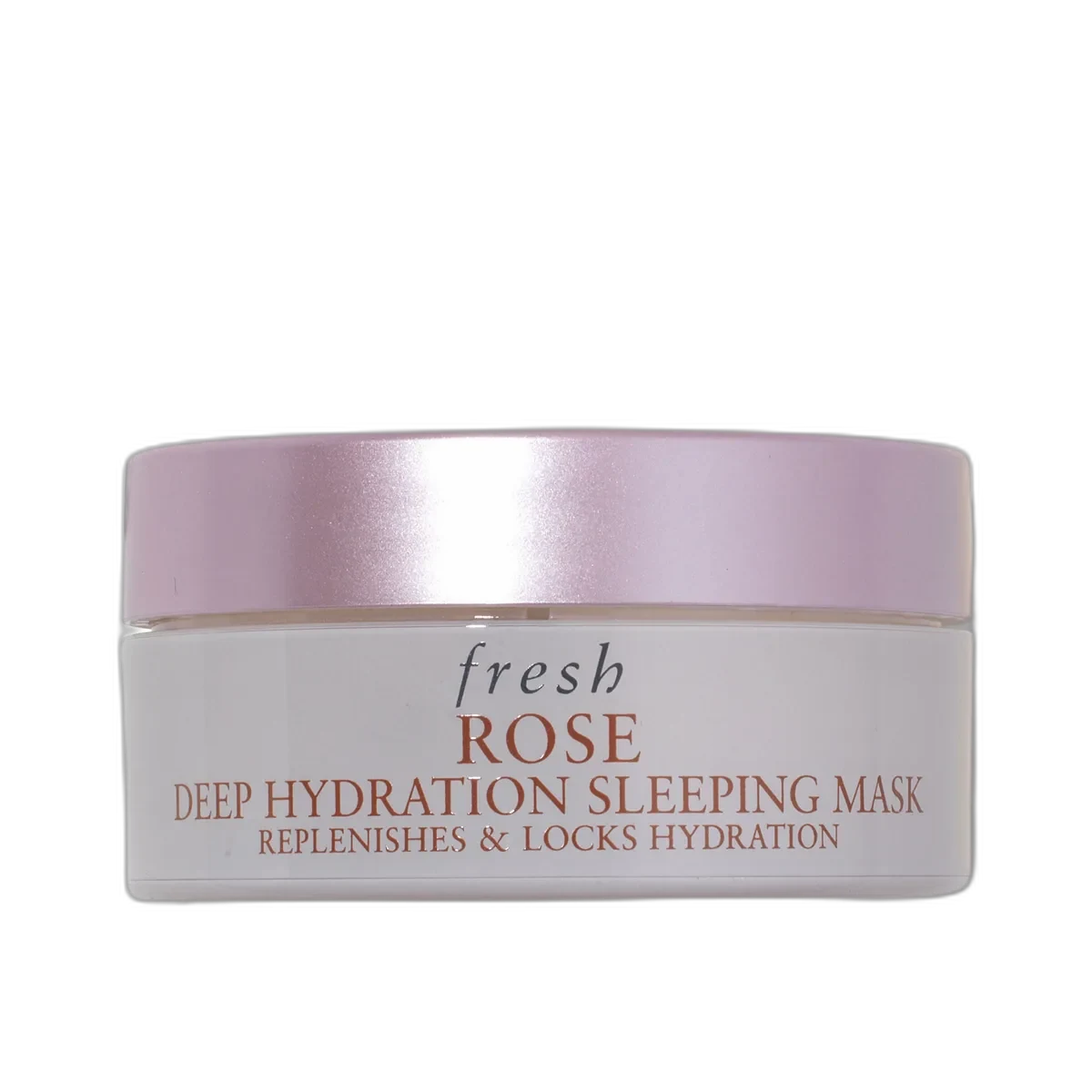
Rose Deep Hydration Sleeping Mask
Two-Step Rose Overnight Ritual
 Verified reviewer
Pros & cons.
- +Rosewater-first formulation uses Rosa Damascena Flower Water as the primary base rather than plain water
- +Two-step system separates hydration delivery from moisture-locking for more targeted overnight treatment
- +Step 2 contains a thoughtful supporting cast: evening primrose, trehalose, urea, and betaine
- +Immediate dewy, plumped skin visible by morning after first use
- +Cooling menthoxypropanediol in Step 1 provides a pleasant bedtime sensorial experience
- +Vegan-claimed formula with no animal-derived ingredients
- −Dual-compartment jar is impractical — products seep into each other and gel depletes faster than cream
- −Contains Citronellol and Geraniol fragrance allergens in a leave-on overnight product with 8-hour exposure
- −Step 2 contains BHT preservative despite the brand's natural positioning
- −At $58 for 70 mL, comparable overnight hydration is available from K-beauty alternatives at half the price
- −Heavy glass jar is not travel-friendly and requires finger-scooping
The full review.
Fresh’s Rose Deep Hydration Sleeping Mask arrives with a design challenge most skincare products don’t attempt: housing two separate formulations in a single jar. One compartment holds a clear amber gel essence. The other holds a silky white water-cream. They’re separated by a dividing wall because they’re designed to work in sequence, not as a blend. It’s an elegant concept — and one that, in practice, creates as many problems as it solves.
The concept itself is sound. Overnight hydration is fundamentally a two-part problem: you need to saturate the skin with water-binding ingredients, then seal everything in so it doesn’t evaporate into your pillow over eight hours. Most sleeping masks try to accomplish both tasks in a single formula, which means compromising on one or both. Fresh separated the steps. Step 1 floods the skin with rosewater, hyaluronic acid, rose extract, and glycerin. Step 2 locks it all in with a dimethicone-based water-cream containing evening primrose root extract, trehalose, and urea.
The rosewater-first formulation in Step 1 is genuinely distinctive. Rosa Damascena Flower Water is the number one ingredient — not plain water with rose extract added later, but actual rosewater as the base vehicle. This delivers bioactive polyphenols (quercetin, kaempferol) with documented antioxidant activity and, more interestingly, hyaluronidase-inhibiting properties. Hyaluronidase is the enzyme that degrades the skin’s own hyaluronic acid, so inhibiting it while simultaneously applying topical hyaluronic acid creates a synergistic approach: you’re adding HA while protecting the HA already present.
The menthoxypropanediol in Step 1 provides an immediate cooling sensation that feels refreshing at bedtime — a nice touch that signals the product is doing something, even if the cooling effect is purely sensorial rather than therapeutic. The gel essence absorbs quickly and leaves skin feeling saturated with moisture.
Step 2 is where the overnight staying power lives. The water-cream contains dimethicone as an occlusive barrier, evening primrose root extract for gamma-linolenic acid (an anti-inflammatory fatty acid that supports barrier repair), and trehalose — a sugar-based protectant that stabilizes cell membranes under stress. Urea, betaine, and inositol contribute additional hydrating and NMF-supporting activity. This is a more sophisticated supporting cast than most sleeping masks offer.
By morning, the results are genuinely noticeable. Skin looks dewy, plump, and visibly hydrated — the kind of ‘I actually slept eight hours’ effect that’s hard to fake. After a few weeks of twice-weekly use, the baseline hydration improves beyond the overnight cosmetic effect. Skin feels more supple even on non-mask mornings, and dry patches become less persistent.
Packaging
Now for the packaging. The dual-compartment jar is visually beautiful — heavy glass with a rose-gold lid, the two products sitting side by side in their separate chambers. But in practice, users consistently report that the products seep into each other’s compartments, especially once the jar is half-empty and the dividing wall’s seal weakens. The gel step also depletes faster than the cream step, leaving you with orphaned product you can’t use as designed. And the jar itself is heavy, impossible to travel with, and requires finger-scooping — hygiene concerns for a product meant to sit on your face all night.
Scent
The fragrance situation is worth addressing directly. Both steps contain Rosa Damascena Flower Oil with Citronellol and Geraniol — EU-classified fragrance allergens — listed separately. This is a leave-on overnight product. Your skin is in contact with these allergens for eight hours. For anyone with even mild fragrance sensitivity, that’s a significant exposure window. The scent itself is strong damask rose — beautiful if you love it, polarizing if you don’t. A few reviewers have described unexpected off-notes, comparing the scent to ‘pickles,’ which is unusual for a luxury product.
Common Complaints
Step 2 also contains BHT (butylated hydroxytoluene), an antioxidant preservative that some consumers prefer to avoid, and phenoxyethanol in both steps. These aren’t necessarily problematic for most people, but they’re notable in a product that leans heavily on its natural rose heritage in marketing.
Price
At $58 for 70 mL, used two to three times weekly, this lasts approximately two to three months. The per-use cost is around $2-3, which is reasonable for a luxury treatment. A smaller 30 mL size is available for around $28-32, offering a lower commitment trial. The value question comes down to whether the two-step ritual and rosewater-first formulation deliver meaningfully better results than a single-step sleeping mask at half the price. Honestly, the morning-after hydration is comparable to excellent Korean sleeping masks that cost $15-25 — but the Fresh experience is undeniably more pleasant and intentional.
Who Should Buy
This is a product for people who find meaning in the ritual of skincare — who want their nighttime routine to feel like self-care rather than maintenance. The two-step application, the cooling gel, the rose scent, the heavy glass jar — it all adds up to an experience that’s worth something, even if the measurable hydration results have more affordable equivalents.
Ingredient analysis.
Full INCI list
Step 1 (Gel Essence): Rosa Damascena Flower Water, Aqua (Water), Glycerin, Pentylene Glycol, PEG-60 Hydrogenated Castor Oil, Rosa Damascena Flower Extract, Cucumis Sativus (Cucumber) Fruit Extract, Rosa Damascena Flower Oil, Tocopherol, Carbomer, Sodium Hydroxide, Tetrasodium EDTA, Sodium Hyaluronate, Menthoxypropanediol, Caprylic/Capric Triglyceride, Caramel, 1,2-Hexanediol, Caprylyl Glycol, Phenoxyethanol, Citronellol, Geraniol. Step 2 (Water-Cream): Aqua (Water), Glycerin, Dicaprylyl Carbonate, Propanediol, Ammonium Acryloyldimethyltaurate/VP Copolymer, Dimethicone, PEG-60 Hydrogenated Castor Oil, Cucumis Sativus (Cucumber) Fruit Extract, Oenothera Biennis (Evening Primrose) Root Extract, Rosa Damascena Flower Oil, Tocopheryl Acetate, Tocopherol, Butylene Glycol, Dimethicone/Vinyl Dimethicone Crosspolymer, Caprylyl Glycol, Polyacrylamide, C13-14 Isoparaffin, Caprylic/Capric Triglyceride, Hydroxylated Lecithin, Trehalose, Urea, Laureth-7, Caramel, Serine, Betaine, Inositol, Taurine, Algin, BHT, Pentylene Glycol, Acacia Senegal Gum, Glyceryl Polyacrylate, Pullulan, Sodium Hyaluronate, Citric Acid, Disodium Phosphate, Potassium Phosphate, Potassium Sorbate, Phenoxyethanol, Citronellol, Geraniol
Skin match.
The science.
The Science
This sleeping mask uses a two-step approach mirroring a pharmacological principle: a loading dose followed by sustained delivery. Step 1 saturates the stratum corneum with hydrophilic ingredients (glycerin, sodium hyaluronate, rosewater-derived polyphenols). Step 2 creates an occlusive barrier (dimethicone) to prevent transepidermal water loss during the 6-8 hour wear period.
Rosa Damascena Flower Water's bioactivity goes beyond fragrance. A 2024 study in Antioxidants (PMC 11339857) examined fermented Rosa Damascena extracts and documented antioxidant activity from phenolic compounds like gallic acid, quercetin, and kaempferol. Earlier research found hyaluronidase-inhibiting activity in rose polyphenols—the enzyme that degrades hyaluronic acid in the skin—suggesting topical rosewater may help preserve endogenous HA levels.
Step 2 contains evening primrose (Oenothera biennis) root extract, which has gamma-linolenic acid (GLA), an omega-6 fatty acid and precursor to anti-inflammatory prostaglandins. A randomized double-blind study in the International Journal of Cosmetic Science (Muggli, 2005) showed that oral evening primrose oil supplementation improved skin moisture, elasticity, firmness, and fatigue resistance over 12 weeks. Topical application differs from oral supplementation, but GLA's role in supporting the skin's lipid barrier is well-documented.
Trehalose works as a humectant and a cellular protectant. A 2024 study in Cosmetics (PMC 11010266) examined sodium trehalose sulfate and showed significant increases in stratum corneum water content. Trehalose stabilizes proteins and cell membranes under dehydration stress via the 'water replacement hypothesis.' This mechanism is relevant for an overnight formula where the skin undergoes natural transepidermal water loss during sleep.
The dimethicone occlusive in Step 2 prevents about 30% of transepidermal water loss per dermatological literature. It creates a semi-permeable barrier that retains moisture from Step 1's humectants while allowing the skin to breathe.
References
- Antioxidant Activity of Fermented Rosa Damascena Extracts — Antioxidants (2024)
- Systemic evening primrose oil improves the biophysical skin parameters of healthy adults — International Journal of Cosmetic Science (2005)
- Sodium Trehalose Sulfate Effects on Stratum Corneum Hydration — Cosmetics (2024)
Dermatologist Perspective
Dermatologists generally support overnight hydration masks for dry or dehydrated skin, as extended wear lets humectants and occlusives work through the skin's nighttime repair cycle. The rosewater-first base and hyaluronic acid combination favor hydration. Board-certified dermatologists would likely flag the fragrance allergen load (Citronellol, Geraniol) in a leave-on product worn for eight hours; extended contact increases sensitization risk. The menthoxypropanediol cooling agent is pleasant but unnecessary and could irritate reactive skin. Dermatologists would note that trehalose and evening primrose extract are promising, though this formula does not disclose their concentrations.
Where it fits in your routine.
Apply 2-3 times per week as the final evening step. After cleansing and applying serums or treatments, scoop a thin layer of Step 1 (gel essence) from its compartment and pat it over the face and neck. Follow immediately with a layer of Step 2 (water-cream) from the other compartment. Sleep on your back to minimize pillow transfer. Rinse off in the morning with your regular cleanser.
At $58 for 70 mL, using the product 2-3 times weekly over its 2-3 month lifespan costs roughly $2-3 per use. A 30 mL size costs around $28-32 for those who want to trial the product. The two-step rosewater-first formulation uses evening primrose, trehalose, and urea, showing more thought than a basic sleeping mask. However, the overnight hydration results match well-formulated K-beauty sleeping masks at $15-25. Fresh's premium price pays for the ritual experience, the rose complex, and the luxury packaging — which is the product's weakest point due to practical complaints about the dual-compartment design.
Normal to combination skin types who want a nighttime ritual and an overnight hydration boost beyond their regular moisturizer. It works for seasonal dryness, dehydration-related dullness, or anyone who likes rose-scented skincare as a self-care experience.
Avoid this if you have fragrance sensitivity; Citronellol and Geraniol contact lasts eight hours. Menthoxypropanediol and the fragrance load require caution for those with rosacea, eczema, or compromised barriers. Budget-conscious shoppers get excellent overnight hydration for much less. The heavy glass dual-compartment jar is impractical for frequent travelers.
Product details.
Two distinct textures: Step 1 is a clear, amber-tinted gel essence that feels cool and watery. Step 2 is a lightweight, silky off-white water-cream that forms a soft occlusive layer. Together they feel airy and lightweight on the skin.
Rosa Damascena Flower Oil gives this a distinct natural damask rose fragrance. Reviewers consistently note the strong rose scent. The menthoxypropanediol in Step 1 causes a brief cooling sensation.
A heavy glass jar uses a dual-compartment design: one side contains the gel essence (Step 1), and the other contains the water-cream (Step 2). The lid has rose-gold accents. The design is impractical; compartments seep into each other, and the heavy jar does not travel well.
Step 1 uses menthoxypropanediol to provide an immediate cooling sensation and saturated hydration. Step 2 seals the skin with a lightweight cream layer. By morning, skin is dewy, plump, and soft. There is no purging or adjustment period. The two-step application takes one minute longer than single-step masks.
2-3 months using 2-3x weekly (70 mL size). Note: the gel step may run out before the cream step.
12 months
All Year
The backstory.
Launched in April 2019 as an overnight extension of Fresh's bestselling rose line, this mask was designed to bring Fresh's signature rose hydration into the K-beauty-influenced overnight masking trend. The two-step concept separates the 'saturate' phase from the 'seal' phase, turning nighttime skincare into a deliberate ritual rather than a single-product afterthought.
About Fresh
Fresh launched in 1991 in Boston and joined LVMH maison in 2000. The brand's rose line is a top collection, using Rosa Damascena from traditional rose-growing regions.
Common myths.
Sleeping masks are just thicker moisturizers with different marketing
This product's two-step system works differently than a standard moisturizer. The gel essence saturates skin with water-binding ingredients, then the water-cream creates a time-release occlusive barrier. The 'hydrate then seal' strategy delivers different results than a single-phase product that tries to do both at once.
Rosewater is only fragrance and provides no active skin benefits.
Rosa Damascena Flower Water has bioactive polyphenols (quercetin, kaempferol) that show antioxidant activity and inhibit hyaluronidase. This inhibition helps preserve the skin's own hyaluronic acid. Rosa Damascena Flower Water is both the hydrating vehicle and an active ingredient in this formula.
Natural rose ingredients are always gentle and safe for sensitive skin
Rosa Damascena Flower Oil has Citronellol and Geraniol. These are EU-classified fragrance allergens listed separately on this product's INCI. These compounds cause contact dermatitis in fragrance-sensitive individuals, even though they are natural, especially in a leave-on overnight format.
FAQ.
How often should you use the Fresh Rose Sleeping Mask?
Fresh recommends this mask 2-3 times per week as your final evening step. Apply Step 1 (gel essence) first, then follow immediately with Step 2 (water-cream) to seal in hydration. Use your regular nighttime moisturizer on non-mask nights.
Can you use Fresh Rose Sleeping Mask with retinol?
Yes — this mask works well over retinol treatments. Apply your retinol serum first, wait a few minutes for absorption, then apply Step 1 and Step 2 of the mask. The glycerin, hyaluronic acid, and dimethicone occlusive buffer retinol-induced dryness and irritation overnight.
Is Fresh Rose Sleeping Mask good for oily skin?
The lightweight gel-cream texture is thinner than many sleeping masks. This makes it suitable for oily skin types wanting overnight hydration without heaviness. However, Step 2 contains dimethicone (an occlusive silicone) that some oily-skinned users may find too sealing. Use it once weekly to test your tolerance.
Does the Fresh Rose Sleeping Mask have fragrance?
Yes. Both steps use Rosa Damascena Flower Oil, Citronellol, and Geraniol (EU-regulated fragrance allergens). The rose scent is strong and distinct. This is a leave-on overnight product, so fragrance-sensitive individuals should avoid it.
What the community says.
"Leaves skin visibly dewy, plump, and hydrated by morning"
"Lightweight texture absorbs well without feeling heavy or greasy"
"Two-step system feels like a spa ritual at home"
"Effective at calming irritated and dehydrated skin overnight"
"Noticeable glow and softness after the very first use"
"Premium price of $58 for 70 mL is steep for a sleeping mask used 2-3x weekly"
"Gel step tends to run out faster than the cream step, creating uneven usage"
"Strong rose scent is not universally appreciated"
"Dual-compartment jar packaging is impractical — products can seep into each other"
"Must sleep on back to avoid transferring product to pillowcase"
People also looked at.