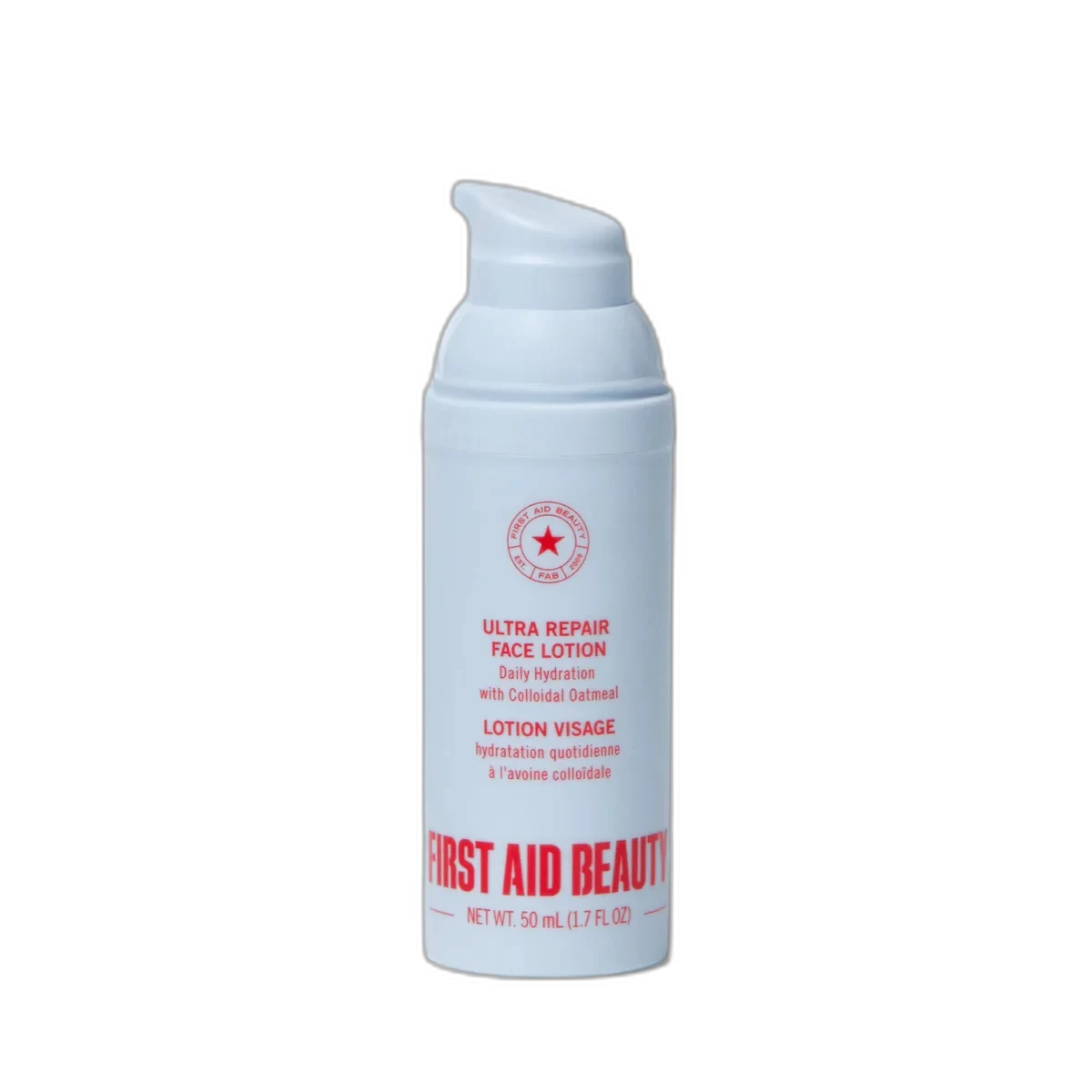
Ultra Repair Face Moisturizer
Sensitive Skin MVP
 Verified reviewer
Pros & cons.
- +Fragrance-free formula with minimal potential irritants — ideal for reactive skin
- +Colloidal oatmeal, ceramide NP, squalane, and urea deliver real barrier repair
- +Lightweight texture absorbs in seconds and layers flawlessly under SPF and makeup
- +Velvety, non-greasy finish that stays comfortable all day without shine
- +Excellent buffer for active treatments like retinol and chemical exfoliants
- +Vegan and cruelty-free with a clean preservative system
- +Immediate soothing effect on irritated or compromised skin
- −1.7 oz bottle at $28 makes this one of the pricier per-ounce moisturizers in its class
- −No larger size available — frequent repurchasing is unavoidable
- −May not provide sufficient hydration for very dry skin as a standalone night cream
- −Only one ceramide — a multi-ceramide complex would strengthen barrier repair
- −Contains dimethicone, which some users with silicone sensitivities may want to avoid
- −Some user reports of formula inconsistency between batches
The full review.
The Ultra Repair Cream is the product that put First Aid Beauty on the map. That thick, rich, slightly clinical-looking tub became a Sephora staple for people whose skin needed rescuing — from winter, from retinol, from the general indignity of having a face that reacts to everything. But the Cream was always a blunt instrument. Magnificent for slathering on cracked hands and dry shins, a bit much for wearing under sunscreen on a Tuesday morning.
The Ultra Repair Face Moisturizer is what happens when a brand listens to that feedback. It takes the philosophy of the original — soothe, protect, repair — and refines it into something you can actually wear every day without feeling like you’ve laminated your face. And quietly, without making a fuss about it, the Face Moisturizer actually improved the formula.
The ingredient list reads like a greatest hits of barrier repair. Colloidal oatmeal — the same FDA-recognized skin protectant that anchors the original Cream — sits comfortably in the top half of the formula. But where the Cream stops at soothing, the Face Moisturizer adds ceramide NP, squalane, and urea. That’s three additional barrier-repair heavyweights that the original product lacks. Ceramide NP integrates directly into the skin’s lipid matrix. Squalane mirrors the skin’s own sebum. Urea, a natural moisturizing factor component, both hydrates and gently encourages cell turnover. Together with allantoin, glycerin, and a supporting cast of plant oils — shea butter, meadowfoam, avocado — this is a formula that takes barrier repair seriously.
The texture is the first thing you notice. It’s light. Genuinely, pleasantly light. Not the kind of light that feels like nothing went on, but the kind that absorbs within thirty seconds and leaves your skin feeling like it just drank a glass of water. There’s a subtle velvety quality to the finish — dimethicone’s contribution — that makes it sit beautifully under sunscreen and makeup. No pilling, no greasiness, no shine.
For sensitive skin, this is close to ideal. The formula is fragrance-free — not “no added fragrance” with essential oils snuck in, but genuinely unscented. No parabens, no sulfates, no alcohol. The preservative system is phenoxyethanol plus caprylyl glycol plus radish root ferment filtrate, which is about as gentle as commercial preservation gets. The potential irritant list is vanishingly short: cetyl alcohol might bother a tiny minority with fatty alcohol sensitivities, and that’s about it.
Performance-wise, this delivers quickly. Within the first few uses, dry patches start to smooth out. By the end of the first week, skin that was tight and reactive feels noticeably calmer. The colloidal oatmeal provides an immediate soothing effect — you can feel it working — while the ceramide and squalane do their slower, structural repair work over weeks. For people using active treatments like retinol or chemical exfoliants, this is a particularly good buffer: hydrating enough to counteract irritation without being so heavy that it interferes with the treatment’s penetration.
The FAB antioxidant booster blend — feverfew, white tea, and licorice root — rounds out the formula with some background anti-inflammatory and antioxidant support. These appear near the end of the ingredient list, so their concentrations are likely modest, but in a formula that’s already doing so much heavy lifting with its primary actives, they’re a thoughtful addition rather than a headline act.
Here’s the catch, and it’s the reason this product doesn’t score higher than it deserves: that bottle is tiny. At 1.7 ounces, you’re looking at roughly four to six weeks of twice-daily use. At twenty-eight dollars, that works out to about sixteen dollars and fifty cents per ounce — premium territory for a moisturizer without any exotic actives or specialized delivery systems. The ingredients are excellent, but they’re not expensive ingredients. Colloidal oatmeal, glycerin, squalane, and a single ceramide don’t justify luxury pricing. You’re paying a real FAB tax here, and the lack of a larger, better-value size option feels like a missed opportunity.
The other limitation is honestly more of a positioning issue than a flaw: this is a lightweight moisturizer, and it knows it. If you have severely dry skin and you’re looking for something that will single-handedly replace your heavy night cream, this isn’t it. It’s the product that gets your skin through the day comfortably, not the one that performs a rescue operation overnight. For nighttime use on very dry skin, you’ll likely want to layer something richer on top.
But within its lane — a daily, lightweight, fragrance-free face moisturizer for sensitive and normal-to-dry skin — this is genuinely hard to beat. The ingredient profile punches above its texture class, the finish is practically invisible, and the sensitivity credentials are legit. It’s the kind of product that doesn’t make you think about your moisturizer, which for anyone who’s dealt with reactive skin, is the highest compliment there is.
Formula
 ### Texture

 The texture is the first thing you notice. It's light. Genuinely, pleasantly light. Not the kind of light that feels like nothing went on, but the kind that absorbs within thirty seconds and leaves your skin feeling like it just drank a glass of water. There's a subtle velvety quality to the finish — dimethicone's contribution — that makes it sit beautifully under sunscreen and makeup. No pilling, no greasiness, no shine.
Scent
For sensitive skin, this is close to ideal. The formula is fragrance-free — not “no added fragrance” with essential oils snuck in, but genuinely unscented. No parabens, no sulfates, no alcohol. The preservative system is phenoxyethanol plus caprylyl glycol plus radish root ferment filtrate, which is about as gentle as commercial preservation gets. The potential irritant list is vanishingly short: cetyl alcohol might bother a tiny minority with fatty alcohol sensitivities, and that’s about it.
### Works for

Performance-wise, this delivers quickly. Within the first few uses, dry patches start to smooth out. By the end of the first week, skin that was tight and reactive feels noticeably calmer. The colloidal oatmeal provides an immediate soothing effect — you can feel it working — while the ceramide and squalane do their slower, structural repair work over weeks. For people using active treatments like retinol or chemical exfoliants, this is a particularly good buffer: hydrating enough to counteract irritation without being so heavy that it interferes with the treatment's penetration.
Pairs Well With
The FAB antioxidant booster blend — feverfew, white tea, and licorice root — rounds out the formula with some background anti-inflammatory and antioxidant support. These appear near the end of the ingredient list, so their concentrations are likely modest, but in a formula that’s already doing so much heavy lifting with its primary actives, they’re a thoughtful addition rather than a headline act.
### Common Complaints

Here's the catch, and it's the reason this product doesn't score higher than it deserves: that bottle is tiny. At 1.7 ounces, you're looking at roughly four to six weeks of twice-daily use. At twenty-eight dollars, that works out to about sixteen dollars and fifty cents per ounce — premium territory for a moisturizer without any exotic actives or specialized delivery systems. The ingredients are excellent, but they're not expensive ingredients. Colloidal oatmeal, glycerin, squalane, and a single ceramide don't justify luxury pricing. You're paying a real FAB tax here, and the lack of a larger, better-value size option feels like a missed opportunity.
Not ideal for
The other limitation is honestly more of a positioning issue than a flaw: this is a lightweight moisturizer, and it knows it. If you have severely dry skin and you’re looking for something that will single-handedly replace your heavy night cream, this isn’t it. It’s the product that gets your skin through the day comfortably, not the one that performs a rescue operation overnight. For nighttime use on very dry skin, you’ll likely want to layer something richer on top.
### Best for

But within its lane — a daily, lightweight, fragrance-free face moisturizer for sensitive and normal-to-dry skin — this is genuinely hard to beat. The ingredient profile punches above its texture class, the finish is practically invisible, and the sensitivity credentials are legit. It's the kind of product that doesn't make you think about your moisturizer, which for anyone who's dealt with reactive skin, is the highest compliment there is.Ingredient analysis.
Full INCI list
Water/Aqua/Eau, Glyceryl Stearate SE, Glycerin, Caprylic/Capric Triglyceride, Cetyl Alcohol, Colloidal Oatmeal, Dimethicone, Squalane, Urea, Allantoin, Ceramide NP, Butyrospermum Parkii (Shea) Butter, Limnanthes Alba (Meadowfoam) Seed Oil, Persea Gratissima (Avocado) Oil, Chrysanthemum Parthenium (Feverfew) Extract, Camellia Sinensis Leaf Extract, Glycyrrhiza Glabra (Licorice) Root Extract, Caprylyl Glycol, Phenoxyethanol, Carbomer, Sodium Hydroxide, Leuconostoc/Radish Root Ferment Filtrate, EDTA
Skin match.
The science.
The Science
Colloidal oatmeal is the star active. It is an FDA-recognized Category I skin protectant with strong clinical evidence. A 2015 study in the Journal of Drugs in Dermatology (Reynertson et al.) shows colloidal oatmeal improves skin barrier function in several ways: avenanthramides provide anti-inflammatory and antioxidant activity, beta-glucans form a moisture-retaining film, and lipids help replenish barrier lipids. Another study in the same journal (Sur et al., 2008) confirms colloidal oatmeal's anti-inflammatory activity directly relieves itch in dry, irritated skin—a mechanism useful for eczema and post-procedure care.
Ceramide NP is one of the most abundant ceramides in healthy human skin. Its depletion marks barrier dysfunction in conditions ranging from atopic dermatitis to aging. This formula uses one ceramide instead of the three-ceramide approach used by some competitors, but it uses a diverse lipid profile to compensate: squalane (which mimics skin sebum), shea butter (high in stearic and oleic acids), meadowfoam seed oil (with a C20-C22 fatty acid profile), and avocado oil (a source of phytosterols and oleic acid). This multi-lipid approach provides building blocks for barrier reconstruction without a strict ceramide-to-cholesterol-to-fatty-acid ratio.
Urea at low concentrations (likely under 5% in this formula based on its position in the ingredient list) works as a humectant and natural moisturizing factor replenisher. It increases the water-holding capacity of the stratum corneum without the keratolytic effects of higher concentrations. Combined with glycerin—listed third, suggesting a concentration likely above 3%—the formula uses two humectant mechanisms under the dimethicone occlusive seal.
The feverfew extract used by FAB is parthenolide-depleted. Raw feverfew contains parthenolide, which is a contact sensitizer. Martin et al. (2008) in Archives of Dermatological Research showed that the depleted extract keeps the anti-inflammatory and free-radical-scavenging properties while removing the sensitization risk—a smart choice for a sensitive-skin product.
References
- Colloidal Oatmeal (Avena Sativa) Improves Skin Barrier Through Multi-Therapy Activity — Journal of Drugs in Dermatology (2015)
- Anti-inflammatory activities of colloidal oatmeal contribute to the effectiveness of oats in treatment of itch associated with dry, irritated skin — Journal of Drugs in Dermatology (2008)
- Parthenolide-depleted Feverfew (Tanacetum parthenium) protects skin from UV irradiation and external aggression — Archives of Dermatological Research (2008)
Dermatologist Perspective
Dermatologists often recommend lightweight, fragrance-free moisturizers with barrier-repair ingredients for patients with sensitive skin, retinoid-related irritation, or post-procedure recovery. The combination of colloidal oatmeal, ceramide NP, and squalane in one lightweight formula matches what board-certified dermatologists advise for daily barrier maintenance. Because it lacks fragrance, essential oils, and common sensitizers, it is a safe recommendation for rosacea and eczema patients. Dermatologists would note that while the single-ceramide approach is less comprehensive than multi-ceramide formulations, the supporting lipid profile—squalane, shea butter, and plant oils—provides complementary barrier support that compensates for this.
Where it fits in your routine.
Apply one to two pumps to clean skin morning and evening once serums or treatments absorb. Press gently into face and neck. The lightweight texture absorbs on contact, so do not rub vigorously. In the morning, use sunscreen SPF 30 or higher. At night, layer a richer cream or facial oil on top for more moisture. Use it as a soothing recovery layer over retinol or after chemical exfoliation by applying generously to buffer irritation.
At $28 for 1.7 ounces, this premium moisturizer costs roughly $16.50 per ounce. The ingredient quality is excellent; colloidal oatmeal, ceramide NP, squalane, and urea are all proven, effective barrier-repair ingredients, but these raw materials are not expensive. You pay for the brand and Sephora distribution. No larger size exists, so you cannot buy in bulk for better value. Drugstore options with similar ingredient profiles cost much less per ounce, though few match this exact combination of lightness and ingredient breadth. The value makes sense if you prioritize the specific texture, the clean formulation, and the sensitive-skin track record—not if you are purely price-shopping.
This works for sensitive, dry, or combination skin needing a lightweight daily moisturizer for barrier repair without heaviness. It suits retinol users, rosacea-prone skin, and anyone seeking a fragrance-free moisturizer that layers well under sunscreen.
Oily skin types needing lighter options, people seeking one heavy-duty night cream for severely dry skin, or budget-conscious shoppers who find the per-ounce cost too high when drugstore ceramide moisturizers cost a fraction of the price.
Product details.
Lightweight lotion with a slight gel-like texture. It is thinner and more fluid than the Ultra Repair Cream. It absorbs quickly into skin without leaving a film.
Fragrance-free. No detectable scent under normal use conditions.
White plastic pump bottle with FAB's signature clean design. The pump dispenses a controlled amount to conserve the 1.7 oz quantity. Recyclable.
The first application feels soothing and comfortable. The colloidal oatmeal and allantoin calm irritated or dry skin. The lotion sinks in within about 30 seconds and leaves a soft, velvety feel. It does not sting or require an adjustment period. Results are front-loaded; skin feels softer and less reactive within the first few days.
4-6 weeks with twice-daily face and neck application
12 months
All Year
The backstory.
Born from FAB's flagship Ultra Repair Cream — the thick, rich barrier balm that became a Sephora cult classic — this face-specific version was developed for users who loved the Cream's ingredients but needed a lighter texture for daily facial use. It preserves the core soothing complex while swapping the heavy occlusive base for a quick-absorbing lotion format.
About First Aid Beauty
Lilli Gordon founded First Aid Beauty in 2009, launching at Sephora as an early U.S. clean beauty brand. All formulas are dermatologist-tested, and the brand excludes 1,300+ ingredients. Procter & Gamble acquired FAB in 2018. FAB has PETA cruelty-free certification and dermatologists widely recommend it for sensitive and eczema-prone skin. *Established Brand (5–20 years)*
Common myths.
Effective barrier repair requires multiple ceramides; a single ceramide product does little.
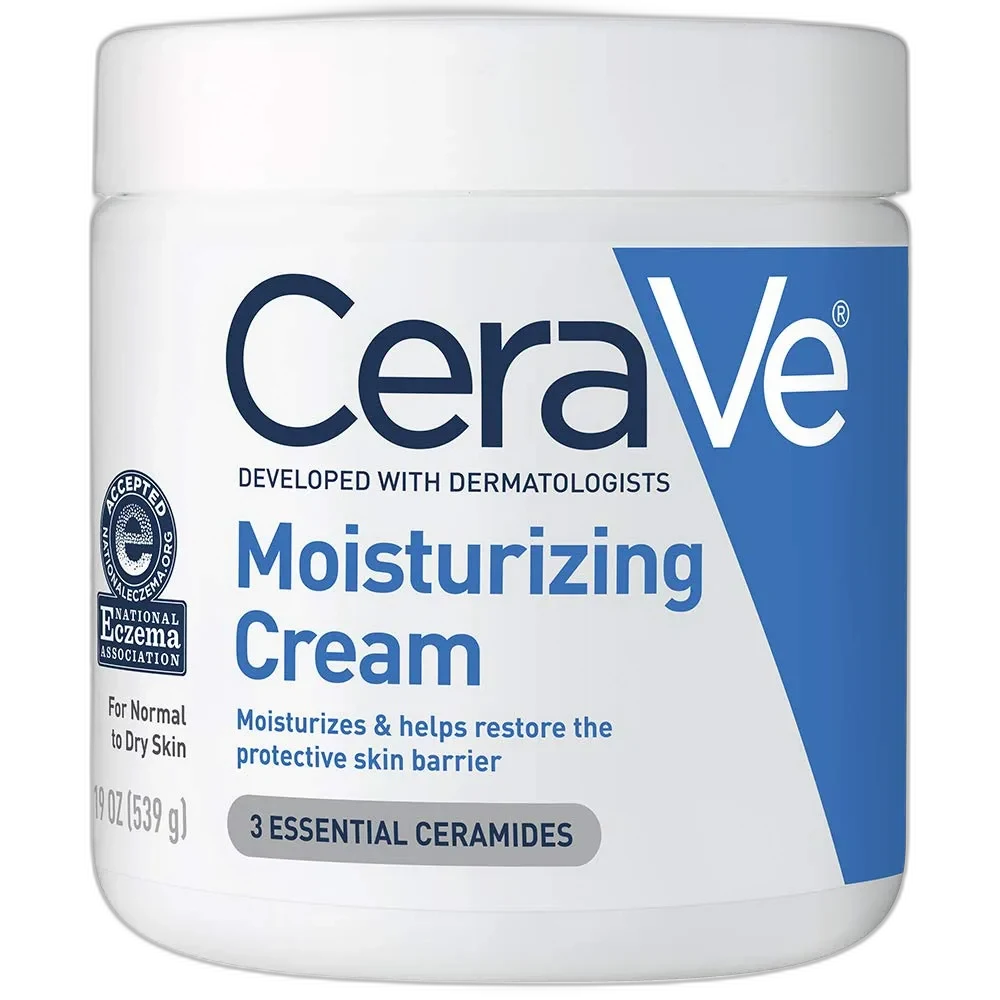
Multi-ceramide formulas, such as CeraVe's 3:1:1 ratio, have plenty of research. However, studies show Ceramide NP alone repairs the barrier. This formula uses squalane, shea butter, meadowfoam seed oil, and avocado oil to provide a broad lipid profile. These lipids help the ceramide integrate into the skin barrier.
Lightweight moisturizers do not hydrate dry or damaged skin.
This formula uses multiple hydration mechanisms: glycerin and urea pull moisture in, colloidal oatmeal forms a protective film, and dimethicone creates an occlusive seal. It achieves hydration without a heavy texture. For severely dry skin, layer it with a heavier product at night.
FAQ.
Is the First Aid Beauty Ultra Repair Face Moisturizer good for oily skin?
The formula is lightweight enough for combination skin, but the squalane, shea butter, and avocado oil feel too thick for oily skin. If you have oily skin with sensitivity or barrier damage, it works as a nighttime moisturizer, but most oily skin types prefer lighter options for daytime.
What's the difference between the Ultra Repair Face Moisturizer and the Ultra Repair Cream?
Both share core ingredients — colloidal oatmeal, shea butter, and the FAB antioxidant booster complex — but the Face Moisturizer is lighter, absorbs faster, and has ceramide NP, squalane, and urea that the Cream lacks. The Cream is a thicker, heavier formula for body use or very dry facial skin.
Can I use this moisturizer with retinol?
Yes — this works well with retinol treatments. The ceramide NP, colloidal oatmeal, and allantoin buffer retinol-induced irritation. The lightweight texture adds no unnecessary heaviness to your treatment. Apply retinol first, wait a few minutes, then layer this on top.
Is the First Aid Beauty Ultra Repair Face Moisturizer fragrance-free?
Yes, entirely. The formula has no artificial fragrances, essential oils, or masking fragrances. It is one of the cleanest fragrance-free formulations in its category. This makes it a frequent recommendation for people with fragrance sensitivities, rosacea, and eczema.
Is this moisturizer safe for eczema-prone skin?
The formula works for eczema-prone skin. Colloidal oatmeal is an FDA-recognized skin protectant used in eczema care, and the fragrance-free, paraben-free formula reduces irritation triggers. While the Face Moisturizer lacks NEA-certification (the Ultra Repair Cream has that seal), its ingredients align with dermatologist recommendations for eczema management.
How long does a bottle of the Ultra Repair Face Moisturizer last?
At 1.7 ounces, applying this twice daily to the face and neck lasts roughly 4-6 weeks. This is the product's main weakness. The small size and $28 price mean you use it quickly. No larger size exists, so you must repurchase often.
Does this moisturizer work under sunscreen and makeup?
Yes, and this is one of its strongest points. The lightweight, fast-absorbing texture creates a smooth, non-greasy base that layers under SPF and foundation without pilling or sliding. Many reviewers praise it as a daytime moisturizer for this reason.
Community
What the community says.
"Lightweight and fast-absorbing without feeling greasy"
"Excellent for sensitive and redness-prone skin"
"Works beautifully under makeup and sunscreen"
"Fragrance-free formula that doesn't irritate"
"Visibly reduces dry patches and flakiness within days"
"Velvety finish that feels comfortable all day"
"1.7 oz size runs out quickly with twice-daily use"
"May not provide enough hydration for very dry skin in winter"
"Some reports of formula changes affecting consistency"
"Price per ounce is significantly higher than comparable drugstore options"