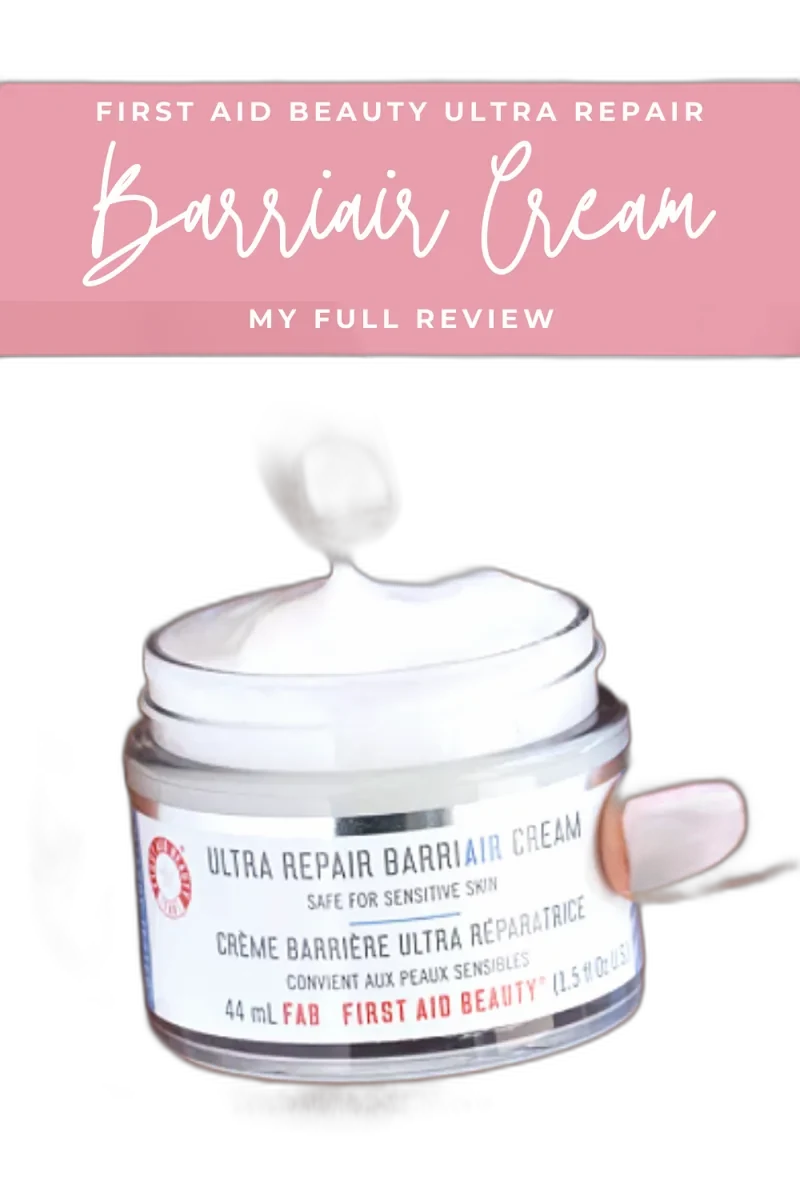
Ultra Repair Barriair Cream
Featherweight Barrier Builder
 Verified reviewer
Pros & cons.
- +Genuinely ultralight whipped texture that delivers ceramide-based barrier repair without any heaviness
- +Biomimetic lipid complex mirrors natural skin barrier composition with ceramide NG, cholesterol, and fatty acids
- +Layers invisibly under makeup and sunscreen with zero pilling
- +Colloidal oatmeal and botanical complex provide immediate soothing for reactive and rosacea-prone skin
- +Fragrance-free and silicone-free with National Eczema Association Seal of Acceptance
- +Makes barrier repair accessible to oily and combination skin types who avoid traditional heavy creams
- −Premium pricing at roughly $18 per ounce makes consistent use expensive
- −Contains perfluorocarbon compounds which raise environmental and ingredient-purity concerns
- −Too lightweight for very dry skin to use as a standalone moisturizer in cold climates
- −Whipped texture means higher product use per application compared to denser creams
- −Limited availability compared to the brand's hero Ultra Repair Cream
The full review.
Barrier repair has a central problem. The necessary ingredients—ceramides, cholesterol, and fatty acids—are lipids. Lipids are heavy. They create thick, dense textures that sit on the skin to work, but they also make you look like you pressed your face into butter. This works for dry skin. For the millions with oily or combination skin whose barriers are compromised by retinol use, over-exfoliation, or environmental damage, traditional barrier creams fail. You need the repair but cannot tolerate the vehicle.
First Aid Beauty’s Ultra Repair BarriAIR Cream attempts to solve this paradox. The name is direct—AIR is capitalized because the texture resembles something that should float rather than sit on your face. The cream looks like marshmallow fluff from the tube, with tiny air bubbles suspended in the white mousse. The lightness makes you wonder if such a weightless product delivers meaningful skincare.
The science uses a whipped oxygen-infusion technology that incorporates actual oxygen and perfluorocarbon compounds into the cream base. This creates the airy consistency without losing the active ingredient payload. It is clever engineering, though the perfluorocarbons raise questions about environmental impact—these cosmetic-grade, skin-safe compounds belong to a chemical family with broader ecological concerns. First Aid Beauty has not publicly addressed this trade-off, and some consumers may decide the texture is not worth the ingredient compromise.
The formula itself is impressive. Ceramide NG—a ceramide subtype studied for barrier repair—is at a concentration of roughly 0.6 to 0.95 percent. It pairs with cholesterol and linoleic and linolenic acids to mimic the natural lipid composition of the stratum corneum. This is not a random collection of moisturizers. It is a deliberate attempt to replicate the specific ratios healthy skin produces, delivered in a texture oily skin will use consistently.
Sodium hyaluronate provides humectancy, and polyglucuronic acid adds a secondary hydration layer through water-binding. Colloidal oatmeal—the FDA-recognized skin protectant in the brand’s original Ultra Repair Cream—adds anti-inflammatory soothing. The FAB antioxidant trio of feverfew, green tea, and licorice root rounds out the formula. The ingredient list is more sophisticated than the original Ultra Repair Cream, reflecting how barrier science has evolved since FAB launched.
In practice, the cream is weightless. It melts into the skin in seconds with no residue, no film, and no shine. It is invisible under makeup and does not pill under sunscreen. For those who skip moisturizer because products feel too heavy, this product offers barrier care that does not interfere with other layers.
The results are subtler than the texture. Redness reduction is the most consistent benefit; multiple users with rosacea report calming within days. General skin comfort improves gradually. You cannot see barrier repair in a mirror, but you feel it: less reactivity to products, less tightness after cleansing, and skin that behaves better over time. This is functional barrier repair—a quiet stabilization rather than a visible transformation.
The criticisms are predictable. At $30 for 1.7 ounces, the BarriAIR is expensive per ounce, and the whipped texture requires more product per application than a dense cream. Very dry skin will find this insufficient as a standalone moisturizer, especially in cold or arid climates. Ultimately, the formula does the same job as heavier barrier creams, just in a lighter package.
That lighter package is the innovation. For anyone with combination skin who avoids ceramide creams under sunscreen, the BarriAIR is an answer. It is not the cheapest option, and the perfluorocarbon question is legitimate. But as proof that serious barrier repair does not require a heavy cream, this product is a genuine achievement.
Formula
Ingredient analysis.
Full INCI list
Water/Aqua/Eau, Propanediol, Glycerin, Cetyl Ethylhexanoate, Perfluorohexane, Caprylic/Capric Triglyceride, Polymethyl Methacrylate, Oxygen, Colloidal Oatmeal, Caprylyl Glycol, Hydrolyzed Yeast Extract, Ceramide NG, Sodium Hyaluronate, Glycyrrhiza Glabra (Licorice) Root Extract, Chrysanthemum Parthenium (Feverfew) Extract, Camellia Sinensis Leaf Extract, Linoleic Acid, Linolenic Acid, Sodium Polyacrylate Starch, Stearic Acid, Cetyl Hydroxyethylcellulose, Cholesterol, Tocopherol, Polyglucuronic Acid, Dipropylene Glycol, Sodium Acrylate/Sodium Acryloyldimethyl Taurate Copolymer, Glyceryl Stearate, Sodium Polyacrylate, Polypropylene, Polysorbate 80, Lecithin, Ethylhexylglycerin, Steareth-30, Cetyl Alcohol, Phenoxyethanol, Chlorphenesin, Perfluoromethylcyclopentane, Leuconostoc/Radish Root Ferment Filtrate, Sodium Benzoate, Potassium Sorbate
Skin match.
The science.
The Science
The BarriAIR Cream formulation uses a biomimetic barrier repair model. This model replicates the three essential lipid classes in a healthy stratum corneum: ceramides, cholesterol, and free fatty acids. Research shows these three lipids exist in an approximately equimolar ratio in a functional skin barrier. Disrupting this ratio through environmental damage, over-cleansing, or inflammatory conditions increases transepidermal water loss and sensitivity.
Ceramide NG (formerly Ceramide 3) is a common ceramide subtype in human skin and has extensive research regarding barrier homeostasis. At a 0.6-0.95% concentration, Ceramide NG works with cholesterol and linoleic/linolenic acids to provide the three lipid pillars needed for barrier reconstruction.
The FDA recognizes colloidal oatmeal as a skin protectant. Its avenanthramide content provides anti-inflammatory activity. These polyphenolic compounds inhibit NF-kB activation and reduce pro-inflammatory cytokine release, which helps eczema and rosacea-associated inflammation.
Sodium hyaluronate and polyglucuronic acid form a dual humectant system. Sodium hyaluronate, the salt form of hyaluronic acid, holds up to 1,000 times its weight in water and penetrates the stratum corneum to hydrate multiple skin depths. Polyglucuronic acid works at the skin surface, creating a moisture-retaining film that complements the deeper-acting sodium hyaluronate.
Oxygen-infused whipping technology delivers the product as a mousse-like texture. This method maintains active ingredient concentrations while reducing the perceived weight on skin. This addresses the compliance challenge that causes many combination and oily skin users to skip barrier repair products.
Dermatologist Perspective
Dermatologists recognize that barrier repair matters for all skin types, not just dry skin. Board-certified dermatologists note that the biomimetic approach—delivering ceramides, cholesterol, and fatty acids in ratios that mirror natural skin lipid composition—is current best practice in barrier restoration. The ultralight texture of The BarriAIR Cream addresses a common clinical challenge: patient compliance. Dermatologists frequently prescribe barrier repair for patients on retinoids or post-procedure, but patients with oily skin often abandon heavy creams. A product that delivers equivalent lipid support in a weightless texture improves consistent use. The National Eczema Association Seal of Acceptance provides additional clinical validation.
Where it fits in your routine.
Apply a thick layer to a clean, dry face and neck after serums or treatments. The whipped consistency spreads easily; pat and press instead of rubbing. Use morning and evening. Apply sunscreen in the morning. Wait 1-2 minutes for full absorption before applying makeup. Layer over a hyaluronic acid serum for extra hydration.
At $30 for 1.7 ounces (roughly $18 per ounce), the BarriAIR is among the most expensive moisturizers in FAB's lineup. The whipped texture requires more product per application than a dense cream, which raises the effective cost. This price pays for formulation innovation: the biomimetic lipid complex is more sophisticated than most lightweight moisturizers, and the oxygen-infused texture technology is unique in the market. No larger or value size exists currently. For oily and combination skin types who cannot tolerate other barrier creams, the BarriAIR fills a niche that justifies the cost. Budget-conscious consumers can find simpler barrier support at a lower price with the Skin Rescue Daily Face Cream.
Oily and combination skin types need real barrier repair without heavy creams. It works for retinol users needing a lightweight buffer, rosacea sufferers who find most moisturizers too heavy, and anyone wanting ceramide-based barrier care that disappears under sunscreen and makeup.
Very dry skin types needing intensive occlusion and heavyweight moisture should use the original Ultra Repair Cream instead. Those concerned about perfluorocarbon ingredients for environmental reasons can use ceramide moisturizers that achieve lightweight textures without these compounds.
Product details.
This whipped, mousse-like cream looks like marshmallow fluff and feels weightless on the skin. The foam-like consistency melts into the skin on contact and leaves no visible residue.
Fragrance-free with no essential oils. Completely neutral smell.
A white squeeze tube features the brand's signature red accent. The 1.7 oz size is compact and travel-friendly, but daily use requires frequent repurchasing.
The whipped, airy texture shows tiny air bubbles when squeezed. It melts into a lightweight, invisible finish on the skin. There is no tingling or adjustment period. Many users see visible redness reduction overnight after the first use.
6-8 weeks with twice-daily facial application
12 months
spring summer
The backstory.
First Aid Beauty developed the BarriAIR as an answer to a specific consumer frustration: people with oily or combination skin who needed genuine barrier repair but couldn't tolerate the rich, heavy textures of traditional barrier creams. The oxygen-infused whipping technology creates the ultralight texture while maintaining the lipid-to-moisture ratios necessary for effective barrier restoration.
About First Aid Beauty
Established Brand (5–20 years)Lilli Gordon founded First Aid Beauty in 2009 to focus on sensitive-skin-safe formulations. Procter & Gamble acquired the brand in 2018. First Aid Beauty is dermatologist tested and sells clean, effective products through Sephora and Ulta.
Common myths.
Lightweight moisturizers can't provide serious barrier repair.
The ceramide NG, cholesterol, and linoleic/linolenic acid complex in this formula matches healthy skin's natural lipid composition, regardless of texture weight. Barrier repair uses lipid ratios, not product thickness.
Oily skin doesn't need a moisturizer with ceramides.
Oily skin can have a compromised barrier. Over-cleansing and harsh acne treatments often deplete ceramides in oily skin types. This lightweight formula repairs the barrier without adding occlusion that worsens oiliness.
FAQ.
How is the BarriAIR different from the regular Ultra Repair Cream?
The BarriAIR uses oxygen-infused whipping technology for an ultralight, mousse-like texture that's dramatically lighter than the thick, rich original Ultra Repair Cream. It includes ceramide NG and cholesterol for biomimetic barrier repair, while the original relies on colloidal oatmeal and shea butter for intensive hydration. Choose BarriAIR for oily or combination skin; the original for dry or very dry skin.
Is this moisturizer good for oily skin?
Yes — BarriAIR is one of the few barrier repair moisturizers designed for oily and combination skin. The whipped texture absorbs fully without shine or heaviness, and the oil-free formula delivers ceramides and hyaluronic acid without occluding pores.
What are the perfluorocarbons in this formula?
Perfluorohexane and perfluoromethylcyclopentane create the airy, whipped texture and deliver oxygen to the skin. These cosmetic-grade compounds evaporate after application. Some consumers avoid them for environmental reasons; this is a personal choice, not a safety concern.
Can I use this as my only moisturizer in winter?
It works for normal to combination skin in moderate climates. Dry skin or harsh winter conditions require a hydrating serum underneath or a thicker cream during the coldest months. The BarriAIR works well as a warm-weather and transitional-season moisturizer.
Does this cream help with redness from rosacea?
Many users see visible redness reduction days after starting this cream. The ceramide NG repairs barrier function, colloidal oatmeal soothes inflammation, and the licorice root and feverfew extracts calm reactive skin — these ingredients reduce rosacea-related redness over time.
Community
What the community says.
"Incredibly lightweight and airy — feels like whipped cream on the skin"
"Noticeably reduces redness overnight for rosacea-prone skin"
"Layers perfectly under makeup and sunscreen without pilling"
"Provides real hydration despite the ultralight texture"
"Fragrance-free with no irritation even on sensitized skin"
"Small 1.7 oz tube at $30 feels expensive for the amount"
"May not provide enough moisture for very dry skin types in winter"
"Whipped texture can feel unusual compared to traditional creams"
"Contains perfluorocarbons which some consumers prefer to avoid"
"Less widely available than the original Ultra Repair Cream"