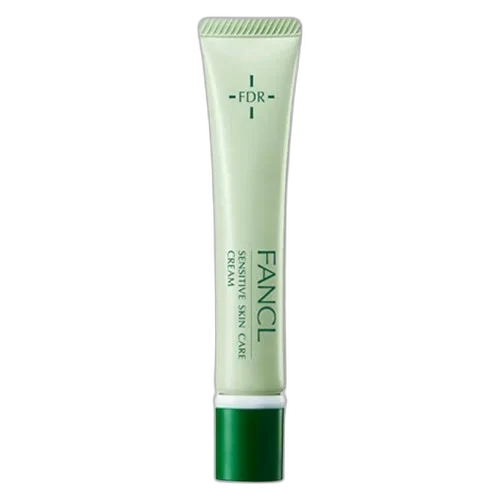
Moisturizing Cream
Sensitive Skin MVP
 Verified reviewer
Pros & cons.
- +Fragrance-free formula genuinely engineered for reactive sensitive skin
- +Triple-weight hyaluronic acid delivers surface and deeper hydration
- +Ceramide NP reinforces the barrier with Fancl's typical conservative approach
- +Ergothioneine and pine bark extract add antioxidant support
- +Rich-but-breathable texture layers cleanly under sunscreen
- +Pregnancy-safe with no retinoids or essential oils
- +Preservative-minimal formulation aligned with Fancl's forty-year philosophy
- −Small 18g jar feels expensive for the price
- −Jar packaging less hygienic than a pump or tube
- −Too rich for oily skin in humid climates
- −Inconsistent availability and pricing outside Japan
The full review.
Fancl is, at its core, a brand that thinks ordinary skincare is secretly too harsh for ordinary skin. The company was founded in 1980 on the theory that preservatives were the hidden driver of sensitization for millions of Japanese consumers, and its entire identity has been built around the pursuit of gentleness at any cost. So when Fancl decided even its mainline skincare wasn’t sensitive enough for a subset of its customers, it spun up an internal sub-brand called FDR — Fancl Dermatological Research — specifically for reactive, easily irritated skin. This Moisturizing Cream is that sub-brand’s long-running flagship, and it’s a masterclass in what sensitive-skin formulation looks like when a company takes the mandate seriously.
The formula reads like someone built a checklist of everything a compromised barrier needs and then resisted every temptation to add anything extra. The hydration layer uses three molecular weights of hyaluronic acid — standard sodium hyaluronate for the surface, hydrolyzed HA for deeper penetration, and sodium acetylated hyaluronate, a modified version designed to bind to skin longer and resist washing off. That’s the kind of move you expect from a $120 department store cream, not from a quiet J-beauty staple. Then come the lipid layers: ceramide NP to feed the barrier’s most depleted fraction, squalane to replicate a native skin emollient, shea butter for comforting richness, and hydrogenated polydecene to round out the occlusive feel without the greasy drag of mineral oil.
And then Fancl adds the small, telling details that separate thoughtful formulation from checkbox formulation. Ergothioneine, a naturally occurring antioxidant amino acid, is included for free-radical scavenging in the upper skin layers — an unusual choice for a barrier cream and a reflection of Fancl’s preservative-minimal philosophy, which makes oxidation control more important than it would be in a paraben-laden formula. French maritime pine bark extract joins as a second antioxidant. Acetyl tetrapeptide-2, a small signaling peptide, is present at a level too modest to promise dramatic rejuvenation but enough to contribute to the skin-feeding effect. None of this is shouted about on the packaging, which is the Fancl way.
Texture
Texture is where the formula earns its keep in daily use. The cream is dense in the jar but soft under warmth, and it melts into skin with a rich-but-not-heavy feel that leaves a smooth, cushiony finish rather than a greasy film. Dry and normal skin types will find it comforting without being suffocating. Sensitive skin users report the immediate soothing feel without any of the flushing or tingling that fragranced creams sometimes trigger. Combination skin can use it effectively, especially during colder months when a richer moisturizer is welcome. The only people who will find it genuinely too much are oily skin users in humid climates — for them, the FDR emulsion is a better fit from the same line.
AM routine
Layered under sunscreen in the morning, the cream disappears cleanly within a minute and doesn’t pill, ball, or break the SPF layer.
PM routine
At night, it sits well over essence-style hydration and serum treatments without feeling like the third coat on an already saturated face.
Pairs Well With
The fragrance-free formulation means it pairs with any existing routine without introducing scent conflicts, which is a quiet luxury if you’ve ever tried to reconcile three floral-scented products on one face.
Common Complaints
The honest limitations are worth naming. The jar is small — 18 grams, roughly half the size of a typical Western moisturizer pot at a similar price point — and Fancl’s preservative-minimal philosophy means you’re paying a freshness premium. At around $44, this is not a budget cream, and the per-gram cost works out higher than many excellent alternatives at the drugstore tier. The jar packaging, while elegant, is less hygienic than a pump, and repeated finger-dipping isn’t ideal for a preservative-light formula — use a small spatula if you want to play it safe. Availability outside Japan is also inconsistent, and pricing from international resellers can fluctuate, so it’s worth buying from Fancl’s direct international site when possible.
Best for
The harder question is whether a cream this thoughtfully engineered justifies its price compared to ceramide creams from larger derm-developed brands at a third of the cost. The answer depends on what you’re solving for. If your skin tolerates fragrance and you just need a functional ceramide moisturizer, there are cheaper options that will work. But if you’re specifically in the reactive, easily irritated category that Fancl has spent forty years studying — the users who flush when they switch products, who have to patch-test for a week before trusting a new cream, who find most ceramide products still contain one ingredient too many — this is a genuinely differentiated product. The full absence of fragrance, the triple-weight HA, the ceramide-plus-antioxidant layering, and the careful preservative philosophy add up to something harder to replicate at lower price points. For the right user, that’s worth the freshness premium and the small jar.
Ingredient analysis.
Full INCI list
Water, Glycerin, Squalane, Dipropylene Glycol, Erythritol, Pentylene Glycol, Behenyl Alcohol, Diglycerin, Butyrospermum Parkii (Shea) Butter, Hydrogenated Polydecene, Sodium Hyaluronate, Sodium Acetylated Hyaluronate, Hydrolyzed Hyaluronic Acid, Ceramide NP, Acetyl Tetrapeptide-2, Ergothioneine, Pinus Pinaster Bark Extract, Adenosine, Glyceryl Stearate, Stearic Acid, Xanthan Gum, BG, Tocopherol
Skin match.
The science.
The Science
Research on barrier lipids and hyaluronic acid hydration supports this formulation logic. Ceramide NP (formerly ceramide 3) is a highly studied skin ceramide; published work shows topical application reduces transepidermal water loss and supports barrier recovery. Dermatological literature reviews of ceramide-containing moisturizers consistently support their use for atopic dermatitis management and compromised barrier repair. Layering multiple molecular weights of hyaluronic acid is a standard strategy: surface hyaluronate provides immediate plumping, lower-molecular-weight fragments penetrate deeper into the stratum corneum, and modified acetylated hyaluronate shows improved retention in ex vivo skin models. Ergothioneine is a newer cosmetic ingredient, but published research shows it has antioxidant activity, including protection against UV-induced oxidative stress in keratinocyte cultures. French maritime pine bark extract (Pycnogenol) has independent evidence for its antioxidant role, though most clinical work focuses on oral rather than topical administration. Squalane, shea butter, and hydrogenated polydecene have well-characterized emollient profiles and are common in sensitive-skin formulations. This cream is distinctive not for a single novel active, but for its conservative composition—fragrance-free, alcohol-free, and essential-oil-free—which aligns with dermatological literature identifying fragrance as a common contact sensitizer. The formulation relies on careful ingredient selection instead of novel mechanism claims.
Dermatologist Perspective
Dermatologists frequently recommend ceramide-containing moisturizers for patients with eczema, rosacea, reactive skin, or compromised barriers, and this cream fits that category. Board-certified dermatologists prefer fragrance-free formulations for sensitive-skin patients because fragrance is a top reported contact allergen. Combining ceramide NP with multiple hyaluronic acid weights in a squalane and shea base follows formulation principles dermatologists cite for barrier-support creams. For patients using prescription retinoids, peels, or laser procedures, dermatologists frequently suggest this type of thick, fragrance-free cream as a recovery moisturizer because it supports the barrier without adding irritants.
Where it fits in your routine.
Apply morning and night. Use it as the final hydrating step before sunscreen (AM) or as your last step (PM). Warm a pea-sized amount between fingertips to soften the cream, then press it onto the face and neck using upward motions. Wait about a minute for absorption before applying sunscreen in the morning. Apply a thicker layer at night or use as a targeted overnight treatment for very dry patches. Do not dip dirty fingers into the jar repeatedly; use a small spatula or clean fingertip to preserve the preservative-minimal formula's integrity.
At about $44 for 18g, the per-gram price exceeds most Western ceramide creams, and no larger size exists. Fancl uses a preservative-minimal philosophy, trading jar size for formula freshness. This delivers equivalent or better sensitive-skin engineering than luxury department-store sensitive-skin creams at two to three times the price. Compared to derm-developed pharmacy brands at a third of the cost, you pay for fragrance-free purity, triple-weight HA, and the ergothioneine-pine bark antioxidant layer. Value depends on your skin reactivity—for users who cannot tolerate fragranced ceramide creams, the premium is reasonable. Users who tolerate most moisturizers have more cost-effective options.
This works for reactive, easily irritated, dry, or normal skin users who need fragrance-free barrier support and struggle with other ceramide creams. It also suits post-procedure recovery, winter dryness, and patients on retinoids who need a gentle thick moisturizer.
Users with oily skin in humid climates, those who want fragranced sensorial creams, or those prioritizing per-gram price can find cheaper ceramide creams. These alternatives work nearly as well for less reactive skin.
Product details.
Fragrance-free — only the faint scent of the natural emollients themselves.
Small frosted glass jar with a screw-top lid. Fancl uses its typical minimalist, preservative-minimal design; the jar format trades hygiene for full usage.
The first use feels comforting; the cream softens skin and absorbs without tightness. Dry patches improve within a few days. Sensitive users typically don't experience stinging or flushing. No purging occurs.
About 6-8 weeks with twice-daily use on face and neck.
6 months
fall winter
The backstory.
Fancl's FDR (Fancl Dermatological Research) line was developed specifically for reactive, easily irritated skin, and this cream is the category's long-running flagship. It was reformulated in 2017 to include updated ceramides and the ergothioneine-pine bark antioxidant combination that reflects contemporary J-beauty thinking on barrier-plus-antioxidant support.
About Fancl
Legacy Brand (20+ years)Fancl launched in Yokohama in 1980 with a preservative-free philosophy. It is one of Japan's most established mainstream skincare brands. This moisturizing cream belongs to Fancl's core FDR (Fancl Dermatological Research) line, which Fancl reformulated in 2017 with updated actives.
Common myths.
Ceramide creams should always feel greasy to be effective.
Ceramide efficacy depends on matching the skin's native lipid composition, not weight. This formula uses ceramide NP in a squalane-and-shea base. It is thick but not occlusive, providing barrier repair without a slick feel.
Fragrance-free means it won't smell like anything.
The shea butter and squalane have a faint natural scent. This comes from the ingredients, not added fragrance. Fancl avoids perfume, essential oils, and masking scents.
FAQ.
Can I use this in the daytime under sunscreen?
Yes. The cream absorbs to a smooth, non-greasy finish that layers well under most chemical and mineral sunscreens. Use a pea-sized amount and wait one minute before applying SPF for the cleanest layering.
Is this cream heavy enough for winter?
The shea butter and squalane combination works for most dry and sensitive skin types. It is thick enough for cold-climate winter use but stays breathable. Users in very harsh winters can layer a thin occlusive on top on the driest days.
Does it clog pores?
Most users tolerate it well. However, the formula contains shea butter and plant oils that do not suit fungal-acne-prone users or very oily skin. Combination skin should use a smaller amount on drier areas.
How long does the 18g jar actually last?
Use twice daily on the face and neck for 6-8 weeks. Fancl uses smaller jars to keep the preservative-minimal formula fresh—a trade-off between ingredient integrity and value per gram.
Is it safe during pregnancy?
Yes — the formulation contains no retinoids, salicylic acid, hydroquinone, or essential oils of concern. The ceramide, hyaluronic acid, and ergothioneine actives are pregnancy-safe.
What's the difference between this and the FDR Moist Refill?
The FDR line has multiple moisture-tier products; this Moisturizing Cream is the thick, ceramide-forward core cream. The FDR lotions and emulsions have lighter textures for users who want a less occlusive finish or layer multiple steps before the cream.
What the community says.
"Soothes reactive and sensitive skin quickly"
"Rich without feeling heavy or suffocating"
"Fragrance-free formula tolerated by easily irritated skin"
"Small amount goes a long way on dry patches"
"Small 18g jar feels expensive for the size"
"Jar packaging less hygienic than a pump"
"Too rich for oily or humid-climate users in summer"