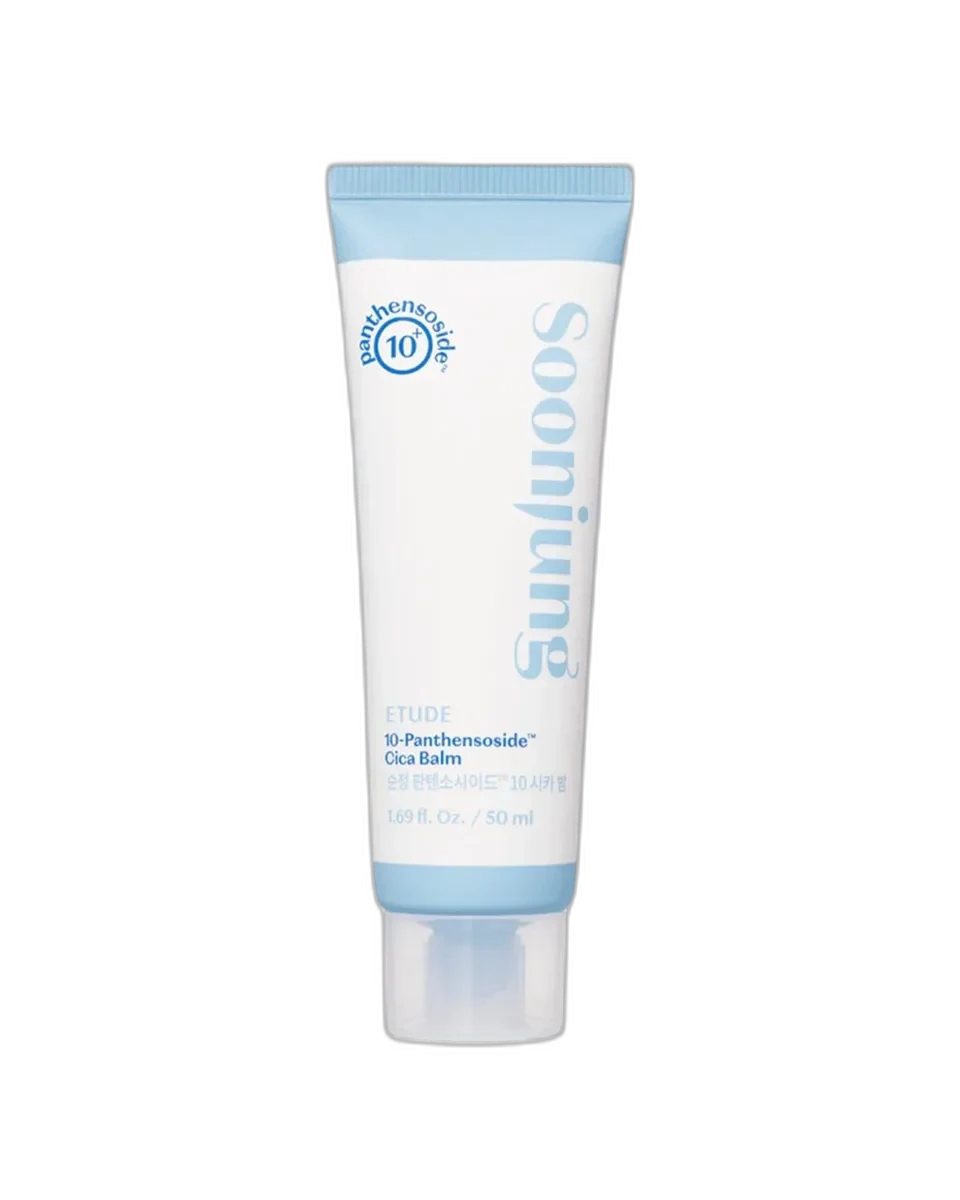
SoonJung Panthensoside Cica Balm
Skin Rescue Essential
 Verified reviewer
Pros & cons.
- +Clinical-grade 5% panthenol concentration matches the dosage used in wound-healing studies
- +Panthenol + madecassoside combination targets both repair and inflammation simultaneously
- +Dense, protective balm creates an occlusive barrier over damaged skin
- +Only 20 ingredients — minimal risk formula for severely compromised skin
- +Fragrance-free, silicone-free, paraben-free with no common allergens
- +Versatile as overnight treatment, spot treatment, and post-procedure care
- −Dense texture too heavy for oily skin or daytime use under makeup
- −Small 50 mL tube runs out quickly when used as full-face treatment
- −Contains cetearyl alcohol — a concern for the small subset who react to fatty alcohols
- −Not suitable for daily use as a regular moisturizer — designed for crisis management
The full review.
Everyone has a retinol story. You applied too much, used it too many nights, or skipped buffering with moisturizer, and now your face is red, flaking, and stinging. Overenthusiastic exfoliation and retinoid reactions are common skincare emergencies. This created the rescue balm category. The Etude SoonJung Panthensoside Cica Balm is likely the best option under thirty dollars.
The name combines panthenol and madecassoside—the two ingredients at the formula’s therapeutic core. Panthenol is at five percent. This isn’t a trace amount for label appeal; five percent panthenol is the concentration used in clinical studies to show accelerated wound healing, significant barrier repair, and reduced transepidermal water loss. At this level, you use an ingredient at therapeutic dosing in an over-the-counter product—a rare find at this price point.
Madecassoside, the purified triterpene glycoside from Centella asiatica, provides the anti-inflammatory component. While panthenol repairs by stimulating cell proliferation and lipid synthesis, madecassoside calms by inhibiting inflammatory cytokines and promoting collagen production. Together, they attack skin damage from two directions—reducing the inflammation that causes redness and discomfort while accelerating the structural repair that restores barrier integrity.
The balm format is deliberately dense. This isn’t a lightweight cream or a gel. It’s a thick balm that requires warming between your fingertips before application and creates a visible protective layer on the skin. That density is intentional. When the skin barrier is compromised, it loses moisture rapidly through gaps in the lipid matrix. An occlusive balm seals those gaps, creating an artificial barrier while the panthenol and madecassoside rebuild the real one. Squalane is the primary emollient base, mimicking skin sebum, while stearic acid and cetearyl alcohol add structural thickness.
The ingredient list is short for a product this effective—twenty ingredients, and every one has a purpose. There is no fragrance, no essential oils, no colorants, and no silicones. When skin is vulnerable, this formula offers the minimum number of ingredients that could cause a reaction while delivering maximum concentrations of repair actives. It is pharmaceutical thinking in a K-beauty package.
Green tea leaf extract adds antioxidant protection—neutralizing free radicals that accumulate at inflammation sites and can impede healing. Hydrogenated lecithin provides phospholipids that reinforce the lipid barrier from within. Diisostearyl malate and cetearyl glucoside contribute to the smooth, non-waxy texture. Every ingredient earns its place.
In practice, the balm works fastest as a nighttime treatment. Cleanse gently, apply a hydrating toner (the Soon Jung Relief Toner is the natural companion), then spread a generous layer of the Cica Balm over affected areas—or the entire face if damage is widespread. The balm sits on the skin like a shield. By morning, redness is visibly reduced, stinging has subsided, and skin feels calmer and more resilient. Repeat for two to three nights to resolve the crisis.
The dense texture makes this less practical for daytime, especially under makeup. The balm’s occlusive quality can interfere with sunscreen application and create a dewy-to-shiny finish. This is a nighttime treatment first, with spot-use potential during the day for irritated areas.
At $25 for 50 mL, the per-ounce cost is higher than other Soon Jung products, but this isn’t for daily use on the entire face. As a targeted treatment during skin stress, one tube lasts two to three months. Given the clinical-grade panthenol concentration and the efficacy of the repair formula, the cost is reasonable—especially compared to a dermatologist visit if you lack a rescue product.
One formulation consideration is cetearyl alcohol, which can trigger reactions in a small subset of sensitive skin individuals. Since this product is designed for compromised skin, the inclusion of a potential trigger is worth noting. If cetearyl alcohol bothers your skin, the Soon Jung All In One Gel (which doesn’t contain it) is an alternative soothing product, though it has lower active concentrations.
The Etude SoonJung Panthensoside Cica Balm earns its place through crisis competence, not daily elegance. It is the product you hope you don’t need and are grateful to have when you do. In K-beauty, where layered routines sometimes push skin past tolerance, a rescue balm is a necessity. This one works as well as any at several times the price.
Formula
PM routine
Ingredient analysis.
Full INCI list
Water, Propanediol, Panthenol, Squalane, Cetearyl Alcohol, Madecassoside, Camellia Sinensis Leaf Extract, Butylene Glycol, Hydrogenated Lecithin, Glyceryl Stearate, Diisostearyl Malate, Cetearyl Glucoside, Stearic Acid, Acrylates/C10-30 Alkyl Acrylate Crosspolymer, Tromethamine, Polyglyceryl-10 Stearate, Polyglyceryl-3 Methylglucose Distearate, Hydroxyethyl Acrylate/Sodium Acryloyldimethyl Taurate Copolymer, Disodium EDTA, 1,2-Hexanediol
Skin match.
The science.
The Science
The 5% panthenol concentration in this balm matches the dosage used in clinical research. A landmark study in the Journal of Dermatological Treatment (Proksch and Nissen, 2002) shows that 5% dexpanthenol cream improves skin barrier function, reduces TEWL, and increases skin hydration compared to vehicle alone. A later study in Skin Pharmacology and Physiology shows that 5% panthenol speeds wound healing by stimulating fibroblast proliferation, increasing cellular energy production, and promoting organized collagen deposition.
Dermatological literature extensively characterizes Madecassoside's mechanisms. Research in the International Journal of Molecular Sciences shows that madecassoside stimulates type I and type III collagen synthesis via the TGF-β pathway, which promotes orderly extracellular matrix formation during wound healing. Its anti-inflammatory activity works through several mechanisms, including NF-κB inhibition and suppression of pro-inflammatory cytokines (IL-1β, TNF-α, IL-6).
Panthenol and madecassoside work synergistically — panthenol provides the raw materials and energy for cellular repair (acting as a coenzyme A precursor), while madecassoside creates the anti-inflammatory environment needed for efficient repair. This dual mechanism follows the dermatological wound care principle that 'wound healing requires both proliferation and inflammation modulation.'
Squalane acts as the primary emollient base. Research shows occlusive barriers speed wound healing by maintaining a moist environment and reducing TEWL. The classic Winter (1962) study in Nature shows moist wound healing produces faster re-epithelialization than dry conditions — a principle that applies to the minor barrier damage from over-exfoliation and retinoid irritation this balm targets.
References
- Topical treatment with dexpanthenol: skin barrier improvement and skin repair — Journal of Dermatological Treatment (2002)
- Formation of the Scab and the Rate of Epithelization of Superficial Wounds in the Skin of the Young Domestic Pig — Nature (1962)
Dermatologist Perspective
Dermatologists view the 5% panthenol concentration in this balm as clinically relevant, as it matches the dosage used in published wound-healing studies. Board-certified dermatologists often recommend panthenol-based products for patients with retinoid-induced irritation, post-procedure inflammation, and compromised barrier conditions. The addition of madecassoside aligns with how dermatologists use centella-derived actives for anti-inflammatory support. The occlusive balm format works for barrier-compromised skin, as moist wound healing principles support using protective barriers during repair. Dermatologists note this product works as an over-the-counter complement to professional treatments, but it does not replace medical care for severe skin conditions.
Where it fits in your routine.
For barrier repair: Cleanse and tone gently, then apply a thick layer to affected areas or the entire face as your final evening step. This thick texture seals the skin overnight. Use nightly until irritation resolves (typically 2-5 nights). For spot treatment: Apply a small amount to specific irritated areas during the day. For post-procedure: Apply liberally to treated areas as your dermatologist directs, reapplying as needed.
At $25 for 50 mL, the per-ounce cost exceeds other Soon Jung products because of higher active concentrations and treatment-focused positioning. Since this is a targeted rescue product for skin stress rather than daily use, one tube lasts 2-3 months. The 5% panthenol concentration offers excellent value; Western clinical brands often charge $30-50 for similar formulations in smaller sizes. For users of active treatments (retinoids, AHAs, BHAs) that periodically compromise the skin barrier, the cost of having this product on hand is negligible compared to the skin recovery it provides.
Keep this in your skincare cabinet for barrier emergencies if you use retinoids, chemical exfoliants, or receive cosmetic procedures. It is essential for sensitive skin types, rosacea sufferers, and anyone prone to seasonal barrier compromise. The 5% panthenol makes it therapeutic, not just cosmetic.
Oily or acne-prone skin without barrier compromise does not need this dense balm texture; it may clog pores. Skip this if you react to cetearyl alcohol. This is not a daily moisturizer. Use the SoonJung Emulsion or All In One Gel for everyday needs.
Product details.
Thick balm. It is thicker than a cream but less waxy than a true ointment. Warm it between fingertips to apply smoothly. It creates a visible protective layer on the skin.
Completely unscented — no fragrance or essential oils.
White tube with a screw cap. The design is clean and pharmaceutical. The 50 mL tube is compact and portable, making it good for travel or a medicine cabinet.
The balm feels protective on application — like a soothing shield for irritated skin. The texture is thick but not sticky; it does not pill or slide off. Skin feels calmer within an hour. By morning, redness and irritation are visibly reduced. This product works.
2-3 months with nightly targeted use, or 4-6 weeks with full-face application
12 months
fall winter
The backstory.
The Cica Balm was developed as the 'intensive care' product in the Soon Jung line — for the days when even the gentle emulsion and toner aren't enough. It was designed for specific situations: over-exfoliation aftermath, retinol irritation, post-procedure healing, and seasonal skin crises. The 'Panthensoside' name is Etude's branding for the panthenol-madecassoside combination that runs through the entire Soon Jung line, but this balm uses them at their highest concentrations, making it the most therapeutically focused product in the range.
About Etude
Established Brand (5–20 years)Etude's SoonJung Cica Balm has 5% 'Panthensoside' — a proprietary panthenol and madecassoside blend from Amore Pacific's R&D division. The product uses 92% naturally derived ingredients and follows the Soon Jung line's sensitive-skin philosophy.
Common myths.
Cica balms are moisturizers repackaged with a trendy ingredient.
This balm contains 5% panthenol—the concentration used in clinical wound-healing studies—and madecassoside, a purified anti-inflammatory triterpene. The thick balm base creates an occlusive barrier to protect damaged skin while the actives work. It is a treatment, not a daily moisturizer.
Avoid heavy balms on irritated skin; they clog pores.
Damaged skin lacks a barrier strong enough to prevent moisture loss. Occlusive products like this balm aid healing by reducing TEWL and creating a protective environment. While pore-clogging concerns healthy, intact skin, irritated, damaged skin benefits from the protective seal.
FAQ.
What is Panthensoside in the SoonJung Cica Balm?
Panthensoside is Etude's proprietary name for panthenol (provitamin B5) and madecassoside (a Centella asiatica active). This balm contains 5% panthenol—the clinical concentration that accelerates wound healing and barrier repair—and madecassoside to provide anti-inflammatory and collagen-stimulating support.
Can I use the SoonJung Cica Balm after retinol?
Yes — many people use the balm this way. When retinol causes peeling, redness, or irritation, 5% panthenol and madecassoside calm inflammation and speed barrier recovery. Apply a thin layer to irritated areas after your retinol absorbs, or use it the next morning to soothe overnight retinol effects.
Is this balm good for eczema?
The fragrance-free, minimal formula with 5% panthenol and squalane works for eczema-prone skin. This thick balm forms a protective barrier over affected areas while panthenol supports healing. However, some eczema sufferers react to cetearyl alcohol — patch test a small area before widespread use.
How is this different from the SoonJung All In One Gel?
The Cica Balm is a thick, concentrated treatment with 5% panthenol for targeted repair of damaged or irritated skin. The All In One Gel is a lightweight, oil-free daily moisturizer with lower concentrations of the same actives. Use the All In One Gel for daily hydration and the Cica Balm as an intensive rescue treatment when skin is compromised.
Can I use this balm every day?
You can, but it works best as a targeted treatment during skin stress — after procedures, during retinol adjustment, or when the barrier is compromised. For daily moisturizing, the lighter SoonJung Emulsion or All In One Gel are more practical. Use the Balm when your skin needs extra help.
What the community says.
"Visibly calms redness and irritation within a day or two of use"
"Perfect rescue product for over-exfoliated or retinol-burned skin"
"5% panthenol concentration feels genuinely therapeutic, not just cosmetic"
"Dense, protective texture seals and heals without clogging pores"
"Fragrance-free and gentle even on severely compromised skin"
"Dense balm texture is too heavy for oily skin or humid climates"
"Small 50 mL size runs out quickly when used as a full-face treatment"
"Contains cetearyl alcohol which some sensitive skin reacts to"
"Not suitable for daytime use under makeup due to thick texture"
People also looked at.