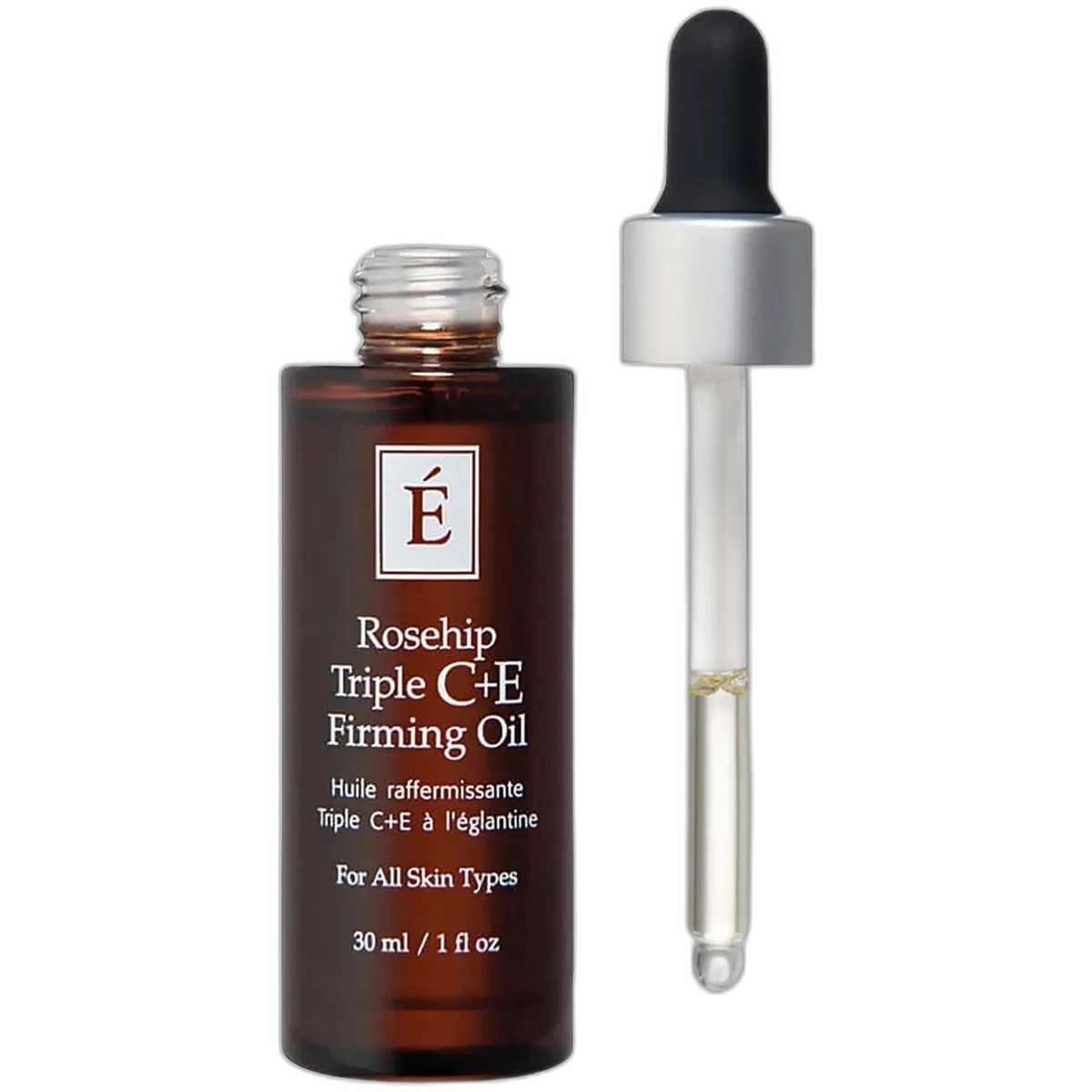
Rosehip Triple C+E Firming Oil
Botanical Glow Oil
 Verified reviewer
Pros & cons.
- +Rosehip seed oil is a legitimate hero with evidence for mild texture improvement
- +Multi-oil blend absorbs more easily than pure single oils
- +Tocopherol provides stable, well-studied antioxidant support
- +Amber glass packaging protects the antioxidant oils from light degradation
- +Dewy glow finish works well as a final PM routine step
- +Pregnancy-safe and vegan formulation
- +Certified organic ingredient sourcing
- −'Triple C+E' naming implies more vitamin C activity than the formula delivers
- −Priced significantly higher than rosehip-focused alternatives
- −Contains sweet almond and avocado oil, not ideal for acne-prone skin
- −Fragrance and botanical profile rule out sensitive skin
- −Not fungal-acne safe due to multiple non-compatible oils
- −Does not replace a dedicated vitamin C serum
The full review.
Some skincare products require translation to understand the actual purchase, and Eminence’s Rosehip Triple C+E Firming Oil is a prime example. The name promises three benefits — vitamin C, vitamin E, and firming — via a rosehip seed oil base. A shopper might assume this oil acts as a vitamin C serum to replace or supplement a traditional ascorbic acid routine. That assumption leads to disappointment. Once you understand the formulation, this product is a well-blended botanical facial oil with modest antioxidant support. Whether $84 is the right price depends on if you want a vitamin C serum or a rosehip oil blend.
The bottle contains specific ingredients. The primary ingredient is rosehip seed oil (Rosa moschata), a legitimate botanical oil for anti-aging. Rosehip seed oil has trans-retinoic acid precursors — compounds the skin partially converts to retinoid-adjacent activity — and essential fatty acids that support barrier function and skin texture. It is not prescription retinol, but the evidence base for rosehip oil exceeds most botanical ingredients in skincare, justifying its anti-aging positioning. Sunflower oil, squalane, avocado oil, jojoba oil, argan oil, and sweet almond oil complete the base. This multi-textural blend absorbs faster than single-oil products and provides a broader fatty acid variety.
The ‘Triple C’ comes from three fruit-derived ingredients: acerola cherry extract, raspberry seed oil, and acai fruit oil. All three contain naturally occurring vitamin C and antioxidant compounds. However, the vitamin C concentration in these botanicals at cosmetic levels is significantly lower than a dedicated ascorbic acid serum or stable vitamin C derivative serum. A 10-20% L-ascorbic acid serum delivers vitamin C in a form and concentration extensively studied for skin brightening and antioxidant activity. This oil delivers modest supplementary antioxidant support from botanical vitamin C sources. These are different. If you expect the brightening or tone-evening effects of a proper vitamin C serum, you will be disappointed. If you use it as an antioxidant-supportive nightly oil and keep your vitamin C serum separate in the morning, you get what the formula delivers.
The vitamin E component is straightforward. Tocopherol is a well-studied antioxidant that works synergistically with vitamin C; in traditional serum formulations, this combination provides enhanced photoprotection and antioxidant stability. In this oil, tocopherol works as a stabilizing and protective antioxidant, while the vitamin C-containing botanicals provide reinforcement. The formula has a meaningful but modest antioxidant profile, which is a defensible positioning if expectations are calibrated.
The oil feels good on skin. The blend is lighter than pure rosehip or avocado oil due to the squalane and sunflower oil, and it absorbs within one to two minutes of pressing into clean skin. The finish is dewy, glowy, and natural — typical for an evening facial oil. The scent is soft rose with subtle botanical undertones; it is less intense than some Eminence products but remains fragranced. The amber glass dropper bottle is aesthetic and functional, as antioxidant oils need light protection to stay stable.
It works as a nightly step for barrier support and gentle anti-aging. Applied after serums and before (or mixed with) moisturizer, the oil delivers the soft, nourished, slightly glowy skin that well-blended facial oils provide. Over 3-4 weeks of consistent use, users typically see slightly smoother texture and a brighter complexion — mostly due to the rosehip seed oil rather than the vitamin C botanicals. For dry or dehydrated skin that enjoys applying facial oil, this is a pleasant product.
The limitations are clear. The formula contains sweet almond oil and avocado oil, which can be comedogenic for acne-prone users, and the profile is not fungal-acne safe. The fragrance and strong botanical profile make it a poor choice for rosacea or reactive skin. Oily skin usually prefers lighter single-oil options or no oil. The $84 price tag is hard to defend; multi-oil blends from Kora Organics, Drunk Elephant, and Tata Harper exist in similar price ranges, but rosehip-focused oils from Pai, The Ordinary, and Trilogy deliver the core rosehip benefit at $15-40.
The honest recommendation: if you love Eminence and want a nice facial oil, and you will pay for the brand’s positioning and aesthetic, this is a well-thought-out formulation. If you want the best value for rosehip oil benefits, cheaper alternatives provide most of what matters. If you expected a vitamin C serum in oil form, reset expectations — use a separate vitamin C serum and use this oil as a nightly botanical hydration step instead.
Ingredient analysis.
Full INCI list
Rosa Moschata (Rosehip) Seed Oil, Helianthus Annuus (Sunflower) Seed Oil, Squalane, Persea Gratissima (Avocado) Oil, Simmondsia Chinensis (Jojoba) Seed Oil, Argania Spinosa Kernel Oil, Prunus Amygdalus Dulcis (Sweet Almond) Oil, Tocopherol, Oryza Sativa (Rice) Bran Oil, Euterpe Oleracea (Acai) Fruit Oil, Borago Officinalis (Borage) Seed Oil, Daucus Carota Sativa (Carrot) Seed Oil, Rubus Idaeus (Raspberry) Seed Oil, Malpighia Glabra (Acerola) Fruit Extract, Rosa Canina Fruit Oil, Rosa Gallica Flower Oil, Parfum (Fragrance)
Skin match.
The science.
The Science
Rosehip seed oil (Rosa moschata) is a well-researched botanical oil. Studies in journals like the Journal of Alternative and Complementary Medicine examine its effects on skin texture, scarring, and photoaging. The oil has high concentrations of linoleic and alpha-linolenic acids and trans-retinoic acid precursors. These provide mild retinoid-adjacent activity—not equal to prescription retinoids, but providing barrier and texture benefits at a gentler intensity. Squalane is a well-characterized lightweight emollient in cosmetic chemistry, known for its non-comedogenic profile and ability to mimic skin's natural lipids. Tocopherol (vitamin E) has extensive literature showing it works as a lipid-soluble antioxidant that works with vitamin C to enhance photoprotection and free-radical scavenging. The 'Triple C' marketing creates a gap in the formula's claims. Acerola cherry extract, raspberry seed oil, and acai fruit oil contain natural vitamin C compounds, but their concentrations in cosmetic formulations are lower than what's needed for the tyrosinase inhibition, collagen support, and brightening effects of dedicated ascorbic acid serums. Research on topical ascorbic acid's skin benefits uses concentrations in the 5-20% range; botanical fruit oils cannot deliver vitamin C at those concentrations and act as supplementary antioxidant sources rather than functional vitamin C treatments. Sunflower, avocado, jojoba, and argan oils add fatty acids that support the emollient and barrier profile. The formulation science is coherent; the marketing asks the vitamin C botanicals to do more than they can.
Dermatologist Perspective
Dermatologists view rosehip seed oil favorably for dry and aging skin within a broader routine. The ingredient has enough evidence that board-certified dermatologists commonly recommend it as a gentle barrier-supportive treatment, especially for patients who cannot tolerate retinoids or want a lower-intensity option. However, dermatologists typically direct patients seeking vitamin C benefits to use a dedicated ascorbic acid or stable vitamin C derivative serum instead of botanical vitamin C sources in an oil blend. This distinction matters—for brightening and photoprotective antioxidant benefits, the evidence supports dedicated serums. This oil works best as a complementary nightly treatment rather than a replacement for an active-driven daytime routine.
Where it fits in your routine.
Apply 2-3 drops to clean, toned skin in the evening after water-based serums and before moisturizer, or mix it with your moisturizer. Press the oil into skin instead of rubbing to increase absorption. Use nightly on dry or normal skin, or 2-3 times per week on combination skin. Skip the T-zone if you have oil-prone areas. It layers well under night creams and over retinol serums to reduce retinoid irritation.
At $84 for 30ml, this costs more than most botanical facial oils. Prestige clean-beauty brands sell multi-oil blends at similar prices, but Pai, Trilogy, and The Ordinary sell single-ingredient rosehip oils for $15-40. This creates a large price gap. The cost covers Eminence brand positioning, multi-oil formulation complexity, organic certification, and spa-channel credibility. This premium makes sense for buyers who value those attributes. For buyers seeking rosehip-specific benefits at the best value, cheaper single-oil products provide most of the results.
Dry, normal, and slightly dehydrated skin needs a botanical facial oil with rosehip seed oil. This suits fans of Eminence and the spa-channel clean-beauty aesthetic who like multi-oil blends. It works for nightly barrier-supportive treatment with mild anti-aging positioning.
Acne-prone, fungal-acne-prone, oily, or sensitive skin needs alternative facial oils. Users wanting vitamin C serum effects should use their dedicated ascorbic acid serum and use this as a supplementary step only. Value shoppers can find cheaper single-ingredient rosehip oils with similar core benefits.
Product details.
Light-to-medium weight facial oil blend that spreads easily and absorbs within a minute
Soft rose and botanical scent with a subtle citrus note — very natural-smelling
Amber glass bottle with dropper, dark packaging protects the antioxidant oils from light degradation
The product gives an immediate dewy glow on application. Skin feels softer within minutes. The squalane and lighter oils in the blend make this oil absorb faster than a pure rosehip product. It causes no tingling or stinging.
About 3-5 months with nightly use
6 months
All Year
The backstory.
Launched in 2018 as Eminence's antioxidant-forward facial oil option. The 'Triple C+E' naming references the vitamin C content of acerola, raspberry, and acai alongside vitamin E from tocopherol and the oils themselves. The amber glass packaging reflects the brand's understanding that antioxidant-rich oils need light protection to remain stable.
About Eminence Organic Skin Care
Established Brand (5–20 years)Eminence Organic Skin Care started in Hungary in 1958. The Rosehip Triple C+E Firming Oil belongs to the brand's antioxidant-focused collection. It uses rosehip seed oil and botanical vitamin C and E sources instead of synthetic ascorbic acid derivatives.
Common myths.
This is a vitamin C serum in oil form.
The vitamin C from acerola, raspberry, and acai has much lower concentrations than a dedicated ascorbic acid or vitamin C derivative serum. For genuine vitamin C brightening, you still need a proper serum — this oil supplements but doesn't replace that routine step.
FAQ.
Can this replace my vitamin C serum?
No — the vitamin C in acerola, raspberry, and acai has much lower concentrations than a dedicated vitamin C serum. Use your ascorbic acid or vitamin C derivative serum in the morning, and use this oil as a supportive antioxidant step in the evening.
Does rosehip seed oil really firm skin?
Rosehip seed oil has trans-retinoic acid precursors that offer mild visible benefits over time. Evidence shows it improves skin texture and softens early signs of aging. The firming effect is real but modest. It provides barrier support rather than structural firming, so do not expect retinoid-level results.
Is it good for acne-prone skin?
Not usually — the formula uses sweet almond oil and avocado oil, which can be comedogenic for some acne-prone users. If you have active acne, use a lighter non-comedogenic oil like squalane or jojoba alone.
Can I use it with retinol?
Yes — you can layer this oil over a retinol serum to reduce irritation, or use it on nights you do not use your retinoid. The oil blend's barrier-supportive character buffers retinoid sensitivity.
Is it safe during pregnancy?
Yes — the oil blend lacks retinoids, salicylic acid, or hormonal botanicals. It is safe for pregnant and nursing users. Rosehip seed oil often helps prevent stretch marks during pregnancy, though evidence for that specific use is modest.
Why is it so expensive?
You pay for the multi-oil blend, organic ingredient sourcing, spa-channel positioning, and the Eminence brand story. Other brands sell comparable facial oils for $30-60. The premium makes sense if you value organic certification and the Eminence aesthetic; cheaper single-oil products offer better value for rosehip oil.
What the community says.
"dewy glow finish"
"lightweight oil blend"
"pleasant rose scent"
"softens dry skin"
"expensive for a botanical oil"
"not a vitamin C serum replacement"
"strong fragrance"
"comedogenic ingredients for acne-prone users"
People also looked at.