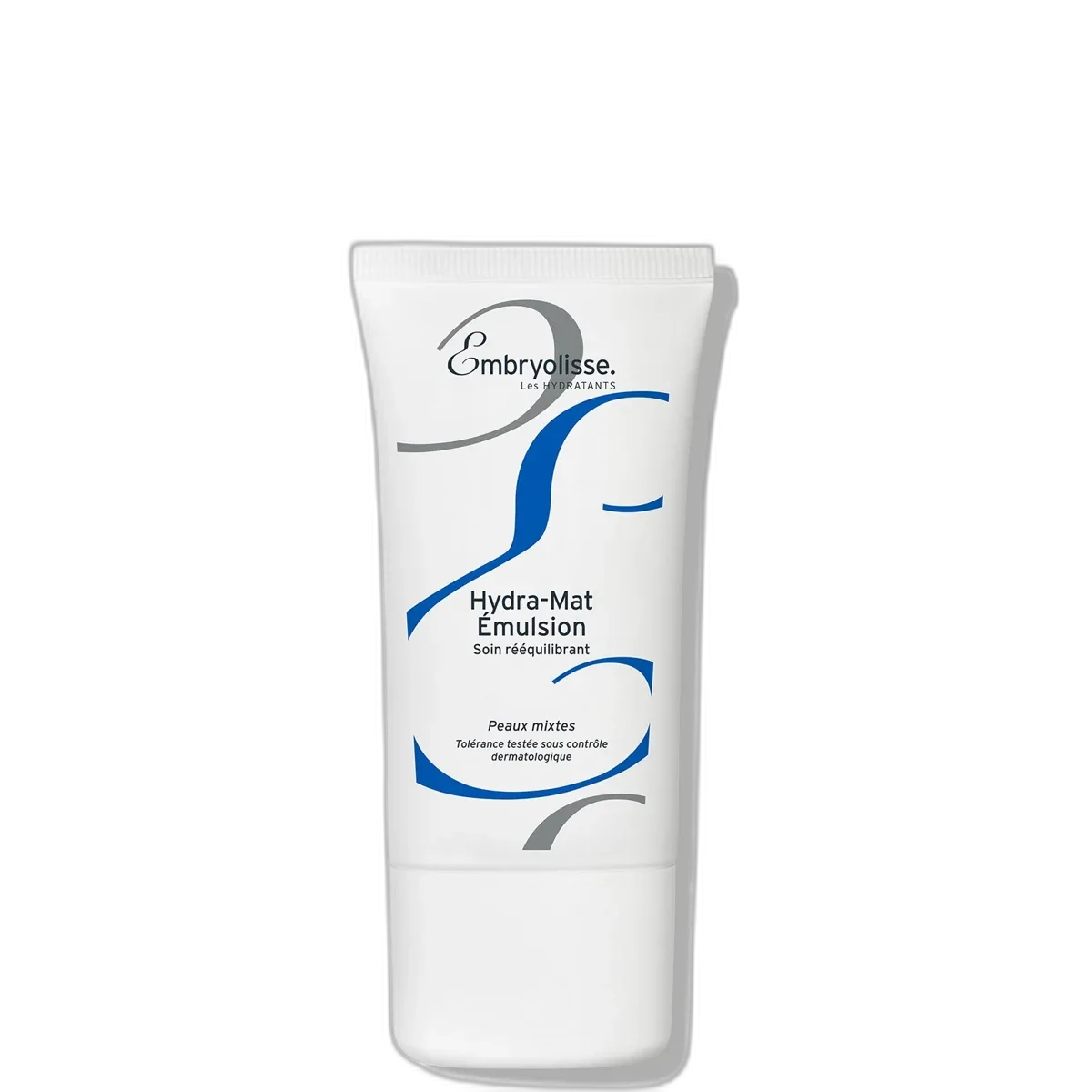
Hydra-Mat Emulsion
French Pharmacy Shine Control
 Verified reviewer
Pros & cons.
- +Silica plus zinc PCA delivers both immediate and longer-term oil control
- +Hydrating base prevents the tight, stripped feeling of pure mattifiers
- +Velvety finish makes it an effective primer under foundation
- +Legacy French pharmacy formulation ethos with no marketing theatrics
- +Cruelty-free and developed with combination skin specifically in mind
- +Pairs naturally with niacinamide and BHA treatments in a routine
- +Lightweight enough for summer layering under mineral sunscreen
- −Contains fragrance that will rule it out for reactive skin types
- −40ml tube is on the small side for full-face daily users
- −Silicone heaviness can pill under certain mineral sunscreens
- −Not fungal-acne safe due to PEG and laureth ingredients
- −Limited US distribution can make restocking inconvenient
The full review.
About Embryolisse
Embryolisse built its reputation on one product — the Lait-Crème Concentré, that dense white tube that has lived in French pharmacy baskets and makeup artist kits since 1950 — and it’s been a rich-skin brand ever since. So when Embryolisse released Hydra-Mat Emulsion in 2017, the natural reaction from longtime fans was mild confusion. Did the brand that perfected skin-that-needs-a-hug really have anything useful to say to skin that can’t stop producing oil by 11am? Turns out, yes. Hydra-Mat is one of those quietly competent products that rewards skepticism. It’s not trying to be a viral mattifying primer or a TikTok pore-blurring miracle. It’s Embryolisse’s version of a shine-control moisturizer, which means it’s been engineered with the same simple logic the brand applies to everything: one tube, calibrated ingredients, no theatrics.
Formula
The formula is built around a silica-and-dimethicone mattifying matrix, which is standard for this product category. What’s less standard is the zinc PCA sitting quietly in the back half of the INCI list. Silica absorbs oil that’s already there; zinc PCA helps regulate the sebaceous activity that produces it in the first place. Pairing them is the difference between a short-term blotting effect and a formula that actually starts to reduce how much shine you’re fighting by hour four. The botanical complex — ivy, bladderwrack, meadowsweet, and centella — adds mild astringent and soothing properties that keep the formula from feeling punitive on skin that gets oily because it’s dehydrated, which is more common than most people realize.
Texture
On application, this is where the silicone-forward construction earns its keep. The emulsion is thin, slightly cool, and spreads into a light powdery finish in under thirty seconds. Skin looks smoother immediately, pores look slightly blurred across the T-zone, and makeup applied on top sits in a way that suggests someone in the lab understood primer chemistry. The finish isn’t the flat, drying matte of a $12 oil-control gel — it’s velvety, the kind of texture you associate with better foundations. If you’ve been wearing Lait-Crème Concentré on your cheeks and leaving your forehead bare because that heavier cream triggers shine, this is the T-zone complement that’s been missing from Embryolisse’s lineup for decades.
Common Complaints
The limitations are honest. The fragrance is real — it’s mild and dissipates in a few minutes, but it’s fragrance, and that will rule this out for anyone with reactive skin, active rosacea, or eczema. The tube is 40ml, which is generous for the price only if you’re using it on your T-zone; spread it full-face and you’ll see the bottom in about two months. The silicone heaviness also means a small subset of users will get pilling under certain mineral sunscreens, so the sixty-second setting window isn’t a suggestion. Fungal-acne-prone skin should also look elsewhere — the PEG-10 dimethicone and laureth-7 aren’t compatible with strict malassezia protocols.
Works for
Shine control typically holds for four to six hours before touch-ups become useful, which is credible for a formula that isn’t stacking powerful actives or blotting papers. Longer-term, if you wear it daily for a month or so, the zinc PCA’s sebum-regulating effects start to show up as skin that doesn’t erupt into oil quite as aggressively between applications. That’s the kind of gradual compounding benefit that separates a decent mattifier from a forgettable one, and it’s what justifies the $28 asking price in a category where pure primers run half as much.
Who Should Buy
For whom does this make sense? Oily and combination skin that’s already comfortable with silicone textures and wants a genuine moisturizer rather than a standalone primer. People who like French pharmacy minimalism and don’t want a ten-step oil-control routine. Makeup wearers who need their moisturizer to play nicely under foundation without a separate primer step. It’s not the right pick for dry skin, barrier-compromised skin, or anyone who wants fragrance-free formulations as a non-negotiable. But for the slice of the market it’s designed for, Hydra-Mat is exactly what you’d want a legacy French brand to build for oily skin: quiet, competent, and free of the marketing drama that defines the rest of the category.
Ingredient analysis.
Full INCI list
Aqua (Water), Cyclopentasiloxane, Glycerin, Dimethicone, Silica, Butylene Glycol, PEG-10 Dimethicone, Sodium Chloride, Disteardimonium Hectorite, Phenoxyethanol, Laureth-7, Tocopheryl Acetate, Chlorphenesin, Caprylyl Glycol, Ethylhexylglycerin, Sodium Hyaluronate, Parfum (Fragrance), Disodium EDTA, Xanthan Gum, Propylene Carbonate, Zinc PCA, Hedera Helix (Ivy) Leaf Extract, Fucus Vesiculosus Extract, Spiraea Ulmaria Flower Extract, Centella Asiatica Extract, Silybum Marianum Extract, Citric Acid
Skin match.
The science.
The Science
This formulation relies on the interaction between absorbent and regulatory oil-control ingredients instead of a single hero active. Silica absorbs sebum through physical adsorption of lipids at the skin's surface, a process well established in cosmetic chemistry literature. Zinc PCA is more interesting because research links it to reduced sebaceous gland activity rather than just surface oil binding. A 2007 study in the International Journal of Cosmetic Science found that topical zinc salts provide consistent sebum-regulating effects with prolonged use, especially when paired with occlusive agents that keep the zinc on the skin. This formula uses dimethicone as a layer that acts as a reservoir, keeping the zinc PCA engaged with the follicular environment instead of being wiped away. The botanical extracts are harder to evaluate. Traditional use supports ivy and meadowsweet as mild astringents and centella asiatica as a soothing agent, but their concentrations here are too low for meaningful clinical effect. They function as formulation polish rather than active contributors. Sodium hyaluronate at this position in the INCI list provides modest humectant support, not the aggressive hydration of dedicated HA serums. This is the correct choice for a mattifying formula where excess hydration would undermine the oil-control architecture. The fragrance is the one formulation choice I question from a dermatological standpoint; it adds no functional benefit and introduces unnecessary sensitization risk in a category prone to reactivity.
Dermatologist Perspective
Dermatologists approach mattifying moisturizers with caution because many in this category sacrifice skin health for short-term shine control. This formulation is a thoughtfully constructed option in the French pharmacy space. The combination of absorbent silica, regulatory zinc PCA, and a hydrating base is what dermatologists tend to recommend when patients with combination skin say pure oil-control gels leave their skin feeling tight. Board-certified dermatologists treating seborrhea and oily acne-prone skin often note that sebum regulation, not just sebum removal, produces lasting improvement. Dermatologists commonly flag the fragrance; anyone with rosacea, sensitized skin, or a fragrance allergy should select a fragrance-free alternative. For otherwise non-reactive combination or oily skin, dermatologists often consider this a reasonable daily moisturizer during warmer months.
Where it fits in your routine.
Apply to clean, dry skin as your last hydrating step. Press a pea-sized amount into oily areas like the forehead, nose, chin, and inner cheeks. Use it full-face if your skin is uniformly oily, but targeted application works best for combination skin if you use a thicker cream on drier zones. Let it set for 60 seconds before applying sunscreen in the morning or treatment products at night. It layers well under liquid and powder foundation and replaces a separate primer step for most formulas.
At $28 for 40ml, this costs more than most French pharmacy moisturizers but stays below prestige skincare prices. The price covers a dual-mechanism oil-control formulation from a seventy-five-year-old derm-developed brand with proven formulation credibility. Compared to pure silicone primers at $15-20 (which don't hydrate) or prestige mattifying creams at $45-60 (which often use similar ingredients in fancier packaging), the value is fair. The size is the main issue — no larger format exists, and full-face users finish a tube in two to three months. Other sizes are not currently available. For T-zone-focused use, which is the correct way to use this, the price per application is reasonable.
Oily and combination skin types want shine control without drying the face. Users who like Embryolisse but find Lait-Crème Concentré too thick for warm weather will like this. Makeup wearers can use this as a primer to avoid the tight feel of pure silicone formulas.
This formula targets dry, sensitive, or barrier-compromised skin. People with fragrance sensitivity, active rosacea, or eczema should skip it. The PEG and laureth content means those with fungal acne need a different option.
Product details.
Light silicone-forward emulsion spreads like a thin lotion and dries to a smooth, powdery finish
Soft clean floral — noticeable on application, fades within minutes
Squeeze tube with a narrow nozzle that controls dispensing well
The application provides an immediate cooling, mattifying sensation. Skin feels smoother within seconds. The silicone finish feels different than creamier moisturizers, but this is normal and does not mean the product is a poor fit.
About 2-3 months with once-daily application on the T-zone
12 months
spring summer
The backstory.
Launched in 2017 as Embryolisse's answer to combination-skin customers who loved the brand but couldn't wear the heavier Lait-Crème Concentré in humid weather. It was developed to sit within the same routine framework as the flagship — a single-step multitasker — but calibrated for shine-prone skin.
About Embryolisse
Legacy Brand (20+ years)A Parisian dermatologist founded Embryolisse in 1950. For over seven decades, its flagship Lait-Crème Concentré has stayed a staple in French pharmacies and backstage makeup kits.
Common myths.
Mattifying moisturizers dry out your skin.
This formula uses silica mattifiers with glycerin and sodium hyaluronate. It controls surface oil without stripping water from deeper layers.
FAQ.
Is Embryolisse Hydra-Mat Emulsion a primer or a moisturizer?
This moisturizer mattifies and smooths the skin. The silica and dimethicone combination blurs like a primer, while glycerin and sodium hyaluronate hydrate. Combination skin can use this instead of a separate moisturizer.
Can I wear this under sunscreen?
Yes, but wait 60 seconds for it to set. This silicone-heavy formula can cause some sunscreens—especially mineral ones with high zinc content—to pill if applied too fast. Wait until it feels dry to the touch, then pat on your SPF.
Does the fragrance make this unsuitable for sensitive skin?
It contains parfum. If you have active rosacea or eczema, or if your skin reacts to fragrance, look elsewhere. For non-reactive oily or combination skin, the fragrance is mild and fades fast.
Will this break me out?
The formula is oil-free and the silica is non-comedogenic. Because it contains multiple silicones, users prone to silicone-trapping sweat and sebum may find it unsuitable. Double cleanse at night if you wear it all day.
How is this different from the regular Lait-Crème Concentré?
The Concentré is a thick, barrier-focused cream for dry to normal skin. Hydra-Mat targets the opposite — combination and oily skin needing oil control. Both use the brand's simple approach but address different skin needs.
Is it fungal-acne safe?
No. The formula uses PEG-10 Dimethicone and Laureth-7. These ingredients are not ideal for managing malassezia folliculitis.
What the community says.
"genuine shine control"
"smooth makeup base"
"lightweight feel"
"contains fragrance"
"small tube"
"can pill under some sunscreens"