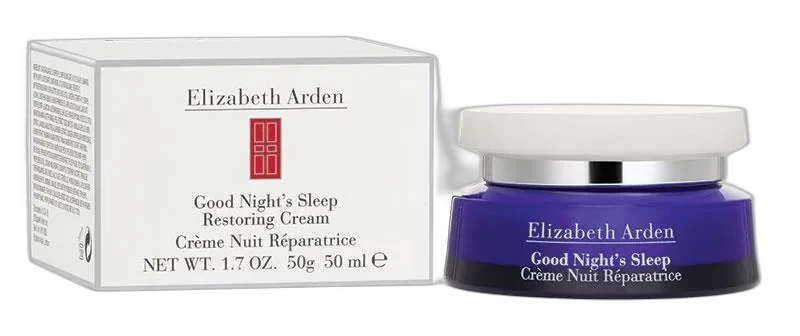
Good Night's Sleep Restoring Cream
Aromatherapy Night Cream
 Verified reviewer
Pros & cons.
- +Whipped, cushiony texture melts into skin without heaviness
- +Niacinamide and hyaluronic acid deliver visible morning hydration
- +Adenosine and caffeine target tired-skin puffiness and dullness
- +Stable vitamin C ester adds antioxidant brightening overnight
- +Lavender and orange essential oils create a genuine bedtime ritual
- +Skin looks visibly more rested from the first use
- +Pairs well with retinol layered underneath
- −Strong essential oil and added fragrance excludes sensitive skin
- −Price is high for the actual active lineup
- −Jar packaging exposes antioxidants to air over time
- −Should be kept away from the immediate eye area
- −Too rich for oily skin types
The full review.
Around 2014, wellness and skincare merged. Sleep became an optimization goal, lavender appeared in twelve different forms, and beauty brands launched “night” products based on the idea that better sleep improves skin. Elizabeth Arden responded with Good Night’s Sleep Restoring Cream, taking this concept literally. The formula focuses on the sensory experience of sleep: a whipped, cushiony texture, a strong lavender and orange essential oil blend, and a functional roster of skincare actives beneath the aromatherapy.
The scent is prominent and lingers on pillows. Long-time fans enjoy the Pavlovian comfort of a scent tied to winding down, which explains the several thousand five-star reviews from users who look forward to application. However, those with sensitive skin or fragrance allergies should avoid it; lavender essential oil and orange peel oil are documented contact sensitizers, and the formula also contains parfum. This is not a clinical sensitive-skin night cream.
The active ingredients are more strategic than the marketing implies. Niacinamide handles most visible results by supporting the barrier, brightening skin, and reducing redness. Sodium hyaluronate provides necessary humectancy to counter overnight water loss, while the shea-butter-and-squalane base seals moisture in. Adenosine has research supporting its use for fine-line smoothing and skin recovery during long overnight contact. Caffeine uses mild vasoconstriction to target puffiness and dullness. Tetrahexyldecyl ascorbate, a stable oil-soluble vitamin C ester, provides brightening and antioxidant support without the stinging or oxidation seen with pure L-ascorbic acid. These ingredients form a coherent set designed for the cream’s specific purpose.
The texture defines the experience. It is whipped and mousse-like, melting into the skin without leaving a greasy residue or heavy occlusive feeling. Most users see visibly plumper, more rested skin by morning even after one use, thanks to the hyaluronic acid and emollient seal. Over several weeks, niacinamide and the vitamin C ester improve skin tone and reduce dullness. The cream meets its promise of better-looking skin in the morning.
The price-to-formula ratio limits its recommendation. At $56 for 50ml, you pay for the experience—the whipped texture, aromatherapy, lavender jar, and bedtime ritual—rather than a unique active package. Unscented drugstore alternatives with niacinamide, hyaluronic acid, and a vitamin C ester offer similar morning-after benefits without the lavender. The jar packaging is also a downside; while vitamin C esters and adenosine are reasonably stable, jars expose the product to air and contamination unlike an airless pump. This is a disappointment for a luxury antioxidant cream.
The eye area is another limitation. Unlike most night creams, this should not be applied near the lash line because the lavender and orange essential oils can irritate thin under-eye skin. Use a dedicated eye product and apply this from the cheekbone outward.
This is a pleasant luxury night cream for those with normal-to-dry skin, no fragrance reactivity, and an interest in bedtime rituals. If you want clinical results in a clinical package, choose a different product; Elizabeth Arden has other options, and the original Eight Hour performs better for the price.
Formula
Texture
The texture defines the experience. It is whipped and mousse-like, melting into the skin without leaving a greasy residue or heavy occlusive feeling. Most users see visibly plumper, more rested skin by morning even after one use, thanks to the hyaluronic acid and emollient seal. Over several weeks, niacinamide and the vitamin C ester improve skin tone and reduce dullness. The cream meets its promise of better-looking skin in the morning.
Scent
The scent is prominent and lingers on pillows. Long-time fans enjoy the Pavlovian comfort of a scent tied to winding down, which explains the several thousand five-star reviews from users who look forward to application. However, those with sensitive skin or fragrance allergies should avoid it; lavender essential oil and orange peel oil are documented contact sensitizers, and the formula also contains parfum. This is not a clinical sensitive-skin night cream.
Common Praise
The cream meets its promise of better-looking skin in the morning.
Common Complaints
The price-to-formula ratio limits its recommendation. At $56 for 50ml, you pay for the experience—the whipped texture, aromatherapy, lavender jar, and bedtime ritual—rather than a unique active package. Unscented drugstore alternatives with niacinamide, hyaluronic acid, and a vitamin C ester offer similar morning-after benefits without the lavender. The jar packaging is also a downside; while vitamin C esters and adenosine are reasonably stable, jars expose the product to air and contamination unlike an airless pump. This is a disappointment for a luxury antioxidant cream.
Not ideal for
The eye area is another limitation. Unlike most night creams, this should not be applied near the lash line because the lavender and orange essential oils can irritate thin under-eye skin. Use a dedicated eye product and apply this from the cheekbone outward.
Works for
This is a pleasant luxury night cream for those with normal-to-dry skin, no fragrance reactivity, and an interest in bedtime rituals. If you want clinical results in a clinical package, choose a different product; Elizabeth Arden has other options, and the original Eight Hour performs better for the price.
Ingredient analysis.
Full INCI list
Water, Glycerin, Cetearyl Alcohol, Caprylic/Capric Triglyceride, Glyceryl Stearate, Cetyl Esters, PEG-40 Stearate, Butyrospermum Parkii (Shea) Butter, Squalane, Dimethicone, Phenoxyethanol, Tocopheryl Acetate, Cetyl Alcohol, Acrylates/C10-30 Alkyl Acrylate Crosspolymer, Sodium Hyaluronate, Niacinamide, Panthenol, Tetrahexyldecyl Ascorbate, Adenosine, Caffeine, Bisabolol, Allantoin, Citrus Aurantium Dulcis (Orange) Peel Oil, Lavandula Angustifolia (Lavender) Oil, Fragrance, Disodium EDTA
Skin match.
The science.
The Science
The formulation uses several well-studied actives in supporting roles. Niacinamide has the most evidence in this formula; published clinical work shows it improves barrier function, reduces transepidermal water loss, supports ceramide synthesis, and provides mild brightening by inhibiting melanosome transfer. Hyaluronic acid as a sodium salt is a documented humectant that binds water in the upper stratum corneum, which adds plumpness and visible smoothness. Adenosine has a smaller but meaningful research base, including studies showing it reduces the appearance of fine lines with regular topical use; it works by activating fibroblasts and supporting collagen. Caffeine has established vasoconstrictive and antioxidant properties for puffiness and dullness, with the strongest evidence in eye-area applications but reasonable use for the face. Tetrahexyldecyl ascorbate is a stable, oil-soluble vitamin C derivative that converts to active ascorbic acid in skin; it offers antioxidant and brightening benefits with less irritation than L-ascorbic acid. Lavender and orange essential oils have aromatherapeutic literature suggesting calming effects via olfactory pathways, but they are documented contact allergens. The dermatology consensus is to avoid them in formulations for sensitive or reactive skin. The active strategy is sound for a night cream targeting dullness and dehydration, but no single component matches the evidence base of retinol or tranexamic acid for their respective indications.
Dermatologist Perspective
Dermatologists generally view aromatherapy-forward night creams as comfort products rather than treatment products. The skincare actives in this formula — niacinamide, hyaluronic acid, adenosine, caffeine, and a vitamin C ester — are reasonable supporting ingredients but lack the evidence level of retinoids or peptides for anti-aging. Board-certified dermatologists note that lavender and citrus essential oils can sensitize skin over time, especially in patients with rosacea, eczema, or contact dermatitis, and they typically recommend fragrance-free alternatives for those populations. For patients without reactivity who want a pleasant nighttime moisturizer to use alongside a separate retinol or treatment serum, this product fits into an evening routine. Dermatologists also emphasize that no topical product replaces sleep — the body's overnight repair processes restore tired skin.
Where it fits in your routine.
Apply nightly after cleansing and serums as your final evening step. Warm a small amount between fingertips, then press into your face and neck. The whipped texture spreads easily; start with less than you think you need. Avoid the immediate eye area because of the essential oil content. If you use retinol or peptide treatments, apply those first. Wait two to three minutes for absorption, then layer this cream on top to seal in the actives and provide overnight comfort. Use this as part of a wind-down routine to experience the aromatherapy element.
At about $56 for 50ml, Good Night's Sleep Restoring Cream is a luxury department-store night cream. The formula uses niacinamide, sodium hyaluronate, adenosine, caffeine, and tetrahexyldecyl ascorbate, but unscented drugstore night creams for $15-25 have similar active combinations. You pay for the experience: the whipped texture, the lavender-orange aromatherapy ritual, the Elizabeth Arden brand, and the packaging. The price works for those who value the bedtime ritual and lack fragrance sensitivity. For those focused only on the active load, the cost-to-benefit ratio is harder to defend. This specific formula lacks other widely available sizes.
This works for normal to dry skin and those without fragrance sensitivity who enjoy a bedtime skincare ritual. It suits people who use lavender for relaxation and want a night cream that functions as a sleep ritual.
Sensitive, reactive, or rosacea-prone skin should avoid this because it contains essential oils and fragrance. Users wanting more active ingredients per dollar should choose a more clinically-focused alternative.
Product details.
Whipped, cushiony cream that melts into skin without feeling heavy
Pronounced lavender and orange aromatherapy blend
Pale lavender jar with metallic accents
The lavender-citrus aromatherapy scent is intentional; the product is part of a sleep ritual. The whipped, cushiony texture melts into skin without the heavy feel of some night creams. Many users report visibly plumper, more rested skin after the first use.
Approximately 2-3 months with nightly face and neck use
12 months
fall winter
The backstory.
Launched in 2014 as part of Elizabeth Arden's expansion into the sleep-and-skincare wellness category that emerged in the early 2010s. The formulation explicitly leans into the connection between sleep quality and skin appearance, marketed alongside the brand's existing Visible Difference and Ceramide lines.
About Elizabeth Arden
Legacy Brand (20+ years)Elizabeth Arden launched in 1910 and remains one of America's oldest beauty houses. Modern skincare lines use in-house formulation labs. The brand has a long history in prestige night-creams, but Good Night's Sleep focuses on luxury comfort rather than clinical validation.
Common myths.
Sleep creams can replace actual sleep
No topical product replaces the systemic recovery the body performs during deep sleep. This cream addresses visible morning signs of poor sleep — dullness, dehydration, and mild puffiness — but more sleep is the real fix for tired skin.
Lavender oil is always calming and safe
Lavender essential oil is a known fragrance allergen for many people and causes sensitization over time. Aromatherapy works for many users, but people with sensitive or reactive skin should patch test first.
FAQ.
Does Elizabeth Arden Good Night's Sleep Restoring Cream really help with sleep?
Lavender and orange essential oils provide aromatherapy for some, but the cream isn't a sedative. The skincare benefits are more reliable — niacinamide, hyaluronic acid, adenosine, and caffeine address visible signs of tired skin overnight.
Is this cream good for sensitive skin?
No — the formula has added fragrance, lavender essential oil, and orange peel oil. These are common irritants for reactive skin. Sensitive users can choose a fragrance-free night cream instead.
Can I layer retinol underneath?
Yes — the cushiony emollient base of this cream works well with a thin layer of retinol applied underneath. This buffers the irritation and dryness retinol causes. Apply retinol first, wait a few minutes, then layer this on top.
Can I use it under my eyes?
Avoid the immediate eye area. Essential oils irritate thin under-eye skin. Use a dedicated eye cream there and apply this from the upper cheekbone outward.
Is it worth the price?
This night cream has a comfortable texture, a solid active list, and a pleasant ritual. Whether the $56 price tag is worth it depends on your preference for lavender — drugstore options with similar actives cost half as much.
How long does a jar last?
Use nightly on the face and neck for about 2-3 months. The whipped texture lasts long; a small amount covers the full face.
What the community says.
"Soothing lavender scent helps wind down for bed"
"Skin feels plump in the morning"
"Luxurious cushiony texture"
"Whipped consistency"
"Strong fragrance"
"Pricey for the active load"
"Not suitable for sensitive skin"
"Jar packaging"