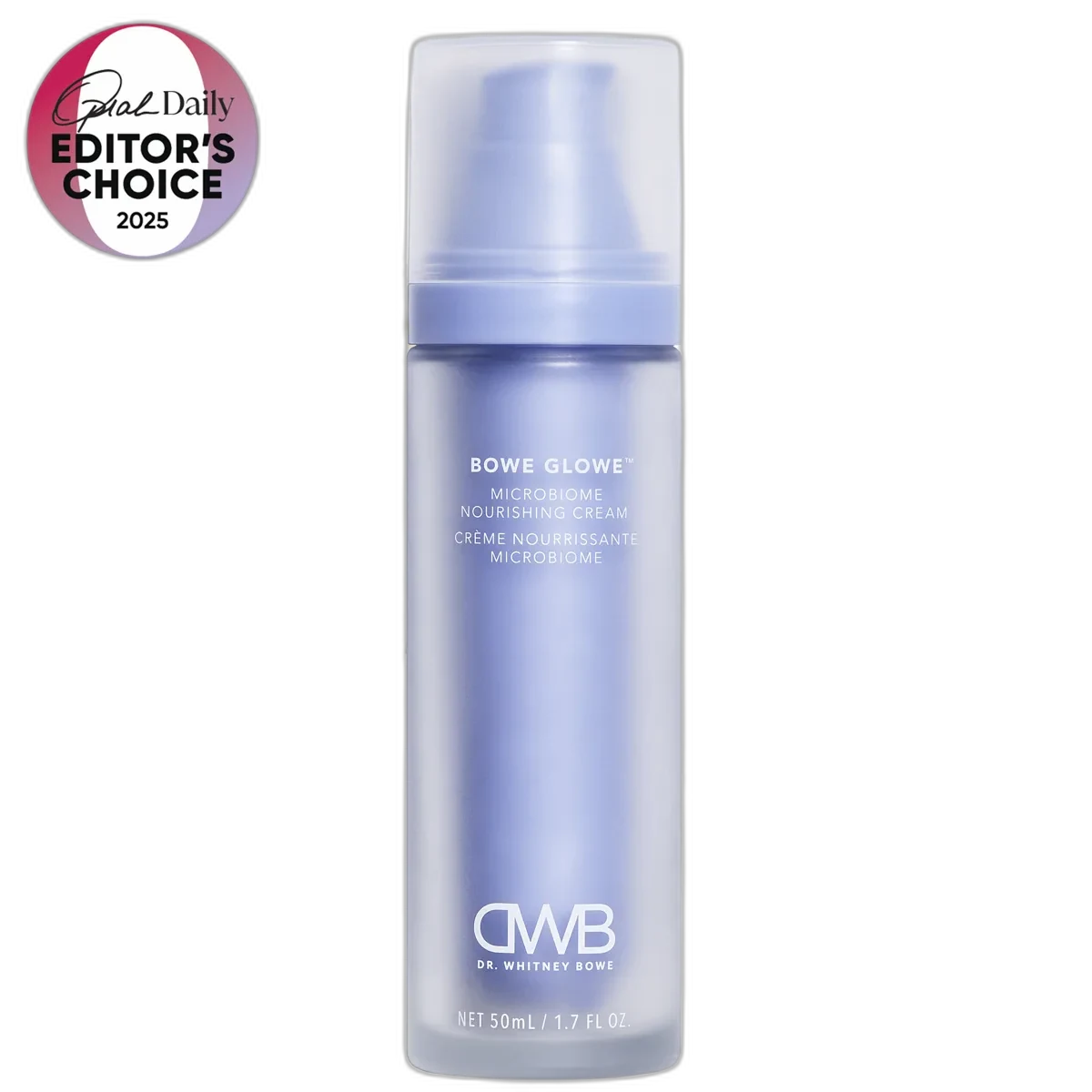
Bowe Glowe Microbiome Nourishing Cream
Barrier Repair + Microbiome Support
 Verified reviewer
Pros & cons.
- +Complete ceramide-cholesterol-fatty acid lipid trio for genuine barrier repair
- +Pro-pre-postbiotic complex adds microbiome support beyond lipid repair
- +Calms sensitive, reactive, or compromised skin within the first few uses
- +Elegant rich-but-lightweight texture suitable for all-day wear under SPF
- +Fragrance-free, essential-oil-free construction safe for the most sensitive users
- +Pregnancy-compatible formulation from a dermatologist-founder brand
- +Oprah's Favorite Things 2025 recognition brought mainstream attention
- −Premium price at $95 for 1.7oz compared to drugstore alternatives
- −Jar packaging is less ideal than airless for ferment ingredient stability
- −Brand launched in 2023 — limited long-term real-world track record
- −Not rich enough for severely dry skin during harsh winter conditions
- −Simpler cheaper ceramide creams deliver most of the lipid benefit without the price
The full review.
Two ways exist to view the skin barrier. The older method—used by most moisturizers—focuses on lipids. The stratum corneum requires ceramides, cholesterol, and free fatty acids in a 3:1:1 ratio to function. When over-exfoliation, retinoid irritation, weather, or aging deplete these lipids, barrier function suffers. Replace the lipids to repair the barrier. This simple logic works well and explains why ceramide moisturizers fill every drugstore.
The newer method adds a second pillar: the microbiome. Your skin hosts commensal bacteria like Staphylococcus epidermidis and Cutibacterium acnes. These microbes manage barrier function, immune modulation, and inflammatory balance, a process dermatological science has studied for fifteen years. When harsh cleansers, aggressive actives, or disease states disrupt this community, lipid-only repair fails to restore skin health. You must support microbes and lipids together. Dr. Whitney Bowe is a leading American dermatologist advocating for this dual approach, and Bowe Glowe is the best consumer product I have found that uses this logic.
The lipid component is strong. Ceramide NP—the most clinically studied skin ceramide—pairs with pomegranate sterols (a plant-derived cholesterol mimic), shea oil, squalane, and sunflower seed oil to provide a full barrier-lipid package. This is not a ceramide-only product; it is a complete lipid replacement system for all three pillars of the stratum corneum’s lipid matrix. The brand claims measurable barrier repair within one hour, which is plausible for a well-constructed ceramide-cholesterol-fatty acid complex.
The microbiome component is more interesting. Three ingredients drive this: lactobacillus ferment (a postbiotic), inulin (a prebiotic fiber), and alpha-glucan oligosaccharide (a prebiotic). Together, they feed beneficial commensal bacteria on the skin surface and provide gentle inflammatory modulation. Five years ago, this was mostly marketing; today, dermatological research supports it. While not fully proven, the formulation shows intentional design rather than just labeling something “postbiotic.”
Bowe Glowe feels pleasant. The thick texture feels substantial but absorbs into a soft, cushioned finish that is not heavy or greasy. Sensitive, reactive, and compromised skin types often see less redness and improved comfort within a few uses. Hyaluronic acid and humectants provide immediate hydration and a visible glow, while the barrier work happens over days and weeks. New users often find that this dermatologist-developed cream feels more luxurious than clinical, a benefit over medical-brand barrier creams that prioritize function over experience.
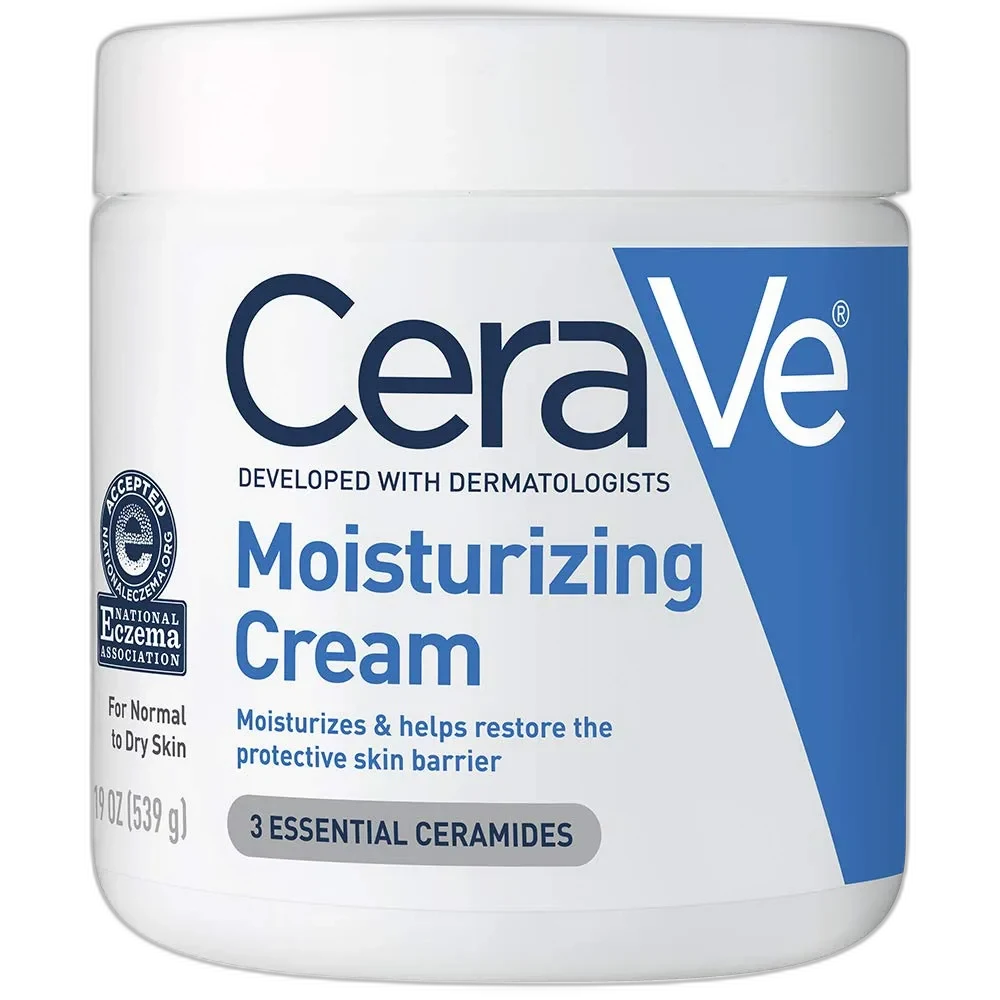
The limitations. At $95 for 1.7 ounces, the price is premium. Excellent barrier moisturizers like CeraVe Moisturizing Cream and La Roche-Posay Toleriane Double Repair cost a third as much and deliver most lipid-repair benefits without the microbiome focus or dermatologist-founder branding. Whether the upgrade is worth it depends on your interest in microbiome-conscious formulas. The jar packaging is also a drawback; a jar is less ideal than airless tubing for lactobacillus ferment, which can lose activity via air exposure. Dr. Whitney Bowe Beauty uses refillable systems for some items, but this jar is less engineered than their airless tubes.
One more note: the brand is new. It launched in 2023, which is recent for premium dermatologist-developed skincare. Dr. Bowe has a strong clinical reputation, but these products lack the decade-plus of real-world validation seen in legacy derm brands. Because this moisturizer uses well-understood ingredients like ceramides and plant sterols, this is less of a concern than with active treatments, but you are paying premium prices for a formulation still building long-term reliability.
Who’s this for?
Anyone with compromised skin barriers, sensitivity, reactive skin, early-to-moderate aging, or mild dryness who wants a sophisticated dermatologist-developed moisturizer with microbiome support. Users who want more than drugstore barrier creams. People who want fragrance-free, essential-oil-free, clean constructions from credible founders.
Who should skip?
Anyone on a budget who can get 85% of the benefit from a $15 drugstore ceramide cream. People with severely dry skin needing a heavier winter occlusive. Users who do not care about the microbiome and prefer simpler, cheaper barrier creams.
Ingredient analysis.
Full INCI list
Water (Aqua), Propanediol, Caprylic/Capric Triglyceride, Squalane, Glycerin, Sodium Acrylates Copolymer, Butyrospermum Parkii (Shea) Oil, Helianthus Annuus (Sunflower) Seed Oil, Punica Granatum Sterols, Lactobacillus Ferment, Inulin, Ceramide NP, Sodium Hyaluronate, Alpha-Glucan Oligosaccharide, Lecithin, Bisabolol, Tocopheryl Acetate, Hydroxydecyl Ubiquinone, Acrylates/C10-30 Alkyl Acrylate Crosspolymer, Ammonium Acryloyldimethyltaurate/VP Copolymer, Maltodextrin, Silica, Sodium Phytate, Ethylhexylglycerin, Phenoxyethanol, Mica, Titanium Dioxide (CI 77891)
Skin match.
The science.
The Science
Bowe Glowe's barrier repair claims use validated ceramide science. Research in the Journal of Investigative Dermatology and the British Journal of Dermatology shows topical ceramides — especially ceramide NP — replenish the stratum corneum's lipid matrix and speed barrier recovery after damage. A 2006 International Journal of Cosmetic Science study found that a 3:1:1 ratio of ceramides, cholesterol, and free fatty acids repairs the barrier faster and more completely than any single lipid alone. Bowe Glowe uses this architecture via ceramide NP, plant sterols, and sunflower/shea seed oils. Emerging research in Frontiers in Microbiology and the Journal of Drugs in Dermatology supports the microbiome aspect. These studies show how commensal skin bacteria aid barrier function, inflammatory regulation, and pathogen resistance. Prebiotic-postbiotic cosmetic ingredients also show measurable effects on microbiome composition and inflammatory markers in early clinical and in vitro studies. The lactobacillus ferment plus inulin plus alpha-glucan oligosaccharide trio in this cream applies this science, though long-term clinical benefits compared to lipid-only barrier creams are still being established. The bisabolol inclusion adds anti-inflammatory support via its alpha-bisabolol content, as research shows measurable effects on erythema and irritation markers. Hyaluronic acid, glycerin, and squalane provide documented hydration and moisture retention.
Dermatologist Perspective
Dermatologists support ceramide-based barrier-repair moisturizers for patients with compromised skin barriers, such as eczema, rosacea, post-procedure recovery, retinoid-induced irritation, and aging-related dryness. The full lipid trio — ceramides plus cholesterol plus fatty acids — works more effectively than single-lipid products and is a common recommendation for significant barrier compromise. The microbiome-friendly angle is newer but increasingly recognized as research links the skin microbiome to overall skin health. While microbiome-focused skincare is a developing category, formulations that avoid harsh surfactants and include prebiotic and postbiotic ingredients are reasonable supportive approaches. For patients wanting a premium barrier-repair moisturizer with microbiome support and a dermatologist-founder, dermatologists have mentioned Bowe Glowe in clinical conversations since its 2023 launch, though cheaper alternatives with strong ceramide content work well for most users.
Where it fits in your routine.
Apply a pea-sized amount (slightly more for the neck) to clean skin after serums every morning and evening. Press and smooth it into the face, neck, and upper chest. In the morning, use broad-spectrum SPF 30 or higher after. At night, use this as the final step, or layer a facial oil or balm on top for very dry skin. Use twice daily for best barrier repair results. One jar lasts 2-3 months with consistent twice-daily full-face use.
At $95 for 1.7oz, Bowe Glowe costs more than most dermatologist-developed moisturizers. It comes in only one size. Compared to $15-25 drugstore ceramide creams, it costs four to six times more. This price reflects formulation complexity that is real but not unique; CeraVe, La Roche-Posay, and others provide strong ceramide products for much less. Beyond the basics, you pay for the full lipid trio architecture, the pro-pre-postbiotic microbiome complex, the dermatologist-founder credibility, and the brand positioning. The price is defensible for users who value these factors and have struggled with simpler barrier creams. For everyone else, cheaper alternatives deliver most of the benefit.
This moisturizer works for people with compromised skin barriers, sensitive or reactive skin, early-to-moderate aging, or mild dryness who want a premium dermatologist-developed formula with microbiome support. It suits users who have outgrown simpler ceramide creams and want a more sophisticated formulation. It also fits those who value dermatologist-founder credibility and microbiome-conscious skincare.
Shoppers on a budget who get most benefits from a $15-25 drugstore ceramide cream. People with severely dry skin who need a heavier winter occlusive. Users who ignore the microbiome angle and prefer simpler, effective alternatives.
Product details.
Thick but lightweight cream that spreads easily and absorbs to a soft, cushioned finish
Fragrance-free
Glass jar with a protective seal — it is not airless, which limits ferment stability over the product's life
The first application provides immediate cushioning hydration and a subtle visible glow. It does not sting or cause reactivity on compromised or post-procedure skin. Most users describe the texture as thick but not heavy, and the finish as soft and natural instead of dewy or matte. Within the first few days, reactive or sensitive skin shows reduced redness and improved comfort.
2-3 months with twice-daily face and neck application
12 months
All Year
The backstory.
Bowe Glowe launched as the flagship moisturizer of Dr. Whitney Bowe Beauty in 2023, built around the brand's core thesis that healthy skin depends on both lipid barrier integrity and a balanced microbiome. The cream has become the line's bestseller and was featured on Oprah's Favorite Things in 2025, which significantly expanded its reach beyond the original dermatology-aware audience into mainstream consumer skincare.
About Dr. Whitney Bowe Beauty
New Brand (<2 years)Dr. Whitney Bowe Beauty launched Bowe Glowe in 2023. Board-certified dermatologist Dr. Whitney Bowe formulated the cream based on her clinical interest in the skin microbiome. The brand is new, but the cream claims to repair the barrier within one hour and has earned recognition like Oprah's Favorite Things.
Common myths.
Barrier repair creams only help people with eczema
Over-exfoliation, retinol ramps, weather, stress, or aging compromise the skin barrier for almost everyone. A good barrier-repair cream like this one helps normal skin stay resilient instead of just treating diagnosed conditions.
Probiotic skincare is just marketing fluff
Stable leave-on creams cannot contain live probiotics. However, bacterial ferments and prebiotic-postbiotic complexes show growing evidence for supporting skin microbiome balance. The effect is not fully proven, but it exists.
What the community says.
"Soothes sensitive and reactive skin quickly"
"Elegant, non-heavy texture despite rich feel"
"Visible calming within the first few uses"
"Thoughtful microbiome-friendly formulation"
"Expensive at $95 for 1.7oz"
"Not rich enough for severely dry skin in winter"
"New brand with limited long-term reviews"