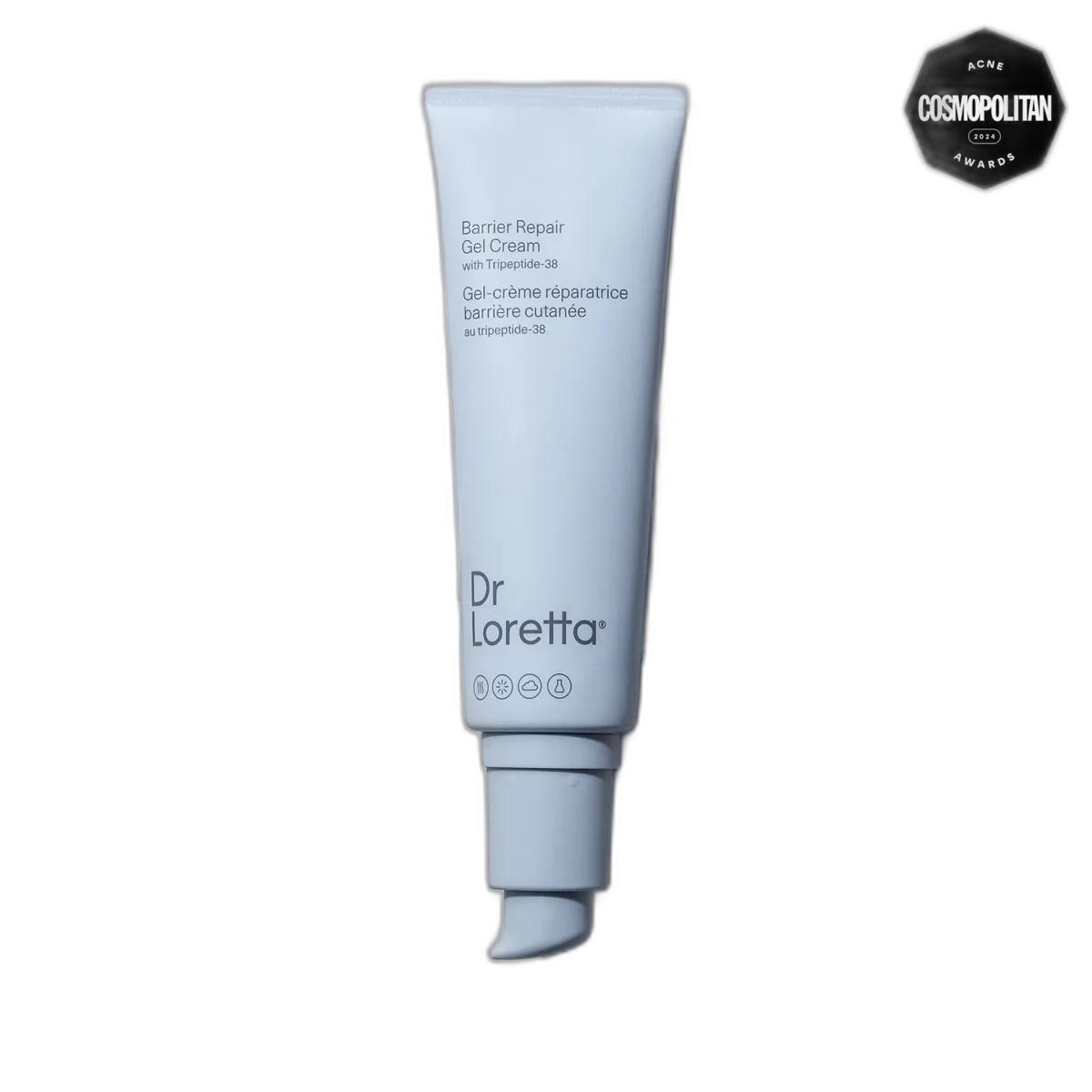
Light Moisturizing Cream (Barrier Repair Gel Cream)
Gel-Cream for Sensitive Oily Skin
 Verified reviewer
Pros & cons.
- +Genuinely lightweight texture layers flawlessly under sunscreen
- +Full ceramide NP plus phytosphingosine barrier architecture
- +Squalane delivers non-comedogenic emollient support
- +Ergothioneine provides high-performance antioxidant protection
- +Fragrance-free formula suits sensitive and reactive skin
- +Palmitoyl tripeptide-38 adds subtle firming benefit
- −Not hydrating enough for truly dry winter skin
- −Coconut extract is a problem for users with coconut sensitivity
- −Emerging brand with shorter independent research track record
- −Results beyond basic hydration and barrier support are subtle
The full review.
The hardest moisturizer to formulate isn’t a rich cream — it’s a truly lightweight gel-cream that still delivers meaningful barrier repair. Rich creams are easy: pile on the shea butter, the petrolatum, the waxes, and you have something that feels expensive and works fine. Lightweight gel-creams are where formulators get lazy. Most of them are 85% water, some carbomers, a little glycerin, and a vanishingly small token ingredient list that exists mostly to justify the prestige price. You can spot them by reading the INCI: if you hit phenoxyethanol before you’ve seen anything worth talking about, you’re looking at an empty gel-cream. The Dr. Loretta Light Moisturizing Cream — sold on the brand’s current site as the Barrier Repair Gel Cream — is one of the rare exceptions.
Open the tube and the texture matches the name. It spreads like water, absorbs within 30 seconds, and leaves no tackiness or residue. If you’ve ever been frustrated by a ‘lightweight’ moisturizer that pills under sunscreen or leaves your fingers slippery for ten minutes, you’ll notice the difference immediately. But the real argument for this cream lives below the surface, in the ingredient deck.
Squalane sits at position six on the INCI, which is unusually high for a gel-cream at this price point. That’s the fatty-acid side of barrier repair, delivered through an emollient that happens to be lightweight, non-comedogenic, and structurally similar to the skin’s own sebum. Below it, you’ll find ceramide NP and phytosphingosine — the ceramide itself and its metabolic precursor — which together rebuild the lipid lamellae that hold the stratum corneum together. A lot of gel-creams include one or the other; including both is a more complete barrier strategy and a sign the formulator was thinking about it seriously.
Then come the bonus layers. Sodium hyaluronate at a molecular weight appropriate for a lightweight vehicle. Palmitoyl tripeptide-38 — the same signal peptide branded as Matrixyl Synthe’6 — for subtle collagen and laminin support. Lactobacillus ferment as a postbiotic for microbiome balance. And most interestingly, ergothioneine, a mushroom-derived antioxidant with unusually long cellular half-life and specific protection against UV-induced oxidative stress. Ergothioneine is a relatively new ingredient in prestige skincare and one of the more scientifically interesting inclusions in a daily moisturizer at this price.
The first few weeks of use are quiet in a good way. There’s no breaking out, no tingling, no adjustment period — just comfortable, hydrated skin. That’s actually the most you can ask of a daily lightweight moisturizer, and it’s harder to achieve than it sounds. Around week two, most users notice that their skin feels slightly less reactive to wind, weather, and other actives in the routine, which is the first sign the ceramide-phytosphingosine barrier work is paying off. The longer-term peptide benefit is subtle — a gel-cream isn’t going to transform your skin’s firmness the way a dedicated treatment serum would — but the gradual improvement in skin quality is real.
The honest limitations are fairly narrow. This cream isn’t enough for true dry skin in winter; it’s designed for oily, combination, and normal skin, and users with dedicated dryness should look at Dr. Loretta’s Concentrated Firming Moisturizer instead. The coconut fruit extract inclusion is worth flagging for users with coconut sensitivity, and it’s not necessarily fungal-acne safe. And Dr. Loretta as a brand is still in the emerging category — only eight years in market, with less independent long-term research than the legacy derm brands. That’s factored into the scoring honestly.
At $58.50 for 1.7 oz, this is actually one of the better-value options in the prestige fragrance-free gel-cream category. Comparable products from more established brands often run $80-100 for similar or thinner ingredient lists. The Dr. Loretta version is formulated with the kind of attention to detail that comes from a dermatologist with 40+ years of clinical practice, and it shows in the small decisions — the choice of squalane over mineral oil, phytosphingosine alongside ceramide NP, ergothioneine as a specific antioxidant rather than the default tocopherol. It’s not going to be in every routine, but for its specific audience, it’s one of the more thoughtful options available.
Ingredient analysis.
Full INCI list
Aqua (Water/Eau), Glycerin, Caprylic/Capric Triglyceride, Propanediol, Cetearyl Alcohol, Squalane, Cocos Nucifera (Coconut) Fruit Extract, Sodium Stearoyl Glutamate, Carbomer, Phenoxyethanol, Caprylyl Glycol, Lactobacillus Ferment, Diisostearyl Malate, Sodium Polyacrylate, Ceramide NP, Ethylhexylglycerin, Hexylene Glycol, Sodium Phytate, Citric Acid, Hydroxypropyl Cyclodextrin, Sodium Hyaluronate, Sodium Hydroxide, Phytosphingosine, Palmitoyl Tripeptide-38, Ergothioneine
Skin match.
The science.
The Science
The barrier-repair claim relies on the ceramide-plus-phytosphingosine inclusion, based on the physiologic lipid replacement work of Man, Feingold, and Elias. Their research shows that applying ceramides with precursors and supporting lipids restores barrier function better than applying ceramides alone, because the skin's lamellar body machinery secretes lipids as complete mixtures rather than individual molecules. Phytosphingosine acts as a ceramide precursor, providing substrate for endogenous ceramide synthesis that extends the barrier effect beyond direct topical supplementation. The peptide comes from palmitoyl tripeptide-38, marketed as Matrixyl Synthe'6, which studies show affects multiple extracellular matrix components including collagen type I, III, laminin, and hyaluronic acid synthesis. Manufacturer in vitro data show upregulation of these components in fibroblast cultures at cosmetically usable concentrations, though independent clinical trials are more limited. Ergothioneine is a notable inclusion — work in the Journal of Investigative Dermatology and related journals characterizes it as a potent scavenger of singlet oxygen and hydroxyl radicals, providing specific protection against UV-induced oxidative stress and a long cellular half-life compared to other antioxidants. Documentation shows its transport into keratinocytes via the OCTN1 transporter, which supports its bioavailability from topical application. Decades of cosmetic and dermatological use establish Squalane as a barrier-compatible emollient, and its non-comedogenic profile suits oily and combination skin.
Dermatologist Perspective
Dermatologists often recommend lightweight gel-cream moisturizers like this one for patients with oily, combination, or acne-prone skin who need barrier support without the comedogenic risk of heavier creams. Board-certified dermatologists note that combining ceramides with phytosphingosine and squalane in one lightweight vehicle addresses barrier repair more completely than most gel-creams in this price bracket, and the fragrance-free formulation works for sensitive skin. Clinicians often suggest this product for patients needing a daytime moisturizer that won't pill under sunscreen or for adult acne patients transitioning off heavier creams, but they typically skip it for patients with very dry winter skin or confirmed coconut sensitivity.
Where it fits in your routine.
Apply morning and night after water-based serums or treatments. A pea-sized amount covers the face and neck. In the morning, wait 30-60 seconds for absorption before applying sunscreen. The gel-cream vehicle layers cleanly under any SPF format, including mineral sunscreens. No acclimation period is needed; the formula works for immediate daily use on most skin types.
At $58.50 for 1.7 oz, this gel-cream offers high value for a prestige lightweight moisturizer. Fragrance-free gel-creams from legacy brands often cost $70-100 for similar or thinner ingredient lists. The ergothioneine, phytosphingosine, and palmitoyl tripeptide-38 inclusions are functional formulation choices, not marketing fillers. Dr. Loretta's emerging-brand status keeps the price free from heritage markup, though the specific product has less long-term independent research than a legacy derm line. For the right user, the value math is among the best in the category.
Adults with oily, combination, or normal skin — including sensitive and acne-prone types — who want a lightweight daily moisturizer that repairs the barrier and has a fragrance-free profile. It works well in humid climates and for users who layer under sunscreen.
People with very dry skin who need a thicker vehicle, users with confirmed coconut sensitivity, and anyone avoiding fungal-acne-triggering extracts. Users wanting maximum anti-aging benefits should use the brand's Concentrated Firming Moisturizer with a retinoid ester instead.
Product details.
Weightless gel-cream that absorbs almost instantly to a satin finish
Neutral, no added fragrance
White squeeze tube with a precision tip
It spreads easily and absorbs within 30 seconds without tackiness or residue. Most users see immediately that it layers under sunscreen without pilling. This is the clearest sign of a well-engineered lightweight moisturizer.
Approximately 3 months with twice-daily face application
12 months
All Year
The backstory.
Developed as a response to Dr. Loretta Ciraldo's patients asking for a daily moisturizer that wouldn't trigger breakouts or sit heavily under sunscreen in Miami's humid climate. The gel-cream format was specifically designed to work in hot weather where richer creams fail.
About Dr. Loretta
Emerging Brand (2–5 years)Dr. Loretta Ciraldo is a board-certified dermatologist with more than four decades of clinical practice in Miami, and her brand launched in 2018. The founder's long clinical experience informs the formulations even though the brand itself is relatively young in prestige retail.
Common myths.
Lightweight gel-creams can't repair a damaged barrier.
Texture matters less than the ingredients. This gel-cream uses ceramide NP, phytosphingosine, squalane, and a signal peptide in a weightless vehicle. This is harder to formulate than putting the same actives in a thick cream. Barrier repair depends on the lipid profile and delivery, not on how occlusive the finish feels.
FAQ.
Is this the same as the Barrier Repair Gel Cream?
Yes — this is Dr. Loretta's lightweight gel-cream moisturizer. Some retailers list it as 'Barrier Repair Gel Cream' and others call it her light moisturizing cream. It is the brand's main weightless daily moisturizer.
Will it provide enough hydration for dry skin?
It works for normal and combination skin. For dry skin in winter, use a thicker cream or a hydrating serum underneath to increase the effect. Dr. Loretta's Concentrated Firming Moisturizer fits dry skin better.
Can I use it under sunscreen?
Yes — the gel-cream texture absorbs fast and layers under SPF without pilling. This is one of its strongest features.
Is it safe for acne-prone skin?
Yes, for most acne-prone users. The squalane is non-comedogenic and the main emollient phase is oil-free. Users with coconut fruit extract sensitivity or fungal acne concerns should note its inclusion.
Is it pregnancy safe?
Yes. Ceramides, peptides, hyaluronic acid, and the antioxidant complex are safe during pregnancy and breastfeeding.
Does it replace a night cream?
Oily and combination skin can use this. Drier skin types may prefer a thicker formula at night and use this during the day.
What the community says.
"Lightweight feel layers perfectly under sunscreen"
"No breakouts even for acne-prone skin"
"Visibly hydrates without greasiness"
"Not hydrating enough for very dry winter skin"
"Small brand means limited in-store availability"
"Coconut extract can be an issue for users with coconut sensitivity"