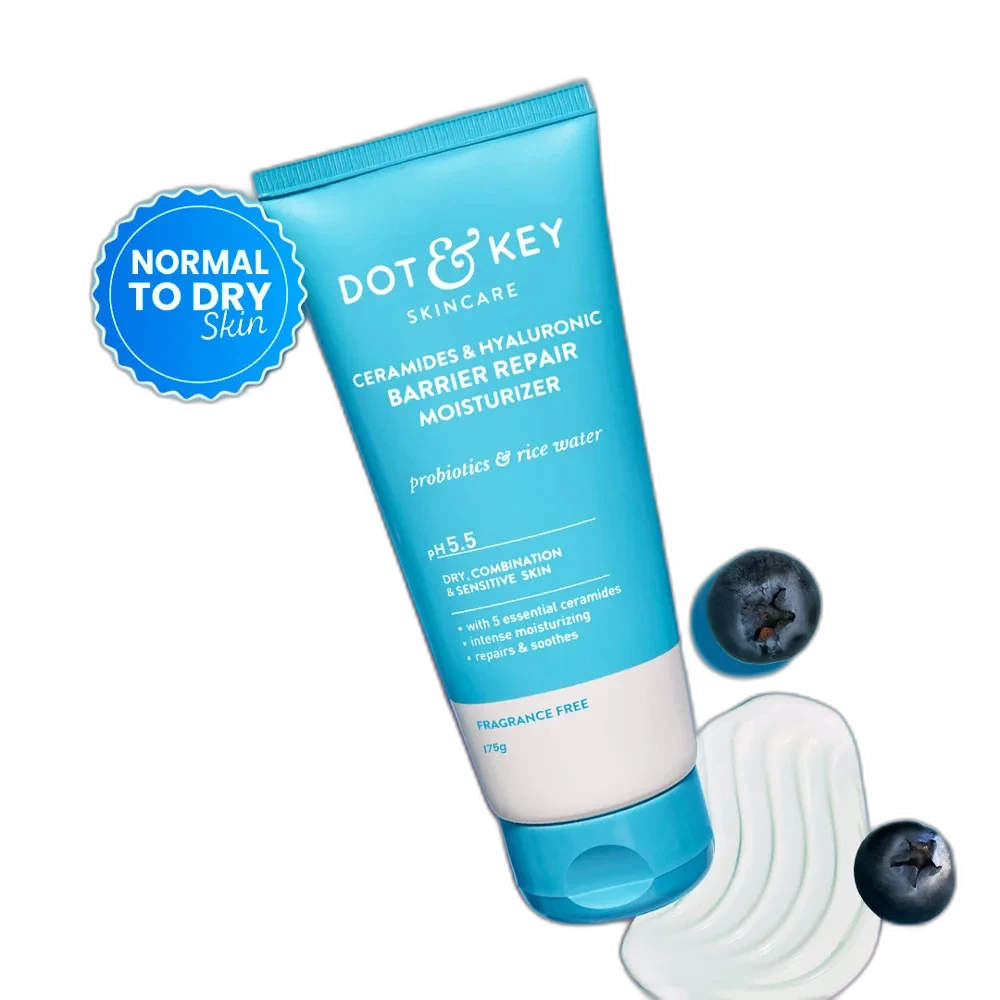
Barrier Repair Hydrating Cream
Budget Barrier Repair Standout
 Verified reviewer
Pros & cons.
- +Full lamellar ceramide complex (NP, AP, EOP, cholesterol, phytosphingosine) at a budget price
- +Niacinamide at meaningful levels for barrier function and PIH
- +Madecassoside provides anti-inflammatory calming for compromised skin
- +Fragrance-free, alcohol-free, silicone-free formulation
- +Lightweight enough to layer under sunscreen without pilling
- +Excellent value for Indian and South Asian markets
- +Pregnancy-safe and reactive-skin friendly
- −60 mL size is smaller than pharmacy-brand competitors at similar prices
- −Limited availability outside of India
- −Emerging brand with shorter track record than legacy pharmacy brands
- −Shea butter may feel too rich for very oily skin in humid climates
The full review.
There’s a skincare revolution happening in India that most Western beauty media hasn’t fully registered yet. Over the past five years, a wave of indie direct-to-consumer brands — Dot & Key, The Derma Co, Minimalist, Foxtale, Deconstruct — have built substantial businesses selling ingredient-forward formulations at price points specifically calibrated to middle-class Indian consumers who were previously stuck choosing between generic drugstore creams and imported premium brands marked up at international airport prices. Dot & Key launched in 2018 as part of this cohort, and the Barrier Repair Hydrating Cream is one of its most widely sold products. What’s interesting about it is that the formulation looks less like a drugstore bargain and more like a mid-tier Western indie cream that got mispriced.
Look at the INCI list and you can see a chemist who understood what a barrier cream actually needs. Three ceramide types — NP, AP, and EOP — plus cholesterol, plus phytosphingosine, which together create the lipid combination that has the strongest clinical support for repairing a compromised stratum corneum. Most barrier creams at this price point pick one ceramide and call it a day. Dot & Key included the supporting cast, which matters because barrier lipids work as an integrated system, not as individual stars. Niacinamide is present at a meaningful level and serves double duty — it stimulates endogenous ceramide production while also addressing the post-inflammatory hyperpigmentation concerns that are common in the deeper Indian skin tones this product was designed for. Madecassoside, the purified active from centella asiatica, adds the anti-inflammatory layer that reduces the redness and stinging that accompanies barrier disruption. Panthenol, shea butter, squalane, and sodium hyaluronate round out the formula. It’s a properly assembled barrier repair stack.
What makes this product worth discussing in the same conversation as more expensive Western options is that the lamellar ceramide ratio is the actual mechanism behind barrier repair — not the brand name on the jar and not the marketing copy. The clinical research on ceramide-cholesterol-fatty acid combinations, pioneered by Peter Elias at UCSF in the 1990s and early 2000s, established that the ratio of these lipids matters more than the absolute amount of any single component. A well-formulated $16 cream with the right ratio can deliver comparable benefit to a $45 cream missing one of the components. The ingredient cost of the molecules themselves is surprisingly modest — the price premium on premium barrier creams is typically going into packaging, brand positioning, and marketing spend rather than raw materials. Dot & Key is essentially arbitraging that gap by skipping the luxury packaging and distribution-heavy marketing structure and passing the cost savings to the customer.
The texture is appropriate for a daily barrier cream — medium-weight, not heavy, with a smooth silky finish from the small amount of dimethicone in the base. It absorbs quickly enough to layer under sunscreen without pilling, which is not always true of cheap ceramide creams. There’s no added fragrance, no essential oils, no alcohol, and no ingredients that commonly trigger reactive skin. The shea butter is the one ingredient that might feel too rich for very oily skin in humid weather, but for normal-to-dry and sensitive skin, it contributes the emollient cushion that users expect from a barrier cream.
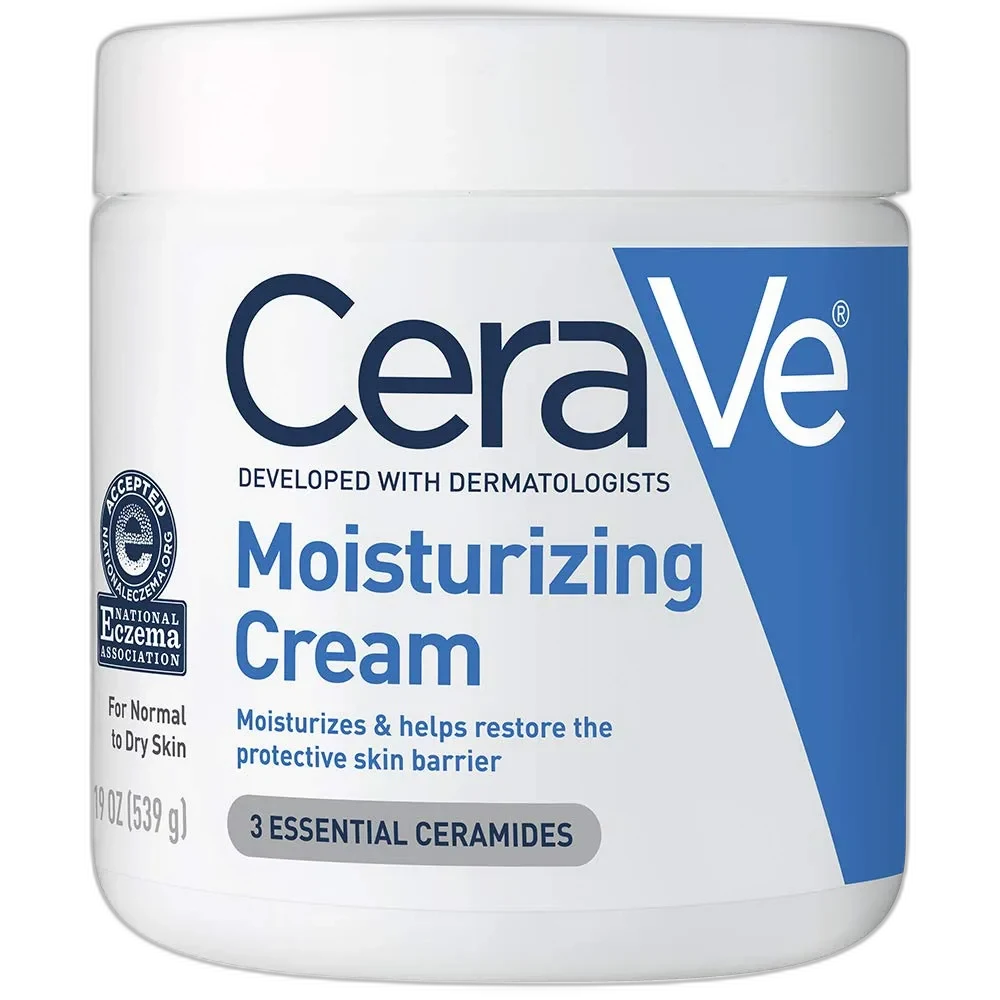
The tradeoffs are real but not dealbreakers. The 60 mL size is smaller than most pharmacy-brand competitors at comparable prices — CeraVe Moisturizing Cream, for example, comes in much larger jars. Availability is mostly limited to India and select international marketplaces, so shoppers in North America or Europe will have to navigate international shipping or wait for Dot & Key’s ongoing expansion. The brand itself is emerging rather than legacy — it’s been on market since 2018, which is meaningful but not the decades of track record that CeraVe, La Roche-Posay, or Eucerin have. For shoppers who specifically want a brand with a long clinical research history, that’s a legitimate concern. For shoppers who care more about what’s in the jar than how long the company has been making it, the gap is smaller than it appears.
For Indian consumers, this is one of the best value barrier creams on the market and the formulation is strong enough to recommend without reservation. For international shoppers willing to navigate availability, it’s an interesting case study in how indie brand economics can produce genuinely competitive formulations when the chemist leads with ingredient quality instead of brand story.
Ingredient analysis.
Full INCI list · pH 5.5
Aqua, Glycerin, Caprylic/Capric Triglyceride, Cetearyl Alcohol, Butyrospermum Parkii (Shea) Butter, Niacinamide, Squalane, Ceramide NP, Ceramide AP, Ceramide EOP, Cholesterol, Phytosphingosine, Panthenol, Sodium Hyaluronate, Madecassoside, Centella Asiatica Extract, Allantoin, Tocopherol, Glyceryl Stearate, PEG-100 Stearate, Dimethicone, Xanthan Gum, Phenoxyethanol, Ethylhexylglycerin, Disodium EDTA.
Skin match.
The science.
The Science
The lamellar ceramide approach in this formula has the strongest clinical support of any barrier-repair strategy. A 2002 study by Peter Elias and colleagues in the Journal of Investigative Dermatology showed the stratum corneum intercellular lipid matrix uses ceramides, cholesterol, and free fatty acids in a 1:1:1 molar ratio. Topical application of lipid mixtures at this ratio recovers the barrier faster than single-lipid creams. Dot & Key uses ceramides NP, AP, and EOP with cholesterol and phytosphingosine to apply this principle.
Niacinamide's role in barrier function is well-documented. A 2005 paper in the International Journal of Cosmetic Science found that topical 2% niacinamide increased stratum corneum ceramide synthesis over four weeks and reduced transepidermal water loss. This shows niacinamide stimulates endogenous lipid production alongside the exogenous ceramides in this formula. This dual mechanism helps ceramide-plus-niacinamide combinations outperform ceramide-only creams in barrier outcomes.
Madecassoside, the purified triterpenoid active from Centella asiatica, aids wound healing and anti-inflammatory activity. A 2008 randomized trial in the Archives of Dermatological Research tested topical madecassoside on compromised skin and found improved hydration and less erythema over four weeks. It works by downregulating pro-inflammatory cytokines and stimulating collagen synthesis in dermal fibroblasts.
The combination of these three evidence-based actives — lamellar ceramides, niacinamide, and madecassoside — fits the clinical framework for barrier repair validated by dermatological research over the last two decades.
References
- Physiological lipid mixtures and barrier repair — Journal of Investigative Dermatology (2002)
- Nicotinic acid/niacinamide and the skin — International Journal of Cosmetic Science (2005)
Dermatologist Perspective
Dermatologists recommend ceramide-based barrier repair creams for patients with compromised skin barriers, eczema, atopic dermatitis, rosacea, and post-procedure recovery. The ceramide-cholesterol-fatty acid ratio in this formula matches clinical evidence and the principles used in pharmacy-brand barrier repair creams. For patients in Indian and South Asian markets, board-certified dermatologists often suggest local brands like Dot & Key as legitimate alternatives to imported Western ceramide creams if the formulation includes niacinamide and the supporting lipid cast. Dermatologists focus on formulation quality rather than brand heritage when recommending barrier repair, even for emerging brands.
Where it fits in your routine.
Apply morning and evening after serums and before sunscreen. Use one pump for the face and neck. Warm the cream between clean fingertips and press it into the skin. Wait 30-60 seconds for full absorption before applying sunscreen or other products. If you use a retinoid, apply the retinoid to dry skin first, wait 10-15 minutes, then layer this cream on top as a buffer. For very dry skin or winter use, apply a thicker amount at night and let it absorb before sleep.
At roughly $16 for 60 mL, this offers good value in the barrier repair cream category. It competes with imported Western brands in India that cost double the price. The per-mL cost exceeds a large tub of CeraVe Moisturizing Cream, but the formulation is more complete and the texture feels better. One jar lasts 6-8 weeks with twice-daily full-face use. Annual costs run roughly $100-130, which is reasonable for a ceramide-rich moisturizer of this quality. For international shoppers paying shipping premiums, pharmacy-brand alternatives may make more sense unless the specific ingredient profile of this product is important to you.
Normal, dry, sensitive, or combination skin types seeking a well-formulated ceramide barrier cream at an affordable price. It works well for Indian consumers wanting a local alternative to imported Western brands, and for retinoid or active users needing a buffer cream to reduce irritation.
Skip this if you live outside India and want to avoid international shipping; pharmacy brands like CeraVe or La Roche-Posay offer similar benefits and better local availability. Also skip if you have very oily skin in humid weather, as the shea butter feels too thick.
Product details.
Medium-weight cream with a smooth, slightly silky finish from the dimethicone.
Fragrance-free with a neutral base note.
Plastic jar with pump dispenser. Reasonably hygienic but not refillable.
The skin feels soft and cushioned on first application. There is no purging or adjustment period. Users with dry, flaky patches see visible skin texture improvement within a few days.
6-8 weeks with twice-daily face application.
12 months
All Year
The backstory.
Dot & Key launched in 2018 as a direct-to-consumer skincare brand in India, part of a wave of Indian indie brands responding to the gap between premium international brands and low-quality local drugstore options. The founders positioned the brand around ingredient transparency and targeted formulations at price points accessible to middle-class Indian consumers. This barrier cream is part of their ceramide line, which has become one of the brand's most reliable sellers.
About Dot & Key
Emerging Brand (2–5 years)Dot & Key launched in India in 2018 as a direct-to-consumer indie brand. It uses ingredient-led formulations at mass-market prices. The brand is a large indie skincare player in the Indian market, but its track record outside India is shorter and independent clinical validation is limited.
Common myths.
Cheap barrier creams do not provide real ceramide benefits.
Ceramide molecules are not expensive. Brand positioning, packaging, and marketing drive the cost of premium barrier creams, not raw ingredient costs. A well-formulated $16 barrier cream with a proper ceramide complex delivers clinical benefits comparable to a $40 one.
A thicker moisturizer always repairs the barrier better.
Barrier repair depends on a formula's specific lipid composition, not its thickness. A lightweight cream with the correct ceramide-cholesterol-fatty acid ratio outperforms a heavy occlusive cream lacking those building blocks.
FAQ.
Is Dot & Key Barrier Repair Cream good for very dry skin?
Yes. The multi-ceramide complex, shea butter, and panthenol suit dry and dehydrated skin. Users with dry or eczema-prone skin may prefer a heavier occlusive like Cerave Moisturizing Cream or petrolatum-based alternatives at night.
Can I use this with retinol?
Yes, it works as a buffer cream for retinoid users. Apply retinoid first to fully dry skin, wait 10-15 minutes, then layer this cream on top to reduce irritation. The ceramides and niacinamide help the skin tolerate the retinoid over time.
Is Dot & Key Barrier Repair Cream fragrance-free?
The formula has no added fragrance or essential oils. Plant-derived ingredients leave a faint neutral scent that does not bother fragrance-sensitive users.
Will this cream help with hyperpigmentation?
Indirectly. The niacinamide content reduces post-inflammatory hyperpigmentation after 8-12 weeks of consistent use, and a healthy barrier prevents new PIH. For dedicated pigmentation treatment, use a vitamin C serum or azelaic acid.
Is this safe during pregnancy?
Yes. The formula has no retinoids, salicylic acid, or essential oils flagged for pregnancy caution. Ceramides, niacinamide, and centella asiatica are safe during pregnancy and breastfeeding.
How does this compare to CeraVe Moisturizing Cream?
CeraVe Moisturizing Cream is a pharmacy-brand option with a thicker petrolatum-based formula and more testing. Dot & Key's cream is lighter, uses madecassoside and a slightly more complex ceramide blend, and costs about the same in Indian markets. Both work for barrier repair.
Can oily skin types use this cream?
Yes, though the shea butter feels thick in hot, humid weather. Use less or switch to a lighter gel moisturizer during summer months if it feels too heavy.
Community
What the community says.
"Excellent barrier repair at a low price point"
"Layers well under sunscreen"
"Fragrance-free and non-irritating"
"Visible results for dry, flaky winter skin"
"Small 60 mL size runs through quickly"
"Limited availability outside India"
"Pump dispenser can be inconsistent"