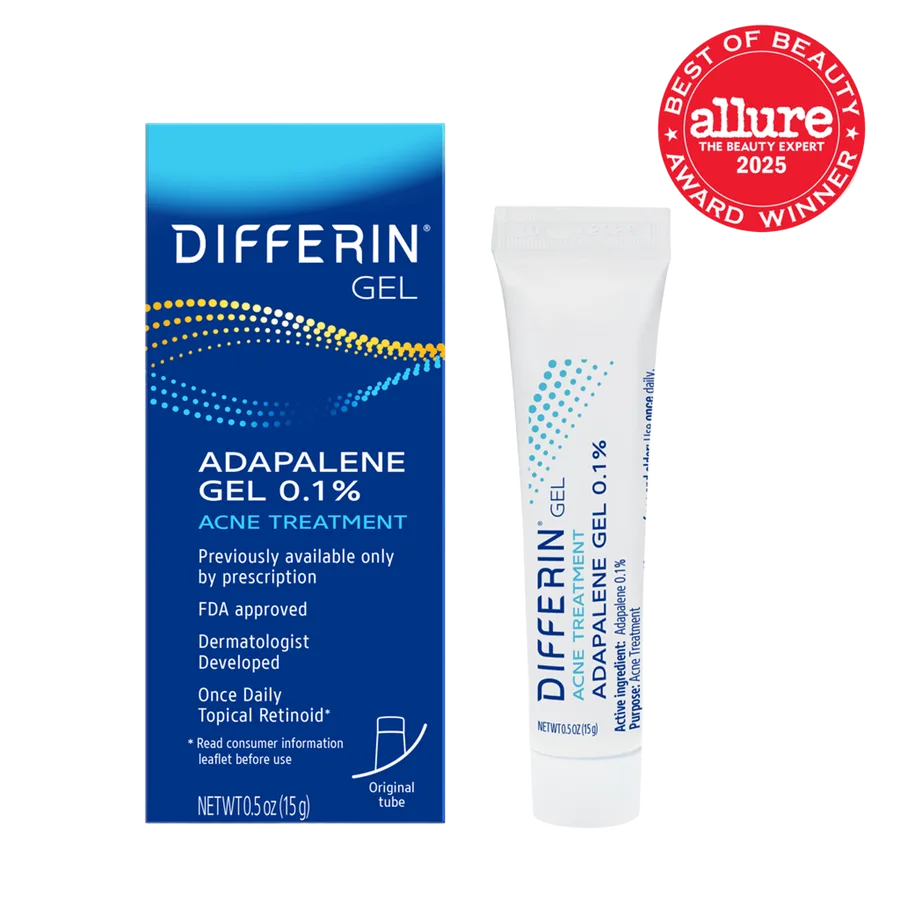
Adapalene Gel 0.1%
The Gold Standard OTC Retinoid
 Verified reviewer
Pros & cons.
- +The only FDA-approved prescription-strength retinoid available without a prescription — unmatched clinical evidence
- +30 years of research and 40+ million patients treated globally provide unparalleled safety and efficacy data
- +Less irritating than tretinoin due to selective RAR-beta/gamma receptor binding
- +Photostable unlike tretinoin — does not degrade in sunlight
- +Under $20 for a 30-day supply — democratized access to prescription-grade skincare
- +Anti-aging benefits alongside acne treatment — collagen stimulation, texture improvement, hyperpigmentation reduction
- +HSA/FSA eligible — can be purchased with pre-tax healthcare dollars
- −Significant retinization period in weeks 1-4 with dryness, peeling, redness, and purging
- −Requires 12 weeks of patience for full results — many users abandon treatment prematurely
- −Not safe during pregnancy or breastfeeding — all retinoids are contraindicated
- −Contains methylparaben, which some consumers prefer to avoid
- −Small 15g tube runs out in 30 days — requires ongoing repurchase for continuous treatment
- −Can be too irritating for sensitive or eczema-prone skin even with buffering techniques
The full review.
On April 15, 2016, an FDA advisory committee meeting reshaped the OTC skincare landscape. The Nonprescription Drugs Advisory Committee voted unanimously to recommend adapalene 0.1% gel for over-the-counter sale. It was the first new OTC acne active ingredient in over thirty years. By 2017, a medication prescribed to over forty million patients worldwide sat on drugstore shelves next to benzoyl peroxide face washes, available to anyone for under twenty dollars.
Adapalene is not a cosmetic ingredient. It is not a vitamin derivative that requires metabolic conversion to become active. It is a synthetic retinoid—a direct-acting molecule that binds to retinoic acid receptors in the skin to change how skin cells behave. It normalizes the abnormal keratinization that clogs pores. It reduces the inflammatory signals that turn clogged pores into swollen breakouts. It accelerates cell turnover to clear existing lesions and prevent new ones. It works through mechanisms documented in hundreds of peer-reviewed studies over three decades.
Galderma introduced adapalene in 1996 as a prescription treatment to improve the tolerability of tretinoin—the original prescription retinoid that worked well but irritated many patients. Adapalene’s innovation is selectivity. While tretinoin binds to all retinoic acid receptor subtypes, adapalene selectively targets RAR-beta and RAR-gamma—the receptors most relevant to acne pathology. This selectivity reduces irritation. There is less redness, less peeling, and fewer patients abandon treatment before seeing results.
The other innovation is photostability. Tretinoin degrades rapidly in light, so it must be applied at night away from UV exposure. Adapalene is chemically stable under UV radiation; its molecular structure does not break down in sunlight. This makes the product more forgiving for real-world use, even though nighttime application remains the standard recommendation.
The gel is simple. It has seven inactive ingredients: purified water, a carbomer gel base, a preservative, an emulsifier, and pH adjusters. There is nothing trendy about this formula. The adapalene molecule is the product. Everything else delivers it to the skin in a stable, effective vehicle.
The first month tests patience. The retinization period—the adjustment phase as skin adapts to retinoid activity—produces dryness, tightness, and flaking that peaks around weeks two to three. Many users also experience a purging phase: a temporary increase in breakouts as accelerated cell turnover pushes existing microcomedones to the surface. These are clogged pores already present below the skin. Adapalene simply accelerates their timeline. The purge typically resolves by week four to six, but this period is the most common reason users stop use.
Results for those who persist are clear. Clinical studies consistently show significant reductions in both inflammatory and non-inflammatory acne lesions by week twelve. A pivotal study comparing adapalene 0.1% to vehicle gel showed statistically significant improvement in total lesion count; some studies reported up to eighty-seven percent reduction in laboratory conditions. In real-world use, the improvement is substantial—fewer breakouts, faster healing of existing lesions, gradual clearing of blackheads, and progressive refinement of skin texture.
Dermatologists also acknowledge the anti-aging benefits. Like all retinoids, adapalene stimulates collagen production in the dermis and accelerates epidermal cell turnover. Over months of use, this results in smoother skin texture, reduced hyperpigmentation, diminished fine lines, and improved pore appearance. While the FDA approval is specifically for acne, the retinoid’s effects on skin quality make it a dual-purpose product for users dealing with both acne and early signs of aging—a common overlap in the late twenties to thirties age range.
The price changes who can access effective retinoid therapy. At under twenty dollars for a thirty-day supply, Differin Adapalene Gel costs a fraction of prescription retinoids and a smaller fraction of the dermatologist visit required to get them. The forty-five-gram tube at approximately thirty-nine dollars extends the supply to ninety days, improving the per-unit economics. HSA and FSA eligibility means many users can purchase it with pre-tax dollars. This democratization of prescription-grade skincare is a significant development in consumer dermatology over the past decade.
Limitations exist. The adjustment period is difficult—weeks of looking and feeling worse before looking better is a hard sell. The product contains methylparaben, which some consumers avoid despite no evidence linking cosmetic-grade parabens to health concerns at used concentrations. Sensitive skin types may struggle with even adapted retinoid therapy, requiring extensive buffering techniques and potentially never tolerating daily use. Users must wait twelve weeks before declaring the product effective.
The fundamental reality is this: in the entire OTC skincare market, no product has more clinical evidence supporting its efficacy for acne. Not salicylic acid, not benzoyl peroxide, not tea tree oil, not niacinamide, and not any other active marketed for breakouts. Adapalene 0.1% was a prescription medication for twenty years because it works at a level that justified medical oversight. The FDA’s unanimous decision to make it available without a prescription acknowledges that the benefit-to-risk ratio is favorable for the general public. That product, with all its evidence, is available for less than the price of a movie ticket. There is nothing else like it on the drugstore shelf.
Formula
Ingredient analysis.
Full INCI list
Active: Adapalene 0.1%. Inactive: Carbomer 940, Edetate Disodium, Methylparaben, Poloxamer 182, Propylene Glycol, Purified Water, Sodium Hydroxide
Skin match.
The science.
The Science
Adapalene is a third-generation synthetic retinoid. It selectively modulates retinoic acid receptor (RAR) activity, specifically targeting the RAR-beta and RAR-gamma subtypes relevant to acne pathogenesis. Receptor binding studies in the Journal of the American Academy of Dermatology show this selectivity produces targeted therapeutic effects with less non-specific receptor activation. This molecular mechanism makes adapalene more tolerable than tretinoin.
The comedolytic mechanism is well-characterized: adapalene normalizes abnormal keratinization within the pilosebaceous unit to stop microcomedone formation. It modulates keratinocyte differentiation and reduces corneocyte cohesion within the follicular infundibulum, preventing the keratin plugs that form the foundational lesion of all acne types. A 1997 study in the Journal of the American Academy of Dermatology by Shalita et al. showed 0.1% adapalene gel has the same efficacy as 0.025% tretinoin gel but with significantly better local tolerability.
Adapalene's anti-inflammatory properties distinguish it from other retinoids. Research in the British Journal of Dermatology shows adapalene inhibits the lipoxygenase pathway, which reduces inflammatory mediators like leukotriene B4 and prostaglandin E2. This dual comedolytic and anti-inflammatory activity means adapalene treats both the structural cause of acne (clogged pores) and the inflammatory cascade that turns comedones into papules, pustules, and nodules.
Multiple studies confirm the photostability of adapalene. Its naphthoic acid backbone does not undergo the photodegradation that affects the polyene structure of tretinoin. This chemical stability means the molecule stays fully active despite incidental light exposure, a practical advantage in real-world conditions.
Long-term safety data from the prescription era is robust. A 2016 review of over 20 years of post-marketing surveillance data, presented to the FDA advisory committee, found no significant safety signals in over 40 million patients treated globally. This data formed the basis for the unanimous OTC approval recommendation.
References
- A comparison of the efficacy and safety of adapalene gel 0.1% and tretinoin gel 0.025% in the treatment of acne vulgaris — Journal of the American Academy of Dermatology (1997)
Dermatologist Perspective
Board-certified dermatologists use adapalene as a first-line topical treatment for acne vulgaris; it is in the American Academy of Dermatology's evidence-based treatment guidelines. Dermatologists say the OTC availability of adapalene is a major development in consumer acne treatment, giving patients access to a retinoid with a proven clinical track record without a prescription visit. Dermatologists typically counsel patients on the retinization period, noting that initial worsening is expected and temporary. They also note that premature discontinuation is the most common reason for treatment failure. For patients who cannot tolerate daily use, dermatologists recommend the 'short contact' method (applying for 30 minutes then rinsing) or the 'sandwich' technique (moisturizer-adapalene-moisturizer) to reduce irritation while maintaining efficacy.
Where it fits in your routine.
Apply once daily in the evening. Cleanse your face with a gentle, non-medicated cleanser and pat dry. If your skin is sensitive, wait 20-30 minutes after cleansing so the skin dries fully — applying to damp skin increases penetration and irritation. Squeeze a pea-sized amount onto fingertips and dot it across your forehead, cheeks, nose, and chin. Spread a thin, even layer across the entire face. Do not apply only to active breakouts, as adapalene works by preventing new acne from forming. Avoid the eye area, lips, and broken skin. Follow with moisturizer. In the morning, apply SPF 30+ sunscreen — this is non-negotiable during retinoid use. For beginners: use it every other night for the first two weeks, then increase to nightly as tolerated. Use the 'sandwich' method (moisturizer-adapalene-moisturizer) if you experience excessive dryness.
Differin Adapalene Gel offers high value at $19.99 for the 15g (0.5 oz) tube (30-day supply) and about $38.99 for the 45g (1.6 oz) tube (90-day supply). The 90-day tube costs roughly $13 per month for a prescription-strength retinoid, which is much cheaper than prescription adapalene or tretinoin (often $100+ without insurance). The larger tube has better per-unit value. HSA/FSA eligibility lowers the effective cost. Compared to the total cost of ineffective OTC acne products — salicylic acid cleansers, benzoyl peroxide washes, pore strips, masks — investing in a product with prescription-grade evidence saves money by resolving the underlying condition.
This works for anyone with mild to moderate acne—comedonal, inflammatory, or both—seeking the strongest OTC treatment. It suits people in their teens through thirties with persistent breakouts that failed to respond to OTC salicylic acid or benzoyl peroxide. It also provides combined acne treatment and anti-aging benefits. This option fits budget-conscious patients who cannot afford dermatologist visits or prescription retinoids.
Adapalene is contraindicated for pregnant or breastfeeding individuals. People with sensitive skin, active eczema flares, or severely compromised skin barriers should consult a dermatologist before starting retinoid therapy. Do not begin treatment if you cannot commit to 12 weeks of consistent use and the initial adjustment period. This product is not for those seeking gentle, immediate results.
Product details.
Fragrance-free. No detectable scent. ***
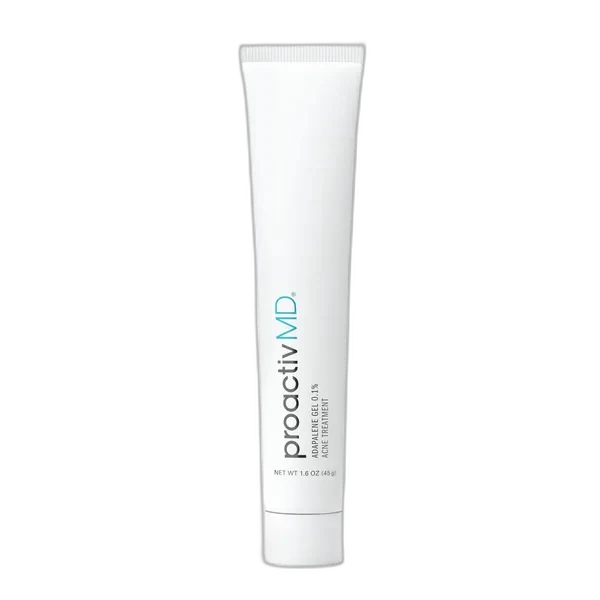
Small aluminum tube with a screw cap. Sizes include 0.5 oz (15g — approximately 30-day supply) and 1.6 oz (45g — approximately 90-day supply). The 45g size also comes in a pump format. The packaging is clean and pharmaceutical-style. ***
The first application feels like a lightweight gel with minimal sensation. Mild dryness and tightness start within the first week. Peeling, flaking, redness, and temporary breakouts (purging) peak during weeks 2-4. This is normal. The retinoid accelerates cell turnover and surfaces existing clogged pores that would eventually become pimples. Most users abandon the product during purging before seeing results. Push through to week 8 to see visible, accelerating improvement.
30 days (0.5 oz) to 90 days (1.6 oz) with nightly full-face application ***
24 months ***
All Year ***
The backstory.
The story begins in 1996, when adapalene was first approved as a prescription acne treatment. Over the next two decades, it was prescribed to over 40 million patients worldwide, building an unmatched safety and efficacy database. In April 2016, the FDA's Nonprescription Drugs Advisory Committee unanimously voted to approve the OTC switch — the first new OTC acne active ingredient in over 30 years. By 2017, Differin Adapalene Gel was available on drugstore shelves, democratizing access to prescription-strength retinoid therapy and fundamentally changing the OTC acne treatment landscape.
About Differin
Established Brand (5–20 years)Differin Adapalene Gel was prescription-only from 1996 until the FDA approved its OTC switch in July 2016. This makes it the first and only prescription-strength retinoid available without a prescription. The FDA based approval on 20 years of safety data from over 40 million patients globally. Galderma, a global dermatology company with R&D headquarters in Sophia Antipolis, France, manufactures it.
Common myths.
The purging means the product is making your acne worse
Purging shows the adapalene works. The retinoid accelerates cell turnover, bringing existing microcomedones (clogged pores below the surface) to the surface faster than they would appear naturally. These would become pimples regardless; adapalene just speeds up the timeline. The purge usually ends by week 4-6, and breakout frequency decreases significantly after that.
Adapalene is just another retinol
Adapalene is a synthetic retinoid that directly binds to retinoic acid receptors without requiring conversion in the skin. Retinol must convert to retinal, then to retinoic acid before it becomes active — each conversion step losing potency. Adapalene skips the entire conversion chain, delivering immediate receptor-level activity at 0.1% that would require much higher retinol concentrations to approximate.
You can't use adapalene during the day because retinoids are sun-sensitive
Adapalene is photostable, unlike tretinoin, so it does not degrade in sunlight. Use adapalene at night because skin repairs and regenerates more actively then, and because you need sunscreen during the day regardless. If you miss a nighttime application, you can apply adapalene during the day under sunscreen without losing efficacy.
FAQ.
How long does Differin Adapalene Gel take to work?
Full results take 12 weeks. Weeks 1-4 involve retinization and purging, so skin may look worse before it improves. Visible improvement starts around weeks 4-8, and acne clears significantly by week 12. Studies show up to 87% reduction in acne lesions with consistent use. The first month is the hardest; do not give up during the purge.
Is Differin the same as tretinoin?
No. Both are retinoids, but their mechanisms differ. Adapalene (Differen) is a third-generation synthetic retinoid that selectively binds to RAR-beta and RAR-gamma receptors. This targets acne with less irritation. Tretinoin binds to all retinoic acid receptors non-selectively; this increases irritation but offers more versatility for anti-aging. Adapalene is photostable and does not break down in sunlight, whereas tretinoin is not.
Can I use Differin Gel for anti-aging?
Yes — adapalene increases collagen production and speeds cell turnover. This improves fine lines, skin texture, and hyperpigmentation over time. The FDA approved adapalene specifically for acne, but dermatologists recognize its anti-aging benefits. It is less potent for anti-aging than higher-strength tretinoin, but it offers meaningful improvement with better tolerability.
What is the purging phase and how long does it last?
Adapalene accelerates cell turnover, which causes purging by bringing existing clogged pores to the surface faster than normal. This shows as more breakouts during weeks 2-4. It usually resolves by week 6. Purging differs from a reaction: purging happens in your usual breakout areas, but an allergic or irritant reaction happens everywhere you apply the product.
Can I use Differin with niacinamide, vitamin C, or other actives?
Niacinamide pairs well—it soothes irritation and helps barrier repair during the retinization period. Use Vitamin C in the morning and Differin at night. Do not use AHA/BHA exfoliants and Differin in the same PM routine for the first 4-6 weeks. After skin adjusts, many users combine these actives by alternating nights or using acids in the AM.
Is Differin Gel safe during pregnancy?
No — all retinoids, including adapalene, are contraindicated during pregnancy because they risk birth defects. Stop use if you are pregnant, planning pregnancy, or breastfeeding. Ask your healthcare provider for pregnancy-safe acne alternatives.
Why is the 0.5 oz tube so small?
A pea-sized amount covers your whole face. The 0.5 oz (15g) tube lasts about 30 days, or one full month. The 1.6 oz (45g) tube lasts 90 days and has a better per-ounce value. Both sizes are compact because each application uses very little product.
What the community says.
"Prescription-strength retinoid at an OTC price point — genuinely transformative for acne"
"Significantly clears acne by 8-12 weeks with consistent use"
"Less irritating than tretinoin while maintaining strong efficacy"
"Anti-aging benefits as a bonus — smoother texture, reduced fine lines"
"Fragrance-free, oil-free, minimal ingredient list"
"Significant purging period in weeks 2-4 — breakouts worsen before improving"
"Dryness, peeling, and redness are common in the first month"
"Requires 12+ weeks of patience for full results — slow gratification"
"Contains methylparaben, which some consumers prefer to avoid"
"Small 15g tube runs out quickly with daily full-face use"
People also looked at.