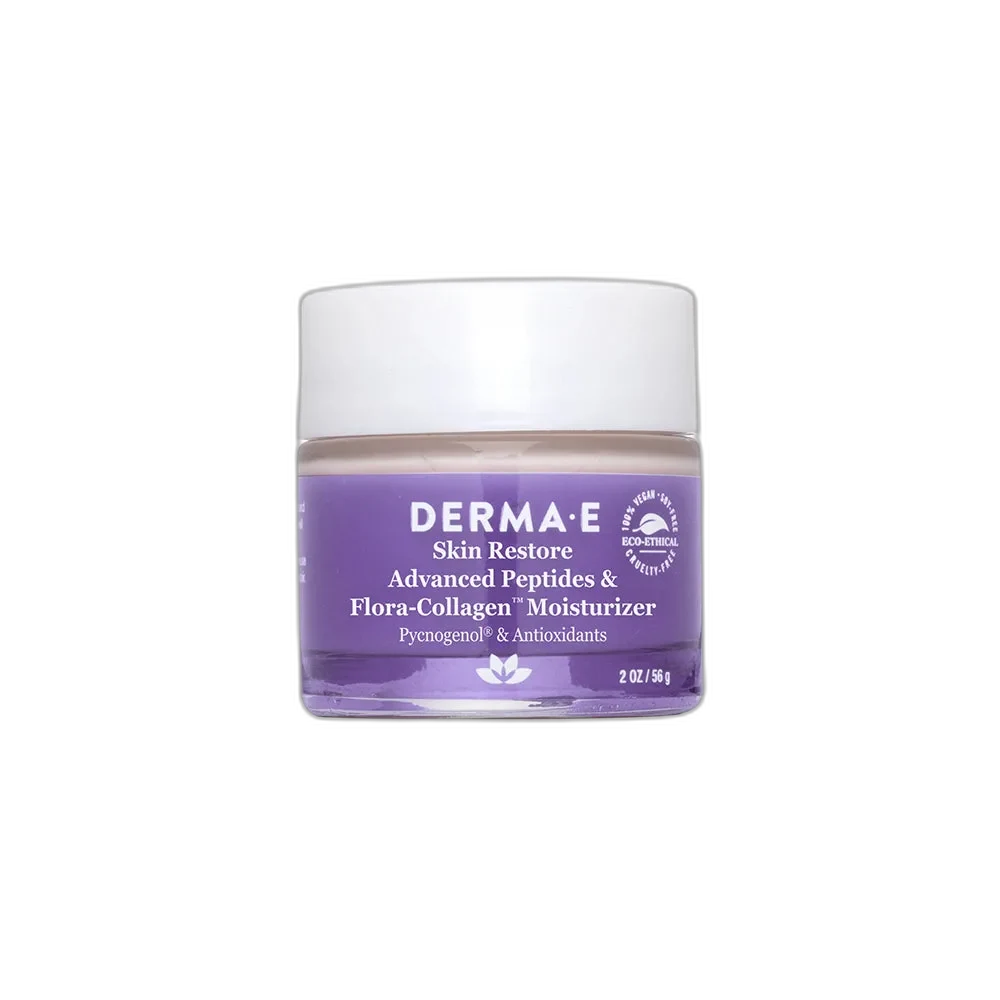
Advanced Peptides & Flora-Collagen Moisturizer
Sensitive Skin Peptide Pick
 Verified reviewer
Pros & cons.
- +Five-peptide complex genuinely targets multiple aging pathways
- +Fragrance-free formula sensitive and reactive skin can tolerate
- +Cushiony texture absorbs without leaving heavy residue
- +Centella and panthenol buffer irritation from active ingredients
- +Vegan and Leaping Bunny certified without sacrificing efficacy
- +Affordable price point for a legitimate peptide cream
- +Airless pump packaging protects peptide stability
- −Not heavy enough as a sole moisturizer in cold winter climates
- −Pump can stop dispensing reliably as the bottle nears empty
- −Shea butter and avocado oil too rich for very oily skin
- −Results are gradual and require consistent use over months
- −The 'flora-collagen' name oversells the bamboo extract's role
The full review.
There’s a long-running tension in skincare between brands that take ingredient science seriously and brands that take ‘natural’ positioning seriously, and the products that try to do both usually end up being mediocre at one and dishonest at the other. Derma E has been quietly threading that needle since 1984, and the Advanced Peptides & Flora-Collagen Moisturizer is one of the cleaner examples of how to do it right — a peptide cream that uses real peptides, dressed in a botanical narrative that doesn’t actively get in the way of the chemistry.
The peptide payload here is the actual story. Palmitoyl tripeptide-1, palmitoyl tetrapeptide-7, palmitoyl hexapeptide-12, palmitoyl tripeptide-38, and acetyl hexapeptide-8 — that’s a five-peptide stack that covers the main categories of cosmetic peptides: signal peptides that nudge fibroblasts to make more collagen, carrier peptides that support copper-dependent skin processes, and one neurotransmitter-inhibiting peptide that mildly relaxes expression-line micromovements. It’s the kind of blend you’d expect to see in a $90 cream from a brand with a lab-coat logo, not a $30 jar from the natural-foods section of Target. The peptides are buried in the middle of the INCI list, which is normal for active concentrations in cosmetic formulations, and they sit in a vehicle that’s well-suited to keeping them stable.
The ‘flora-collagen’ part is where the marketing turns up the volume. Bamboo extract is a real ingredient, it does provide silica that supports the body’s own collagen-crosslinking enzymes, and the polysaccharides form a smoothing film on the surface. But it is not, despite the implication of the name, a plant version of collagen. Nothing applied topically actually replaces collagen in your dermis — that’s just not how the molecule works. What bamboo extract can plausibly do is contribute to the smoothing effect and provide some structural support to the formula. Read it as a supporting player, not the headliner, and the product makes a lot more sense.
Texture
The texture is where the formula really wins over skeptics. It’s a soft, almost whipped cream that melts into a thin satin film and disappears in about thirty seconds. There’s enough squalane and avocado oil to feel cushiony and substantial, but no occlusive weight that makes you feel coated. The shea butter is tucked far enough down the list that it doesn’t dominate the slip. Most importantly, there’s no fragrance — not ‘masking fragrance,’ not ‘natural fragrance,’ just nothing — which is increasingly rare in the natural-skincare aisle, where essential oils have a habit of sneaking into otherwise sensible formulas.
The centella asiatica extract deserves a quick spotlight because it’s the difference between a peptide cream that reactive skin can actually use and one that it can’t. Centella’s triterpene compounds calm the low-grade inflammatory tone that often makes anti-aging products feel itchy or pink-cheeked on sensitive users, and it pairs naturally with the panthenol and aloe in the formula to create a soothing buffer around the actives. If you’ve ever bought a buzzy peptide serum and found yourself sliding it back into the drawer because it made your face feel hot, this formula is a deliberate answer to that experience.
Common Complaints
Where it earns its honest cons: this is a daytime-or-mild-climate moisturizer, not a winter-night occlusive. If you have very dry skin and you live somewhere cold, you’ll want something heavier on top after dark. The pump packaging is well-designed for protecting the peptides from oxidation, but a few users report that it stops dispensing properly toward the end of the bottle — frustrating when you’ve paid for actives you can’t get out. And the results, as with all topical peptides, are gradual and subtle. If you’re expecting the kind of dramatic firming that comes from a procedure, you will be disappointed. If you’re expecting the gentle, accumulating effect of consistent peptide use over months, you will not.
For under thirty dollars, this is one of the most credible peptide moisturizers in the natural-aisle category, and one of the few I’d genuinely recommend to someone who wants vegan, fragrance-free, and actually-works in a single product.
Ingredient analysis.
Full INCI list
Water (Aqua), Caprylic/Capric Triglyceride, Glycerin (Vegetable Derived), Squalane, Cetearyl Olivate, Sorbitan Olivate, Cetyl Alcohol, Glyceryl Stearate, Persea Gratissima (Avocado) Oil, Butyrospermum Parkii (Shea) Butter, Bambusa Vulgaris (Bamboo) Extract, Centella Asiatica Extract, Camellia Sinensis (Green Tea) Leaf Extract, Palmitoyl Tripeptide-1, Palmitoyl Tetrapeptide-7, Palmitoyl Hexapeptide-12, Palmitoyl Tripeptide-38, Acetyl Hexapeptide-8, Tocopheryl Acetate (Vitamin E), Sodium Hyaluronate, Aloe Barbadensis Leaf Juice, Allantoin, Panthenol, Xanthan Gum, Sclerotium Gum, Phenoxyethanol, Ethylhexylglycerin, Citric Acid
Skin match.
The science.
The Science
Topical peptides are well-validated anti-aging actives, even if marketing oversimplifies the evidence. Published research shows Palmitoyl pentapeptide derivatives stimulate collagen and glycosaminoglycan synthesis in cultured fibroblasts at low concentrations; the palmitoyl chain acts as a lipid anchor to help the peptide cross the stratum corneum lipid layers. Acetyl hexapeptide-8, formerly marketed as Argireline, uses a different mechanism—it competes with SNAP-25 in the SNARE complex during neurotransmitter release at neuromuscular junctions. This theoretically reduces expression line depth, though the topical effect is more modest than injectable neuromodulators. Formulators increasingly combine multiple peptides, theorizing that signaling, carrier, and inhibitory peptides provide additive effects. Centella asiatica's triterpene compounds, specifically madecassoside and asiaticoside, show wound-healing and anti-inflammatory effects; research in journals like the Journal of Ethnopharmacology shows they modulate TGF-β signaling and collagen synthesis. Bamboo extract has less evidence—while silica aids collagen crosslinking systemically, its topical role is mostly structural and film-forming rather than biologically active.
Dermatologist Perspective
Dermatologists see topical peptides as a sensible anti-aging addition for patients who cannot tolerate retinoids or want a complementary active. Board-certified dermatologists note that peptide creams set realistic expectations: they offer gradual, accumulating improvements in fine lines and skin firmness instead of the dramatic remodeling seen with prescription tretinoin. This formula often suits sensitive and rosacea-prone patients because centella and panthenol buffer the formula and the fragrance-free design removes a common irritation trigger. Dermatologists also note that peptides pair well with retinoids in one routine—peptides support the retinoid's collagen-stimulating action while the emollient base helps mitigate retinoid dryness.
Where it fits in your routine.
Apply morning and evening to clean, slightly damp skin after water-based serums and before sunscreen. Use a pea-sized amount for the face and neck; it spreads more than it looks. In the morning, follow with a broad-spectrum SPF because peptides do not provide sun protection and UV exposure undoes their collagen-supporting work. In the evening, layer a heavier occlusive on top in cold weather or use it alone in milder climates. For best results, use twice daily for at least 8 weeks before evaluating if it works for your skin.
At under thirty dollars for a 2-ounce airless pump, this lands in the upper half of the affordable peptide moisturizer market and well below the $60-$120 range typical of clinical peptide creams. The peptide complex is genuinely comparable to formulations selling for two or three times the price, and the supporting cast — squalane, centella, panthenol, hyaluronic acid — punches above the price point. Where it loses some value points is the lack of a larger size option, which means heavy users will go through it faster than they would a 1.7-ounce jar of a more concentrated competitor. Still, for a legitimate peptide cream from a 40-year-old brand with strong third-party certifications, this is one of the better dollar-per-active deals in the natural-skincare aisle.
This works for normal, dry, combination, or sensitive skin. It is a peptide moisturizer without fragrance, animal-derived ingredients, or a clinical price tag. It suits rosacea-prone or reactive users who cannot tolerate most anti-aging products and need a gentle introduction to peptide chemistry.
The shea butter and avocado oil may be too thick for very oily or breakout-prone skin. This won't deliver dramatic, retinoid-level results. If you need one product for severe winter dryness, use a more occlusive layer on top.
Product details.
Soft, whipped cream that melts into a thin satin film
Fragrance-free with a faint natural plant-oil note
Recyclable plastic airless pump bottle protects peptides from light and air degradation
The first application feels cushioned without tingling or warming. Skin looks more even-toned within a few days. There is no purging or adjustment period — you can add this moisturizer mid-routine without bracing yourself.
About 3 months with twice-daily face and neck application
12 months
All Year
The backstory.
Derma E launched the 'Advanced Peptides' line in 2018 to bring legitimate peptide chemistry into the natural-skincare aisle, where most anti-aging products were still relying on vague 'collagen' claims. The flora-collagen positioning was a way to offer a vegan alternative to the marine collagen creams dominating the category.
About Derma E
Legacy Brand (20+ years)Derma E launched in 1984 in California. It was one of the first brands to combine vitamin E with botanical actives. The brand has a forty-year history in natural skincare and sells through mainstream retailers.
FAQ.
How is this different from the regular Derma E Advanced Peptides Collagen Moisturizer?
The Flora-Collagen version swaps the original marine collagen for a bamboo-derived plant alternative, making it fully vegan. The peptide complex and supporting cast remain very similar.
Best for
The formula is non-comedogenic for most users, but the shea butter and avocado oil may be too thick for very oily or acne-prone skin. If emollients cause breakouts, use a lighter peptide serum instead.
Reality
Expect modest improvements in fine lines and skin firmness after 6-8 weeks of consistent twice-daily use. Topical peptides work, but changes are gradual and subtle, not dramatic.
What the community says.
"Lightweight but cushiony texture"
"No fragrance or sting"
"Affordable for a peptide cream"
"Skin feels softer over time"
"Pump can be inconsistent"
"Doesn't work as a standalone hydrator in winter"
"Subtle results for those expecting dramatic firming"