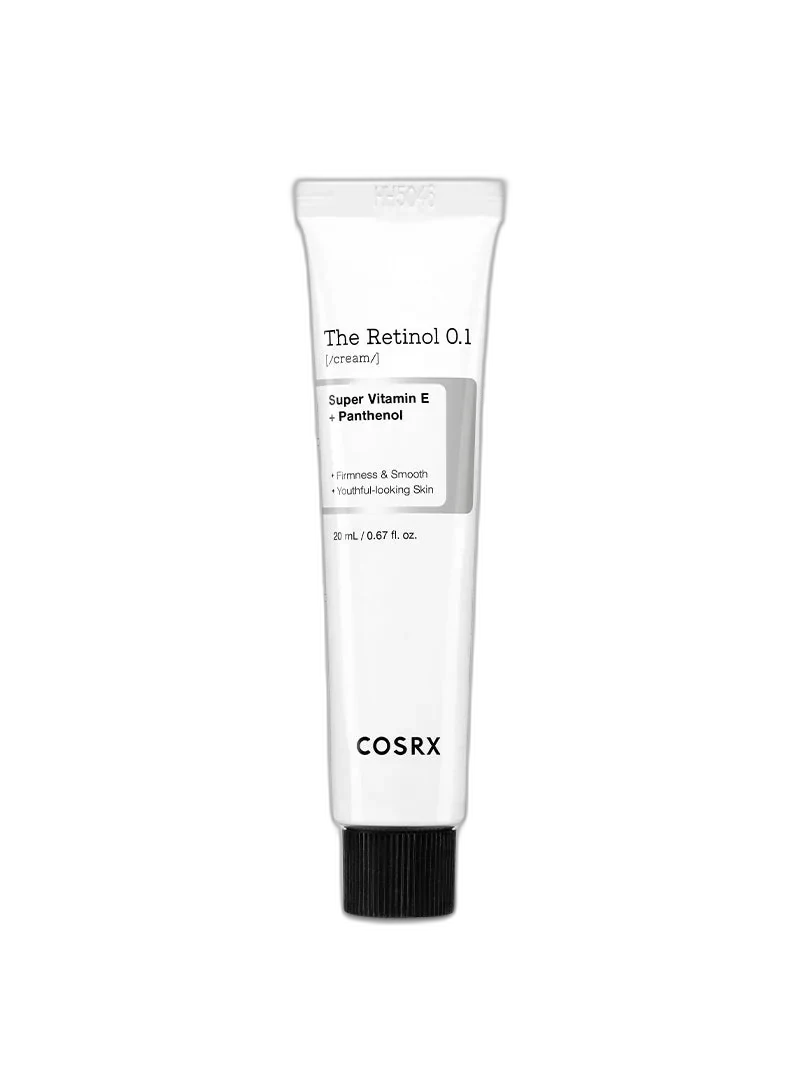
The Retinol 0.1 Cream
Beginner-Friendly Retinol
 Verified reviewer
Pros & cons.
- +Seven-antioxidant system stabilizes retinol while providing independent anti-aging benefits
- +Five types of hyaluronic acid prevent the dryness and flaking typical of retinol products
- +Genuinely gentle — most users report zero irritation, redness, or peeling at 0.1%
- +Lightweight cream texture absorbs quickly with a breathable matte finish
- +Clinical testing showed measurable wrinkle and pore improvement within two weeks
- +Part of a graduated system (0.1%, 0.3%, 0.5%) for progressive retinol introduction
- +Fragrance-free, cruelty-free, and vegan with no common allergens
- −Aluminum tube packaging prone to cracking, oozing, and paint flaking
- −0.1% concentration too subtle for experienced retinol users seeking visible transformation
- −Small 20 mL tube at $27 — higher cost per unit than many competing retinol creams
- −Can develop an off odor if not stored in cool, dark conditions
- −Not pregnancy-safe — standard for all retinol products regardless of concentration
The full review.
Skincare users often quit retinol. They buy a product, use it twice, wake up with sunburn-like irritation, and stop using it. COSRX designed The Retinol 0.1 Cream to stop this. They did not make a weak product; they built a massive safety net around a retinol molecule for twenty-seven dollars.
The ingredient list shows why. Fifty-one ingredients depart from COSRX’s usual minimalism, but every addition functions within the retinol support ecosystem. The active is pure retinol—not a gentler ester like retinyl palmitate—at 0.1%. This sits at the beginner end of the therapeutic range but delivers the direct, bioavailable vitamin A that dermatologists call the gold standard for OTC anti-aging.
The formulation gets interesting around that retinol. Seven antioxidants—tocotrienols, tocopherol, tocopheryl acetate, ascorbic acid, 3-O-ethyl ascorbic acid, glutathione, and beta-carotene—form a multi-layered shield. First, they stabilize the retinol against oxidative degradation. This is vital because retinol is unstable and breaks down in light, air, or heat. Second, each antioxidant provides independent anti-aging benefits: vitamin C supports collagen synthesis, glutathione brightens, and tocotrienols neutralize free radicals with forty to sixty times the potency of standard vitamin E.
This is an unusual philosophy for a retinol product. Most retinol creams use one antioxidant—usually vitamin E—for basic stabilization. COSRX built an antioxidant cocktail that rivals standalone antioxidant serums. While hard to quantify if this yields better outcomes than simpler formulas, the theoretical synergy is sound and retinol stability should be superior.
Hydration support is also comprehensive. Five types of hyaluronic acid—the same multi-depth system COSRX uses in their HA serum and body cream—hydrate different layers of the epidermis. The crosspolymer form creates a sustained-release moisture reservoir on the surface. The acetylated form adheres more to skin. The hydrolyzed form penetrates deeper. Together, they target the main reason people quit retinol: the flaking, tightness, and dryness that even gentle retinols cause in the first few weeks. Panthenol, shea butter, allantoin, and trehalose add soothing and barrier-supporting layers.
The texture is a surprise. Despite fifty-one ingredients and a cream base with shea butter and multiple oils, it feels lightweight and absorbs within thirty seconds. Polysilicone-11 creates a breathable, non-tacky finish that does not interfere with sleep or pillow cases. If you dislike the heavy, greasy feel of some retinol creams, this one feels un-dramatic on the skin, matching its un-dramatic retinol delivery.
Results are gradual. COSRX’s clinical testing showed measurable improvements: an 18.62% reduction in forehead wrinkles and a 45.14% improvement in pore volume within two weeks. In real-world use, most users report smoother texture and brighter skin within the first month, with more noticeable line-softening at two to three months. At 0.1%, you will not get the dramatic peeling, purging, or visible transformation seen with higher-concentration retinols. This is a whisper, not a shout.
The packaging needs criticism. The aluminum tube protects the retinol from light, which is good, but multiple users report the tube cracking, paint flaking, and product oozing from stress points after a few weeks of use. For a twenty-seven dollar product containing a light-sensitive active, the packaging should be more robust. The tube is also small, making it easy to dispense more than a pea-sized amount without a light touch.
The Retinol 0.1 Cream solves the right problem for retinol beginners. The 0.1% concentration, antioxidant, and hydration infrastructure ensure the first experience is almost certainly comfortable. The graduated system—step up to 0.3% when ready, then 0.5%—provides a clear path. The supporting ingredients do more than buffer the retinol; they provide standalone skincare benefits that make the product worth using before long-term collagen effects begin.
For experienced retinol users, this is likely too gentle. If you use 0.5% retinol or prescription tretinoin, stepping down to 0.1% will feel like nothing. The formula is excellent, but the concentration won’t challenge skin adapted to stronger retinoids. COSRX’s 0.3% or 0.5% options fit that audience better.
At twenty-seven dollars for twenty milliliters, value depends on how you categorize the product. As a retinol cream, it is slightly expensive per milliliter. As a retinol-plus-antioxidant-cocktail-plus-five-HA cream, the price makes sense. You pay for the ecosystem, not just the retinol. For those who failed with retinol before, this ecosystem’s insurance policy might be worth the premium.
Ingredient analysis.
Full INCI list
Water/Aqua/Eau, Caprylic/Capric Triglyceride, Propanediol, Glycerin, Tocopheryl Acetate, Cetearyl Alcohol, Trehalose, Panthenol, Butyrospermum Parkii (Shea) Butter, Glycine Soja (Soybean) Oil, Ammonium Acryloyldimethyltaurate/VP Copolymer, Dimethicone, Glyceryl Polymethacrylate, Helianthus Annuus (Sunflower) Seed Oil, Polyglyceryl-10 Stearate, Hydrogenated Lecithin, Hydroxyethyl Acrylate/Sodium Acryloyldimethyl Taurate Copolymer, Carbomer, Tromethamine, Glyceryl Stearate, Polysilicone-11, Sodium Sulfite, Tocopherol, Daucus Carota Sativa (Carrot) Root Extract, Retinol, Allantoin, Glyceryl Caprylate, Oryza Sativa (Rice) Bran Wax, Tocotrienols, Stearic Acid, Polyglyceryl-3 Methylglucose Distearate, Palmitic Acid, Disodium EDTA, Ethylhexylglycerin, Adenosine, Sorbitan Stearate, Elaeis Guineensis (Palm) Oil, BHT, Beta-Carotene, Myristic Acid, Lauric Acid, Ascorbic Acid, Limnanthes Alba (Meadowfoam) Seed Oil, 3-O-Ethyl Ascorbic Acid, Glutathione, Sodium Hyaluronate, 1,2-Hexanediol, Hydrolyzed Hyaluronic Acid, Sodium Hyaluronate Crosspolymer, Hyaluronic Acid, Sodium Acetylated Hyaluronate
Skin match.
The science.
The Science
Retinol at 0.1% sits at the gentler end of the therapeutic range, but evidence shows it works for visible skin improvements.
Retinol's mechanism is well-established: it converts to retinaldehyde and then to retinoic acid (tretinoin) in the skin. This activates nuclear retinoic acid receptors that regulate cell turnover, collagen synthesis, and melanin production. A landmark study by Kafi et al. in the Archives of Dermatology (2007) showed that 0.4% retinol significantly improved fine wrinkles and increased glycosaminoglycan and procollagen I expression after 24 weeks. While 0.1% is lower than the concentration in that study, the conversion pathway is the same—the effects are proportionally gentler and more gradual.
The tocotrienol inclusion is scientifically noteworthy. Research in the Journal of Biological Chemistry shows that tocotrienols have 40-60 times the antioxidant activity of tocopherols. Their unsaturated side chain allows for more efficient distribution within cell membranes. A study in Free Radical Biology and Medicine (2006) found that tocotrienols inhibited UV-induced lipid peroxidation more effectively than tocopherols, suggesting superior photoprotective activity in skin applications.
The dual vitamin C system—ascorbic acid plus 3-O-ethyl ascorbic acid—provides complementary stability profiles. Pure ascorbic acid is the most potent but least stable form, while 3-O-ethyl ascorbic acid stays active in formulations where ascorbic acid degrades. Research in the International Journal of Cosmetic Science (2013) showed that 3-O-ethyl ascorbic acid inhibited melanogenesis and had greater stability than ascorbic acid at neutral pH. This makes it well-suited to this cream's pH range of 5.8-7.8.
Glutathione, the body's primary endogenous antioxidant, lightens skin by inhibiting tyrosinase activity. A randomized controlled trial in Clinical, Cosmetic and Investigational Dermatology (2017) found that topical glutathione significantly reduced melanin indices and wrinkles. In this retinol cream, it stabilizes other antioxidants (glutathione regenerates oxidized vitamin C) and provides independent brightening effects.
The five-HA complex addresses retinol-induced barrier disruption. Sodium hyaluronate crosspolymer provides sustained moisture delivery in studies in the International Journal of Biological Macromolecules (2019), while sodium acetylated hyaluronate shows enhanced skin retention due to increased lipophilicity. This is critical in a product that may temporarily weaken the barrier through retinoid-mediated cell turnover.
References
- Improvement of naturally aged skin with vitamin A (retinol) — Archives of Dermatology (2007)
- Topical glutathione as a skin-whitening agent: a randomized controlled trial — Clinical, Cosmetic and Investigational Dermatology (2017)
Dermatologist Perspective
Board-certified dermatologists call retinol the gold-standard OTC anti-aging ingredient. Most recommend starting at low concentrations and introducing it gradually. Dermatologists say 0.1% retinol is an appropriate starting point for beginners, with the expectation of increasing concentration as tolerance develops. The multi-antioxidant system in this formula helps retinol stability—dermatologists note that retinol degradation in poorly stabilized products can reduce efficacy by 50% or more within weeks. The five-HA and panthenol buffering system follows dermatological guidance to pair retinol with hydrating and barrier-supporting ingredients. Dermatologists emphasize that any retinol user must apply broad-spectrum SPF 30+ the following morning, as retinol increases photosensitivity.
Where it fits in your routine.
Apply a pea-sized amount to clean, dry skin at night after serums but before moisturizer. Use 2-3 nights per week for the first 2-4 weeks. If you have no irritation, move to every other night, then nightly over 4-6 weeks. Avoid the immediate eye area during first use; extend to the under-eye area once your skin tolerates it. Always apply broad-spectrum SPF 30+ the next morning. Store the tube in a cool, dark place to keep retinol potency.
At $27 for 20 mL, this cream costs moderately per use, but a pea-sized amount nightly makes the tube last 2-3 months. The 2-pack at $45.90 provides better value. You pay for more than the 0.1% retinol — the seven-antioxidant system, five-HA complex, and soothing ingredients turn this into a multi-functional night treatment instead of a simple retinol cream. Many retinol creams at similar prices offer the active with few supporting ingredients. COSRX's formulation complexity justifies the premium for beginners needing every advantage during their retinol adjustment period.
New retinol users seeking a gentle start with low irritation risk will like this. It works for sensitive skin types that failed with stronger retinol products, anyone wanting a multi-functional night treatment (retinol + antioxidants + hydration), and those planning to step up to 0.3% and 0.5% as tolerance builds.
Use COSRX 0.3% or 0.5% if you use retinol or tretinoin and need higher concentrations for visible results. Pregnant or breastfeeding individuals must avoid all retinol products. Skip this if you want fast anti-aging results; this slow-build product prioritizes comfort over speed.
Product details.
This lightweight, elastic cream is slightly thicker than a gel-cream. It spreads smoothly with little product and absorbs fast. The polysilicone-11 film-former leaves a breathable matte finish. It has no sticky residue.
Fragrance-free and has no scent when fresh. Note: retinol develops a faint odor over time if exposed to heat or light — store in a cool, dark place to prevent this.
20 mL aluminum squeeze tube with twist-open cap. The aluminum protects retinol from light. Some users report the tube cracks or the paint flakes with extended use. Store upright to prevent overflow.
The first application is uneventful. The cream applies smoothly, absorbs quickly, and causes no tingling, stinging, or redness for most users. The 0.1% concentration is deliberately gentle. You won't feel it 'working' like higher-concentration retinols. Results build gradually over weeks.
2-3 months with nightly face application of a pea-sized amount
12 months
All Year
The backstory.
Launched in September 2022 as the entry point in COSRX's graduated retinol system (0.1%, 0.3%, 0.5%), this cream was specifically designed to give retinol beginners a positive first experience. The brand recognized that many people abandon retinol due to irritation in the first few weeks and built an unusually robust buffer system to prevent that dropout.
About COSRX
Established Brand (5–20 years)COSRX launched in South Korea in 2013. The name combines 'Cosmetics' with 'Rx' to signal a clinical K-beauty approach. The brand has 135+ global beauty awards and sells in 146+ countries. It uses well-researched actives to build a reputation for effective, no-frills formulations.
Common myths.
0. 1% retinol is too weak to do anything
Clinical testing shows measurable improvements in wrinkles and pore volume within two weeks at this concentration. While 0.1% retinol results are more gradual and subtle than higher concentrations, it still promotes cell turnover and collagen synthesis with minimal irritation. This gentleness is the point for beginners.
You can't use retinol with vitamin C
This formula contains retinol, glutathione, and two forms of vitamin C (ascorbic acid and 3-O-ethyl ascorbic acid). The vitamin C stabilizes the retinol and adds anti-aging benefits. The "don't mix retinol and vitamin C" advice is outdated.
FAQ.
Can I use COSRX Retinol 0.1 every night?
Use this 2-3 nights per week for the first 2-4 weeks. If your skin shows no redness, flaking, or tightness, increase use to every other night, then nightly. At 0.1%, most users reach nightly use within 4-6 weeks. Always apply moisturizer after and use sunscreen the next morning.
What's the difference between the 0.1%, 0.3%, and 0.5% COSRX retinol creams?
They form a graduated system. The 0.1% version starts beginners and sensitive skin with gentle, maximum hydration and soothing. The 0.3% version works for intermediate users who tolerate 0.1% and want faster results. The 0.5% version is the strongest; it uses an oil base for experienced retinol users targeting significant aging concerns.
Why does this retinol cream contain vitamin C and glutathione?
The two vitamin C forms and glutathione serve two purposes: they stabilize the retinol molecule against oxidative degradation to keep it effective longer and provide independent anti-aging benefits via antioxidant protection and collagen support. This multi-antioxidant approach provides more than just retinol's benefits from a single product.
Is COSRX Retinol 0.1 pregnancy-safe?
No. Avoid all retinol products during pregnancy and breastfeeding because of potential teratogenic effects, regardless of concentration. Ask your healthcare provider for pregnancy-safe anti-aging alternatives like bakuchiol, vitamin C, or peptides.
Should I refrigerate this product?
Storing the tube in a cool, dark place (like a drawer or skincare fridge) helps preserve the retinol's potency and prevents an off odor. Heat and light degrade retinol. Some users report a slight onion-like smell develops when stored at room temperature for extended periods.
What the community says.
"Extremely gentle and beginner-friendly — no irritation, flaking, or redness"
"Lightweight cream texture absorbs quickly without greasiness"
"Noticeable skin smoothing and softening of fine lines within weeks"
"Effective at regulating sebum production for oily skin types"
"Works well in the under-eye area without irritation"
"Aluminum tube packaging cracks and oozes over time"
"0.1% concentration too subtle for experienced retinol users"
"Small 20 mL tube runs out in 2-3 months"
"Can develop an unpleasant odor if not stored properly in cool conditions"
"Results are gradual and not dramatic for significant wrinkles"
People also looked at.