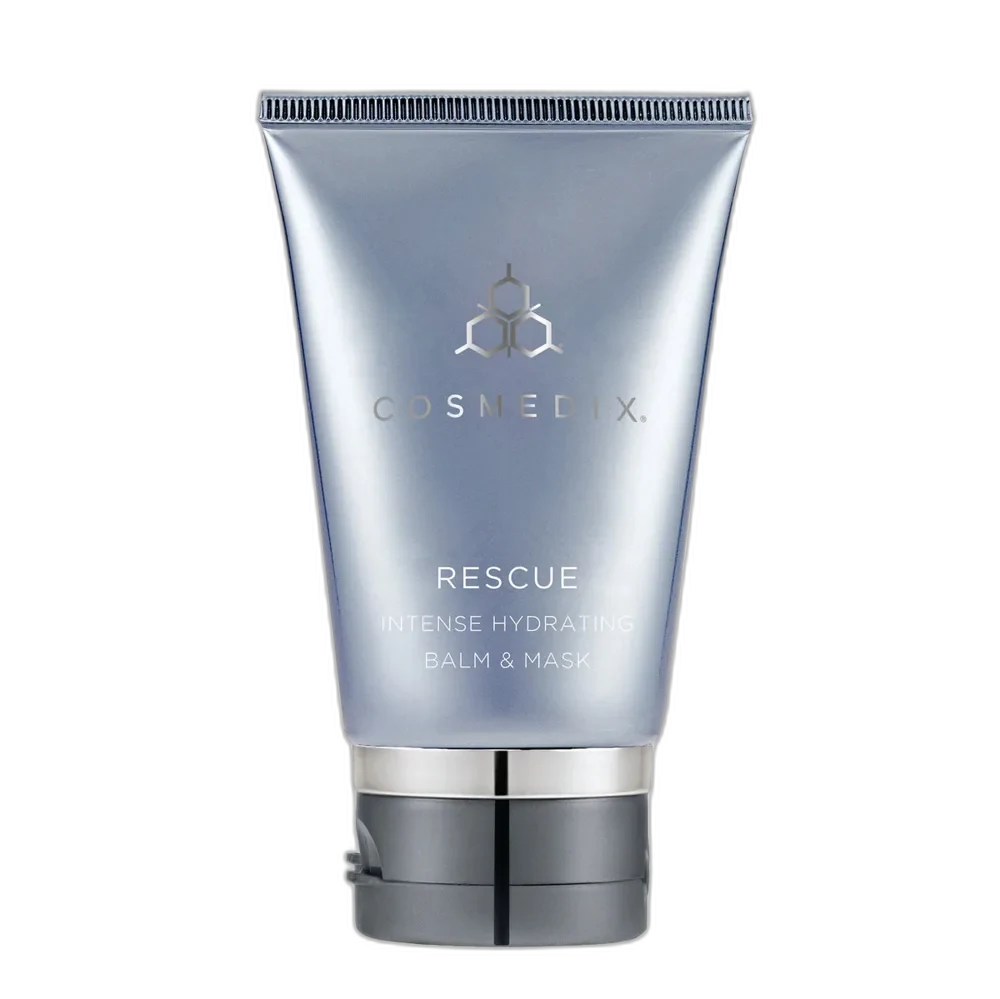
Rescue Balm
Post-Procedure Rescue
 Verified reviewer
Pros & cons.
- +Classical beeswax-and-lanolin lipid architecture that genuinely protects compromised skin
- +Calming botanical layer of bisabolol, calendula, chamomile, and allantoin
- +Immediate comfort on damaged, chapped, or post-procedure skin
- +Multi-purpose use on face, lips, cuticles, and body dry patches
- +Fragrance-free with only faint natural scent from lanolin and beeswax
- +Pregnancy safe and appropriate for recovery use
- +Small dense size lasts months with targeted use
- −Contains lanolin, which is a known allergen for a small subset of users
- −Too rich for oily or acne-prone skin as a daily full-face product
- −Small 0.5 oz size feels expensive for the sticker
- −Contains beeswax and lanolin, so not suitable for vegan users
The full review.
Walk into any drugstore skincare aisle and you’ll find shelves of products labeled ‘balm.’ Most of them are not balms in any meaningful historical sense. They’re thick creams with silicone added for slip, or petrolatum-based ointments with a fragrance on top, or gel-creams with a marketing decision. A true balm — the kind your grandmother used on wind-chapped hands, the kind that came in a tin with a screw lid and smelled faintly of honey — is built on beeswax and rendered animal fats or thick plant lipids, and it stays solid at room temperature because its entire purpose is to sit on skin and not go anywhere. Cosmedix Rescue Balm is one of the relatively few products still being made in that old tradition, updated with modern calming actives and a more refined feel, and it’s worth understanding why that format still matters in 2026.
The architecture is simple. Caprylic/capric triglyceride provides the liquid lipid matrix, shea butter adds occlusive body and fatty acids, beeswax gives structural integrity and allows the balm to hold at skin temperature without melting into nothing, squalane mimics sebum for skin compatibility, and lanolin provides deep occlusive sealing. On top of that lipid base, the formula adds bisabolol and calendula and chamomile extracts for their anti-inflammatory action, allantoin for surface soothing and gentle turnover support, panthenol for barrier recovery, and both tocopherol and tocopheryl acetate as antioxidant stabilizers. There are no actives beyond that — no retinoids, no acids, no brighteners. Rescue Balm is not asking to do multiple jobs. It is asking to do one job, which is protect and calm damaged skin, and it’s engineered specifically for that.
The use cases it actually serves are broader than the name suggests. Yes, it’s designed for post-procedure recovery — the kind of aesthetician practice where clients walk out of a peel or a microneedling session with instructions to apply it every few hours for the next three days. But it also works on windburn, chapped lips, raw cuticles, eczema patches on the knuckles, the weird dry patch next to your nostril that no moisturizer seems to fix, the wound where you scraped your knee on a garden wall. This is the old ‘all-purpose’ salve role, and Rescue Balm fills it with unusual grace. The faint honey-and-lanolin smell is part of the charm — it signals what the formula is, and anyone old enough to remember real lanolin balms from childhood will find it immediately familiar.
In use, it applies as a dense opaque balm that you need to warm slightly with your fingertip before it spreads. A small amount goes a long way — a dot the size of a pea will treat a full cheek, and most users won’t use it as a full-face product anyway. It settles into a thin glossy lipid layer that stays in place through sleep and survives moderate sweating. On compromised skin, the relief is immediate: the tight, raw, stretched feeling of a damaged barrier calms within minutes of application. Over 24 to 72 hours of consistent use, flaking resolves, surface redness reduces, and the skin underneath has a chance to rebuild without constant insult from the environment. It’s the kind of product that turns a three-day skin crisis into a one-day event.
The downsides are worth being honest about. Lanolin is a documented contact allergen for a small percentage of people, and if you know you react to it, this is not the balm for you — the lanolin is near the top of the deck, not a trace addition. The fifteen-milliliter jar is small for the forty-six-dollar sticker, though it will legitimately last months if used for its actual purpose rather than as a full-face moisturizer. And the lipid-rich formula is too heavy for oily and acne-prone users as a daily product — they should reach for it as a targeted spot treatment on specific dry patches rather than applying it all over. For people with genuinely oily skin, this is not their cream. For people with acne and occasional dry flares from retinoid use, it’s a useful tool deployed narrowly.
What’s refreshing about Rescue Balm is its unpretentiousness. There is no claim that it fades dark spots or lifts wrinkles or rebuilds your collagen scaffolding. It does not have a serum-delivery mechanism or a nanotechnology story. It is a lipid balm with soothing botanicals, engineered to protect skin while it heals itself. That is the entire value proposition, and for the specific moments it’s designed for, nothing with a more complicated story does the job better.
Formula
Ingredient analysis.
Full INCI list
Caprylic/Capric Triglyceride, Beeswax (Cera Alba), Shea Butter (Butyrospermum Parkii), Squalane, Lanolin, Tocopheryl Acetate, Bisabolol, Allantoin, Calendula Officinalis Flower Extract, Chamomilla Recutita (Matricaria) Flower Extract, Panthenol, Rosa Canina (Rosehip) Fruit Oil, Tocopherol
Skin match.
The science.
The Science
Occlusive recovery balms using beeswax, lanolin, and plant butters are established, well-supported barrier repair strategies. The mechanism is simple: a thick lipid layer reduces transepidermal water loss. For skin with lost barrier function—from chemical peels, laser resurfacing, eczema flares, or environmental damage—reducing water loss is the priority for recovery. The formula's soothing layer has its own evidence. Published research shows Bisabolol reduces UV-induced erythema and inhibits inflammatory mediators in human skin models. Allantoin has decades of clinical use for its keratolytic and soothing action and appears in many wound-healing formulations. Panthenol has robust data for barrier repair, including documented reductions in transepidermal water loss and improved skin hydration in irritant contact dermatitis models. Calendula extract has a long history of traditional use in wound recovery; while peer-reviewed trials are fewer than for pharmaceutical actives, studies suggest the flavonoid content provides anti-inflammatory activity. Lanolin is one of the most effective occlusives studied, despite its reputation as an allergen, and has a long clinical track record in nipple-cream products for breastfeeding, wound care, and severely chapped skin. No published head-to-head trial compares Rescue Balm against other recovery balms; the formulation follows standard recovery principles but lacks peer-reviewed studies on this exact formula.
Dermatologist Perspective
Dermatologists regularly recommend occlusive balms for post-procedure recovery, eczema flares, and severely compromised barriers. The clinical approach uses thin, frequent application over the first 72 hours of recovery, paired with gentle cleansing and avoiding actives until the skin normalizes. Aesthetician offices frequently carry professional-channel balms like Rescue Balm in post-procedure kits because the lipid-rich soothing formula meets recovering skin's needs. Board-certified dermatologists note that consistent occlusive use matters more than the specific brand, but a well-formulated balm with low sensitization risk is a reasonable choice for patients who do not react to lanolin or beeswax.
Where it fits in your routine.
Apply as the final step in your routine, over moisturizer. Scoop a small amount with clean fingertips and warm it between fingers before pressing onto dry, chapped, or freshly treated skin. For post-procedure recovery, apply every two to four hours for the first 24–72 hours, then use twice daily as skin normalizes. For multi-purpose use, dab onto lips, cuticles, elbows, or any dry patch as needed throughout the day. A little goes a long way — do not over-apply.
At $46 for 0.5 oz, Rescue Balm sits in the premium recovery-balm tier. Pharmacy and clinical brands offer comparable recovery balms for less, but few combine a traditional lipid base with a modern calming active layer. The price reflects formulation restraint and Cosmedix's professional positioning. Because Rescue Balm is dense and requires little product, the per-use cost is lower than the sticker price — one jar lasts most users several months of targeted use. However, the size-to-price ratio remains steep compared to drugstore alternatives.
Use this as a classical recovery balm for post-procedure care, eczema flares, or severely compromised skin. It also works as a multi-purpose balm for chapped lips, dry cuticles, and facial dry patches.
People with known lanolin or beeswax allergies. Oily or acne-prone users looking for a daily moisturizer — use it for spot treatment only if at all. Vegan users who avoid animal-derived ingredients.
Product details.
Dense opaque balm that warms into a glossy lipid layer with body heat
Faint honey-and-lanolin note with a hint of calendula; no added fragrance
Small twist-up tin jar — traditional balm format, protects against oxidation well
The first application provides immediate comfort to dry or irritated patches. The balm warms and softens on contact, turning into a thin gloss instead of a greasy slick. Most users see visible calming within the first day of use.
Takes about 2–4 months, depending on full-face use or targeted spot treatment
12 months
All Year
The backstory.
Rescue Balm has been a fixture in Cosmedix's professional range since the brand's early years and was specifically formulated as a recovery product for clients coming off chemical peels, microneedling, and laser resurfacing. It's the kind of product aestheticians hand you as you're leaving the treatment room, with instructions to use it 'wherever it hurts.'
About Cosmedix
Established Brand (5–20 years)Cosmedix has occupied the professional channel since 2005, focusing its catalog on recovery and acne formulations. Rescue Balm is a signature post-procedure product for the brand. Aestheticians use Rescue Balm frequently, though no independent clinical trials exist for this specific formula.
Common myths.
All balms are greasy and clog pores.
Rescue Balm is an occlusive. Its lipid profile — shea, squalane, lanolin — works well on dry and normal skin. Oily and acne-prone users should use Rescue Balm as a spot treatment instead of all over.
Lanolin is outdated and should be avoided.
Lanolin is a highly effective occlusive with decades of clinical use. It is an allergen for a small subset of users, but for most, it provides barrier protection that petrolatum alternatives struggle to match.
FAQ.
Can I use Rescue Balm on acne-prone skin?
Use it as a spot treatment instead of all over. The lipid-rich formula with shea butter and lanolin is too occlusive for daily full-face use on acne-prone skin, but it is well-tolerated on specific dry, flaking, or chapped areas.
Is Rescue Balm safe after a chemical peel?
Yes — this is a primary use. Apply a thin layer over recovering skin several times a day starting 24 hours post-peel (or as your provider directs). The occlusive layer protects compromised skin during healing.
Does Rescue Balm contain fragrance?
No added fragrance. The lanolin, beeswax, and calendula have a faint natural scent, but there is no synthetic perfume.
Can I use Rescue Balm on chapped lips?
Yes. Many users keep Rescue Balm on their bedside table for multi-purpose use on lips, cuticles, elbows, and dry patches. The beeswax-shea-lanolin base works for all those uses.
Is Rescue Balm pregnancy safe?
Yes. The formula lacks retinoids, salicylic acid, or hydroquinone. The soothing botanical actives are safe during pregnancy and breastfeeding.
Why is the jar so small?
Balms are dense and concentrated. A 0.5 oz jar lasts 2–4 months with targeted use. Cosmedix markets this as a recovery product instead of a daily face moisturizer, so the size fits targeted application.
What the community says.
"Calms irritated skin quickly"
"Works on chapped lips, cuticles, and elbows too"
"A little goes a long way"
"Tiny size for the price"
"Contains lanolin"
"Too thick for acne-prone skin"
People also looked at.