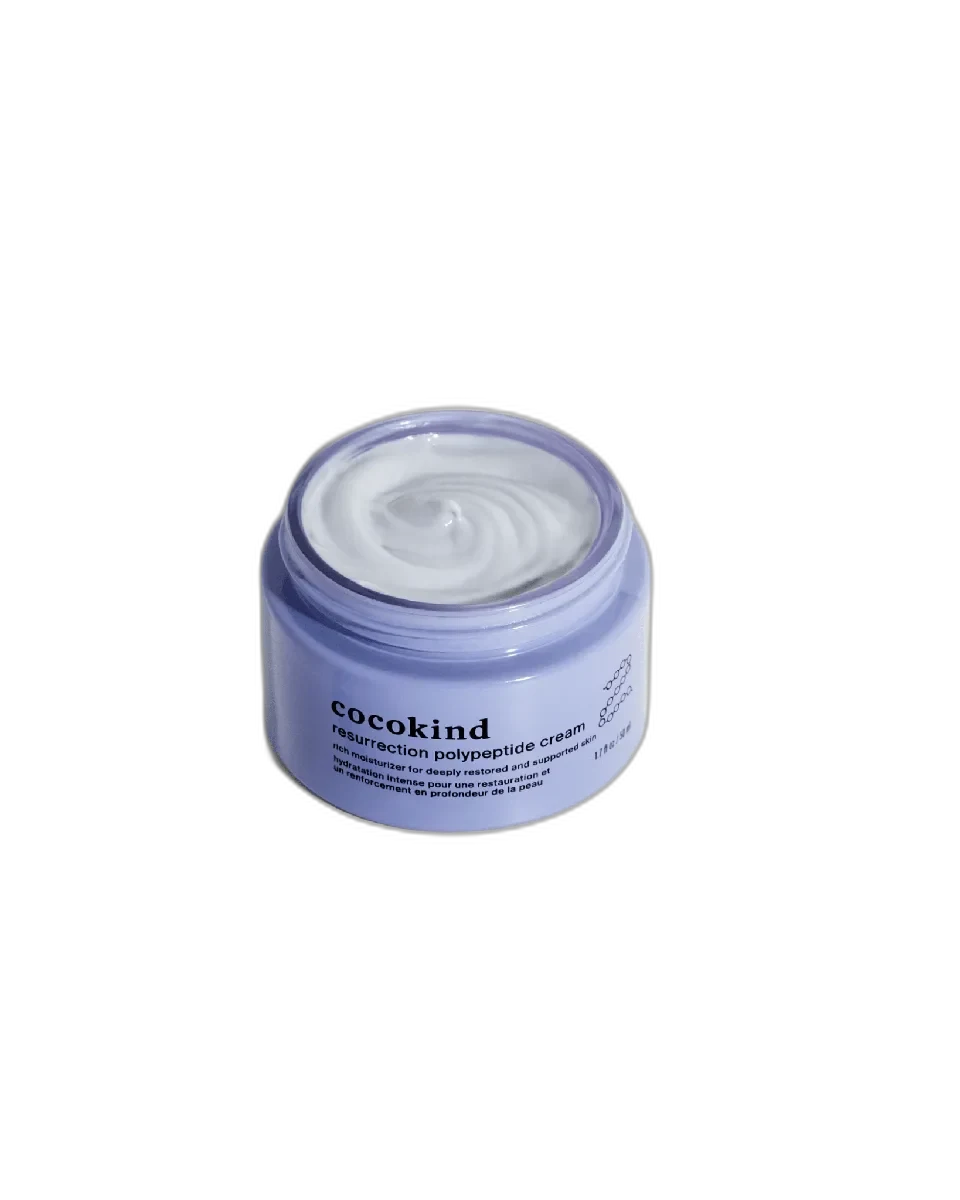
Resurrection Polypeptide Cream
Budget Luxury Dupe
 Verified reviewer
Pros & cons.
- +Extraordinary texture that rivals luxury creams at a fraction of the price
- +Completely fragrance-free with National Eczema Association seal for sensitive skin
- +Innovative biotech-produced plant peptide represents genuine formulation creativity
- +Squalane and olive-derived emulsifier system mimics skin's natural lipid structure
- +Travel size available at $12 for low-commitment trial
- +Leaping Bunny certified, vegan, and silicone-free clean beauty credentials
- +Over 3,500 reviews at 4.7 stars demonstrate exceptional consumer satisfaction
- −Too rich for oily skin types and warm-weather daily use
- −Shea butter content poses comedogenic risk for acne-prone skin
- −Glass jar packaging is less hygienic than pump or tube alternatives
- −Key actives (peptide, resurrection plant) sit low on the INCI list
- −Independent clinical evidence for the specific peptide complex remains limited
- −Formula appears to lack traditional preservatives raising shelf stability questions
The full review.
About Cocokind
The internet loves a dupe narrative. Tell people they can get the La Mer experience for twenty-seven dollars and the content practically writes itself. But the Cocokind Resurrection Polypeptide Cream deserves better than being reduced to someone else’s cheaper understudy. What Priscilla Tsai and her team built over eighteen months of development is a cream with its own identity — one rooted in plant adaptation science, biotech innovation, and the kind of texture engineering that makes you understand why people develop emotional relationships with their moisturizers.
The first encounter is visual. This cream is purple. Not a faint lavender tint, but a confident violet derived from Genipa Americana fruit extract — jagua fruit, an Amazonian botanical with antioxidant properties that doubles as a natural colorant. It is a bold choice that signals immediately: this is not trying to look like everything else on your shelf.
Then comes the texture, and this is where the La Mer comparisons genuinely earn their place. The cream has a taffy-like, bouncy consistency — dense enough to hold its shape in the jar, but melting on contact with warm skin into something silky and absorbent. It is the kind of texture that makes you want to touch your face twenty minutes later just to confirm that yes, your skin really does feel like that now. Plumped. Smooth. Velvety with a subtle blurring effect that makes pores seem to recede.
The formulation tells an interesting story through its INCI list. Watermelon seed oil anchors the oil phase — a lightweight choice rich in linoleic acid that avoids the heaviness of traditional seed oils. Squalane, listed third, provides biomimetic lipid support. The emulsifier system is Olivem 1000, an olive-derived complex that mimics the skin’s natural lipid structure. Shea butter brings the occlusive richness. Together, these create a moisture architecture that feels considered rather than accidental.
The two headline ingredients — the ones that give the cream its name — sit deeper in the INCI list, which is worth acknowledging honestly. Selaginella Lepidophylla, the resurrection plant, appears at position thirteen. The polypeptide complex lands at seventeen. Both are active at low concentrations, which is typical for peptides and specialty botanicals, but the positioning tempers expectations about their contribution relative to the cream’s more abundant emollients.
The resurrection plant angle is genuinely fascinating as biology, if slightly overstated as skincare marketing. Selaginella Lepidophylla is a Central American desert plant that can lose virtually all its water content, curl into a dry brown ball, and spring back to verdant life when water returns — sometimes after years of dormancy. The mechanism involves trehalose, a sugar that physically replaces water molecules around proteins and cell membranes, maintaining structural integrity through extreme desiccation. Applying its extract to human skin does not grant supernatural moisture retention, but the trehalose-mediated hydration protection is a real and documented biological phenomenon.
The peptide story is arguably even more interesting, if less photogenic. Nicotiana Benthamiana Hexapeptide-40 SH-Polypeptide-76 — a name that would make any copywriter weep — is a signal peptide produced through biotechnology. The peptide is grown in tobacco-family plants that have been engineered to produce a TGF-beta-2 analog, a growth factor involved in collagen synthesis and cell differentiation. It is plant-produced biotech in a jar, which is a remarkable sentence to write about a twenty-seven dollar cream. The catch: independent clinical evidence for this specific peptide’s cosmetic efficacy is still limited. The science is sound in theory, emerging in practice.
In daily use, the cream performs exactly as its 4.7-star average across thousands of reviews suggests: reliably, pleasantly, and with a generosity of hydration that dry skin types will find deeply satisfying. The fragrance-free formula produces zero scent — a genuine rarity that the sensitive-skinned will appreciate. The National Eczema Association seal is not handed out casually, and its presence here confirms that the cream’s gentleness is not just marketing language.
The limitations align with what you would expect from a rich, oil-forward cream. Oily skin types will find this too heavy, particularly in warm weather. The shea butter content gives pause for acne-prone users — not everyone will break out, but the comedogenic potential is real. The glass jar, while beautiful and recyclable, means finger-dipping into the product twice daily, which is suboptimal from a hygiene perspective. And some early batches showed consistency variations, though the 2025 reformulation reportedly addressed this while adding an extra one percent peptide complex.
The value proposition is where this cream genuinely shines. At twenty-seven dollars for fifty milliliters, you are getting a thoughtfully formulated, fragrance-free, Leaping Bunny certified cream with biotech peptides, plant-derived emollients, and a texture that punches well above its price class. A travel size at twelve dollars lets you test drive before committing. This is not about being a cheap alternative to luxury — it is about a small brand delivering genuine quality without the markup that pays for marble counters and tissue paper.
The cream earned its viral moment not because the internet is gullible, but because it delivers a tactile experience that most people associate with products five to ten times the price. Whether the resurrection plant and polypeptide complex provide anti-aging benefits beyond hydration remains to be proven with more rigor. But as a moisturizer that makes dry skin feel transformed while keeping its ingredient list clean and its price honest, the Cocokind Resurrection Polypeptide Cream is the real thing — purple hue and all.
Ingredient analysis.
Full INCI list
Water/Eau, Citrullus Lanatus (Watermelon) Seed Oil, Squalane, Triolein, Musa Sapientum (Banana) Leaf/Trunk Extract, Glycerin, Betaine, Cetearyl Olivate, Butyrospermum Parkii (Shea) Butter, Crambe Abyssinica Seed Oil Phytosterol Esters, Glyceryl Stearate SE, Jojoba Esters, Selaginella Lepidophylla Extract, Cetearyl Alcohol, Cetyl Palmitate, Sorbitan Olivate, Nicotiana Benthamiana Hexapeptide-40 SH-Polypeptide-76, Butylene Glycol, Salix Alba (Willow) Bark Extract, Genipa Americana Fruit Extract, Sorbitan Palmitate, Sorbitan Oleate, Xanthan Gum, Citric Acid
Skin match.
The science.
The Science
The Cocokind Resurrection Polypeptide Cream uses two emerging ingredient categories. The resurrection plant extract (Selaginella Lepidophylla) contains trehalose, a disaccharide that acts as a bioprotectant during extreme desiccation. Trehalose replaces water molecules around proteins and phospholipid membranes to maintain their three-dimensional structure when cellular water drops to near zero. A clinical study on formulations with 3% trehalose showed significant skin hydration improvement versus placebo over 14 days, confirming the sugar's humectant and protective properties in topical application.
No studies exist specifically on Selaginella Lepidophylla in cosmetics, but a related resurrection plant species — Myrothamnus flabellifolia — appeared in a 2022 clinical trial in the Journal of Cosmetic Dermatology. Over 56 days, the formulation reduced age spots by 30.8%, improved skin homogeneity by 63.2%, and diminished wrinkle area by 8.1%. The study also showed modulation of autophagy pathways at the cellular level, suggesting resurrection plant extracts support cellular renewal mechanisms beyond simple hydration.
The polypeptide component (Nicotiana Benthamiana Hexapeptide-40 SH-Polypeptide-76) is a recombinant TGF-beta-2 analog produced in tobacco-family plants through genetic engineering. TGF-beta-2 is a growth factor that drives cell proliferation, differentiation, and extracellular matrix production — including collagen synthesis. This plant-based production method is a novel approach to peptide manufacturing in cosmetics, though independent peer-reviewed studies on this specific ingredient's cosmetic efficacy are not yet available.
The cream's Olivem 1000 emulsifier system (Cetearyl Olivate and Sorbitan Olivate) forms liquid crystalline structures that mimic the skin's natural lipid organization. This biomimetic emulsion chemistry may enhance active ingredient delivery and support barrier function more than conventional emulsifier systems.
References
- Modulation of autophagy by an innovative phytocosmetic preparation containing Myrothamnus flabellifolia and its effects in a clinical randomized placebo-controlled trial — Journal of Cosmetic Dermatology (2022)
Dermatologist Perspective
Dermatologically, this cream's most notable credential is its National Eczema Association Seal of Acceptance, which requires the organization's scientific advisory board to review the ingredient list and formulation. Dermatologists would recognize the squalane-rich, fragrance-free, silicone-free formula as generally well-tolerated for dry and eczema-prone skin. The olive-derived emulsifier system and absence of common irritants (fragrance, essential oils, alcohol) make it suitable for reactive skin types. Board-certified dermatologists would note that while the peptide and resurrection plant ingredients are scientifically interesting, the evidence base for their anti-aging claims at cosmetic concentrations remains limited. The cream's primary dermatological value is its barrier-supporting emollient profile rather than its specialty actives. The shea butter content warrants caution for patients prone to comedonal acne.
Where it fits in your routine.
Warm a pea-sized amount between fingertips to melt the thick texture, then press into clean, slightly damp skin. Apply this as the final moisturizing step after serums and treatments. In the morning, wait 2-3 minutes for absorption before applying sunscreen — the thick texture takes time to settle. At night, use a generous final layer or a sleeping mask in dry climates. Use a clean spatula instead of fingers to scoop from the jar for hygiene.
At $27 for 1.7 oz, the Cocokind Resurrection Polypeptide Cream offers high value. Competitors often charge $50-200+ for similar-sized peptide creams. The $12 travel size removes the risk of buying a full-price product. The formulation uses biotech ingredients (plant-produced peptide), emollients (squalane, watermelon seed oil), and third-party certifications (Leaping Bunny, NEA seal) that many products at triple the price lack. The La Mer comparison highlights the core fact: this cream provides a luxury sensorial experience with clean credentials at a justifiable price. Using it twice daily lasts 2-3 months, making the daily cost roughly 30-45 cents.
This cream works for dry to normal skin types wanting a thick, fragrance-free moisturizer with clean beauty credentials at an accessible price. If you like thick creams, value vegan and cruelty-free certifications, and want innovative plant-science ingredients, this is an exceptional choice.
Oily and acne-prone skin types should avoid this cream. The shea butter and oil phase are heavy and likely comedogenic. The emerging evidence base lacks published efficacy data for the anti-aging peptide concentrations. This cream feels thick and heavy if you prefer lightweight, fast-absorbing textures.
Product details.
It is unscented—no fragrance or essential oils. Users report no smell, so it works for those sensitive to or who dislike scented skincare.
A purple-tinted glass jar with a screw-on lid matches the cream's natural violet color from jagua fruit extract. The outer box uses 100% FSC-certified paper. You can recycle the glass jar, but the small lid is not recyclable. The jar format looks good but is less hygienic than pump alternatives.
The color is a striking purple-violet from natural jagua fruit extract. The texture is thick and bouncy, like taffy, and feels more expensive than the price tag. Skin feels plump and velvety minutes after application. Most users experience no adjustment period, tingling, or breakout risk.
2-3 months with twice-daily face application
12 months
fall winter
The backstory.
Developed over 18 months by founder Priscilla Tsai, the Resurrection Polypeptide Cream launched in late 2022 and quickly became Cocokind's breakthrough product. The resurrection plant angle — inspired by a desert succulent that survives complete desiccation — captured social media attention, with the La Mer texture comparison going viral on TikTok. A 2025 reformulation addressed early batch consistency issues and added an additional 1% peptide complex.
About Cocokind
Established Brand (5–20 years)Priscilla Tsai founded Cocokind in 2014 in San Francisco. The brand grew from one Whole Foods shelf to nationwide availability at Target, Ulta, and Amazon. Cocokind is Leaping Bunny certified and has a National Eczema Association Seal of Acceptance for this product, providing third-party validation for its clean beauty positioning.
Common myths.
This cream gives La Mer results for $27 — the same outcome at a fraction of the price.
The texture comparison is valid — both creams feel thick and cushiony. But La Mer and Cocokind use different active ingredient strategies (La Mer's Miracle Broth vs. Cocokind's plant peptide and resurrection plant extract). They share a sensory experience, not equivalent formulation science.
The resurrection plant extract teaches your skin to resist dehydration.
The extract has high trehalose levels. This sugar protects cellular structures during dehydration through a biological mechanism. Topical application of the extract does not reprogram skin hydration pathways. It provides protective hydration, but 'teaching skin to protect itself' overstates the evidence for this ingredient.
FAQ.
Is the Cocokind Resurrection Polypeptide Cream really a La Mer dupe?
The texture comparison is valid — both creams have a thick, cushion-like feel on skin. However, the formulations differ. This cream uses plant-derived peptides and resurrection plant extract, while La Mer uses its proprietary Miracle Broth. You get a similar sensorial experience for $27 instead of $200+, but the formulations are not identical.
What is the resurrection plant in this cream?
Selaginella Lepidophylla, commonly called Rose of Jericho, is a desert plant native to Central America that can survive complete desiccation and revive when rehydrated. The extract is rich in trehalose, a sugar that protects cellular structures during dehydration. In this cream, it aims to support the skin's moisture-retention mechanisms.
Is the Cocokind Resurrection Cream good for acne-prone skin?
This thick cream contains shea butter and multiple oils. These ingredients are heavy and can trigger breakouts in acne-prone skin. The formula works best for dry to normal skin types. If you have acne-prone skin but want the peptide benefits, use this cream only at night or on non-breakout-prone areas.
Does the Cocokind Polypeptide Cream have preservatives?
The INCI list excludes traditional preservatives like parabens, phenoxyethanol, or sodium benzoate. The formula uses the antimicrobial properties of specific ingredients and the glass jar packaging. This raises questions about shelf stability, but the 12-month PAO and glass packaging address these concerns.
Why is the Cocokind Resurrection Cream purple?
Genipa Americana Fruit Extract (jagua fruit) provides the distinctive violet color and antioxidant properties. This purple hue comes from the botanical ingredient, not artificial dyes. The color fades to invisible once the cream absorbs into the skin.
Is the Cocokind Resurrection Polypeptide Cream safe during pregnancy?
This cream has no retinoids, salicylic acid, or other ingredients flagged during pregnancy. The fragrance-free formula is gentle and has the National Eczema Association seal. It is generally safe for pregnancy, but consult your healthcare provider with specific concerns.
How does the plant-derived peptide in this cream work?
The peptide (Nicotiana Benthamiana Hexapeptide-40 SH-Polypeptide-76) is a TGF-beta-2 analog. Biotechnology in tobacco-family plants produces it instead of chemical synthesis. It works as a signal peptide to support collagen production and cell differentiation. This technology is innovative, but independent clinical data on this specific peptide's cosmetic efficacy remains limited.
What the community says.
"Luxurious rich texture frequently compared to La Mer at a fraction of the price"
"Deeply hydrating without feeling greasy once absorbed"
"Distinctive taffy-like cushion texture that melts into skin beautifully"
"Visible plumping and blurring effect that smooths skin appearance"
"Fragrance-free with no noticeable scent — ideal for sensitive noses"
"National Eczema Association seal provides confidence for reactive skin"
"Glass jar packaging raises hygiene concerns with repeated finger-dipping"
"Too rich and heavy for oily skin types or warm humid climates"
"Shea butter content may trigger breakouts in acne-prone individuals"
"Key actives (peptide, resurrection plant) are positioned low on the INCI list"
"Some batch consistency issues reported before the 2025 reformulation"