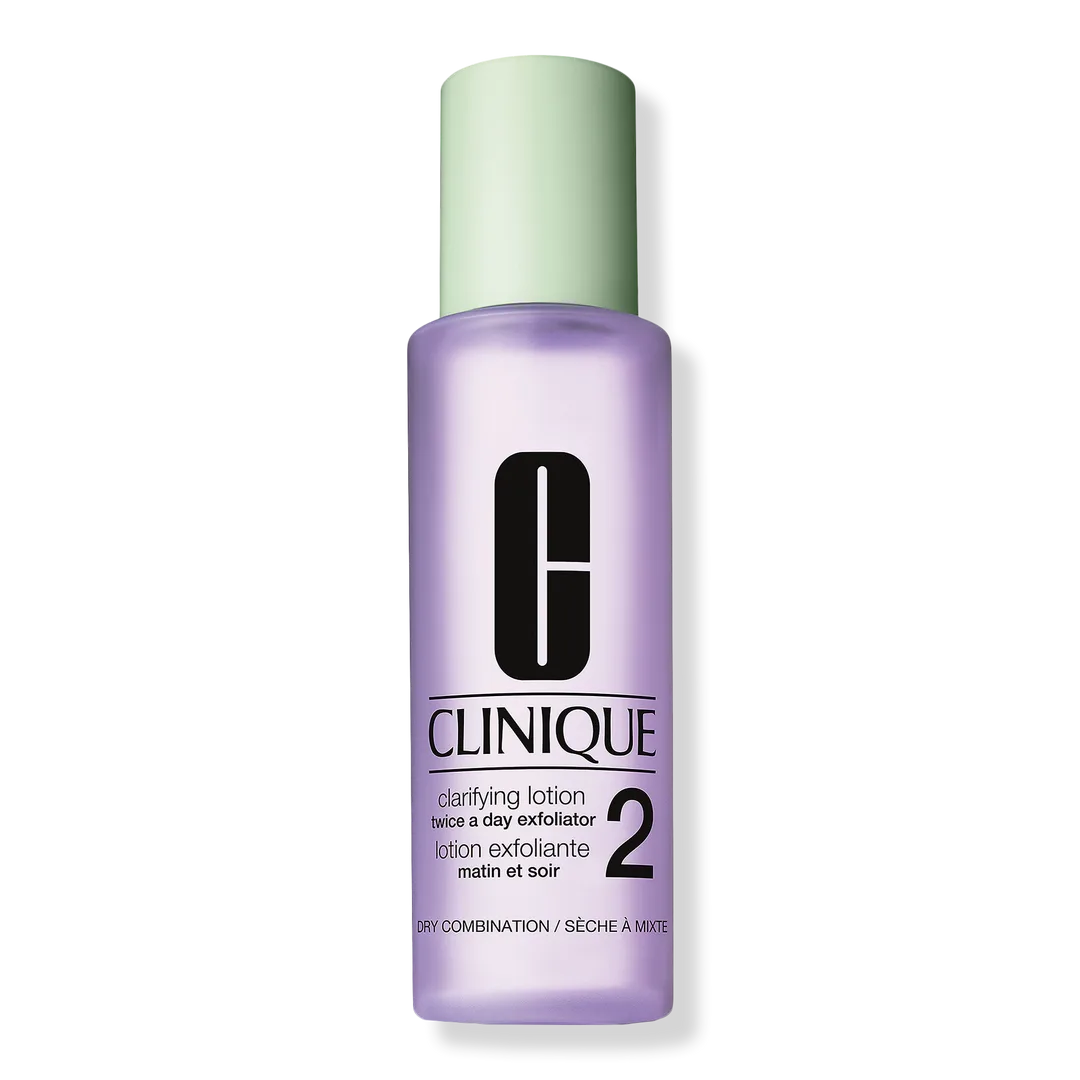
Clarifying Lotion 2
Legacy Exfoliating Toner
 Verified reviewer
Pros & cons.
- +Acetyl glucosamine provides genuine chemical exfoliation without requiring acidic pH conditions
- +Part of a historic three-step system with nearly sixty years of real-world validation
- +Reformulated with sodium hyaluronate glycerin and trehalose to buffer alcohol drying effects
- +Multiple size options from travel to jumbo offer excellent flexibility and per-ounce value
- +Fragrance-free and paraben-free with a simple twelve-ingredient formula
- +Visible exfoliation feedback on cotton pad confirms product is working
- −Alcohol denat. is the second ingredient creating significant drying and irritation potential
- −Formula feels dated compared to modern alcohol-free exfoliating toners
- −Can sting on sensitized compromised or freshly shaved skin
- −Not suitable for sensitive skin rosacea or eczema despite the mild #2 designation
- −The purple tint can temporarily stain cotton pads and light towels
The full review.
In 1968, consumers did not believe in or practice daily exfoliation. Skincare routines used only soap and water. The idea of a dedicated exfoliation step—a liquid applied with a cotton pad to remove dead skin cells—was revolutionary. The Clinique Clarifying Lotion led that revolution. As Step 2 of the original Three-Step Skin Care System, it taught millions that healthy skin requires regular removal of the dead cell layer that dulls complexion, clogs pores, and blocks product penetration.
Nearly sixty years later, Clarifying Lotion 2 remains on shelves. It still uses numbers (1 through 4, dry to oily) and still leaves the same yellowish-brown residue on the cotton pad that convinced generations of users it worked. That residue is primarily dead corneocytes and dissolved sebum—evidence of exfoliation, not dirt. This distinction matters: the product is functioning as intended by loosening and removing the uppermost layer of cells.
The exfoliating engine has changed over the decades. The current formula centers on acetyl glucosamine, an amino sugar that disrupts glycosidic bonds between dead corneocytes without needing the acidic pH required by alpha hydroxy acids. This is an advantage: exfoliation works at the formula’s native pH instead of a low-pH environment that stings and irritates. Witch hazel extract provides extra astringent and antioxidant activity, though its role is smaller than in the original formula because acetyl glucosamine handles more of the exfoliation.
The reformulation added a hydration safety net missing from the 1968 version. Sodium hyaluronate, glycerin, and trehalose form a three-part humectant system to counteract the drying effect of the high alcohol content. Alcohol denat. is the second ingredient, right after water, which shows the formula’s age. In 1968, alcohol was a standard skincare vehicle. In 2026, modern formulators work to eliminate or minimize it. The hydration additions help, but they fight the high volume of alcohol in the base.
The experience is distinctive. A soaked cotton pad provides a brisk, slightly stinging sweep across the face, followed by the clean-tight feeling alcohol creates, then noticeable smoothness once the toner evaporates. It is a ritual; Three-Step users who have used it for decades call it addictive, a sensory confirmation that they prepared their skin. The purple tint is cosmetic, caused by colorants at the end of the INCI list, and has no functional purpose.
The #2 formula targets dry-combination skin and is the mildest in the Clarifying range. It lacks the salicylic acid found in the #3 formula for oily, acne-prone skin and uses fewer astringent actives than the #3 and #4 versions. This makes it the most tolerable entry point for the Three-Step System, though “most tolerable” still involves significant alcohol exposure.
Value is reasonable for the prestige category. Twenty-three dollars for 6.7 ounces lasts two to three months with twice-daily use. Larger sizes up to 16.5 ounces offer better per-ounce value. These multiple size options provide a convenience many modern toner brands lack.
The honest assessment: this product works. Acetyl glucosamine exfoliation delivers measurable smoothing and brightening over weeks of consistent use. Witch hazel provides gentle astringent refinement. For the millions who grew up with the Three-Step System, the Clarifying Lotion is a foundational habit.
But this habit relies on a formulation philosophy from nearly sixty years ago. The alcohol content is the elephant in the bottle. Modern exfoliating toners deliver comparable or superior results using gentler vehicles—no alcohol, no stinging, and no need for a hydration safety net to undo the exfoliation step’s effects. Clinique reformulated thoughtfully within the original concept, but the constraints remain.
Formula
Ingredient analysis.
Full INCI list
Water/Aqua/Eau, Alcohol Denat., Glycerin, Hamamelis Virginiana (Witch Hazel) Extract, Acetyl Glucosamine, Trehalose, Sodium Hyaluronate, Butylene Glycol, Sodium Bicarbonate, Red 6 (CI 15850), Red 33 (CI 17200), Ext. Violet 2 (CI 60730)
Skin match.
The science.
The Science
Acetyl glucosamine uses a mechanism different from the hydroxy acids in most exfoliating toners. This amino sugar breaks glycosidic bonds between corneocytes in the upper stratum corneum to promote desquamation without the pH-dependent activity of glycolic or lactic acid. It works at near-neutral pH, which helps in an alcohol-water vehicle that lacks acidic conditions. Research shows acetyl glucosamine also brightens skin by inhibiting tyrosinase, providing tone-evening benefits alongside exfoliation.
Witch hazel extract has tannins—polyphenolic compounds that bind to proteins to temporarily tighten pores. Gallic acid derivatives in witch hazel provide mild antioxidant activity. Some dermatological research questions if this astringent effect is beneficial or just cosmetically satisfying, since pore tightening is temporary and does not change actual pore size.
The trehalose inclusion uses modern cellular stress protection. This disaccharide stabilizes cell membrane phospholipids during dehydration stress, preventing the protein denaturation and membrane damage caused by alcohol exposure. In this formula, it acts as a molecular cushion that helps skin cells survive alcohol contact intact.
Dermatologist Perspective
Dermatologists have a nuanced view of the Clarifying Lotion. Board-certified dermatologists agree the Three-Step System introduced millions to proper skincare habits, and its exfoliation principle remains valid. However, most dermatologists today do not prescribe a high-alcohol exfoliating toner as a first choice, as modern alternatives achieve comparable exfoliation with less irritation risk. Dermatologists typically recommend the Clarifying Lotion for patients who have used it successfully for years and see no reason to change, but they steer new patients toward alcohol-free exfoliating options.
Where it fits in your routine.
Saturate a cotton pad with the Clarifying Lotion after cleansing. Sweep it across the face and neck, but avoid the lips and eye area. Use it morning and evening as Step 2 in the Clinique Three-Step routine. Apply serum and moisturizer immediately after to replenish hydration. Do not leave the toner on skin without subsequent moisturization.
At twenty-three dollars for 6.7 ounces, this prestige toner is competitively priced and lasts two to three months with twice-daily use. The 13.5 oz and 16.5 oz sizes offer excellent per-ounce value for Three-Step users. A 2.0 oz travel size is also available. For a legacy dermatologist-guided brand with nearly sixty years of market validation, the price-to-heritage ratio is fair — though the formulation doesn't fully justify the prestige premium against modern drugstore exfoliating toners.
Dryer combination skin types wanting a gentle daily exfoliant within the Clinique Three-Step framework will like this. It suits longtime Three-Step users who know the formula works and value the ritual consistency. Non-sensitive skin types new to the Clinique system can use this as an entry point.
Sensitive, rosacea-prone, or eczema-affected skin. People with a compromised skin barrier. Users who prefer alcohol-free skincare or feel stinging from alcohol-based products. Oily or acne-prone skin needs Clarifying Lotion 3 or 4 instead.
Product details.
Thin, watery liquid with a purple tint. Use a cotton pad in a sweep-and-wipe motion. It is light and non-viscous.
Fragrance-free, but a noticeable alcohol scent lasts for seconds after application.
Iconic Clinique clear bottle with green cap. It comes in 2.0 oz, 6.7 oz, 13.5 oz, and 16.5 oz sizes. These sizes work for everything from travel to value.
The alcohol creates a brisk, slightly stinging sensation on application that dissipates within seconds. Skin feels clean and slightly tight immediately. The cotton pad shows a yellowish-brown residue of removed dead skin and debris, providing visible feedback that the product works.
2-3 months with twice-daily use (6.7 oz size)
18 months
All Year
The backstory.
When dermatologist Norman Orentreich and Vogue editor Carol Phillips created Clinique in 1968, the Clarifying Lotion was Step 2 of the revolutionary Three-Step System — cleanse, exfoliate, moisturize. It was radical at the time: the idea that daily exfoliation was essential for healthy skin was not mainstream consumer advice. The numbering system (1 through 4) matched skin types from driest to oiliest, creating one of skincare's first personalized product selection frameworks. Nearly sixty years later, the Three-Step System remains in production.
About Clinique
Legacy Brand (20+ years)Clinique was founded in 1968 as the first prestige cosmetics brand to be allergy-tested and fragrance-free, developed in partnership with dermatologist Norman Orentreich. A subsidiary of Estée Lauder Companies, Clinique pioneered dermatologist-guided skincare and remains one of the most recognized prestige skincare brands worldwide.
Common myths.
The residue on the cotton pad after using Clarifying Lotion is dirt.
The yellowish-brown residue consists mostly of dead skin cells (corneocytes) loosened by acetyl glucosamine and witch hazel, along with some dissolved sebum. This is exfoliation debris, not dirt—which shows the product works as intended.
Alcohol in toner is always bad for skin
Alcohol denat. in this formula acts as a solvent and quick-drying vehicle. At this concentration, it dries sensitive or dry skin. The reformulation added hyaluronic acid, glycerin, and trehalose as hydration buffers to fix this. Normal and combination skin generally tolerates the alcohol when used within the Three-Step system with moisturizer.
FAQ.
Which Clinique Clarifying Lotion number should I use?
Clinique Clarifying Lotion 2 targets dry-combination skin as the range's mildest formula. For oilier skin, especially in the T-zone, Clarifying Lotion 3 contains salicylic acid. The numbering system follows skin type: lower numbers suit drier skin, while higher numbers suit oilier skin.
Does Clinique Clarifying Lotion 2 contain alcohol?
Yes — alcohol denat. is the second ingredient. The reformulated version uses sodium hyaluronate, glycerin, and trehalose to buffer drying effects. If you are sensitive to alcohol in skincare, this product causes irritation. Use alcohol-free exfoliating toner alternatives.
Can I use Clinique Clarifying Lotion with retinol?
Use caution. The acetyl glucosamine exfoliation and retinol can over-exfoliate sensitive or dry skin. If using both, apply the Clarifying Lotion in the morning and retinol at night, or alternate days. Use enough moisturizer and sunscreen.
Why does my cotton pad turn brown after using Clarifying Lotion?
The residue consists mostly of dead skin cells (corneocytes) loosened by acetyl glucosamine and witch hazel, plus dissolved sebum and leftover cleanser. This shows exfoliation, not dirt removal. This is normal and expected.
Is Clinique Clarifying Lotion 2 a toner or an exfoliant?
Both. Clinique calls it a 'lotion' (their term for toner), but acetyl glucosamine and witch hazel make it a daily chemical exfoliant. It exfoliates the upper layer of dead skin, tones, and prepares the skin for subsequent products. In the Clinique system, it is Step 2 — the exfoliation step.
What the community says.
"Leaves skin feeling refreshed and smooth after every use"
"Visibly improves skin clarity and luminosity over time"
"Part of a trusted three-step system that simplifies routines"
"Cotton pad picks up visible residue confirming exfoliation is working"
"Multiple sizes available from travel to jumbo"
"High alcohol content can be drying and irritating for sensitive skin"
"Alcohol scent is noticeable and off-putting for some users"
"Formula feels dated compared to modern alcohol-free exfoliating toners"
"Can sting on compromised or freshly shaved skin"
"The purple tint can temporarily stain cotton pads and towels"