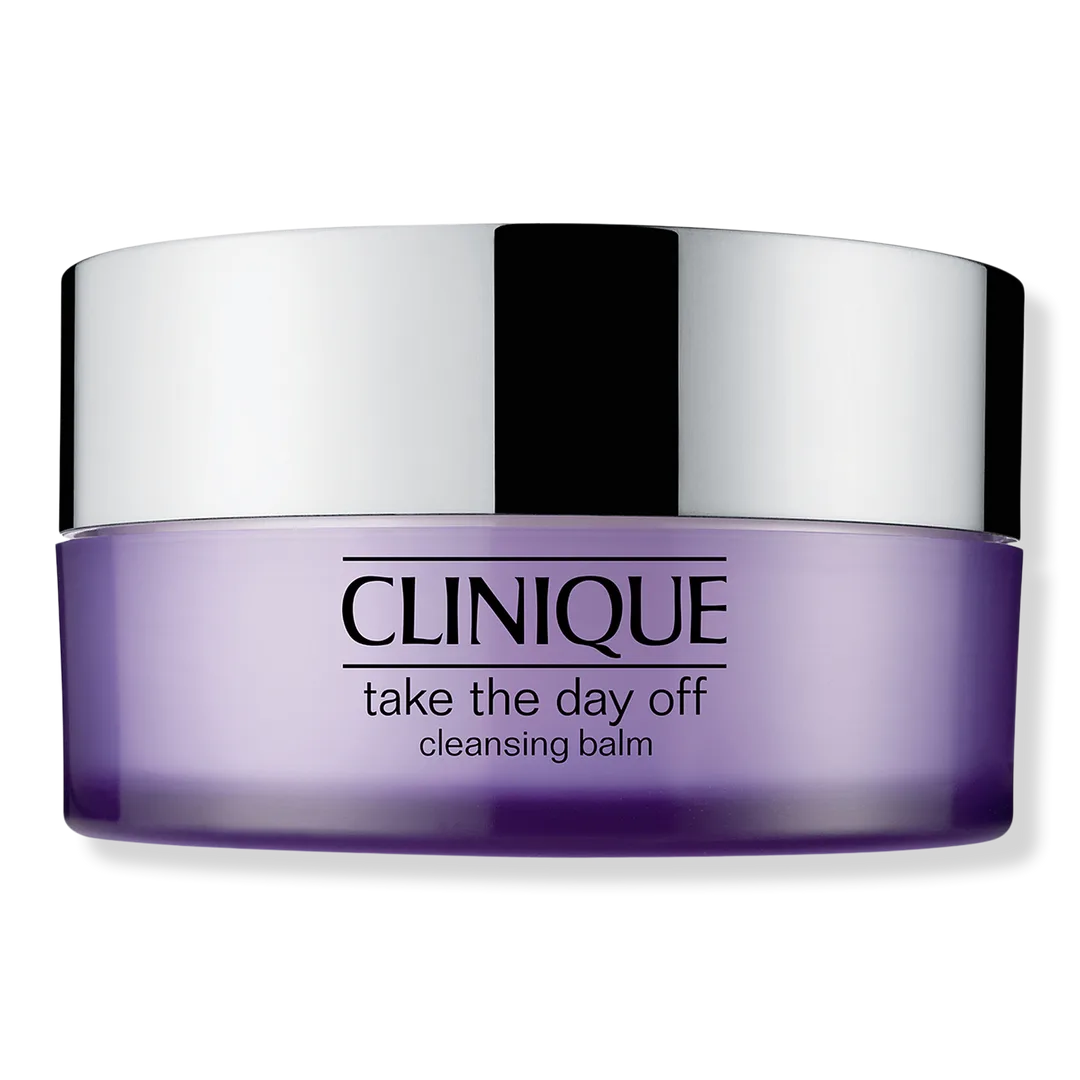
Take the Day Off Cleansing Balm
Cult-Status Makeup Eraser
 Verified reviewer
Pros & cons.
- +Radically minimalist nine-ingredient formula eliminates virtually all potential irritants and allergens
- +Dissolves all makeup types including waterproof mascara and heavy SPF without rubbing or tugging
- +Emulsifies cleanly with water — no oily residue or film left behind
- +Safe for virtually every skin type and condition including rosacea, eczema, and post-procedure skin
- +Exceptional economy — a dime-sized amount covers the full face, with the standard jar lasting 4-6 months
- +Ophthalmologist tested and safe for use directly on the eye area
- +Available in three sizes including a travel-friendly 1.0 oz and value-oriented 6.7 oz jumbo
- −Contains polyethylene (microplastic) — a legitimate environmental concern
- −Utilitarian texture and experience — lacks the sensory luxury of newer cleansing balms
- −Jar packaging requires finger scooping — less hygienic than pump or tube formats
- −Can cause temporary blurry vision if not rinsed thoroughly from the eye area
- −No additional skincare benefits beyond cleansing — purely functional
The full review.
Some products earn cult status through glamour—pretty packaging, scents, and sensory experiences that feel like self-care. Others earn it by being unglamorously reliable. The Clinique Take the Day Off Cleansing Balm is the latter.
The ingredient list reveals the philosophy. Nine ingredients. In a category where competitors list thirty or forty ingredients—using botanical extracts, essential oils, vitamin complexes, and proprietary blends—Clinique’s formulators focused on the chemistry of dissolving makeup. They chose the minimum number of ingredients required to do the job perfectly.
That number is nine. Ethylhexyl palmitate and safflower seed oil dissolve oil-based impurities. Caprylic/capric triglyceride adds texture and dissolving power. Emulsifiers ensure everything rinses clean with water. Tocopherol protects the formula from oxidation. Phenoxyethanol preserves it. That is the entire formula. There is no fragrance because fragrance affects aesthetics, not function. There are no essential oils because they add complexity without improving cleansing efficacy. There are no trendy botanical extracts because they wash down the drain with your mascara.
This minimalism is not laziness. It makes this balm safe for almost every skin type and condition. Rosacea patients use it without flares. Eczema sufferers use it during active outbreaks. Post-laser, post-peel, and post-microneedling skin tolerates it. Contact dermatitis-prone skin has nothing to react to. Fewer ingredients mean fewer potential triggers—at nine ingredients, the trigger risk approaches zero.
Clinique launched the Take the Day Off line long before the K-beauty cleansing balm trend brought oil-based cleansing to the mainstream. While Banila Co’s Clean It Zero and Farmacy’s Green Clean later popularized the category with Instagrammable jars and herbal fragrances, Clinique was already there—doing the same work with less fanfare and less fragrance. The TDOF Cleansing Balm predates its trendier competitors by years and has outlasted many of them.
Texture
The texture is functional, not luxurious. The balm is a dense white paste in the jar that scoops easily with dry fingers. On warm skin, it transforms into a clear, slippery oil that glides across the face with almost no friction. It works immediately—foundation lifts, sunscreen dissolves, and mascara surrenders. A dime-sized amount covers the entire face, so a single 3.8 oz jar lasts four to six months of nightly use. The economics are excellent for a prestige product.
PM routine
The rinse step shows the emulsification engineering. Add water and the clear oil becomes a milky emulsion that rinses clean. There is no oily residue or film. You do not need to wash again. This clean rinse distinguishes it from oil cleansers that leave a slippery coating. The emulsifier system (sorbeth-30 tetraoleate and PEG-5 glyceryl triisostearate) is calibrated to bind with water and carry oil and dissolved impurities down the drain.
The safflower seed oil choice matters for acne-prone users. Safflower oil is high in linoleic acid, a fatty acid acne-prone skin often lacks. Research shows topical linoleic acid can improve sebum composition and reduce comedone size. Non-acnegenic testing confirms the chemistry: this balm does not cause breakouts when used as directed.
There are honest limitations. The texture is more waxy and utilitarian than newer Korean and Japanese cleansing balms that optimize for sensory pleasure. If you want a spa ritual, this balm will disappoint—it is efficient, not indulgent. The jar requires scooping with fingers, which is less hygienic than a pump or spatula. Also, the formula contains polyethylene—a microplastic—which is an environmental concern for sustainable consumers.
The polyethylene issue matters to informed consumers. Polyethylene acts as a texture agent to maintain the balm’s solid consistency, but it is a microplastic that enters waterways after rinsing. For consumers who want the same efficacy without microplastics, the Clinique Take the Day Off Cleansing Oil provides similar performance in a liquid format without polyethylene.
This product maintains its cult status despite a decade of competition because nothing has replicated this specific combination of minimalist safety, universal tolerability, efficient cleansing, and clean rinsing. Other products may match one or two dimensions—some feel nicer, some have shorter ingredient lists—but the total package is unmatched. Dermatologists recommend this as a first cleanser for patients with reactive skin. Estheticians use it to strip makeup before a facial. Beauty editors include it on “products that actually work” lists with regularity. It earned its position through the reality that nine thoughtfully chosen ingredients can outperform forty.
Ingredient analysis.
Full INCI list
Ethylhexyl Palmitate, Carthamus Tinctorius (Safflower) Seed Oil, Caprylic/Capric Triglyceride, Sorbeth-30 Tetraoleate, Polyethylene, PEG-5 Glyceryl Triisostearate, Water, Tocopherol, Phenoxyethanol
Skin match.
The science.
The Science
This balm uses the 'like dissolves like' principle. Makeup, sunscreen, and sebum are oil-based; they contain lipids, waxes, and silicones that bind to skin via hydrophobic interactions. The ethylhexyl palmitate and safflower seed oil in this formula are chemically compatible with these impurities and dissolve them on contact by disrupting intermolecular forces.
Safflower seed oil contains linoleic acid, which matters for acne-prone skin. A 1998 study in the Journal of Investigative Dermatology by Downing et al. shows that acne-prone sebum lacks linoleic acid compared to non-acne skin. Research shows topical linoleic acid helps normalize sebum composition; a 1998 study in Clinical and Experimental Dermatology found topical linoleic acid reduced comedone size by approximately 25% over one month.
The emulsification system — sorbeth-30 tetraoleate and PEG-5 glyceryl triisostearate — gives cleansing balms their self-emulsifying property. When water is added, these emulsifiers form micelles around the dissolved oil-and-impurity mixture, encapsulating the oil phase in a water-soluble shell that rinses clean. This prevents the residual film left by pure oil cleansers and removes the need for harsh surfactants to rinse.
Caprylic/capric triglyceride, derived from coconut oil, provides medium-chain fatty acids that help dissolve stubborn formulations like waterproof mascaras and long-wear foundations. Its molecular weight and polarity penetrate the cross-linked polymer films used in waterproof cosmetics.
Dermatologist Perspective
Board-certified dermatologists frequently recommend this as a first cleanser for patients with sensitive or reactive skin. The nine-ingredient list lacks fragrance, essential oils, or botanical extracts, so the risk of allergic contact dermatitis or irritant reactions is low. Dermatologists often prescribe this as the first step of a double-cleansing routine, especially for patients with rosacea, atopic dermatitis, or compromised skin barriers who must remove makeup and sunscreen without adding inflammatory burden. The ophthalmologist-tested credential helps patients with ocular rosacea or blepharitis.
Where it fits in your routine.
Use dry fingers to scoop a dime-sized amount of balm from the jar. Warm the balm between your palms for a few seconds until it melts into an oil. Apply to dry skin; water stops the oil from dissolving makeup effectively. Massage the face in circular motions for 60 seconds, focusing on the eye area and spots with heavy makeup or sunscreen. Splash a small amount of lukewarm water onto your face and massage to emulsify the product into a milky liquid. Rinse thoroughly with lukewarm water. Use a water-based second cleanser to complete the double cleanse.
The standard 3.8 oz jar costs $44, a moderate upfront price for a prestige cleanser. Longevity provides the real value — nightly use makes the jar last four to six months, costing about 25-35 cents per use. The 1.0 oz travel size costs $16; it works for trials and travel but has worse per-ounce economics. The 6.7 oz jumbo size offers the best per-ounce value when available. The Clinique balm justifies its price against K-beauty competitors through its allergy-tested, dermatologist-tested, and ophthalmologist-tested credentials and its decade-plus track record of safety on reactive skin.
This cleanser works for anyone wearing makeup, sunscreen, or both who wants a gentle, thorough first cleanser without irritation. It suits sensitive, rosacea-prone, eczema-prone, or post-procedure skin. It is an excellent choice if you reacted to fragrant or heavily formulated cleansing balms. It provides a reliable, low-risk introduction to the double-cleansing method for first-time oil cleansing converts.
People prioritizing environmental sustainability and avoiding microplastics will find the polyethylene content a valid concern. Users wanting a sensory experience rather than a purely functional cleanse will notice the difference. Those preferring pump or tube packaging for hygiene reasons may also have preferences.
Product details.
The product is a white, semi-solid paste in the jar with a whipped consistency. It is lighter and thinner than most cleansing balms. It scoops easily and melts into a transparent, silky oil on warm skin that spreads across the face. A dime-sized amount covers the entire face.
Fragrance-free. It is virtually unscented during use; you only detect a faint, neutral oil scent if you put your nose directly in the jar.
White plastic jar with a screw-top lid. The Clinique design is clean and clinical. It comes in 1.0 oz travel size, 3.8 oz standard, and 6.7 oz jumbo size. The jar format requires finger scooping; this is less hygienic than a pump but provides easy access to the thick balm texture.
Many users find the first use revelatory. Scoop a small amount, warm it between fingers, and massage onto dry skin. The solid balm turns into a clear, silky oil that glides across skin, dissolving foundation, mascara, and sunscreen in seconds. Add water to emulsify the oil into a milky liquid that rinses away cleanly. Skin feels soft, clean, and hydrated—not stripped. There is no residue, tightness, or irritation. Even waterproof mascara dissolves without rubbing.
4-6 months with nightly use (3.8 oz standard size)
12 months
All Year
The backstory.
The Take the Day Off line emerged from Clinique's recognition that the most critical skincare step — removing the day's accumulation of makeup, sunscreen, and environmental debris — was being overcomplicated. While the market was filled with cleansers competing on exotic ingredients and luxurious textures, Clinique went the opposite direction: strip the formula down to the essential chemistry of dissolution and rinsing. The result was a product that predated the K-beauty cleansing balm trend by several years and has outlasted many of the trendier competitors it inspired.
About Clinique
Legacy Brand (20+ years)Clinique was founded in 1968 as the first dermatologist-developed prestige skincare brand. The Take the Day Off line is one of Clinique's most universally praised ranges, with the Cleansing Balm becoming a cult-status product recommended by dermatologists, estheticians, and beauty editors globally.
Common myths.
Oil-based cleansers cause breakouts
Safflower seed oil, this balm's primary oil, has high linoleic acid levels. Research shows this helps acne-prone skin by normalizing sebum composition. The emulsifier system rinses the oils away completely without leaving pore-clogging residue. Non-acnegenic testing and thousands of positive reviews from acne-prone users confirm the formula is safe.
Use a separate eye makeup remover before using a cleansing balm
Ophthalmologist tested, this balm dissolves eye makeup, including waterproof formulas, in one cleansing step. Massage it gently over closed eyes. The oils dissolve mascara and eyeliner without the tugging cotton pads and dedicated eye makeup removers cause.
FAQ.
Does Clinique Take the Day Off Cleansing Balm remove waterproof mascara?
Yes — this is one of its most celebrated capabilities. The ethylhexyl palmitate and safflower seed oil base dissolves waterproof formulas on contact. Massage gently over closed eyelids for 30-60 seconds to break down mascara completely. It requires no rubbing or tugging. The ophthalmologist-tested formula is safe for the eye area.
Will this cleansing balm break me out?
This oil-based formula is non-acnegenic (tested to not cause acne). The safflower seed oil has high linoleic acid, which research shows benefits acne-prone skin. The emulsifier system rinses the oils away completely. Out of nearly 9,000 reviews, most acne-prone users report no breakouts when they use this as the first step of a double-cleanse followed by a water-based cleanser.
Do I need a second cleanser after using this balm?
Dermatologists recommend using a water-based second cleanser after any oil-based first cleanser. This removes all dissolved impurities and residual product. This balm rinses cleaner than most oil cleansers, but a gentle gel or foam cleanser afterward helps treatment products penetrate effectively.
Is the Clinique Cleansing Balm safe for rosacea and eczema?
This nine-ingredient, fragrance-free, alcohol-free formula is a safe cleansing option for reactive skin. Because it lacks essential oils, botanical extracts, and acids, it does not trigger rosacea flares or irritate eczematous skin. Dermatologists frequently recommend it for patients with these conditions.
Which size of the Clinique Cleansing Balm is the best value?
The 3.8 oz standard jar costs $44 and lasts 4-6 months with nightly use. This is the practical sweet spot. The 6.7 oz jumbo size has better per-ounce value when available. The 1.0 oz travel size costs $16 and works for travel, but has the worst per-ounce economics — use it as a trial size before buying the full jar.
Does this balm contain microplastics?
Yes — the formula contains polyethylene, a classified microplastic. This is a valid environmental concern for some consumers. Polyethylene acts as a texture agent to keep the balm solid. If you want microplastic-free formulations, the Clinique Take the Day Off Cleansing Oil cleanses similarly without polyethylene.
What the community says.
"Removes all makeup including waterproof mascara effortlessly"
"Extraordinarily gentle — no stinging, burning, or irritation"
"Leaves skin feeling clean and soft, never stripped"
"A little goes a long way — extremely economical"
"Works for virtually every skin type including very sensitive and acne-prone"
"Rinses off completely with no oily residue"
"Lacks a luxurious sensory experience — utilitarian rather than pampering"
"Can cause temporary blurry vision if not rinsed thoroughly from eye area"
"Contains polyethylene (microplastic beads) — environmental concern"
"Jar packaging is less hygienic than a pump or tube"
"Some find texture more waxy than newer K-beauty cleansing balms"