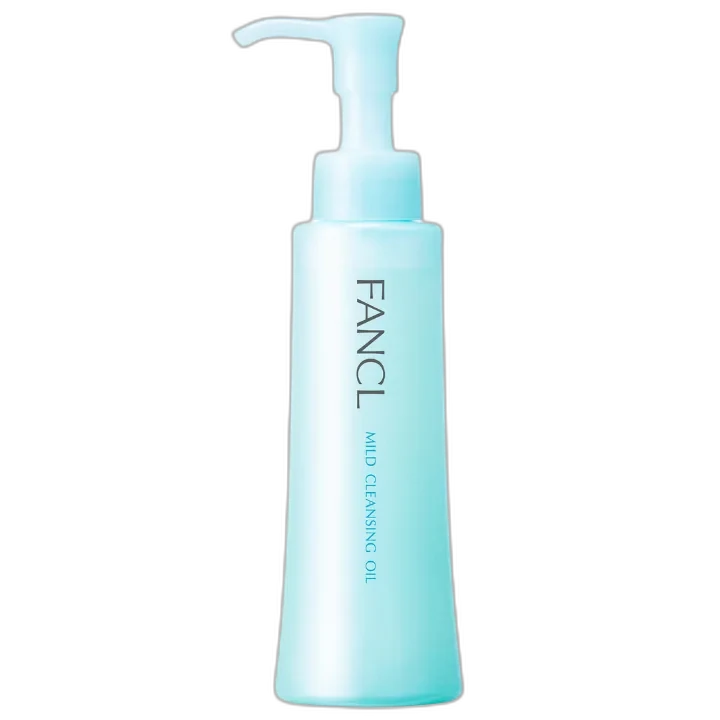
Mild Cleansing Oil
Japanese Drugstore Classic
 Verified reviewer
Pros & cons.
- +Fragrance-free and preservative-minimal — genuinely safe for reactive skin
- +Removes waterproof sunscreen and long-wear makeup in a single pass
- +Rinses off cleanly without the greasy film common to oil cleansers
- +Lightweight ester base dissolves sebum without leaving an occlusive layer
- +Includes chia and baobab oils plus vitamin C for light skin-feeding
- +Two-decade track record of consistent performance and Japanese market dominance
- +Safe for use during pregnancy with no retinoids or essential oils
- +Gentle enough for eye-area mascara removal when used properly
- −Price has increased over the years, especially outside Japan
- −Pump dispenser releases more product than most users need per cleanse
- −Inconsistent availability and pricing from Western retailers
- −Contains plant oils that may not suit strict fungal-acne-safe routines
The full review.
Fancl exists because one man in 1980s Yokohama decided preservatives were the real problem. Kenji Ikemori, the brand’s founder, built an entire company — and a patented sealed-packaging system — around the idea that paraben-free, fragrance-free, minimalist formulations could solve the chronic sensitivity plaguing Japanese women using the standard skincare of the era. Four decades later, that obsession with gentleness has produced one of the quiet champions of the cleansing oil category, and most of the world is still sleeping on it.
The Mild Cleansing Oil launched in 2002 and has been a fixture of Japanese drugstore shelves, magazine best-of lists, and @cosme rankings ever since. It’s not loud, it doesn’t trend, and it doesn’t run TikTok campaigns. What it does is the thing most cleansing oils genuinely struggle with: it actually removes waterproof sunscreen and long-wear makeup, and then it actually rinses off without leaving the greasy film that haunts so many of its category peers.
The formula is worth looking at carefully because it tells you what Fancl cares about. The base is ethylhexyl palmitate and diisostearyl malate — lightweight cosmetic esters that dissolve silicone and hydrocarbon sunscreen filters without the occlusive drag of mineral oil. There’s cyclopentasiloxane to thin the texture further, which is why the product pours almost like water rather than the molasses pace of something like DHC or Kose. Then come the polyglyceryl esters — Polyglyceryl-10 Laurate, Polyglyceryl-4 Laurate, Polyglyceryl-2 Triisostearate — which are the real engineering trick. These are the plant-derived emulsifiers that let the oil transform into a milky emulsion the moment you start rinsing, and they’re why the cleanser leaves skin feeling clean rather than coated.
But Fancl didn’t stop at “makes a functional cleansing oil.” They added baobab seed oil, chia seed oil, and ascorbyl tetraisopalmitate — a stable, oil-soluble vitamin C derivative — so the cleanser does a little skin-feeding during its short contact time. That’s the J-beauty philosophy in miniature: every step should give back, not just take away. Is the vitamin C meaningful in a rinse-off? Realistically no — contact time is too brief for any serious antioxidant action. But the omega-3s in the chia oil and the tocopherols in the baobab do provide a light barrier buffer, and the absence of fragrance means there’s genuinely nothing in the formula trying to pick a fight with reactive skin.
Texture is where this cleanser really separates from the pack. It’s thin and slippery in the best way, almost like a dry oil, which means you can massage it across dry skin for 30-60 seconds without the heavy, dragging feeling of mineral-oil cleansers. Sunscreen melts off in one pass — yes, even the thicker Japanese chemical SPFs it was designed to handle. Add water, and the oil blooms into a pale milk that rinses without a trace. There’s no squeaky aftermath, no stripped feeling, just clean skin that doesn’t need to be rescued by the next step of your routine.
For sensitive and reactive skin types, this is close to a perfect first cleanse. The lack of fragrance is the headline feature — most cleansing oils hide behind floral notes or masking scents, and Fancl just refuses to play. The plant oils are included at low enough concentrations and chosen for their rinse-off profile, so the comedogenic risk is minimal for most users. Combination and oily skin tolerate it well because the ester base doesn’t leave residue, though acne-prone users should still patch-test, as with any oil cleanser.
Where it earns a few gentle complaints: the price has drifted upward over the years, especially outside Japan where import margins add up, and the pump dispenser is generous to a fault — you’ll likely find two pumps is more than enough unless you’re removing heavy makeup. It’s also not always easy to find at consistent pricing in Western retailers, which can push you toward mystery sellers if you’re not careful. Buy from Fancl’s direct international store or a known Japanese beauty retailer if possible.
The larger question is whether a 2002 formula still holds up in 2026, and the honest answer is: yes, and not by accident. The cleansing oil category has evolved with more marketing than formulation progress, and most “new” oil cleansers are still solving problems this one solved twenty years ago. Fancl’s gentleness-first engineering has aged well because skin science hasn’t changed what skin needs. This remains a benchmark product — the kind of quiet staple you buy once, keep on the shelf for months, and eventually forget was ever a discovery.
Texture
Texture is where this cleanser really separates from the pack. It’s thin and slippery in the best way, almost like a dry oil, which means you can massage it across dry skin for 30-60 seconds without the heavy, dragging feeling of mineral-oil cleansers. Sunscreen melts off in one pass — yes, even the thicker Japanese chemical SPFs it was designed to handle. Add water, and the oil blooms into a pale milk that rinses without a trace. There’s no squeaky aftermath, no stripped feeling, just clean skin that doesn’t need to be rescued by the next step of your routine.
Best for
For sensitive and reactive skin types, this is close to a perfect first cleanse. The lack of fragrance is the headline feature — most cleansing oils hide behind floral notes or masking scents, and Fancl just refuses to play. The plant oils are included at low enough concentrations and chosen for their rinse-off profile, so the comedogenic risk is minimal for most users. Combination and oily skin tolerate it well because the ester base doesn’t leave residue, though acne-prone users should still patch-test, as with any oil cleanser.
Common Complaints
Where it earns a few gentle complaints: the price has drifted upward over the years, especially outside Japan where import margins add up, and the pump dispenser is generous to a fault — you’ll likely find two pumps is more than enough unless you’re removing heavy makeup. It’s also not always easy to find at consistent pricing in Western retailers, which can push you toward mystery sellers if you’re not careful. Buy from Fancl’s direct international store or a known Japanese beauty retailer if possible.
Ingredient analysis.
Full INCI list
Ethylhexyl Palmitate, Diisostearyl Malate, Cyclopentasiloxane, Caprylic/Capric Triglyceride, Polyglyceryl-10 Laurate, Polyglyceryl-4 Laurate, Polyglyceryl-2 Triisostearate, Phytosteryl Macadamiate, Adansonia Digitata Seed Oil, Mannitol, Salvia Hispanica Seed Oil, Ascorbyl Tetraisopalmitate, Salvia Officinalis (Sage) Leaf Extract, Thymus Vulgaris (Thyme) Flower/Leaf Extract, Salvia Hispanica Seed Extract, Adansonia Digitata Fruit Extract, Tocopherol, Caramel, Dipropylene Glycol, Water, BG
Skin match.
The science.
The Science
Decades of research on surfactant-mediated cleansing and barrier protection inform this formulation. Oil cleansing with polyglyceryl emulsifiers disrupts the barrier less than traditional sulfate-based surfactants, matching published irritation profiles. A 2013 review in the Journal of Clinical and Aesthetic Dermatology by Draelos notes that emulsifier choice determines how much a cleanser compromises barrier lipids; non-ionic and polyglyceryl emulsifiers are gentler than sulfates. Fancl's use of polyglyceryl-10 laurate and related esters follows this principle. Omega-3 fatty acids from chia seed oil have evidence supporting anti-inflammatory roles in topical formulations, though contact time in a rinse-off product limits their depth of action. Ascorbyl tetraisopalmitate is a stable vitamin C derivative that penetrates skin in leave-on studies, but its benefit in a rinse-off format is marginal. Baobab seed oil contains oleic and linoleic acids plus tocopherol, acting as a light emollient. This formulation is distinctive because it excludes mineral oil and fragrance—choices supported by dermatological literature on sensitive skin, where fragrance is a top contact allergen. The formulation uses conservative, evidence-based cleanser design instead of novel active delivery, which is why it performs reliably across skin types.
Dermatologist Perspective
Dermatologists often recommend oil-based first cleansers for patients using daily sunscreen, especially mineral and hybrid SPFs that water-based cleansers fail to remove fully. Board-certified dermatologists note that incomplete sunscreen removal can cause congestion, milia, and dullness, making a gentle, effective cleansing oil a routine necessity rather than a luxury. In this category, dermatologists typically prefer fragrance-free formulations like this one for sensitive, rosacea-prone, or eczema-prone skin, as perfume and essential oils are common contact triggers. Dermatologists also advise patients to emulsify the oil thoroughly with water before rinsing and to use a gentle second cleanse when wearing heavy makeup—a double-cleanse approach this product was explicitly designed around.
Where it fits in your routine.
Use this as your first evening cleanse. Start with dry skin and dry hands; water breaks the emulsion early and lowers cleansing power. Dispense 2-3 pumps into your palm and massage the entire face for 30-60 seconds. Focus on the hairline, nose, and eye area where sunscreen and makeup concentrate. Let it sit on mascara to soften. Wet your fingertips and massage more—the oil turns into a milky white emulsion. Add more water and rinse thoroughly with lukewarm water. If you wear heavy sunscreen or long-wear makeup, follow with a gentle water-based cleanser, then continue your routine.
At about $20 for 120 mL, the price reflects the formulation quality and brand legacy. Fancl sells a larger 200 mL size that offers better per-milliliter value for regular users. This performs as well as or better than luxury J-beauty cleansing oils costing two or three times more, without the prestige markup. It is gentler and rinses better than the cheapest drugstore oil cleansers, making it worth the extra cost for sensitive skin. While the price has risen over the years, Fancl's reputation and the formula's consistent performance justify it. The premium pays for conservative, proven engineering rather than packaging or brand story.
This works for daily sunscreen users wanting a gentle first cleanse, sensitive or reactive skin types needing fragrance-free formulations, and users frustrated by greasy oil cleansers. It also suits dry and normal skin that lacks tolerance for surfactant-heavy cleansing.
Avoid this if you use strict fungal-acne-avoidant routines without plant oils, prefer fragranced or sensory cleansing rituals, or have a cleansing oil that rinses cleanly. It works well but is not a dramatic upgrade over the best alternatives.
Product details.
This clear, light-bodied oil feels almost watery compared to heavier mineral-oil cleansers. It turns into a thin milky emulsion when it touches water.
Fragrance-free. It has no perfume, no essential oils, and no masking scent. It has a faint oil smell.
Clear PET bottle with a pump dispenser. Fancl's trademark sealed, preservative-free packaging system is absent because the cleansing oil has a longer shelf life, but the design works well and stays mess-free.
First use is the reveal: makeup and sunscreen dissolve quickly, and the rinse is notably clean compared to thicker cleansing oils. Expect no stinging, no fragrance notes, and no film. Skin feels soft immediately and should adjust without any purging or breakouts for most users.
Approximately 2-3 months with nightly use of 2-3 pumps as a first cleanse.
12 months
All Year
The backstory.
Fancl was founded in 1980 on the premise that preservatives were the hidden cause of much sensitive-skin irritation, and the brand built sealed unit-dose packaging to eliminate them. The Mild Cleansing Oil launched in 2002 as the brand's answer to the then-dominant heavy mineral-oil cleansers, and it has remained one of Japan's most consistently top-selling cleansing oils for over twenty years.
About Fancl
Legacy Brand (20+ years)Fancl launched in Yokohama in 1980. It uses proprietary sealed-packaging systems to provide preservative-free skincare. The brand is a top J-beauty name in Japan with decades of domestic clinical and consumer testing.
FAQ.
Is Fancl Mild Cleansing Oil good for sensitive skin?
Yes — it is fragrance-free, alcohol-free, and uses minimal preservatives. The lightweight ester and plant-oil base avoids heavy mineral oils that irritate reactive skin. Fancl builds its entire brand on sensitive-skin formulation, and this flagship cleanser leads that philosophy.
Does it remove waterproof sunscreen and long-wear makeup?
Yes, it works. The ester-dominant base dissolves silicone and hydrocarbon sunscreen filters. The polyglyceryl emulsifier system rinses it off without a film. Most users report it removes Japanese chemical sunscreens and tinted SPFs in one pass.
Do I still need a second cleanser after using this?
Most sunscreen users need a gentle water-based second cleanse to remove residual emulsion, sweat, and sebum. If you wear no makeup and only need to lift sunscreen, one pass of this oil and a thorough rinse works.
Is it safe to use during pregnancy?
Yes — the formula lacks retinoids, salicylic acid, or concerning essential oils. The vitamin C derivative (ascorbyl tetraisopalmitate) is safe during pregnancy and exists in very low amounts because this is a rinse-off format.
How is this different from DHC Deep Cleansing Oil?
Fancl avoids mineral oil, using lightweight esters and plant oils instead. It includes a vitamin C derivative and chia/baobab oils to feed the skin during cleansing rather than acting as a pure solvent.
Can I use it on my eye area to remove mascara?
Fancl markets this as safe for eye-area makeup removal. Apply to dry skin with dry hands. Let it sit on mascara for 10-15 seconds to soften, then emulsify with water and rinse. Do not get neat oil directly in the eye.
Does it break out acne-prone skin?
The lightweight ester base and clean rinse help most acne-prone users tolerate it well, but no oil cleanser is universally non-comedogenic. If you have reactive skin, patch-test along the jawline for one week before full-face use.
What the community says.
"Rinses off cleanly without the oily residue typical of cleansing oils"
"Removes stubborn sunscreen and long-wear makeup effectively"
"Fragrance-free formula works for sensitive and reactive skin"
"Skin feels soft and hydrated rather than stripped after cleansing"
"Pump packaging can dispense more product than needed"
"Price has crept up in recent years compared to the original Japanese retail"
"Harder to find in Western retailers at consistent pricing"
Featured in.
People also looked at.