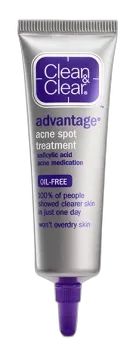
Advantage Acne Spot Treatment
Drugstore Acne Staple
 Verified reviewer
Pros & cons.
- +Visibly reduces mild pimple size and redness within 12-24 hours of application
- +Under nine dollars for a tube lasting 3-4 months of targeted spot use
- +Dries completely clear and works invisibly under makeup and concealer
- +Narrow tube tip allows precise application to individual blemishes only
- +Nearly twenty years of consumer data and consistent retail availability
- +Current formula is fragrance-free, improving on the original version
- −Alcohol denat. as the second ingredient is excessively drying and barrier-compromising
- −Stings and burns on application to inflamed skin — a significant comfort issue
- −Ineffective for deep cystic or nodular acne that requires professional treatment
- −Can cause peeling, flaking, and post-inflammatory hyperpigmentation with overuse
- −Not cruelty-free certified under Kenvue ownership
- −Contains benzalkonium chloride, a known skin sensitizer and preservative
The full review.
The Clean & Clear Advantage Acne Spot Treatment has occupied drugstore shelves since 2006. Since then, skincare philosophy has shifted. We now know that stripping the skin barrier to fight acne backfires. Alcohol-heavy formulations often cause more inflammation than they resolve. Treating a pimple shouldn’t feel like punishment. Yet, this tube of 2% salicylic acid in a denatured alcohol base still sells, collects reviews, and works well enough for many to justify its place.
The formula is aggressive by modern standards. Denatured alcohol is the second ingredient, indicating a high concentration. This isn’t just a small amount of alcohol used as a solvent; alcohol is the primary vehicle. It evaporates quickly, making the product fast-drying. It also increases salicylic acid penetration, which speeds up results. However, it dries out the pimple and the surrounding skin, where the formula’s effectiveness meets its limitations.
Salicylic acid at 2% — the maximum OTC concentration — is a reliable comedolytic agent. It is lipophilic, so it dissolves in oil and penetrates sebum-filled pores to break down the dead cells and oil plugs causing blemishes. It also has anti-inflammatory properties that reduce redness and swelling in active pimples. This chemistry works. The question isn’t whether salicylic acid treats pimples — it does — but whether this formula’s delivery vehicle causes too much collateral damage.
Witch hazel water is the third ingredient, providing astringent and mild anti-inflammatory properties. Glycerin is fifth on the list, providing some humectant counterbalance to the alcohol, though it struggles against the drying ingredients above it. The result is a formula that treats the target blemish but may compromise the barrier function of surrounding skin, especially with repeated daily use.
The product stings upon application. This stinging is strongest on inflamed pimples and less noticeable on closed comedones or early-stage blemishes. The sting fades within ten to fifteen seconds as the alcohol evaporates. A thin, clear, slightly tight film of salicylic acid remains on the site. By the next morning, mild surface pimples are typically smaller and less red. This rapid visible result is the product’s strongest selling point and why users return despite the sting.
For deeper, inflammatory breakouts, results take two to three days of consistent application. For cystic acne, this product is essentially ineffective. Salicylic acid works within the pore, but cystic acne occurs deep in the dermis, beyond the reach of any OTC topical. Applying the product to cystic lesions causes surface dryness and peeling without fixing the deep inflammation.
Clean & Clear launched in 1956 as a Revlon-developed sensitive skin line, was acquired by Johnson & Johnson in 1991, and recently spun off to Kenvue. The Advantage Spot Treatment won a Glam.com Beauty Award in 2007. The formula has changed since then — the current version removes synthetic fragrance — but the core approach has stayed the same for nearly two decades: salicylic acid, an alcohol base, and fast results.
The price is fair: under nine dollars for a tube that lasts three to four months of targeted spot use. The narrow tube tip allows precise application without waste. It dries clear under makeup, is portable, and is available everywhere. These practical features matter for a product used during a breakout emergency.
But the acne treatment landscape has moved on. Hydrocolloid patches drain blemishes without active ingredients. Niacinamide-based spot treatments reduce inflammation without compromising the barrier. Even other salicylic acid spot treatments now use gentler vehicles instead of high-concentration denatured alcohol. This product works, but it works like 2006 acne treatment, not 2026.
For oily-skinned users who tolerate alcohol and want the fastest visible reduction in a surface pimple, this delivers. It is not a sophisticated formula. It is not gentle. It is a salicylic acid delivery vehicle optimized for speed over skin health. Whether that trade-off works depends on your skin’s tolerance and your willingness to moisturize afterward.
Formula
Ingredient analysis.
Full INCI list
Active Ingredient: Salicylic Acid 2%. Inactive Ingredients: Water, Alcohol Denat., Hamamelis Virginiana (Witch Hazel) Water, Polyacrylamide, Glycerin, C13-14 Isoparaffin, C12-15 Alkyl Lactate, Alcohol, Phenoxyethanol, Cetyl Lactate, Cocamidopropyl PG-Dimonium Chloride Phosphate, Laureth-7, Polysorbate 20, Sodium Hydroxide, Phenethyl Dimethicone, Xanthan Gum, Propylene Glycol, Benzalkonium Chloride, Tetrasodium EDTA
Skin match.
The science.
The Science
Salicylic acid (2-hydroxybenzoic acid) is a beta-hydroxy acid with proven comedolytic and anti-inflammatory properties. It treats acne by dissolving intercellular lipid bonds in the stratum corneum and follicular lumen, which promotes desquamation and unclogs pores. A 2015 systematic review by Arif in Clinical, Cosmetic and Investigational Dermatology confirmed 2% salicylic acid works for mild to moderate acne vulgaris, significantly reducing comedone and inflammatory lesion counts.
The alcohol-based vehicle helps salicylic acid penetrate the pilosebaceous unit by disrupting the lipid barrier. This improves active ingredient delivery but also increases transepidermal water loss and can compromise the stratum corneum. Research by Lachenmeier in the International Journal of Environmental Research and Public Health shows denatured alcohol in topical products can cause local irritation, especially on compromised skin.
Witch hazel (Hamamelis virginiana) provides astringent properties via tannins, which cause protein precipitation and tissue contraction. Thring et al. found in the Journal of Inflammation (2011) that witch hazel extracts have anti-inflammatory and antioxidant activity, though clinical evidence for its acne-specific efficacy is limited compared to salicylic acid and benzoyl peroxide.
Dermatologist Perspective
Board-certified dermatologists have mixed views on alcohol-based acne spot treatments. The fast-drying vehicle and salicylic acid delivery work for mild comedonal acne, but dermatologists warn that high-alcohol formulations can worsen inflammation by compromising the skin barrier—potentially creating an irritation cycle that perpetuates breakouts. Dermatologists typically recommend this product for oily-skinned patients with occasional mild breakouts, provided they use it sparingly on individual blemishes and follow with a non-comedogenic moisturizer. For patients with sensitive skin, dry skin, or barrier damage, dermatologists generally suggest alcohol-free BHA treatments or hydrocolloid patches instead.
Where it fits in your routine.
Cleanse your face and pat dry. Use the tube's narrow tip to apply a thin layer directly onto individual blemishes. This is a targeted spot treatment, not an all-over facial product. Let it dry completely (about 30 seconds) before you apply moisturizer, makeup, or sunscreen. Use it morning and evening. Start with once daily to check tolerance, then move to twice daily if you see no excessive drying or irritation. Always follow with a non-comedogenic moisturizer to offset the drying alcohol content.
At $8.19 for 0.75 oz, the per-ounce cost is $10.92/oz. However, users apply spot treatments in tiny amounts; one tube lasts 3-4 months of regular targeted use. Treating 2-3 blemishes daily costs well under fifty cents. This drugstore acne treatment has nearly twenty years of market history and consistent availability, making the price reasonable. The brand's legacy heritage means you pay for a proven OTC approach rather than formulation innovation—more sophisticated spot treatments exist at similar or modestly higher price points.
People with oily or combination skin who get occasional mild surface pimples and want a fast-acting, affordable, pharmacy-available spot treatment. This works best for users who tolerate alcohol-based products and prioritize fast visible results over formulation gentleness.
High alcohol content worsens dry, sensitive, or barrier-compromised skin. This is not for cystic or nodular acne, which needs professional treatment. Users of retinoids or other drying actives should watch for extra barrier disruption. Consumers seeking cruelty-free certification should look elsewhere.
Product details.
This lightweight, slightly milky gel-cream absorbs quickly. The narrow tube tip allows precise spot application with this thin formula. It dries to a clear, slightly tight finish.
The current formula is fragrance-free and has no scent besides a faint medicinal note from the alcohol base.
Small white squeeze tube (0.75 fl oz) has teal Clean & Clear branding and a narrow applicator tip for targeted spot application. This compact, portable design fits in a pocket or makeup bag. It uses a standard screw cap.
The alcohol and salicylic acid cause stinging or tingling on first application, especially on inflamed pimples. The product absorbs within thirty seconds and dries clear. By the next morning, a mild surface pimple is usually smaller and less red. The skin around the application site feels tight or dry. Regular use often causes initial peeling or flaking.
3-4 months with targeted spot use as needed
12 months
All Year
The backstory.
Clean & Clear launched the Advantage Acne Spot Treatment in October 2006, and it quickly became one of the brand's most popular products — winning the Glam.com Beauty Award for Blemish Treatment in 2007. The formula has been updated over the years (the current version removes synthetic fragrance from the original), but the core approach remains the same: 2% salicylic acid in a fast-drying alcohol base for quick spot treatment. Nearly twenty years on, it remains a drugstore staple despite the industry's broader shift away from alcohol-heavy acne formulations.
About Clean & Clear
Legacy Brand (20+ years)Revlon developed Clean & Clear in 1956 for sensitive skin. Johnson & Johnson acquired the brand in 1991, then spun it off to Kenvue in 2023. Clean & Clear has been a drugstore acne treatment staple for decades. It is not dermatologist-developed and uses standard OTC acne active ingredients instead of proprietary formulation technology.
Common myths.
Spot treatments that sting are working harder.
Denatured alcohol and salicylic acid sting when they touch inflamed tissue. This sting shows irritation, not efficacy. Other effective spot treatments use gentler delivery vehicles and do not sting. The sting is a trade-off for fast drying, not a sign of superior acne-fighting ability.
Apply acne spot treatments generously to make blemishes disappear faster.
Applying more than necessary increases drying and irritation without speeding up results. A thin, targeted layer on the blemish works. More product increases alcohol contact with healthy skin, which causes peeling and barrier damage.
FAQ.
Why does this spot treatment sting when I apply it?
Denatured alcohol (the second ingredient) and salicylic acid cause stinging when they touch inflamed skin. This formulation involves a trade-off: the alcohol dries fast and increases penetration, but it also irritates. If stinging is severe or persistent, use it less often or choose a gentler spot treatment.
Can I use this spot treatment with retinol?
Apply them to different areas or on alternate nights. Using this alcohol-and-salicylic-acid treatment directly on skin that also receives retinol increases irritation, dryness, and peeling risk. If you use retinol as your nightly treatment, use this spot treatment only on individual blemishes in the mornings.
Is this spot treatment too drying for everyday use?
Oily skin generally tolerates targeted daily use on active blemishes. Combination or normal skin types should use this 1-2 times daily on individual spots and follow with a hydrating moisturizer. The alcohol content makes this formula likely too drying for regular use on dry or sensitive skin.
Can I wear makeup over this spot treatment?
Yes. The product dries clear within thirty seconds and creates a smooth base. Let it dry completely before you apply primer, concealer, or foundation. Some users see slight residue under heavy concealer, but the dried product is invisible for most.
Is Clean & Clear cruelty-free?
No. Clean & Clear (now under Kenvue, formerly Johnson & Johnson) lacks Leaping Bunny or PETA certification. The parent company says it does not test finished products on animals, but it cannot guarantee ingredient-level testing by suppliers. The brand sells in markets where law requires animal testing.
Does this work on cystic acne?
It is generally not effective. This spot treatment dissolves sebum plugs in pores to target surface-level pimples. Cystic acne occurs deeper in the skin and usually needs prescription-strength treatments like oral antibiotics, isotretinoin, or cortisone injections. Applying this product too much to cystic lesions dries the surface but does not reach the deep inflammation.
What the community says.
"Visibly reduces pimple size and redness within 24 hours of application"
"Affordable at under nine dollars for a targeted acne treatment"
"Dries clear and can be worn invisibly under makeup during the day"
"Oil-free, compact tube is portable for on-the-go spot treatment"
"Long track record as a reliable drugstore acne spot treatment"
"High alcohol content is excessively drying and can compromise skin barrier"
"Stings and burns on application, especially on broken or inflamed skin"
"Inconsistent results — works well for some users but not others"
"Can cause peeling and flaking around the treatment area with repeated use"
"Not effective for deep, cystic, or nodular acne"
Featured in.
People also looked at.