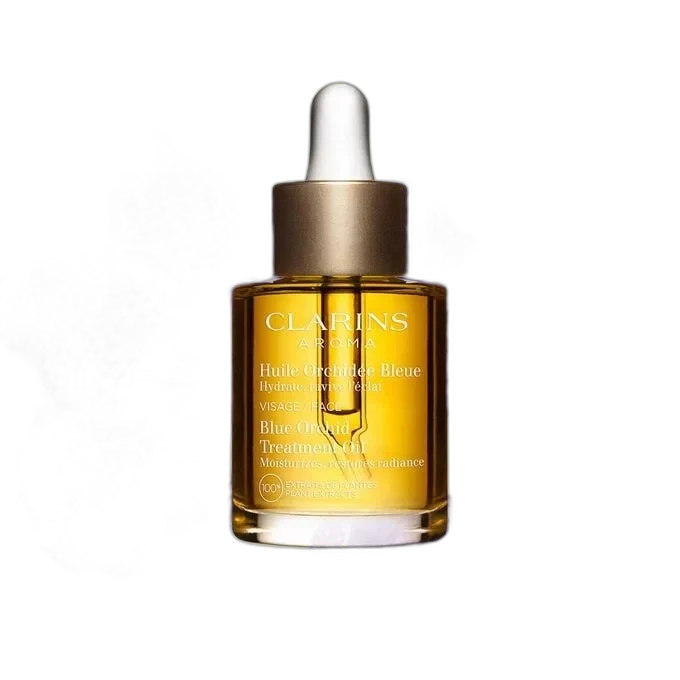
Blue Orchid Face Treatment Oil
Heritage Botanical Oil
 Verified reviewer
Pros & cons.
- +Heritage formula from a 60+ year face oil line — proven longevity and consumer loyalty
- +Hazelnut oil base absorbs quickly and provides rich yet lightweight emollience
- +Incredibly economical per use — 1-2 drops per application means one bottle lasts months
- +100% plant-derived, preservative-free formula with only 11 ingredients
- +Immediate softness and visible glow from first application
- +Silicone-free, paraben-free, and water-free
- −Six fragrance allergens in an 11-ingredient formula — extremely high allergen ratio
- −Strong patchouli scent is deeply polarizing — love it or hate it
- −Orchid extract (the namesake) is present at minimal concentration
- −No humectants — cannot hydrate on its own without layering over water-based products
- −Overpriced at $68 for a simple hazelnut oil and essential oil blend
- −Unsuitable for sensitive, reactive, or acne-prone skin
The full review.
About Clarins
Jacques Courtin-Clarins was a medical student before founding Clarins. When he created the first Clarins Face Treatment Oils in 1965, he used a radical principle: plant oils applied directly to the face nourish and restore skin better than cream-based products. That original line remains in production over sixty years later—a longevity few skincare products match.
About Clarins Blue Orchid Face Treatment Oil
The Blue Orchid variant specializes in dehydration. The INCI list is short: eleven ingredients. In an industry where serums often contain forty to sixty ingredients, this minimalism is either honest or underwhelming.
Texture
Hazelnut oil dominates the formula. Corylus avellana seed oil contains approximately 80% oleic acid, which provides deep emollience to soften and smooth the skin surface. It absorbs faster than heavier oils like avocado or argan, creating the lightweight feel long-time users praise. A clinical study showed a 10% hazelnut oil emulsion boosted skin hydration by 20-30% versus controls over 28 days. In this formula, hazelnut oil is the overwhelming majority, not just 10%.
Scent
The second ingredient changes the profile. Patchouli essential oil (Pogostemon cablin) is concentrated enough to be the second-listed ingredient, so this product smells like patchouli. Devotees call this signature scent warm, earthy, and spa-like. Detractors find it overwhelming, describing it as “masculine” or “cologne-like.” Published research shows patchouli oil has anti-inflammatory properties, including a mouse study showing increased collagen and reduced wrinkles, but its primary role here is aromatic.
The fragrance profile goes beyond patchouli. Linalool, limonene, coumarin, eugenol, and citral are all listed individually—five EU-regulated fragrance allergens in an eleven-ingredient formula. This is one of the highest allergen-to-ingredient ratios we have reviewed. If you have fragrance sensitivities, contact dermatitis, or reactive skin, do not use this product.
Ingredients
Orchid extract gives this product its name and blue hue, but it appears ninth on the eleven-ingredient list. Its concentration is minimal. While research shows orchid extracts can stimulate aquaporin-3 and provide antioxidant activity, the amount here is likely too low for meaningful skin benefit. The orchid provides the story; the hazelnut oil provides the function.
How to Use
The product is 100% plant-derived and preservative-free. This works because oils do not support microbial growth like water-based products. There are no synthetic emulsifiers, no silicones, no water, and no humectants. This is critical: this oil seals in moisture; it does not attract it. Applying it to bare, dry skin creates a barrier but does not fix an underlying water deficit. Layer it over a hyaluronic acid serum or water-based moisturizer to make it effective.
Common Praise
The value of Blue Orchid Oil lies in the experience. Warming one to two drops between your palms and pressing it into the skin makes skin feel velvet-soft and look subtly luminous. The patchouli scent creates an evening ritual devotees call meditative. At this rate, one bottle lasts three to six months, making the per-use cost lower than the $68 price suggests.
Price
At $68, you pay for sixty years of brand heritage and sensorial design rather than formulation complexity, as the formula is hazelnut oil, patchouli essential oil, sunflower oil, and traces of orchid extract. The ingredients are quality and the oil is well-made, but consumers can find comparable quality plant oil blends for much less.
Overall
Clarins Blue Orchid Face Treatment Oil is a heritage product with a decades-old following. It is beautiful to use, smells either wonderful or terrible depending on your preference for patchouli, and softens dry skin. It is one of the simplest, most honestly named products we have reviewed—an orchid-infused face treatment oil that is essentially excellent hazelnut oil with a specific vibe.
Ingredient analysis.
Full INCI list
Corylus Avellana (Hazel) Seed Oil, Pogostemon Cablin Oil, Linalool, Parfum/Fragrance, Limonene, Helianthus Annuus (Sunflower) Seed Oil, Coumarin, Eugenol, Citral, Orchid Extract, Tocopheryl Acetate
Skin match.
The science.
The Science
The main ingredient, hazelnut oil (Corylus avellana seed oil), acts as an emollient and supports the skin barrier. Its fatty acid profile contains ~80% oleic acid and ~9% linoleic acid, making it lighter than many plant oils while providing emollience. A 28-day clinical study of 56 volunteers shows a 10% hazelnut oil emulsion increases skin hydration 20-30% over controls, with effects lasting after application. The oil also has β-sitosterols, which have documented anti-inflammatory properties.
Pogostemon cablin (patchouli) oil has studied anti-inflammatory and antimicrobial activity. A 2018 PMC review identifies patchoulol as the primary bioactive compound, which inhibits the NF-κB pathway to create anti-inflammatory effects. A mouse model study shows patchouli oil application suppresses skin wrinkle formation and increases collagen content by 21.9-26.3%, though human clinical trials have not replicated this.
Cosmetics research shows orchid extract can enhance skin hydration by stimulating aquaporin-3. A 2015 PubMed review identifies antioxidant flavonoids and phenolic acids in various orchid species. Because Clarins does not disclose the specific orchid species or the concentration used in this formula, direct efficacy claims remain speculative.
Sunflower seed oil provides linoleic acid to complement the oleic acid-dominant hazelnut oil; research supports its barrier-repair properties.
References
- Safety assessment of Corylus avellana-derived ingredients as used in cosmetics — International Journal of Cosmetic Science (2001)
- A Comprehensive Review on the Phytochemical Constituents and Pharmacological Activities of Pogostemon cablin Benth. — PMC (2018)
- A Comprehensive Review of the Cosmeceutical Benefits of Vanda Species (Orchidaceae) — PubMed (2015)
Dermatologist Perspective
Dermatologists recognize hazelnut oil as an emollient that supports the barrier in dry skin. However, most board-certified dermatologists would worry about the fragrance allergen load; six allergens in an eleven-ingredient formula creates a high risk of contact sensitization with daily use. Dermatologists specializing in contact dermatitis would likely tell patients to avoid this product. For dry skin patients seeking a face oil, dermatologists typically recommend simpler, fragrance-free options like pure squalane or jojoba oil.
Where it fits in your routine.
Press 1-2 drops warmed between palms onto your face and neck. Use in the evening after water-based serums and before or mixed with moisturizer. Mix it with foundation for a dewy finish. For dehydrated skin, always apply over a hydrating serum; the oil seals in moisture but does not attract it.
At $68 for 1 oz, the Blue Orchid Oil is a luxury face oil. Its formula uses hazelnut oil and patchouli essential oil with traces of orchid extract, making it simpler than products costing half as much. Using 1-2 drops per application makes it last 3-6 months, which offsets the price. Value comes from the sensorial experience and Clarins' 60-year heritage in face oils, not formulation sophistication.
Dry and dehydrated skin types who like face oil rituals and patchouli-dominant scents. Heritage skincare enthusiasts who value a formula with over sixty years of history. People seeking a minimalist, plant-derived oil with no synthetic ingredients.
People with fragrance sensitivities, contact dermatitis, or reactive skin face high allergen loads. Acne-prone skin users and those who dislike patchouli also benefit. Ingredient-focused consumers get maximum active concentration per dollar.
Product details.
Strong, distinctive patchouli-dominant fragrance with orchid undertones. The scent is the most polarizing part — fans find it spa-like, while others find it overpowering and masculine.
Glass bottle with dropper dispenser for precise 1-2 drop application Finish dewyglowynon-greasy
The first application delivers immediate softness and a visible glow. The patchouli scent is strong and determines if you like this product. There is no adjustment period or purging. Skin looks and feels nourished from the first use.
3-6 months with nightly use of 1-2 drops
12 months
fall winter
The backstory.
Clarins' Face Treatment Oil range was created in 1965 by founder Jacques Courtin-Clarins, initially available only in his Parisian beauty institutes before being released to the public in 1966. The range has been in continuous production for over sixty years, making it one of the heritage products of the luxury skincare industry. The Blue Orchid variant targets dehydrated skin with hazelnut oil as its primary carrier, infused with orchid extract and patchouli essential oil.
About Clarins
Legacy Brand (20+ years)Jacques Courtin-Clarins, a former medical student, founded Clarins in 1954 and pioneered plant extracts in skincare. The Face Treatment Oil range launched in 1965 and is one of luxury skincare's longest-running product lines. Clarins is family-owned and operates in over 150 countries.
Common myths.
Orchid extract is the primary active ingredient in this oil
Orchid extract sits near the end of a short INCI list, so the concentration is low. Hazelnut oil and patchouli essential oil make up most of the product; orchid extract provides the name and marketing narrative rather than functional activity.
Face oils provide hydration to dehydrated skin
Oils act as emollients and occlusives. They soften skin and prevent moisture loss, but they do not attract water like humectants such as hyaluronic acid or glycerin. Layer this oil over a water-based hydrating product for dehydrated skin.
What the community says.
"Skin feels immediately hydrated, soft, and radiantly glowing"
"Absorbs faster than expected — lightweight for a face oil"
"Distinctive spa-like patchouli-orchid scent is widely loved by fans"
"A little goes a long way — 1-2 drops per use means the bottle lasts months"
"Visible plumping and radiance, especially during dry winter months"
"Strong patchouli fragrance is polarizing — some find it overpowering"
"Contains six listed fragrance allergens — unsuitable for sensitive skin"
"No humectants — does not hydrate on its own without layering"
"Some users report breakouts, particularly around the chin"
"Expensive at $68 for a simple hazelnut oil formula with minimal actives"
"Orchid extract is present at very low concentration despite being the namesake"
People also looked at.