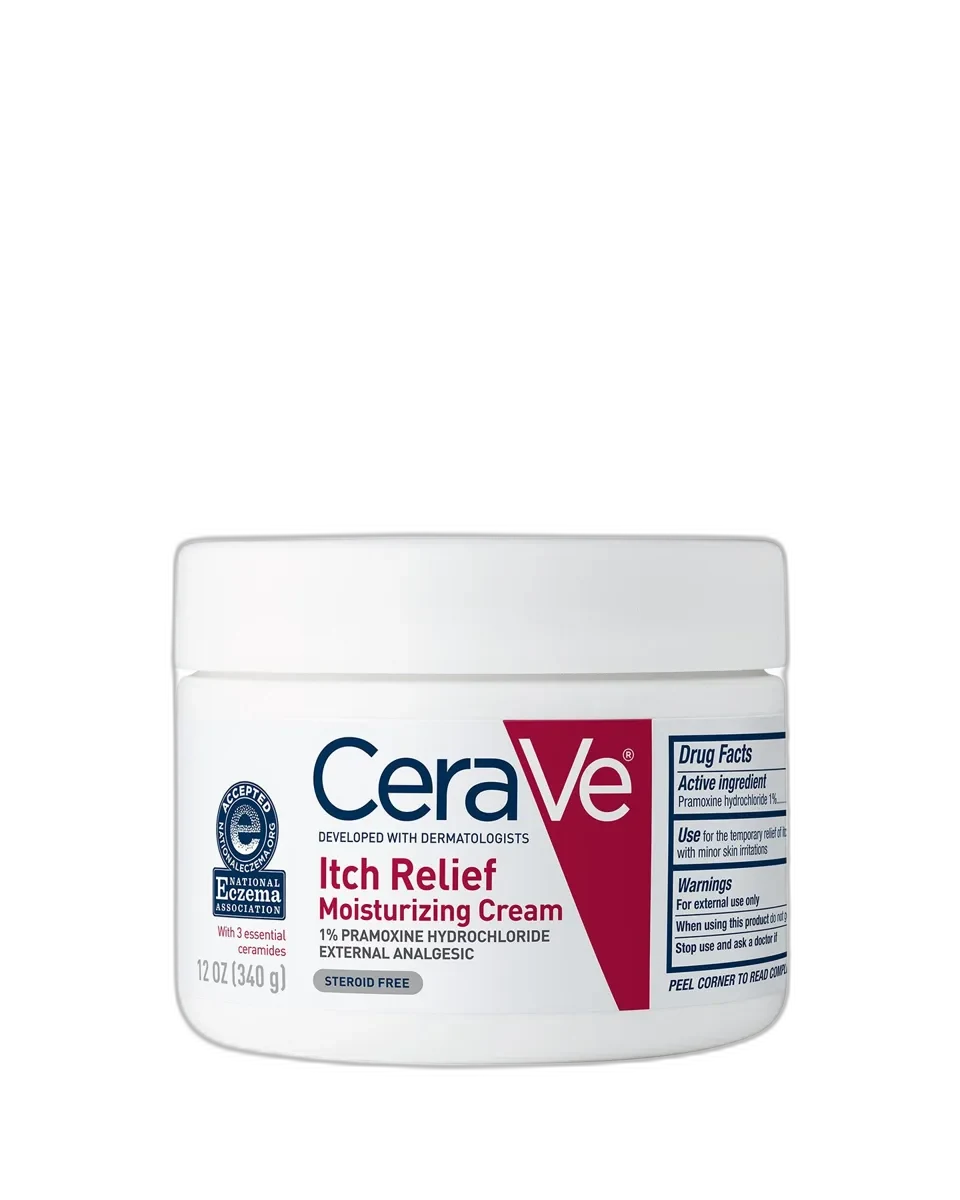
Itch Relief Moisturizing Cream
Itch-Scratch Cycle Breaker
 Verified reviewer
Pros & cons.
- +Pramoxine provides steroid-free itch relief within 2 minutes lasting up to 8 hours
- +Safe for long-term daily use without skin-thinning or rebound risks of corticosteroids
- +Built on a genuine ceramide barrier-repair moisturizer base, not a generic cream
- +Tasmannia lanceolata extract adds botanical anti-inflammatory support
- +Fragrance-free and paraben-free formula minimizes irritation triggers
- +Large 12 oz jar provides generous volume for body-wide application
- +Addresses both the symptom (itch) and the root cause (barrier dysfunction) simultaneously
- −Higher price point at $24.99 compared to standard CeraVe moisturizers
- −Contains alcohol denat. which some users with very sensitive skin may prefer to avoid
- −Too heavy for comfortable facial use, especially in warm weather
- −Not a permanent cure — itch relief ends when product is discontinued
- −Contains isopropyl myristate with moderate comedogenic potential
The full review.
Itching is more than a minor complaint. For those with chronic itch from eczema, xerosis, or contact dermatitis, it dominates waking hours, ruins sleep, and leaves skin looking like it lost a negotiation with sandpaper. Standard advice—moisturize more, stop scratching—is technically correct but practically useless. Moisturizing helps, but it does not stop the itch signal firing in nerve endings. Telling someone to stop scratching is like telling them to stop breathing; the reflex is involuntary, overwhelming, and self-reinforcing.
The CeraVe Itch Relief Moisturizing Cream exists because someone at CeraVe understood that the problem requires a multi-pronged solution. Pramoxine hydrochloride at 1% handles the immediate crisis. It is a topical local anesthetic that blocks sodium channels in cutaneous nerve endings, interrupting the itch signal before it reaches the brain. It is not a steroid. It does not suppress inflammation. It does not thin the skin. It simply tells the nerves in the treated area to be quiet, and clinical data shows it works within two minutes and maintains relief for up to eight hours.
The steroid-free aspect is clinically significant, not a marketing gimmick. Hydrocortisone, the default OTC itch relief active, is effective but carries real risks with chronic use: skin atrophy, telangiectasia, striae, and rebound inflammation when discontinued. For someone with chronic eczema needing daily itch relief for months or years, these risks are real. Pramoxine has none of these concerns, making it safe for the long-term, daily use that chronic itch conditions demand.
The genius of this product is not just the pramoxine; it is the delivery vehicle. The base cream is a supercharged version of CeraVe’s Moisturizing Cream, loaded with three ceramides, cholesterol, phytosphingosine, petrolatum, shea butter, dimethicone, glycerin, and hydrolyzed hyaluronic acid. This is not a drug in a generic cream base; it is a drug in a legitimately excellent barrier-repair moisturizer.
This matters because most itch is not random. It stems from barrier dysfunction. When the stratum corneum lipid matrix is depleted—as in eczema, xerosis, and many other conditions—irritants, allergens, and microbes penetrate the living epidermis and trigger an inflammatory cascade that produces pruritus. Moisturizing with ceramides repairs the barrier that keeps those triggers out. Pramoxine silences the itch signal while the barrier catches up. The two approaches are complementary in a way that hydrocortisone-in-a-basic-cream is not; the steroid addresses inflammation but does nothing for the structural barrier deficit.
The inclusion of Tasmannia lanceolata fruit extract—Tasmanian mountain pepper berry—adds a botanical anti-irritant layer. This is not skincare fairy dust. Polygodial, the active compound in mountain pepper berry, shows anti-inflammatory and analgesic properties in published research. It is a thoughtful addition providing a third mechanism of itch relief: pramoxine blocks the nerve signal, ceramides repair the barrier, and Tasmannia calms the inflammatory response.
In use, the cream applies like any thick CeraVe moisturizer—creamy, absorbing within a few minutes to leave skin feeling soft and sealed. The pramoxine creates a subtle numbing quality in the treated area. It is not dramatic like a dental anesthetic, but it is distinctly present. You notice the itch stopping rather than feeling a new sensation replace it. The relief is quiet and thorough.
The twelve-ounce jar provides generous volume for body-wide application, though the $24.99 price is higher than CeraVe’s standard moisturizers—a premium justified by the medicated active ingredient and the complex formulation. For localized use on forearms, shins, or other chronic itch spots, the jar will last months.
The formula contains a small amount of alcohol denat., which may concern users with very sensitive or compromised skin. In this thick, emollient-heavy formula, the alcohol serves as a solvent for the pramoxine and is unlikely to cause the drying or stinging seen in toner-type products. But full disclosure matters, especially for a product targeting already-irritated skin.
Facial use is technically possible—the formula is non-comedogenic and fragrance-free—but the petrolatum and shea butter base is designed for body application. For facial itch, a thinner application or a dedicated facial treatment is more practical.
For anyone managing chronic itch alongside chronic dryness—the overlapping Venn diagram encompassing most eczema patients, many psoriasis patients, and millions with plain old winter-dry skin—the CeraVe Itch Relief Moisturizing Cream is a uniquely complete solution. It stops the itch fast, repairs the failed barrier, moisturizes the dried skin, and does all this without the risks of steroids. That is not just a good product. That is a good treatment plan in a jar.
Formula
Ingredient analysis.
Full INCI list
Active Ingredient: Pramoxine Hydrochloride 1%. Inactive Ingredients: Water, Glycerin, Petrolatum, Cetyl Alcohol, Butyrospermum Parkii Butter/Shea Butter, Cetearyl Alcohol, PEG-100 Stearate, Glyceryl Stearate, Isopropyl Myristate, Stearic Acid, Dimethicone, Palmitic Acid, Potassium Phosphate, Ceramide NP, Ceramide AP, Ceramide EOP, Carbomer, Behentrimonium Methosulfate, Sodium Hydroxide, Myristic Acid, Sodium Lauroyl Lactylate, Cholesterol, Tasmannia Lanceolata Fruit Extract, Phenoxyethanol, Dipotassium Phosphate, Disodium EDTA, Alcohol Denat., Hydrolyzed Hyaluronic Acid, Citric Acid, Xanthan Gum, Phytosphingosine, Ethylhexylglycerin
Skin match.
The science.
The Science
The CeraVe Itch Relief Moisturizing Cream uses a dual-action approach. It combines topical anesthesia with barrier repair to treat pruritus at the symptom and structural levels. Pramoxine hydrochloride at 1% is a topical anesthetic that blocks sodium channels in cutaneous sensory nerve endings to stop itch signals. It works faster than lidocaine and has a lower risk of contact sensitization, so it works for long-term use on irritated skin.
The steroid-free mechanism is clinically significant. A review in the Journal of the American Academy of Dermatology noted that chronic topical corticosteroid use risks skin atrophy, telangiectasia, and hypothalamic-pituitary-adrenal axis suppression, especially in skin-fold areas or with higher-potency preparations. Pramoxine avoids these risks because it does not interact with corticosteroid receptors.
The ceramide-based moisturizer vehicle addresses the pathophysiology of pruritus in dry skin conditions. Research in the Journal of Investigative Dermatology shows that ceramide depletion in the stratum corneum causes barrier dysfunction, increased transepidermal water loss, and higher penetration of pruritogens. By replenishing ceramides NP, AP, and EOP with cholesterol and phytosphingosine, the cream restores the barrier that stops irritant penetration.
Tasmannia lanceolata fruit extract contains polygodial, a sesquiterpene dialdehyde that modulates TRPV1 receptors. Research shows polygodial produces anti-inflammatory and analgesic effects through this mechanism, which complements the pramoxine's sodium channel blockade.
References
- The Importance of a Healthy Skin Barrier From the Cradle to the Grave Using Ceramide-Containing Cleansers and Moisturizers: A Review and Consensus — Journal of Drugs in Dermatology (2023)
Dermatologist Perspective
Dermatologists recommend the CeraVe Itch Relief Moisturizing Cream as a first-line OTC option for patients with chronic pruritus who need long-term itch management without topical corticosteroid risks. Board-certified dermatologists note the steroid-free, pramoxine-based approach is valuable for patients using the product on thin-skinned areas, for extended durations, or in pediatric populations (ages 2+). The ceramide moisturizer base is a clinical advantage over generic anti-itch creams because it addresses the barrier dysfunction behind most chronic itch conditions instead of just masking the symptom.
Where it fits in your routine.
Apply to affected areas up to three or four times daily. Spread a thick layer over itchy, dry skin and wait two to three minutes to absorb. Use as your primary body moisturizer in affected areas for eczema and chronic dry skin. Apply after bathing while skin is still slightly damp to maximize hydration. Avoid eye contact. Adults should supervise children ages 2 and older. Stop use and consult a physician if the condition worsens or fails to improve within 7 days.
At $24.99 for twelve ounces, this cream costs more than standard CeraVe moisturizers because it includes the pramoxine active ingredient. It combines an anti-itch treatment and a barrier-repair moisturizer into one product, offering value to those buying both separately. For localized itch (forearms, shins, hands), the jar lasts two to three months. For full-body eczema management, the volume lasts about one month with twice-daily use. Comparable medicated anti-itch moisturizers from dermatological brands cost more for less volume.
This works for anyone managing chronic itch from eczema, xerosis, contact dermatitis, or seasonal dry skin who wants itch relief without topical steroids. It is useful for people needing daily, long-term anti-itch treatment to address both the itch symptom and underlying barrier dysfunction.
People without active itching who only need a moisturizer — the standard CeraVe Moisturizing Cream or Intensive Moisturizing Cream is more appropriate and costs less. The heavy body-cream texture also makes it less ideal for facial use, as does any known sensitivity to pramoxine hydrochloride.
Product details.
This thick cream is similar to the standard CeraVe Moisturizing Cream but has more slip from the pramoxine base. It absorbs within a few minutes. Skin feels soft and protected without excessive greasiness.
Fragrance-free. The pramoxine has a faint, clean medicinal note that dissipates quickly after application.
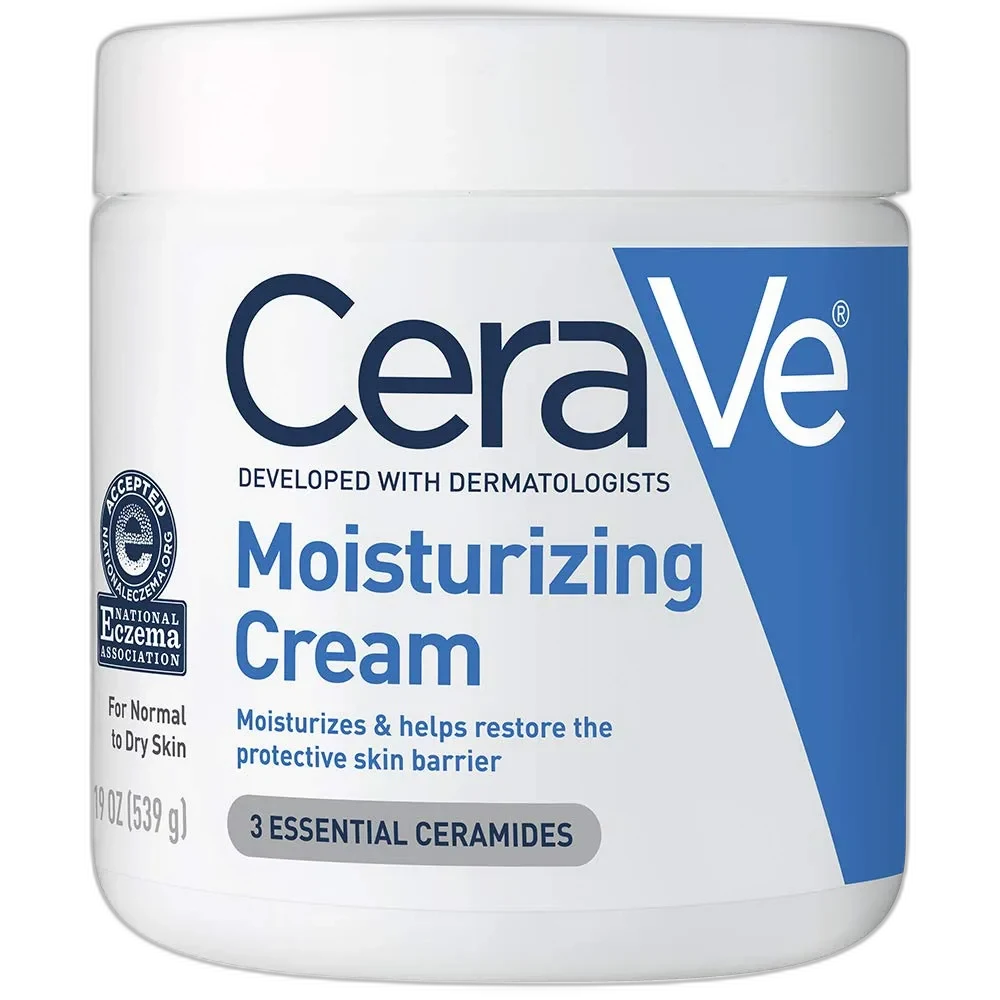
A large white jar uses CeraVe's blue and green labeling and is marked as an OTC drug product. The wide mouth allows easy access for body application.
The first application relieves itch within two minutes. The pramoxine creates a subtle, functional numbing sensation in the treated area. The cream feels moisturizing and soothing, without the cooling or tingling of menthol-based anti-itch products. Skin feels calmer and more comfortable within minutes.
Use twice daily on localized areas for 2-3 months; apply full-body for 3-4 weeks
12 months
All Year
The backstory.
CeraVe recognized that itch and dryness are not separate problems — they are two symptoms of the same barrier dysfunction cycle. Dry, compromised skin lets irritants in, which triggers itching, which leads to scratching, which further damages the barrier. The Itch Relief Moisturizing Cream was designed to break this cycle at multiple points simultaneously: pramoxine interrupts the nerve signal, ceramides repair the barrier, and the rich moisturizing base prevents the dryness that started it all.
About CeraVe
Legacy Brand (20+ years)CeraVe launched in 2005, built with dermatologists. It is the number-one dermatologist-recommended skincare brand in the U.S. The Itch Relief Moisturizing Cream is an OTC drug product using clinically tested pramoxine hydrochloride and CeraVe's established ceramide science.
Common myths.
Hydrocortisone (a steroid) provides effective itch relief.
Pramoxine hydrochloride relieves itch via local anesthesia instead of anti-inflammatory steroid action. It works long-term without the skin-thinning, rebound, or other side effects of topical steroids. For many chronic itch conditions, it is a safer long-term alternative.
Anti-itch creams contain too much medication for regular moisturizer use.
This formula uses CeraVe's moisturizing cream base with ceramides, hyaluronic acid, shea butter, and petrolatum. It works as a high-quality moisturizer that also contains an anti-itch active. Users often use it as their main body moisturizer during dry, itchy periods.
FAQ.
Is CeraVe Itch Relief Moisturizing Cream a steroid?
No — the active ingredient is pramoxine hydrochloride 1%, a topical local anesthetic, not a corticosteroid. You can use it long-term without the skin-thinning, rebound effects, or other side effects found in steroid creams like hydrocortisone. It relieves itch by temporarily blocking nerve signals instead of suppressing inflammation.
How quickly does CeraVe Itch Relief Cream work?
Clinical studies show itch relief starts within 2 minutes and lasts up to 8 hours. The pramoxine numbs the area to interrupt the itch signal almost immediately, while the moisturizing base provides sustained comfort and barrier repair.
Can I use CeraVe Itch Relief Cream on my face?
The formula is non-comedogenic and fragrance-free, but targets body use. Apply sparingly to the face and avoid the eye area. The thick, petrolatum-heavy base feels heavy on the face, especially for oily or acne-prone skin types. Consult your dermatologist before using any medicated product on the face.
Is CeraVe Itch Relief Cream safe for children?
This product is for ages 2 and older. Consult a physician before use for children under 2. The steroid-free formula works for pediatric itch relief, so parents avoid the concerns of long-term topical steroid use on young skin.
Can I use CeraVe Itch Relief Cream with prescription eczema treatments?
Yes — many dermatologists recommend this cream with prescription treatments. The steroid-free formula does not interact with or duplicate prescription corticosteroids or calcineurin inhibitors. The ceramide base supports the barrier repair that prescription treatments aim for. Discuss timing and layering with your dermatologist.
What the community says.
"Itch relief starts within minutes of application"
"Steroid-free formula safe for long-term daily use"
"Works as both an anti-itch treatment and a genuine moisturizer"
"Fragrance-free and gentle enough for eczema-prone skin"
"Large 12 oz size provides good value for body-wide use"
"Higher price point than standard CeraVe moisturizers"
"Contains alcohol denat. which some users prefer to avoid"
"Too heavy for use on the face in warmer weather"
"Not a permanent solution — itch returns when product is discontinued"