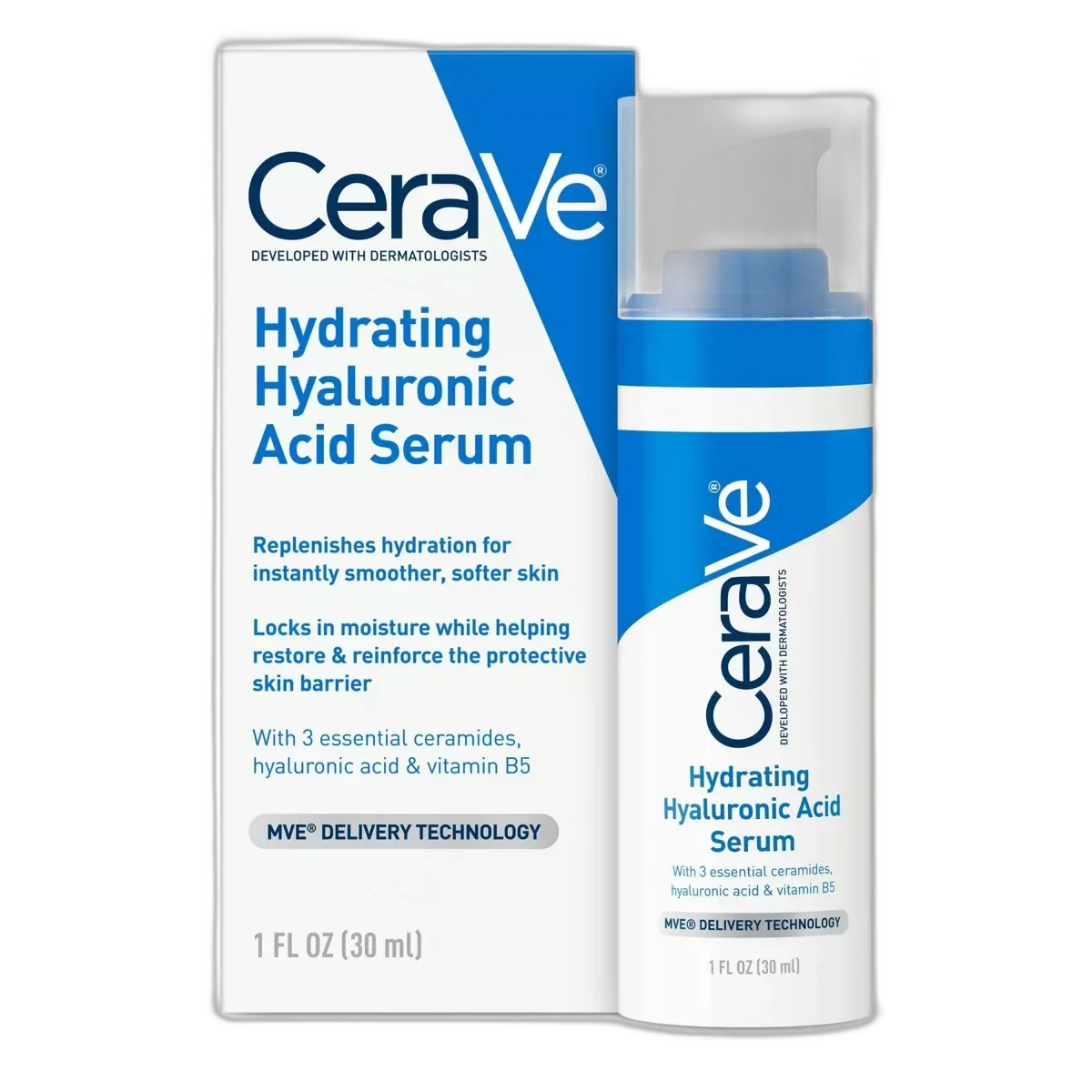
Hydrating Hyaluronic Acid Serum
Barrier-Smart Hydrator
 Verified reviewer
Pros & cons.
- +Ceramide complex repairs the barrier that holds hydration in, solving HA's biggest limitation
- +Panthenol at functional concentration adds soothing anti-inflammatory benefits beyond pure hydration
- +Lightweight texture absorbs quickly without tackiness or residue
- +Fragrance-free, paraben-free formula suitable for sensitive and reactive skin
- +Immediate visible plumping effect on dehydration lines after first application
- +Layers seamlessly under moisturizer and sunscreen without pilling
- −One-ounce bottle lasts only 6-8 weeks with twice-daily use
- −Contains isopropyl myristate which may trigger breakouts in acne-prone users
- −Hydrating effect may not last a full day for very dry skin in arid climates
- −Higher per-ounce cost than CeraVe's cleansers and moisturizers
- −Dimethicone may not appeal to users who prefer silicone-free formulations
The full review.
Texture
The texture hits the balance many HA serums miss. It is viscous enough to feel substantive on the skin—important at this price point—but thin enough to absorb within a minute without tacky residue. The dimethicone in the formula creates a barely perceptible silicone layer that smooths the skin surface and locks in moisture. Some purists dislike dimethicone in serums, but here it has a functional purpose: preventing the transepidermal water loss that would otherwise reduce the hyaluronic acid’s effectiveness.
Packaging
The small bottle size means it lasts six to eight weeks with twice-daily use. This creates a modest per-unit cost that adds up over a year. The dropper dispenser works well, though you need two to three squeezes for full-face coverage.
Common Praise
The serum delivers a noticeable plumping effect minutes after application. Skin looks dewier, feels softer, and fine dehydration lines—shallow creases from parched skin—visibly diminish. Glycerin and HA drive this immediate effect by drawing water into the superficial layers of the stratum corneum. The longer-term benefit—skin that holds hydration better over days and weeks—comes from the ceramide complex rebuilding the barrier infrastructure for sustained moisture retention.
Common Complaints
The serum’s limitations appear in its staying power for very dry skin in dry climates. Some users report the hydrating effect does not persist through a full day like higher-concentration or multi-molecular-weight HA formulations. This is an inherent limitation of a 1-ounce product trying to hydrate skin for sixteen hours; a moisturizer on top is essential.
Not ideal for
The formula includes isopropyl myristate. This emollient improves spreadability, but its moderately high comedogenic rating can trigger breakouts in acne-prone individuals. While less of a concern for a serum for dry and sensitive skin, combination-skin users with acne-prone zones should patch-test before full-face use.
Ingredient analysis.
Full INCI list
Water, Glycerin, Cetearyl Ethylhexanoate, Dimethicone, Ammonium Polyacryloyldimethyl Taurate, Sodium Hyaluronate, Panthenol, Ceramide NP, Ceramide AP, Ceramide EOP, Carbomer, Cetearyl Alcohol, Behentrimonium Methosulfate, Sodium Hydroxide, Sodium Lauroyl Lactylate, Cholesterol, Phenoxyethanol, Disodium EDTA, Isopropyl Myristate, Caprylyl Glycol, Citric Acid, Xanthan Gum, Phytosphingosine, Ethylhexylglycerin
Skin match.
The science.
The Science
The CeraVe Hydrating Hyaluronic Acid Serum formulation solves a known problem with topical hyaluronic acid: hydration fades without barrier support to stop moisture loss. The sodium hyaluronate used here has a lower molecular weight than native hyaluronic acid, so it penetrates the stratum corneum better. A 2011 study by Pavicic et al. in the Journal of Drugs in Dermatology shows that low-molecular-weight hyaluronic acid derivatives penetrate deeper and hydrate longer than high-molecular-weight forms.
Combining these with ceramides NP, AP, and EOP is pharmacologically rational. Research shows transepidermal water loss (TEWL) correlates directly with ceramide depletion in the stratum corneum. By replenishing ceramides and delivering hyaluronic acid at once, this serum manages both moisture attraction and moisture retention.
Panthenol at the estimated 1.2-1.8% concentration provides clinically meaningful benefits. A study in Skin Pharmacology and Physiology confirmed that topical dexpanthenol improves stratum corneum hydration, reduces TEWL, and speeds epidermal barrier recovery after disruption. Combined with hyaluronic acid and ceramides, panthenol creates a three-pronged hydration and repair system.
The glycerin concentration (estimated 3.7-5.6%) adds humectant capacity. Research in the British Journal of Dermatology shows glycerin acts as a humectant and stimulates aquaporin-3 expression in keratinocytes, which improves the skin's intrinsic water transport.
References
- Efficacy of cream-based novel formulations of hyaluronic acid of different molecular weights in anti-wrinkle treatment — Journal of Drugs in Dermatology (2011)
Dermatologist Perspective
Dermatologists recommend the CeraVe Hydrating Hyaluronic Acid Serum as a practical step-up from basic moisturization for patients with persistently dehydrated or barrier-compromised skin. Board-certified dermatologists note the ceramide-HA combination works well for patients using drying prescription treatments like retinoids or benzoyl peroxide, where barrier recovery is ongoing. The panthenol component makes it a common recommendation for post-procedure hydration after chemical peels or laser treatments, where soothing and moisture restoration are both critical.
Where it fits in your routine.
Apply three to four drops to damp skin after cleansing. Press the liquid into your face and neck. Damp skin is necessary because hyaluronic acid binds to available moisture; applying to dry skin reduces its effectiveness. Follow immediately with moisturizer to seal in hydration. Use morning and evening. Apply before or after treatment serums like retinol or vitamin C. Apply thinner products first.
At approximately twenty dollars for one ounce, this serum sits at the premium end of CeraVe's pricing but remains significantly more affordable than prestige HA serums from brands that charge forty to eighty dollars for similar or smaller volumes. The addition of ceramides, panthenol, and cholesterol — ingredients that would typically require purchasing separate products — adds functional value beyond what a pure HA serum provides. The 6-8 week lifespan with twice-daily use means a yearly cost of approximately $130-170, which is reasonable for a cornerstone hydrating product from a dermatologist-developed brand.
This hydrating serum works for dry, dehydrated, or sensitive skin and does more than temporary plumping. It helps retinoid users, post-procedure patients, and people whose moisturizer alone lacks sufficient hydration. It is a smart choice for those wanting hyaluronic acid with integrated barrier repair.
Oily or acne-prone skin types should use this with caution because of the isopropyl myristate and dimethicone. Users on a tight budget who cannot repurchase every six to eight weeks may find better value in CeraVe's moisturizers. CeraVe's moisturizers use ceramides and hyaluronic acid in a format that lasts longer.
Product details.
Completely fragrance-free with no discernible scent.
Small frosted white bottle with a dropper applicator. Clean, clinical CeraVe branding in blue and green. The dropper provides precise dosing but some users find it dispenses less product than desired per squeeze. Finish lightweightdewynon-greasy
The first application plumps the skin immediately. Skin feels more hydrated and looks dewier within minutes. It causes no tingling, stinging, or adjustment period. The serum layers under moisturizer without pilling or balling up.
6-8 weeks with twice-daily use
12 months
All Year
The backstory.
CeraVe entered the serum market relatively late, watching as hyaluronic acid serums became the most searched-for skincare category online. Rather than simply launching a generic HA serum, they applied their ceramide-first philosophy to the format, creating a serum that addresses the fundamental limitation of hyaluronic acid — that it pulls in moisture which then escapes through a damaged barrier — by repairing that barrier simultaneously.
About CeraVe
Legacy Brand (20+ years)Dermatologists helped develop CeraVe in 2005. It is the number-one dermatologist-recommended skincare brand in the U.S. Peer-reviewed research backs its ceramide-based formulations, and the brand has National Eczema Association seals across its core product line.
Common myths.
Hyaluronic acid serums can dry out skin by pulling moisture from deeper layers.
Pure HA can draw moisture upward in very dry environments, but this serum's dimethicone and ceramide complex creates an occlusive, barrier-repair layer. This layer stops moisture from escaping the skin surface. The formula traps the hydration HA attracts instead of letting it evaporate.
All hyaluronic acid serums are essentially the same because HA is HA.
The vehicle matters. This serum combines sodium hyaluronate with panthenol, three ceramides, cholesterol, and dimethicone to hydrate differently than a pure HA-in-water serum. The barrier-repair and occlusive components change how effectively the HA works.
What the community says.
"Noticeable plumping effect after first application"
"Lightweight texture absorbs quickly without stickiness"
"Pairs well with other products in a routine"
"Affordable compared to prestige HA serums"
"Fragrance-free and gentle on sensitive skin"
"Small 1 oz bottle does not last long for twice-daily use"
"Some users find hydration does not last through the full day"
"Contains isopropyl myristate which may concern acne-prone users"
"Less hydrating than some competing HA serums at higher concentrations"