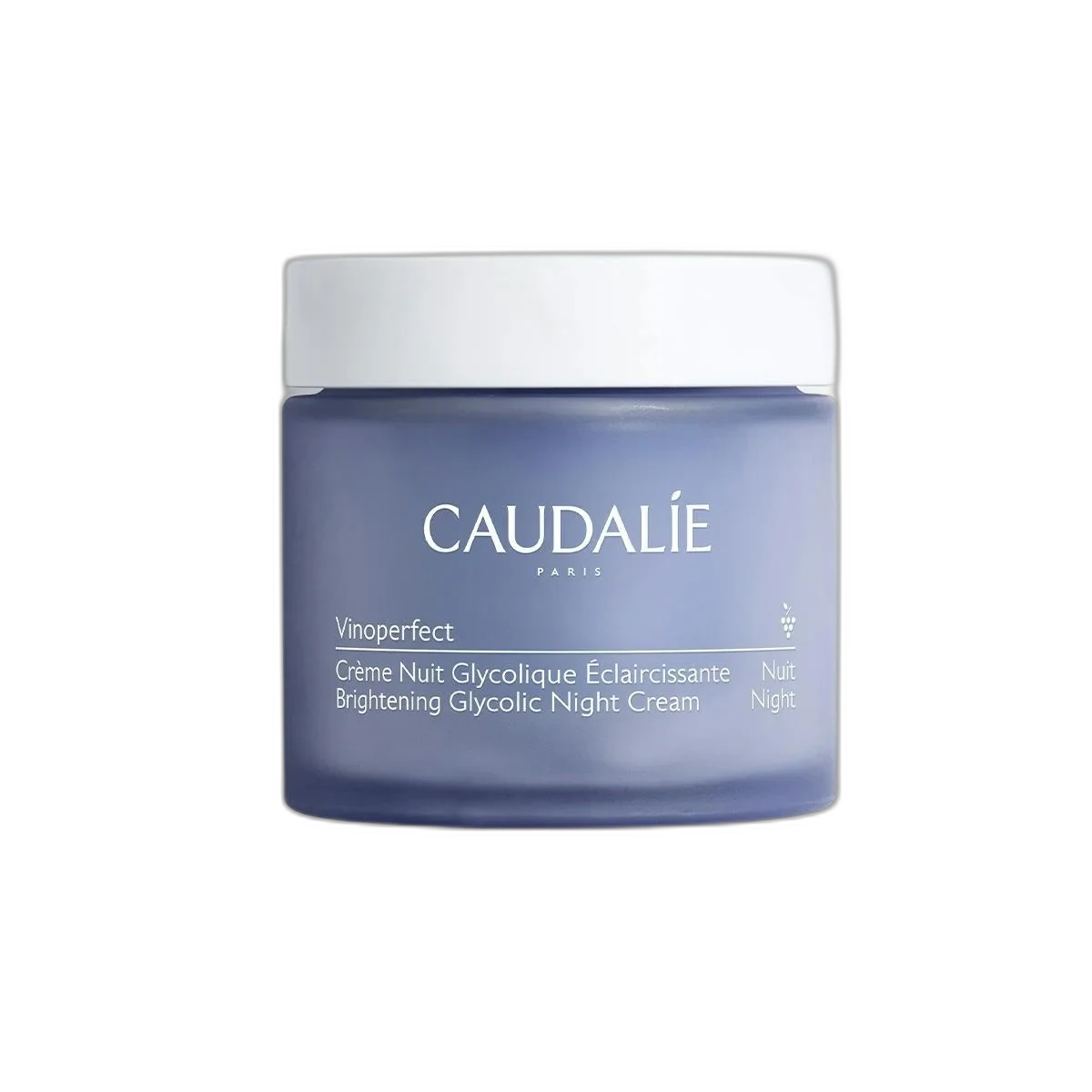
Vinoperfect Dark Spot Correcting Glycolic Night Cream
Luxury AHA with a Brightening Twist
 Verified reviewer
Pros & cons.
- +4% glycolic acid at pH 4 delivers real overnight exfoliation without next-day irritation
- +Viniferine is one of the more credible patented brighteners on the market
- +Buttery cream texture absorbs cleanly and doesn't interfere with morning routine
- +Balanced formulation with hyaluronic acid and squalane offsets dehydration risk
- +Gentle enough for nightly use on most non-sensitive skin types
- +Pregnancy-safe formulation with no retinoid component
- +Cruelty-free, vegan, and Sephora Clean+ certified for clean-beauty shoppers
- −$72 for 40ml places this firmly in the luxury price tier
- −Fragrance rules it out for sensitive or rosacea-prone skin
- −Glass jar isn't airless and exposes actives to air with each use
- −Effects on deep dermal melasma are modest — not a replacement for prescription treatment
- −Small size runs out in roughly two months with consistent use
The full review.
About Caudalie
Caudalie’s brightening story started in 1993, when a visiting professor picked up a handful of discarded grape seeds at the Thomas family’s Bordeaux vineyard and told them they were throwing away some of the most powerful antioxidants in the plant world. Three years later, Mathilde and Bertrand Thomas launched Caudalie on the back of that observation. The Vinoperfect franchise — and specifically the hunt for a grape-derived pigment inhibitor that could stand up to hydroquinone — has been the brand’s signature scientific project ever since. This night cream is the latest chapter in that story, and it’s easily the most interesting Vinoperfect release in years. The premise is straightforward: take the Viniferine molecule that anchors the original Vinoperfect serum, pair it with a well-tolerated 4% glycolic acid, and let the two work overnight while the skin is most receptive to renewal. In practice, what you get is a soft, buttery cream that sinks in within about thirty seconds and feels like a standard moisturizer rather than a treatment. There’s no greasy film, no tacky residue, and the faint botanical fragrance dissipates within a minute. The first few nights bring a mild tingle, which is exactly what a 4% AHA cream at pH 4 should feel like — present but not aggressive. By the fourth or fifth morning, most users notice skin that feels smoother to the touch and looks a shade more awake, which is the glycolic doing its immediate surface work. The Viniferine story takes longer. Caudalie has published in-house research suggesting the molecule outperforms kojic acid on tyrosinase inhibition, and independent lab work has been broadly supportive, though the consumer-use effect is more modest than the headline numbers suggest. Realistically, expect meaningful fading of post-acne marks and superficial sunspots after six to eight weeks of consistent nightly use. Deeper melasma is a much harder problem and will require either prescription help or a more aggressive in-office approach — this cream can support that work but won’t replace it. The formulation is thoughtful beyond just the headline actives. Hydrolyzed hyaluronic acid and sodium hyaluronate offset the mild dehydration glycolic can cause, squalane fills in the lipid gap without creating an occlusive barrier that would interfere with acid penetration, and a whisper of papaya enzyme provides a gentler secondary exfoliation. The absence of niacinamide is a deliberate choice — Caudalie positions Viniferine as the brightening lead and doesn’t want to muddy the story. Where this cream loses points is price and size. At $72 for 40ml, you’re paying a luxury premium for what is mechanically a well-made 4% AHA cream with a patented brightener bolted on. Francophile packaging and Bordeaux provenance are doing some of the heavy lifting on that price tag. If your dark spots are stubborn and you’ve cycled through a few drugstore AHAs without meaningful progress, that premium may genuinely be worth it. If you’re newer to exfoliating actives or your pigmentation is mild, a $30 alternative will give you eighty percent of the benefit. The cream also isn’t the right pick for reactive or rosacea-prone skin — the fragrance and the glycolic together are too much for a compromised barrier, and Caudalie makes gentler Vinosource options for that audience. For everyone else, this is a graceful, effective overnight brightener from a brand that’s spent three decades earning the right to make it.
Ingredient analysis.
Full INCI list · pH 4
Aqua/Water/Eau, Glycolic Acid, Glycerin, Dicaprylyl Carbonate, Propanediol, Cetearyl Alcohol, Cetyl Alcohol, Glyceryl Stearate SE, Sodium Hydroxide, Vitis Vinifera (Grape) Vine Extract, Carica Papaya (Papaya) Fruit Extract, Hydrolyzed Hyaluronic Acid, Sodium Hyaluronate, Squalane, Tocopherol, Xanthan Gum, Pentylene Glycol, Caprylyl Glycol, Phenoxyethanol, Parfum/Fragrance, Citric Acid, Disodium EDTA, Sodium Benzoate, Potassium Sorbate
Skin match.
The science.
The Science
Two validated mechanisms work better together than alone. Glycolic acid is the most studied alpha hydroxy acid in dermatology. Decades of peer-reviewed work show that 4% to 10% concentrations at low pH accelerate corneocyte turnover, improve stratum corneum organization, and stimulate basal keratinocyte activity. At 4% and pH 4, this cream stays in the well-tolerated range for nightly use—high enough to work, low enough to avoid cumulative irritation for most users. The more interesting active is Viniferine, a stilbene glucoside from grapevine sap that inhibits tyrosinase, the rate-limiting enzyme in melanin synthesis. In vitro comparative studies suggest Viniferine is more potent on tyrosinase than kojic acid or arbutin, though skin penetration, dose, and pigmentation depth affect how well enzyme kinetics translate to real-world sun spot fading. The formula's insight is the pairing: glycolic acid thins the stratum corneum to improve Viniferine penetration into the basal layer where melanocytes live, while also sloughing away pigmented corneocytes at the surface. This one-two action explains why users see brightening faster than with the Vinoperfect serum alone. The supporting cast—hyaluronic acid in two molecular weights, squalane, and papaya enzyme—protects barrier function during exfoliation. This is critical because a compromised barrier worsens hyperpigmentation by driving inflammatory melanogenesis. Omitting a separate niacinamide component is a deliberate choice, not a weakness.
Dermatologist Perspective
Dermatologists often recommend overnight AHA creams as a more tolerable alternative to daytime acid serums for patients with post-inflammatory hyperpigmentation and photodamage. A 4% glycolic acid concentration at pH 4 is a sweet spot for nightly use on most non-sensitive skin types; board-certified dermatologists note glycolic acid has the most robust clinical evidence base of any AHA. Viniferine is less common but increasingly cited as a reasonable non-prescription brightening alternative for patients who cannot tolerate hydroquinone or prefer botanical-derived actives. Dermatologists caution that any brightening regimen requires daily broad-spectrum SPF—without it, exfoliation increases vulnerability to the UV that caused the pigmentation. For patients with melasma or hormonally driven pigmentation, this cream is an adjunctive treatment rather than a standalone solution.
Where it fits in your routine.
Apply to clean, dry skin as the final evening step. Start three to five nights a week, then use nightly as tolerated. Use a pea-sized amount for the full face and neck; more AHAs does not mean better results. Avoid the eye area, active breakouts, and broken skin. Skip retinoids, vitamin C, and other exfoliating acids on nights you use this cream to prevent irritation. Always apply a broad-spectrum SPF 30 or higher the next morning. Glycolic acid increases UV sensitivity, and sun exposure undoes the brightening. If redness or peeling persists, use it less often instead of quitting.
At $72 for 40ml, this cream sits between mid-market and luxury pricing. The formulation works well and the Viniferine patent shows R&D investment, so the price covers more than just packaging. However, at roughly $1.80 per milliliter, you pay a brand premium — a comparable 4% glycolic night cream from a drugstore or clinical brand costs $25-35 and lacks the grape-derived brightener. Caudalie does not currently offer a larger size of this specific product, which limits per-unit savings for long-term users. The verdict: it is worth it if dark spots are your primary concern and cheaper AHA routes failed. If you are new to exfoliation or have mild pigmentation, a less expensive glycolic option delivers most of the benefit.
This product suits anyone with post-acne marks, sunspots, or dullness who uses AHAs and wants one overnight product for exfoliation and brightening. It works well for normal to combination skin types that need more than basic glycolic toners and prefer a cream texture.
People with highly reactive, rosacea-prone, or fragrance-sensitive skin should use Caudalie's Vinosource line instead. Budget-conscious shoppers find similar glycolic concentrations in Pixi, The Ordinary, or Naturium for less money — try those before buying this. Skip this if you use prescription tretinoin at night and do not want to alternate evenings.
Product details.
Soft, buttery cream that melts into skin without leaving a tacky film
Light botanical fragrance with subtle grape-floral notes
The frosted glass jar has a screw-top lid. It is not airless, so store it away from direct sunlight.
Expect a mild tingle during the first few uses; this fades as skin acclimates. Your cheeks may look slightly pink the first morning because the glycolic acid works. Skin feels smoother almost immediately, but visible brightening builds over weeks.
About 2 months with nightly use on face and neck
6 months
All Year
The backstory.
The original Vinoperfect Radiance Serum launched in 2006 and became Caudalie's biggest global hit. Fifteen years later, the brand extended the franchise with this night cream, reformulating around the observation that users were layering the serum under stronger AHAs anyway. Packaging both actives together was the logical next step.
About Caudalie
Established Brand (5–20 years)Mathilde and Bertrand Thomas founded Caudalie in 1995 in Bordeaux. The brand built its reputation on polyphenol research from grapevine byproducts, working with the University of Bordeaux pharmacy school. Caudalie has patented several grape-derived actives and uses independent clinical trials for flagship products to support its clean-beauty positioning.
Common myths.
Glycolic acid at 4% is too weak to do anything meaningful.
At pH 4, 4% glycolic exfoliates well when left on overnight. Higher percentages do not always work better, especially in a leave-on cream where contact time does the work.
Viniferine is just a marketing buzzword for grape extract.
Viniferine is a stilbene glucoside molecule isolated from grapevine sap. Caudalie published in-house research on its tyrosinase activity. Consumer use shows more modest clinical effects than lab data, but the effect exists.
FAQ.
Can I use this every night?
Yes, this cream works for nightly use — the 4% glycolic acid concentration ensures daily tolerability. If you are new to acids, use it every other night for the first two weeks before switching to nightly.
Can I use this with the Vinoperfect Radiance Serum?
Yes, and Caudalie designs these for layering. Apply the serum first to damp skin, wait 30 seconds, then use this cream. The serum has a higher Viniferine dose, while the cream adds the glycolic exfoliation layer.
Is this cream safe during pregnancy?
Glycolic acid in leave-on products at this concentration is generally safe during pregnancy, and the formula is retinoid-free. Always check with your OB or dermatologist before using any new active during pregnancy.
Will this cream fade melasma?
It exfoliates and gradually inhibits new pigment production to help surface-level melasma, but deeper dermal melasma often needs prescription interventions. Use this with rigorous SPF use for gradual, not dramatic, improvement.
Can sensitive skin tolerate this?
Sensitive skin types must use caution; glycolic acid and the added fragrance can trigger reactions. Patch test on the jawline for several nights before full face application. Keep a fragrance-free ceramide moisturizer nearby to buffer if needed.
Do I still need retinol if I use this?
This cream exfoliates and brightens, but it does not treat fine lines or deep collagen concerns like a retinoid. Many users alternate: this cream three nights a week, retinoid two nights, and a simple moisturizer the rest.
Why is the jar so small?
40ml is standard for luxury French night creams and shows the active concentration — a little goes a long way. Most users report it lasts about two months with nightly application.
What the community says.
"Visibly smoother skin by morning"
"Gentle enough for nightly use"
"Noticeable fading of post-acne marks"
"Elegant cream texture"
"Pleasant light scent"
"Expensive for the size"
"Fragrance isn't for everyone"
"Slow results on deeper melasma"
"Small jar runs out quickly"
People also looked at.