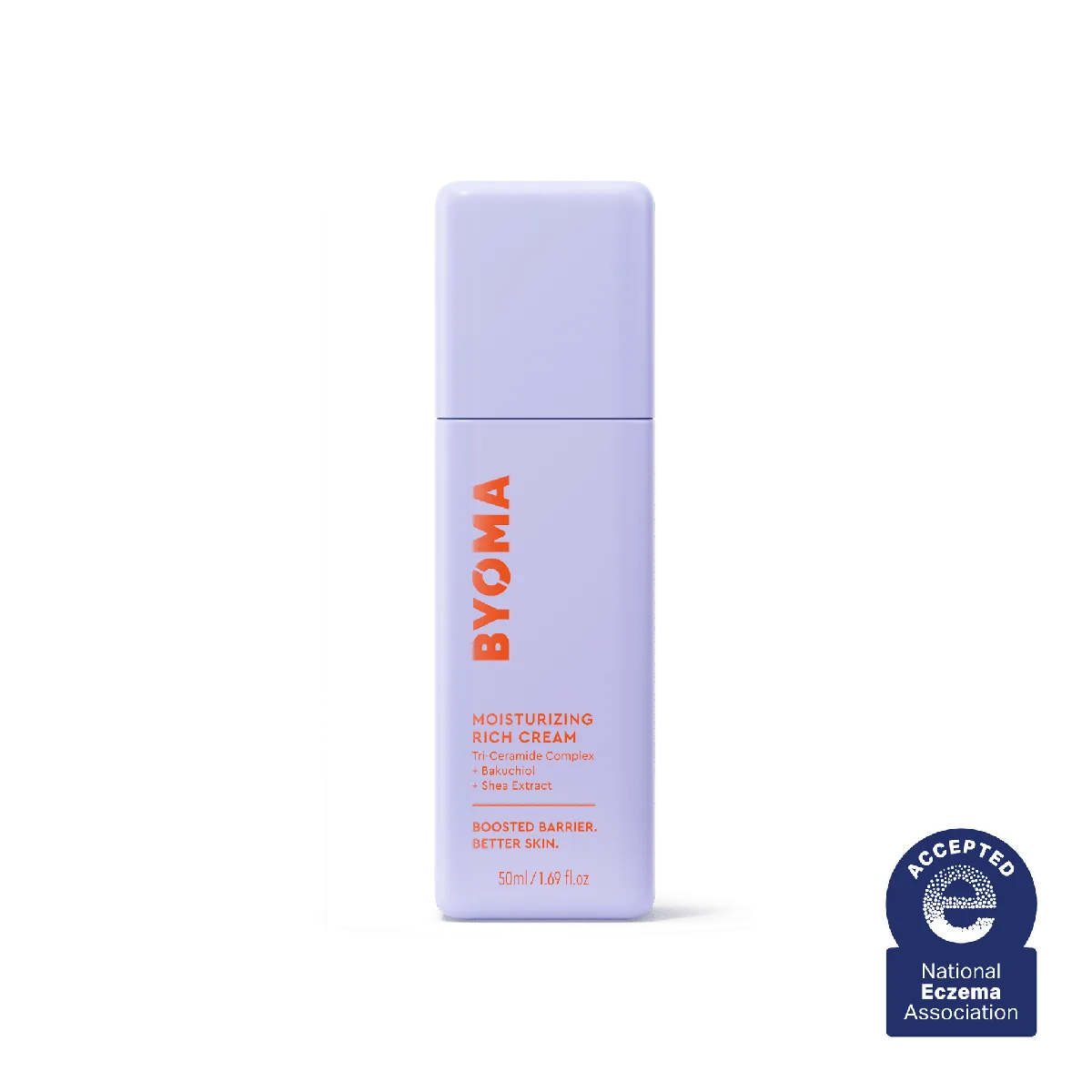
Moisturizing Rich Cream
Dry Skin's Barrier Shield
 Verified reviewer
Pros & cons.
- +Combines Tri-Ceramide Complex with bakuchiol for simultaneous barrier repair and anti-aging
- +Shea butter provides meaningful occlusive moisture without heavy greasiness
- +Rich velvety texture melts on contact and absorbs without suffocating skin
- +Fragrance-free, silicone-free formula with minimal irritation risk
- +Refill option available at Target reduces waste and improves long-term value
- +Anti-inflammatory licorice root derivative calms redness and sensitivity
- +Under $16 for a multi-active ceramide cream — exceptional value
- −Pump mechanism is unreliable and a consistent complaint across reviews
- −Contains olive fruit oil which may trigger breakouts in acne-prone skin
- −Too rich for oily skin or humid climate daily use
- −Bakuchiol concentration appears modest based on ingredient list position
- −50 mL bottle may not last long enough for those applying to face and neck
The full review.
Most brands treat barrier repair and anti-aging as separate product categories with separate price tags. Byoma’s Rich Cream refuses that distinction. It takes the same Tri-Ceramide Complex that runs through the entire Byoma range and nests it inside a richer, more occlusive formula alongside bakuchiol — a retinol alternative that has been generating increasingly convincing clinical data since a landmark 2019 study in the British Journal of Dermatology showed it matching retinol for wrinkle and pigmentation improvement. The result is a cream that simultaneously rebuilds your lipid barrier and stimulates collagen production, all for a price that most brands would charge for a sample size.
The ingredient list reads like someone who actually studied cosmetic chemistry wrote it rather than a marketing team. Glycerin leads as the primary humectant. Caprylic/capric triglyceride provides medium-weight emolliency. Shea butter, listed fifth, delivers the richness that gives this cream its name — a meaningful position in the formula indicating a concentration high enough to provide real occlusive benefits rather than just label appeal. Cetearyl olivate and sorbitan olivate form a gentle, olive-derived emulsifier system that helps the water and oil phases stay blended while adding their own skin-conditioning properties.
The Tri-Ceramide Complex — ceramide NP, cholesterol, and phytosphingosine — is the scientific backbone. In this richer formula, these barrier lipids sit within a more occlusive matrix than the brand’s Gel Cream, which theoretically gives them longer contact time with the stratum corneum and a more sealed environment in which to integrate into the existing lipid lamellae. Dipotassium glycyrrhizate adds anti-inflammatory calming from the licorice-root family, and tocopherol provides basic antioxidant protection.
Texture
The texture is genuinely pleasant. It is rich without being heavy — a thick cream that melts on contact and spreads easily without dragging or pulling. Think of it as the difference between a heavy winter coat and a well-insulated jacket: the warmth is there, but the weight is not. It leaves a velvety, slightly dewy finish that feels protective without suffocating. Mornings, it needs a few minutes to fully absorb before sunscreen application. Evenings, it sits comfortably as a final layer and keeps skin cushioned through the night.
Works for
Bakuchiol is the ingredient that elevates this from a straightforward barrier cream to something more interesting. While it sits lower in the ingredient list, suggesting a modest concentration, bakuchiol has demonstrated efficacy at concentrations as low as 0.5%. It works by upregulating collagen types I, III, and IV through retinoid receptor-independent pathways — meaning it does not cause the irritation, peeling, or photosensitivity associated with retinol. For people who want anti-aging benefits but whose sensitive or compromised skin cannot tolerate retinoids, this is a meaningful inclusion.
Conflicts With
The honesty section: olive fruit oil. It appears lower in the formula, but olive oil has a documented history of being comedogenic for some individuals. If you are acne-prone and considering this cream, that ingredient warrants a patch test. The olive-derived emulsifiers (cetearyl olivate, sorbitan olivate) are generally well-tolerated, but the actual fruit oil can trigger breakouts in susceptible skin. Several user reviews mention unexpected acne, and this is the most likely culprit.
Packaging
The pump packaging is the product’s weakest link. Across the Byoma range, pump reliability is a recurring complaint, and the Rich Cream is no exception. When it works, it dispenses cleanly and hygienically. When it doesn’t — and user reports suggest this happens frequently enough to constitute a pattern rather than an anomaly — you are left trying to coax product from a bottle that apparently has other plans. A refill option at Target for $13.99 somewhat mitigates the waste concern, but the fundamental pump design needs attention.
Best for
At $15.99 for 50 mL, the value calculation is straightforward. You are getting a ceramide barrier cream with bakuchiol, shea butter, licorice root extract, and vitamin E for less than most brands charge for a basic moisturizer. The formulation would not look out of place at two or three times the price. Whether Byoma can maintain this quality-to-price ratio as the brand scales remains to be seen, but right now, the Rich Cream represents one of the best deals in barrier-focused skincare.
Not ideal for
The limitation is what it is not. This is not a lightweight daily moisturizer for combination or oily skin — that role belongs to the Gel Cream. This is not an intensive treatment for severe dermatitis — that requires prescription intervention. This is a well-formulated, affordable rich cream for dry and sensitive skin that happens to include a retinol alternative as a bonus. For its intended audience, it delivers.
Ingredient analysis.
Full INCI list
Aqua, Glycerin, Caprylic/Capric Triglyceride, Cetearyl Alcohol, Butyrospermum Parkii (Shea) Butter, Cetearyl Olivate, Sorbitan Olivate, Dipropylene Glycol, Hydroxyethyl Acrylate/Sodium Acryloyldimethyl Taurate Copolymer, Hydroxyacetophenone, Ceramide NP, Cholesterol, Phytosphingosine, Caprylyl Glycol, Bakuchiol, Palmitic Acid, Stearic Acid, Oleic Acid, Hydrogenated Lecithin, Acrylates/C10-30 Alkyl Acrylate Crosspolymer, Tromethamine, Olea Europaea (Olive) Fruit Oil, Ethylhexylglycerin, Lactic Acid, Disodium EDTA, Sorbitan Isostearate, Dipotassium Glycyrrhizate, Caprylhydroxamic Acid, Tocopherol
Skin match.
The science.
The Science
The Byoma Moisturizing Rich Cream uses two evidence pillars: ceramide-based barrier repair and bakuchiol's retinoid-like activity. The ceramide NP, cholesterol, and phytosphingosine triad uses the same research as the entire Byoma range — specifically, a 2024 International Journal of Cosmetic Science review confirming that multi-lipid formulations mimicking the stratum corneum's natural composition restore the barrier better than single-ceramide products.
A 2019 randomized, double-blind study by Dhaliwal et al. in the British Journal of Dermatology bolstered bakuchiol's status as a retinol alternative. The study compared 0.5% bakuchiol applied twice daily against 0.5% retinol applied nightly over 12 weeks. Both groups showed statistically significant improvement in wrinkle severity and hyperpigmentation, with no significant differences between groups. The bakuchiol group reported significantly less scaling and stinging than the retinol group, supporting its use in sensitive-skin formulations like this one.
Bakuchiol's mechanism differs from retinol. Instead of binding to retinoid receptors, it activates AMP-activated protein kinase (AMPK) and upregulates type I, III, and IV collagen expression through alternative signaling pathways. This receptor-independent mechanism prevents characteristic retinoid dermatitis — making it compatible with this cream's barrier-repair mission rather than working against it.
Shea butter provides a documented emollient and anti-inflammatory profile. It contains stearic acid, oleic acid, and triterpene esters, which provide occlusive moisture retention and direct anti-inflammatory activity. Research in the Journal of Oleo Science shows shea butter suppresses inflammatory mediators, complementing the dipotassium glycyrrhizate in this formula.
References
- Prospective, randomized, double-blind assessment of topical bakuchiol and retinol for facial photoageing — British Journal of Dermatology (2019)
- The role of ceramides in skin barrier function and the importance of their correct formulation for skincare applications — International Journal of Cosmetic Science (2024)
Dermatologist Perspective
Dermatologists often recommend ceramide-rich moisturizers for patients with dry, eczema-prone, or aging skin, where barrier compromise accelerates moisture loss and visible aging. Combining barrier lipids with bakuchiol is a formulation approach board-certified dermatologists find clinically sensible — it addresses the barrier dysfunction that makes aging skin vulnerable while providing gentle retinoid-like collagen stimulation. Dermatologists frequently suggest this type of product for patients who cannot tolerate prescription retinoids or want a maintenance option between active treatments.
Where it fits in your routine.
Apply a pea-sized amount to cleansed skin as your final step. Press it into the face and neck. The thick texture warms between your palms before you press it on. Use morning and evening. In the AM, wait 2-3 minutes for absorption before sunscreen. For dry skin, mix in 2-3 drops of facial oil. This cream works as a night cream for all but the driest skin types. You do not need a separate retinol unless targeting specific concerns — the bakuchiol provides baseline retinoid-like benefits.
At $15.99 for 50 mL, the Byoma Rich Cream uses four actives — ceramides, bakuchiol, shea butter, and licorice root — for less than comparable products from established dermatological brands. The $13.99 refill option lowers costs for repeat purchasers. A prestige brand ceramide cream with bakuchiol typically costs $45-$80. While Byoma's brand heritage is still developing, the ingredient quality and concentration in this formula show genuine value instead of a watered-down budget option.
This moisturizer suits people with dry, sensitive, or mature skin who want affordable barrier repair and gentle anti-aging. It works well for those who cannot tolerate retinol, people recovering from barrier damage, and anyone who finds gel-cream moisturizers lack enough hydration.
People with oily or acne-prone skin may prefer the Gel Cream; the olive fruit oil and thick texture can cause breakouts. If you want lightweight, fast-absorbing textures, this cream feels too heavy for daily daytime use, especially in warm or humid climates.
Product details.
Unscented — no detectable fragrance. Some users smell a faint, neutral emollient scent from the shea butter.
A white pump bottle with pastel accents follows Byoma's brand aesthetic. The 50 mL size matches the Gel Cream. Target sells a refill for $13.99, which cuts waste and lowers the per-unit price. However, users report pump reliability issues across the Byoma range. Finish satindewyvelvety
The first application provides immediate comfort and a visible moisture blanket. The cream feels thick but not suffocating. The bakuchiol is gentler than retinol, so no purging or adjustment period occurs. Skin feels softer within the first few uses. Some acne-prone users reported breakouts in the first week, likely due to the olive fruit oil content.
2-3 months with once or twice-daily facial application
12 months
fall winter
The backstory.
The Rich Cream rounds out Byoma's moisturizer lineup, addressing the dry-skin gap that the Gel Cream intentionally left open. While the Gel Cream targeted the over-exfoliated combination skin crowd, the Rich Cream was formulated for people whose barriers are compromised by environmental stress, aging, or naturally dry skin. The addition of bakuchiol signals Byoma's awareness that barrier repair and anti-aging are not separate conversations for this demographic.
About Byoma
Emerging Brand (2–5 years)Byoma was founded in 2022 by Marc Elrick in Glasgow, UK, with a focus on barrier-first skincare at accessible prices. The brand's products are dermatologist-tested and clinically validated, and it rapidly gained traction through social media, reaching $30–50 million in sales by 2023. While the formulations use well-studied ingredients, the brand's independent clinical portfolio is still developing.
Common myths.
Bakuchiol works like retinol and replaces prescription retinoids
Bakuchiol improves skin texture and fine lines, though it has less research than retinol. A 2019 British Journal of Dermatology study shows bakuchiol yields results comparable to retinol for wrinkles and pigmentation. Bakuchiol works as a gentler complementary option rather than a direct replacement for prescription-strength retinoids.
Rich creams clog pores more than gel creams
Comedogenicity depends on specific ingredients, not product thickness. This cream is non-comedogenic despite its thick texture, though the olive fruit oil may cause issues for some acne-prone individuals. The ceramide and shea butter base is not pore-clogging.
FAQ.
Is Byoma Rich Cream better than the Gel Cream?
They suit different skin types. The Rich Cream is thick with shea butter and bakuchiol for dry, mature, or severely dehydrated skin. The Gel Cream is light with niacinamide and green tea for normal to combination skin. Both use the same Tri-Ceramide Complex. Choose based on your skin's moisture needs.
Can I use Byoma Rich Cream with retinol?
Yes — the ceramide complex buffers retinol irritation. This cream contains bakuchiol, a retinol alternative, so it provides retinoid-like benefits. If you use a separate retinol, apply it before this cream to let the ceramide-rich formula seal and protect.
Will Byoma Rich Cream cause breakouts?
The formula is non-comedogenic and dermatologist-tested. It contains olive fruit oil, which can cause breakouts in some acne-prone people. If olive oil-derived ingredients cause you breakouts, patch test first or use the Gel Cream instead.
Is Byoma Rich Cream good for eczema?
The ceramide-cholesterol-phytosphingosine complex, shea butter, and anti-inflammatory dipotassium glycyrrhizate make this formula suitable for eczema-prone skin. It is fragrance-free and alcohol-free. If you have active eczema flares, consult your dermatologist before using new products.
Does Byoma Rich Cream have anti-aging benefits?
Yes — bakuchiol, a plant-derived retinol alternative, provides anti-aging benefits like collagen stimulation and improved texture. A 2019 clinical study shows bakuchiol works like retinol to reduce wrinkles and pigmentation without irritation. The ceramide complex also supports barrier function, which declines with age.
What the community says.
"Provides sustained moisture that lasts throughout the day and night"
"Rich texture without feeling heavy or greasy"
"Fragrance-free and non-irritating for sensitive skin"
"Bakuchiol adds anti-aging benefits without retinol sensitivity"
"Good value for a ceramide cream with multiple actives"
"Pump mechanism frequently malfunctions or stops dispensing"
"Some users experienced breakouts or cystic acne after initial use"
"Small 50 mL bottle size feels insufficient for the price"
"May be too rich for oily or combination skin in humid conditions"