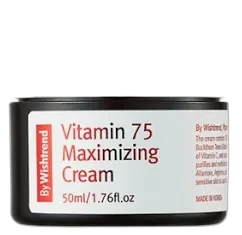
Vitamin 75 Maximizing Cream
Vitamin C System Match
 Verified reviewer
Pros & cons.
- +75% sea buckthorn water replaces the entire water phase
- +Shares the same antioxidant base as the brand's vitamin C serum
- +Designed as a system pairing for genuine routine cohesion
- +Lightweight satin finish absorbs cleanly without residue
- +Sunflower and macadamia oils provide vitamin E and barrier lipids
- +Panthenol and allantoin add soothing humectant support
- +Pregnancy-safe option for pairing with vitamin C
- +Years of consistent community results validate the system approach
- −Lemon peel oil is a sensitization and photosensitivity risk
- −Not fungal-acne safe due to multiple plant oils
- −Faint citrus natural scent isn't universally loved
- −Too lightweight to be a sole moisturizer for very dry winter skin
- −Glass jar packaging exposes the formula to air with each use
The full review.
Most skincare brands sell a flagship serum and leave users to choose a moisturizer. Wishtrend uses a different strategy with the Vitamin 75 Maximizing Cream. Instead of a generic moisturizer for the Pure Vitamin C 21.5% Advanced Serum, the brand uses the same sea buckthorn ‘vitamin tree’ hydrosol as the serum’s base. Hippophae rhamnoides water makes up 75% of this cream by volume. The formula contains essentially no plain water. The polyphenol, carotenoid, and trace vitamin C-and-E content from the sea buckthorn hydrosol stays throughout the moisturizer instead of sitting on top of a glycerin-water emulsion. This is one of the more thoughtful K-beauty product pairings on the market.
The formulation logic works as a standalone moisturizer, too. Sunflower seed oil is a primary lipid component high on the INCI; it is linoleic-acid-rich, lightweight, and provides vitamin E. Macadamia seed oil adds occlusive richness with a fatty acid profile close to human sebum. Caprylic/capric triglyceride and a small amount of dimethicone smooth the texture. Beeswax provides subtle physical occlusion. Panthenol, allantoin, betaine, and arginine act as the soothing-and-humectant supporting cast. The cream feels satin and slightly dewy on the face, absorbing cleanly without an obvious film. This texture works well after a high-strength vitamin C serum, providing barrier-supporting moisturization without competing with the active.
The system works as marketed when used as intended: vitamin C serum on dry skin in the morning, this cream layered over, then sunscreen. Most users see a subtle radiance shift within the first week and a clearer glow after four to six weeks of consistent use. The serum does most of the brightening and pigmentation work, while the cream provides the moisturized, intact-barrier canvas the serum needs. Over time, the routine compounds and evens skin tone faster than either product alone. Reviewers using both products consistently report better results than those using the serum with a generic moisturizer, likely due to the supporting antioxidant base.
The limitations are clear. The lemon peel oil at the bottom of the INCI is the main issue. Citrus essential oils can cause photosensitivity or irritation for sensitive skin and offer no functional benefit here, as the formula already has a high antioxidant load. The concentration is low enough that most users tolerate it, but those with rosacea or essential oil sensitivity should patch test or use the cream at night only. This choice prevents a clean recommendation for sensitive skin.
The second limitation is fungal-acne incompatibility. Sunflower oil, macadamia oil, palm oil, and palm kernel oil are all Malassezia-friendly, so this cream is not safe for users with confirmed fungal acne. This is a shame because the brand’s vitamin C serum is fungal-acne safe. Many users choose By Wishtrend for that reason, but the cream breaks the system for them and requires a different moisturizer.
Other constraints are minor. The 50ml jar is medium-sized for daily use and lasts six to eight weeks with twice-daily application on the face and neck. The satin-light texture suits combination and normal skin but lacks the occlusion needed for very dry winter skin without a heavier layer on top. The faint lemon-and-cream smell may not appeal to everyone. Finally, the glass jar is heavier than plastic for travel and exposes the contents to more air than an airless pump.
This cream is designed for combination, normal, and resilient dry skin seeking a brightening, antioxidant moisturizer to pair with the brand’s flagship vitamin C serum. It is not for sensitive skin, fungal-acne-prone skin, or those wary of citrus essential oils. For its target audience, the sea buckthorn base is a substantive choice, the system play is real, and the cumulative results over months of use are visibly better than the serum alone. It earns its place in that specific routine.
Formula
Ingredient analysis.
Full INCI list · pH 5.5
Hippophae Rhamnoides (Sea Buckthorn) Water (75%), Butylene Glycol, Helianthus Annuus (Sunflower) Seed Oil, Glycerin, Cetearyl Alcohol, Cetearyl Olivate, Sorbitan Olivate, Hydroxyethyl Acrylate/Sodium Acryloyldimethyl Taurate Copolymer, Betaine, Caprylic/Capric Triglyceride, 1,2-Hexanediol, Panthenol, Macadamia Ternifolia Seed Oil, Elaeis Guineensis (Palm) Oil, Elaeis Guineensis (Palm) Kernel Oil, Dimethicone, Beeswax, Allantoin, Arginine, Xanthan Gum, Carbomer, Ethylhexylglycerin, Ethyl Hexanediol, Citrus Medica Limonum (Lemon) Peel Oil
Skin match.
The science.
The Science
Sea buckthorn (Hippophae rhamnoides) is one of the more nutritionally dense plant species in cosmetics, with documented vitamin C, vitamin E, carotenoid and flavonoid content in both the berry and the leaf. The hydrosol — the water phase produced during steam distillation of the plant — captures the water-soluble fraction of these nutrients, including modest amounts of vitamin C and various polyphenols. A 2017 review in the Journal of Ethnopharmacology summarized the topical and oral evidence for sea buckthorn in dermatological applications and noted antioxidant, anti-inflammatory and wound-healing effects in both in vitro and small clinical studies. The 75% concentration in this cream is unusually high for a sea buckthorn-based moisturizer — most products in the category use sea buckthorn extract or oil as a minor ingredient rather than replacing the water phase with the hydrosol. Sunflower seed oil is dominated by linoleic acid (60-70% of total fatty acid content), which has an established role in stratum corneum lipid synthesis and barrier repair, and its tocopherol content provides a quiet vitamin E contribution. Macadamia seed oil is high in palmitoleic acid (omega-7), which has a fatty acid profile unusually close to human sebum and contributes to skin compatibility and barrier integration. Panthenol's role in hydration and barrier function is one of the most replicated findings in cosmetic dermatology. Allantoin has documented soothing and keratolytic activity at low concentrations. Beeswax provides modest physical occlusion and contributes to the cream's texture. The combination matters because the cream is designed as a system partner for the brand's high-strength L-ascorbic acid serum: pure vitamin C is a notoriously irritating active, and pairing it with a moisturizer whose base shares the antioxidant logic of the serum creates a more cohesive routine than layering a generic emulsion on top would. The lemon peel oil at the back of the INCI is included as a natural antioxidant flavor note, though its inclusion does carry some sensitivity and photosensitization risk for susceptible users — a limitation worth noting against the otherwise thoughtful formulation logic.
References
- Sea buckthorn in dermatology: a review of pharmacological and clinical evidence — Journal of Ethnopharmacology (2017)
Dermatologist Perspective
Dermatologists generally view sea buckthorn as a useful supporting ingredient with reasonable evidence for antioxidant and barrier-supportive effects, particularly when used at meaningful concentrations rather than as a token addition. Board-certified dermatologists frequently recommend pairing high-strength vitamin C serums with moisturizers that contain antioxidants and barrier-supporting lipids, which is the role this cream plays in the brand's system. The lemon peel oil in the formula is a point of dermatological caution — citrus essential oils are known photosensitizers and contact sensitizers in a small percentage of users, and dermatologists generally recommend avoiding them in leave-on daytime products for patients with sensitive skin or rosacea. Patients should patch test before facial use and consider using the cream at night only if they have any history of essential oil sensitivity. The product is generally considered appropriate for use during pregnancy.
Where it fits in your routine.
Apply after cleansing, toner, and serums. Pat a small amount into the face and neck. Use sunscreen in the morning; lemon peel oil makes daytime sun protection essential. In the evening, use this as the final step or layer it under a thicker night cream if you have very dry skin. It pairs with the brand's Pure Vitamin C 21.5% Advanced Serum applied first.
At around twenty-seven dollars for 50ml, this sits in the K-beauty mid-range for moisturizers — comparable to the brand's other moisturizer SKUs and slightly above basic ceramide creams. The single 50ml size is the only option, and a jar reasonably lasts six to eight weeks with twice-daily face and neck application. The price is justified by the unusually high sea buckthorn water concentration and by the system-pairing logic with the brand's vitamin C serum — buying both products together genuinely produces better results than buying the serum alone with a generic moisturizer. Cheaper sea buckthorn moisturizers exist, but most use the extract or oil at trace levels rather than replacing the water phase with the hydrosol. This is the version worth paying for if you are committing to the brand's vitamin C system.
Combination, normal, and resilient dry skin types seeking a brightening, antioxidant moisturizer to pair with the brand's vitamin C serum. Users following the By Wishtrend vitamin C system who want the matching cream. Anyone wanting a sea buckthorn-rich moisturizer at an honest concentration.
Sensitive, rosacea-adjacent, or essential-oil-sensitive skin that reacts to citrus oils. Fungal-acne-prone users who cannot tolerate plant oils. Vegan shoppers avoiding beeswax. Users with very dry winter skin who need a thick occlusive cream as their primary moisturizer.
Product details.
Lightweight cream that melts into a satin, slightly dewy finish.
Faint natural citrus from the lemon peel oil; no added synthetic fragrance.
Frosted glass jar with screw cap.
Most users see a subtle glow shift in week one and immediate hydration. The faint lemon scent comes from the essential oil and fades within minutes. Users with sensitive skin should patch test before facial use due to the citrus oil.
50ml lasts about 6-8 weeks with twice-daily face and neck use.
12 months
All Year
The backstory.
By Wishtrend launched the Vitamin 75 Maximizing Cream in 2017 as the moisturizer counterpart to the Pure Vitamin C 21.5% Advanced Serum. The decision to share the sea buckthorn water base across both products was a deliberate system play — the cream extends the antioxidant logic of the serum into a leave-on moisturizer step.
About By Wishtrend
Established Brand (5–20 years)By Wishtrend launched in 2013 as Korean retailer Wishtrend's in-house brand. The Vitamin 75 Maximizing Cream is the moisturizer counterpart to the brand's Pure Vitamin C 21.5% Advanced Serum, sharing the same sea buckthorn 'vitamin tree' base.
Common myths.
Vitamin creams are regular moisturizers with marketing.
Most are. This one isn't — replacing 75% of the water phase with sea buckthorn hydrosol is a substantive formulation choice that delivers a real, if modest, additional polyphenol load alongside the conventional moisturizer base.
If a moisturizer has plant oils, it must be heavy.
Heaviness depends on oil types, concentrations, and other formula ingredients. The sunflower and macadamia oils here provide a satin finish on normal-to-dry skin without an occlusive feel. Texture is a formulation choice, not an inherent property of plant oils.
FAQ.
Is this the same as the Pure Vitamin C 21.5% Advanced Serum?
No — this is a moisturizer, not a serum, and lacks pure ascorbic acid. It is the cream counterpart to the serum, uses the same sea buckthorn water base, and works as a system when used together. The serum delivers high-strength vitamin C; the cream delivers moisturizer-grade hydration and an antioxidant base.
Why is there lemon peel oil in the formula?
Lemon peel oil adds natural antioxidants and a faint citrus scent. The concentration is low and sits at the bottom of the INCI, but citrus essential oils can cause photosensitivity and irritation for sensitive skin. Use this cream only at night if you are concerned, or skip it if you have a history of citrus oil sensitivity.
Is it fungal acne safe?
No — the formula uses sunflower oil, macadamia oil and palm oil-derived components that feed Malassezia. Fungal-acne-prone users need different products.
Can I use it morning and night?
Use this twice daily. Pair it with the brand's vitamin C serum in the morning and a treatment serum at night. Always finish with daily SPF in the morning; the lemon peel oil makes daytime sun protection important.
Is it moisturizing enough for very dry skin?
It works for normal-to-dry skin, but very dry winter skin needs a thicker occlusive on top. The satin-light texture appeals to combination skin but limits its use for the driest types.
Is it safe in pregnancy?
Yes — the formula lacks retinoids, salicylic acid, or other common pregnancy-restricted ingredients. The lemon peel oil concentration is very low.
What the community says.
"genuinely brightening over weeks"
"lightweight despite the oils"
"pairs beautifully with the C serum"
"noticeable glow in first week"
"lemon peel oil is a sensitivity risk"
"not fungal acne safe"
"faint citrus scent isn't to everyone's taste"
"50ml runs out fast"