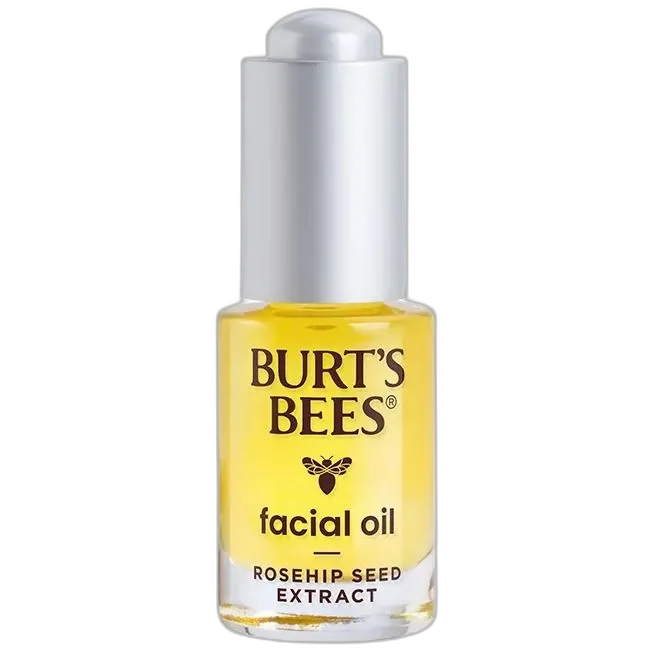
Complete Nourishment Facial Oil
Budget Botanical Oil
 Verified reviewer
Pros & cons.
- +Rosehip-first formula puts the most potent botanical ingredient at the forefront
- +Multi-pathway antioxidant system with vitamins A, C, and E plus beta-carotene
- +Genuinely lightweight texture absorbs quickly without heavy greasy residue
- +Outstanding value at roughly $15 compared to luxury oils with similar ingredients
- +100% natural origin formula with a clean, transparent ingredient list
- +Evening primrose and borage oils provide gamma-linolenic acid for barrier support
- +Oil-soluble vitamin forms dissolve seamlessly into the lipid base for better delivery
- −Natural fragrance with limonene and linalool limits suitability for sensitive skin
- −Small 0.51 fl oz bottle means higher per-ounce cost than the sticker price suggests
- −Wheat germ and soybean oils increase comedogenicity risk for acne-prone users
- −Retinyl palmitate is too gentle to deliver significant clinical anti-aging results
- −Not rich enough for severely dry or eczema-prone skin in harsh winter conditions
The full review.
Somewhere around 2015, facial oils went from niche granola territory to full-blown luxury obsession. Suddenly every beauty brand had a golden elixir in an apothecary bottle, priced like it contained liquid saffron and the tears of a unicorn. Burt’s Bees, a company that was making beeswax candles in rural Maine before most of those brands existed, responded with characteristic understatement: a small glass bottle, a dropper, and a formula built on rosehip seed extract that quietly does what many of its flashier competitors only promise.
The Complete Nourishment Facial Oil leads with Rosa Canina Seed Extract — rosehip — and that ordering matters. Unlike oils that bury their star ingredients behind cheaper carrier oils, this formula puts its most potent botanical up front. Rosehip seed extract is one of the few plant oils with naturally occurring trans-retinoic acid and a nearly ideal ratio of omega-3 to omega-6 fatty acids. It is, in the quiet parlance of dermatological research, the real deal for skin rejuvenation.
Backing up the rosehip is a supporting cast that reads like a botanical pharmacist’s wish list. Jojoba oil, which technically is a wax ester that mimics human sebum so closely that the skin barely registers it as foreign. Evening primrose and borage oils, both rich in gamma-linolenic acid, an omega-6 that most Western diets lack and that skin desperately needs for barrier integrity and anti-inflammatory function. Wheat germ oil, one of the richest natural sources of vitamin E. Calendula flower oil, used for centuries in wound healing and now validated by modern research for its anti-inflammatory triterpenoids.
Then there are the sneaky-smart additions that elevate this from a pleasant oil blend to something with genuine anti-aging architecture. Retinyl palmitate and ascorbyl palmitate — oil-soluble forms of vitamins A and C, respectively — dissolve seamlessly into this lipid base in a way their water-soluble counterparts never could. Beta-carotene provides provitamin A backup. Green tea extract brings polyphenol antioxidant coverage. Together, these ingredients create a multi-pathway antioxidant defense system that works while you sleep and protects while you go about your day.
The texture is where this oil earns its daily-use credentials. It is genuinely lightweight — not the kind of lightweight that marketing teams claim while your face shines like a glazed donut, but actually, measurably light. Three to five drops spread across the face and absorb within two to three minutes, leaving skin that feels like it has been fed from the inside rather than coated from the outside. There is a soft, dewy finish that looks like good skin rather than applied product, which is precisely what a facial oil should deliver.
The scent is subtle and herbal — a consequence of the natural fragrance and the botanical ingredients themselves. It is pleasant enough, with quiet notes of rosehip and calendula that fade within minutes. However, this is where the formula’s one meaningful compromise lives. The presence of natural fragrance, along with limonene and linalool, means this oil carries contact allergen potential that truly sensitive skin should take seriously. Natural origin does not equal hypoallergenic, and Burt’s Bees, to their credit, lists these components transparently on the label rather than hiding them under a generic fragrance umbrella.
Performance-wise, this oil delivers exactly what the ingredient list promises: hydration, nourishment, and gentle rejuvenation. After two to three weeks of consistent use, dry patches soften, skin develops a warmer undertone from the beta-carotene, and the overall texture improves in a way that suggests genuine barrier repair rather than superficial smoothing. Fine lines look diminished under that dewy finish, though the anti-aging effects from the retinyl palmitate are subtle and cumulative — this is not a clinical retinoid and should not be expected to perform like one.
The honest limitations are worth naming. At 0.51 fluid ounces, the bottle is small, and while a little goes a long way, the per-ounce cost is higher than the sticker price suggests. The wheat germ and soybean oils in the formula bump up the comedogenicity risk for acne-prone skin — this oil is best suited for dry to normal skin types rather than those battling breakouts. And the natural fragrance, while lovely, is a missed opportunity for a brand that could easily reformulate without it and open this product up to the sensitive-skin market that would otherwise love everything else about it.
At roughly fifteen dollars, though, this oil represents remarkable value. The rosehip-forward formula, the multi-antioxidant architecture, the genuinely pleasant texture — these are qualities you typically find in oils priced three to five times higher. Burt’s Bees has been doing this for four decades, and it shows in the confident simplicity of this formulation. No unnecessary emulsifiers, no trendy peptide complex, no twenty-ingredient label padding. Just well-chosen botanicals in thoughtful proportions, doing exactly what facial oils are supposed to do.
This is the kind of product that does not generate breathless unboxing videos or sell out in forty-five seconds on TikTok Shop. It sits on the shelf at your local drugstore, unassuming and unpretentious, waiting for someone who cares more about what is inside the bottle than what is on the Instagram grid. And for that person, it delivers beautifully.
Formula
Ingredient analysis.
Full INCI list
Rosa Canina Seed Extract, Simmondsia Chinensis (Jojoba) Seed Oil, Fragrance (Natural Fragrance), Oenothera Biennis (Evening Primrose) Seed Extract, Borago Officinalis Seed Oil, Triticum Vulgare (Wheat) Germ Oil, Corylus Avellana (Hazel) Seed Oil, Tocopherol, Calendula Officinalis Flower Oil, Camellia Sinensis Leaf Extract, Helianthus Annuus (Sunflower) Seed Oil, Rosmarinus Officinalis (Rosemary) Leaf Extract, Beta-Carotene, Canola Oil, Glycine Soja (Soybean) Oil, Ascorbyl Palmitate, Retinyl Palmitate, Limonene, Linalool
Skin match.
The science.
The Science
Research supports this rosehip-first oil formulation. Rosehip seed oil contains natural trans-retinoic acid, the same active metabolite found in prescription tretinoin, though at lower concentrations than pharmaceutical preparations. A 2015 study in the International Journal of Molecular Sciences documented rosehip oil's antioxidant, anti-inflammatory, and anti-aging properties. It noted that high levels of polyunsaturated fatty acids and phenolic compounds help restore the skin barrier and protect against photoaging.
The gamma-linolenic acid (GLA) in both evening primrose and borage oils supports skin barrier function. GLA acts as a precursor to dihomo-gamma-linolenic acid, which produces anti-inflammatory eicosanoids. A 2017 systematic review in the International Journal of Cosmetic Science confirmed that topical GLA-rich oils improve skin barrier function and reduce transepidermal water loss. This mechanism drives the hydration improvements users report with this product.
Tocopherol, ascorbyl palmitate, and beta-carotene form a synergistic antioxidant network. Tocopherol (vitamin E) regenerates via ascorbic acid after neutralizing free radicals, a cycle that extends the antioxidant protection of both vitamins. Beta-carotene adds singlet oxygen quenching to complement the free radical scavenging of the other antioxidants. Photobiology research shows this multi-antioxidant approach provides superior photoprotection compared to any single antioxidant alone.
The jojoba oil component is notable. Its wax ester structure mirrors human sebum composition. Research in the International Journal of Cosmetic Science shows this leads to better skin penetration and sebum regulation than conventional triglyceride-based carrier oils. This biomimetic quality explains why the oil absorbs quickly despite its botanical complexity.
Dermatologist Perspective
Dermatologists often recommend rosehip-based oils for patients wanting a natural way to address dryness and early aging. The rosehip, jojoba, and evening primrose combination provides an essential fatty acid profile that supports barrier repair—a cornerstone of dermatological treatment for dry, compromised skin. Board-certified dermatologists note that while retinyl palmitate is the least potent over-the-counter retinoid, its presence in an oil base offers benefits for photodamaged skin without the irritation risk of stronger retinoids. The main clinical concern involves natural fragrance allergens (limonene, linalool). Dermatologists advise patch-testing before full facial application, especially for patients with contact dermatitis or atopic skin.
Where it fits in your routine.
Press 3-5 drops into clean palms and onto slightly damp skin after water-based serums but before moisturizer. Use morning and evening. In the morning, always apply SPF 30 or higher because retinyl palmitate increases mild photosensitivity. For extra nourishment, mix 2-3 drops into your night cream. Apply to dry cuticles, elbows, or rough patches as a targeted treatment. Avoid the immediate eye area and store in a cool, dark place to preserve the antioxidant actives.
At about $15 for 0.51 fluid ounces, this oil is affordable for the facial oil market. The $29 per-ounce cost competes well with its rosehip-first formulation and multi-antioxidant blend. Luxury facial oils with similar rosehip and botanical ingredient lists usually cost $40 to $80 per one-ounce bottle. Burt's Bees' four-decade track record and dermatologist-recommended status justify this price — you pay for proven botanical science from a legacy brand, not trend-driven markup. The small bottle size is the only value consideration, requiring a repurchase every two to three months.
Dry to normal skin types seeking affordable, natural-origin facial oils with anti-aging ingredients. It works well for skincare minimalists wanting one product to hydrate, nourish, and provide antioxidant protection.
Acne-prone or oily skin types should avoid the comedogenic wheat germ and soybean oils in this blend. People with fragrance sensitivities or contact dermatitis history should patch-test first because of the limonene and linalool content. For serious anti-aging results, a dedicated retinol or prescription retinoid works better than retinyl palmitate.
Product details.
A natural fragrance blend gives a subtle herbal-floral scent with rosehip and calendula notes.
Small 0.51 fl oz glass bottle with dropper applicator for controlled dispensing
The first use provides a soft golden glow and immediate hydration. The oil feels silky and absorbs in minutes. No adjustment period is required; results accumulate over time instead of being transformative on day one.
2-3 months with twice-daily use of 3-5 drops per application
12 months
fall winter
The backstory.
Born from Burt's Bees' four-decade commitment to nature-based skincare, this facial oil was introduced in 2016 as part of their Complete Nourishment anti-aging line. It embodies the brand's philosophy that effective skincare doesn't require synthetic ingredients, packing clinically studied botanicals into a formula that rivals oils costing three to four times as much.
About Burt's Bees
Legacy Brand (20+ years)Burt's Bees started in Maine in 1984 and is now one of America's most recognized natural personal care brands. Clorox acquired Burt's Bees in 2007. The brand is the number-one dermatologist-recommended natural skincare line, using 100% natural origin and dermatologist-tested products.
Common myths.
Facial oils will make your skin oily and cause breakouts.
This oil uses a jojoba base that mimics natural sebum to help regulate oil production instead of increasing it. People prone to fungal acne should use this botanical oil blend with caution.
Natural fragrance is always safe for sensitive skin.
This formula contains limonene and linalool. These naturally derived fragrance components still trigger contact dermatitis in sensitized individuals.
FAQ.
Is Burt's Bees Complete Nourishment Facial Oil good for wrinkles?
This oil contains retinyl palmitate, a gentle vitamin A derivative, and rosehip seed extract, which naturally contains trans-retinoic acid. Together they provide mild anti-aging support. Clinical studies show this oil reduces the appearance of fine lines over time. A prescription retinoid works better for deep wrinkles, but this is a solid gentle option.
Can I use Burt's Bees facial oil under makeup?
Yes — the lightweight, fast-absorbing formula works well under makeup if you wait 2-3 minutes to absorb. Use 2-3 drops and press into skin instead of rubbing. It creates a smooth, hydrated canvas that helps foundation apply evenly, especially on dry or flaky patches.
Is this facial oil safe for acne-prone skin?
The rosehip and jojoba base is non-comedogenic, but wheat germ oil and soybean oil in the formula rank higher on the comedogenicity scale. This oil may not work well if you are actively breaking out. Acne-prone skin needs simpler ingredient lists focused on linoleic-acid-rich oils.
How long does Burt's Bees facial oil last?
The 0.51 fl oz bottle lasts 2-3 months if you use 3-5 drops twice daily. The dropper design controls dispensing to prevent waste. Store away from direct sunlight and heat to preserve the antioxidant actives.
Does Burt's Bees Complete Nourishment Facial Oil contain retinol?
It contains retinyl palmitate, a gentler vitamin A ester rather than retinol. Retinyl palmitate converts through two steps to become active retinoic acid in the skin. This makes it milder than retinol or prescription retinoids, but less potent for anti-aging.
Community
What the community says.
"Absorbs quickly without greasy residue"
"Delivers noticeable glow and softness"
"Affordable compared to luxury facial oils"
"Pleasant natural scent"
"Small amount goes a long way"
"Some find it doesn't absorb fully overnight"
"Natural fragrance may irritate very sensitive skin"
"Small bottle size for the price per ounce"
"Not rich enough for extremely dry skin in winter"
People also looked at.