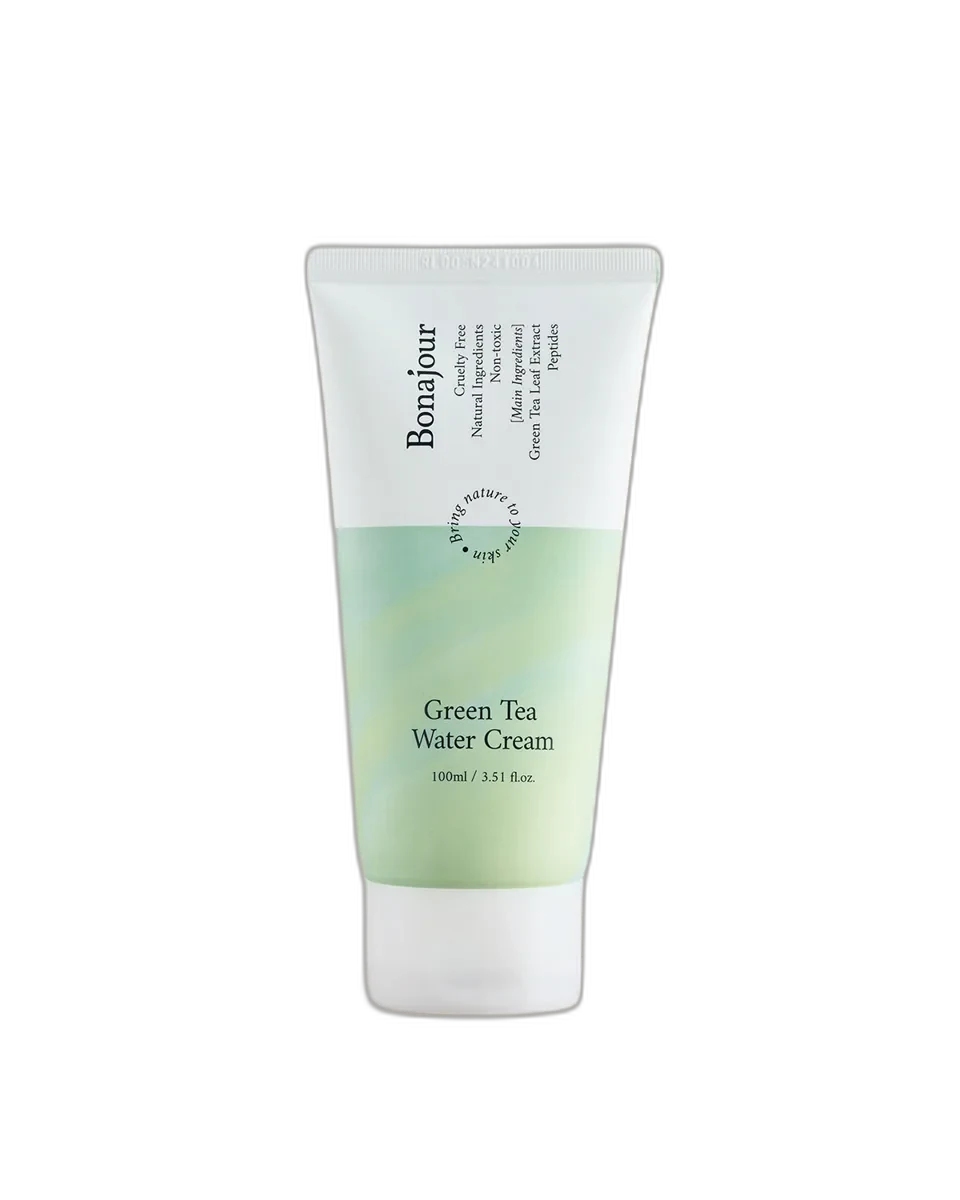
Green Tea Water Bomb Cream
Sensitive-Skin MVP
 Verified reviewer
Pros & cons.
- +Fragrance-free, alcohol-free, vegan-certified formula
- +Meaningful Camellia sinensis dose at 4th position on INCI
- +~2% niacinamide for barrier and brightness support
- +Genuine peptide complex including copper tripeptide-1
- +Polyglutamic acid plus sodium hyaluronate two-tier humectant system
- +Genuinely cooling, fast-absorbing gel-cream texture
- +Excellent suitability across almost all skin types
- −Not rich enough alone for very dry winter skin
- −Contains cetearyl alcohol — not fungal-acne safe
- −Jar packaging is not airless
- −Only one size available
- −Peptide concentrations are modest, not a primary anti-aging driver
The full review.
Read the Bonajour Green Tea Water Bomb Cream marketing copy and you’d expect a simple, plant-forward gel-cream built around the ubiquitous K-beauty promise of green tea antioxidants. Read the ingredient list and you find something genuinely more interesting. About twelve lines into the INCI, you hit Copper Tripeptide-1. One line later, SH-Polypeptide-7. Then SH-Decapeptide-7, SH-Octapeptide-4, SH-Oligopeptide-9, SH-Pentapeptide-19. This is a six-peptide signaling complex — a biotech backbone that almost no ‘green tea cream’ at this price point bothers to include — layered into a gel-cream base that also features niacinamide at approximately 2%, sodium hyaluronate and polyglutamic acid as a two-tier humectant system, Camellia sinensis leaf extract at a meaningful fourth-position dose, panthenol, licorice root, and allantoin for soothing. The whole formula is fragrance-free, alcohol-free, and vegan-certified. For a product that looks like a category entry, this is a surprisingly thoughtful piece of formulation work, and once you notice it, the cream’s long-running best-seller status starts to make a lot more sense.
The experience on skin is the other half of why this product has held on through so many trend cycles. Straight out of the jar, the gel-cream is genuinely cool to the touch — one of the few ‘water bomb’ textures that actually delivers on the name — and it melts into skin within seconds without the tacky film that plagues many humectant-heavy Korean moisturizers. There’s no fragrance, no stinging, no adjustment period, no purging. It simply absorbs, leaves behind a fresh dewy finish, and gets out of the way. Layered under sunscreen or makeup, it sits invisibly. Layered over a treatment serum, it seals the hydration in without blunting the active. For combination and oily skin in warm months, it’s exactly the level of moisture most people want. For dry skin in winter, it’s a pleasant base that you’ll want to top with a richer occlusive at night, and Bonajour actually makes several heavier options in the same line if that’s the direction you want to go.
Where this cream earns its reputation most clearly is with sensitive and reactive skin. The ingredient profile is one of the safer gel-cream formulations on the K-beauty market: no fragrance, no alcohol, a soothing panthenol-plus-allantoin-plus-licorice-root stack, and a consistent pH that sits well with compromised barriers. Users managing rosacea-adjacent sensitivity, post-procedure skin, or general irritation tend to gravitate to it precisely because it delivers substantial hydration without introducing new variables their skin has to tolerate. Combined with the niacinamide and the modest peptide content, it functions as a genuine barrier-support moisturizer in a category usually dominated by formulas chasing a cleaner label than a cleaner effect.
The limitations are fair to mention. The cream isn’t going to deliver dramatic anti-aging results — the peptide levels, while real, are modest enough that you shouldn’t expect this to replace a retinoid or a dedicated peptide serum. It’s not fungal-acne safe due to cetearyl alcohol and a few other fatty alcohols, which disqualifies it for users actively managing malassezia-related breakouts. The jar packaging, while attractive and sturdy, isn’t airless — not a huge issue for this particular formula since none of the ingredients are especially photosensitive, but peptide stability would be slightly better in a pump. And for very dry or very mature skin types, it simply isn’t heavy enough to be a full anti-dryness solution in winter, which is a feature of the texture rather than a flaw but worth knowing going in.
Value is where this cream quietly pulls ahead of its competition. At roughly $22 for 100ml — a generous size for K-beauty moisturizers — the cost per month is low, the formulation quality is high, and you’re getting a vegan certification and a modern peptide complex that competitors typically charge significantly more for. Bonajour has been selling this exact formula since 2017, which puts it well past the reformulation danger zone and into the stable, iterated territory where you can trust that the version you buy today is the version people have been praising for years. As a general recommendation for ‘a K-beauty gel-cream for almost anyone,’ this is a genuinely easy pick. It won’t overhaul your routine, but it’s the kind of reliable, well-built product that becomes a quiet staple and earns repurchases long after the more exciting launches have faded.
Ingredient analysis.
Full INCI list
Water, Butylene Glycol, Caprylic/Capric Triglyceride, Camellia Sinensis Leaf Extract, Squalane, Niacinamide, Glycerin, Dicaprylyl Carbonate, Sodium Hyaluronate, Polyglutamic Acid, Copper Tripeptide-1, SH-Polypeptide-7, SH-Decapeptide-7, SH-Octapeptide-4, SH-Oligopeptide-9, SH-Pentapeptide-19, Glyceryl Stearate, Adansonia Digitata Seed Oil, Allantoin, Dipotassium Glycyrrhizate, Panthenol, Zanthoxylum Piperitum Fruit Extract, Pulsatilla Koreana Extract, Usnea Barbata (Lichen) Extract, Cetearyl Alcohol, 1,2-Hexanediol, Adenosine, Carbomer, Arginine, Disodium EDTA, Propanediol, Caprylhydroxamic Acid, Sodium Polyacryloyldimethyl Taurate, Dicaprylyl Ether, Pentylene Glycol, Polyglyceryl-10 Dilaurate, Caprylyl Glycol, Tocopherol
Skin match.
The science.
The Science
The antioxidant profile of this cream is among the best-documented in plant-derived skincare. Camellia sinensis leaf extract delivers polyphenols—specifically epigallocatechin gallate (EGCG)—which researchers have studied extensively for topical antioxidant activity. A review in Archives of Dermatological Research (Katiyar et al., 2001) summarized how topical green tea polyphenols reduce UV-induced oxidative stress and inflammation markers in human skin. Subsequent research shows EGCG also has anti-inflammatory and modest photoprotective effects.
Niacinamide, at approximately 2% based on its INCI position, has extensive evidence supporting its role in barrier ceramide synthesis, sebum modulation, and mild pigmentation reduction (Hakozaki et al., British Journal of Dermatology, 2002). At this concentration in a daily moisturizer, it provides measurable background support instead of acting as a single hero active.
The two-layer humectant system pairs sodium hyaluronate—the best-studied humectant in cosmetic chemistry—with polyglutamic acid. Polyglutamic acid is a newer film-forming humectant that manufacturer and some peer-reviewed research shows creates a water-retaining surface film. While the independent evidence base for polyglutamic acid is still maturing, early studies suggest it reduces transepidermal water loss when layered over or combined with HA.
Copper Tripeptide-1 (GHK-Cu) anchors the peptide section, possessing one of the strongest evidence bases for any cosmetic peptide. Research (Pickart & Margolina, International Journal of Molecular Sciences, 2018) documented its roles in wound healing, collagen synthesis signaling, and antioxidant activity. At the modest concentration in this gel-cream, it provides supportive rather than dramatic anti-aging effects.
References
- Green tea polyphenol (-)-epigallocatechin-3-gallate treatment of human skin inhibits ultraviolet radiation-induced oxidative stress — Carcinogenesis (2001)
- The effect of niacinamide on reducing cutaneous pigmentation and suppression of melanosome transfer — British Journal of Dermatology (2002)
- Regenerative and Protective Actions of the GHK-Cu Peptide — International Journal of Molecular Sciences (2018)
Dermatologist Perspective
Dermatologists generally recommend this lightweight, fragrance-free gel-cream moisturizer as an excellent baseline for many patients, including those with oily or combination skin in warm climates, or sensitive and reactive skin needing gentle, effective daily hydration. Board-certified dermatologists note that the combination of approximately 2% niacinamide, a well-dosed green tea antioxidant, and a modern humectant system offers meaningful supportive benefits. This formulation is unlikely to trigger reactions common with fragranced or alcohol-heavy alternatives. Dermatologists view the modest peptide content, including copper tripeptide-1, positively but not as a primary anti-aging tool. For patients targeting wrinkles or collagen concerns, dermatologists typically recommend pairing this cream with an evidence-based retinoid or peptide serum. Overall, dermatologists feel comfortable recommending this moisturizer broadly.
Where it fits in your routine.
Cleanse and tone as usual, then apply treatment serums. Use a clean fingertip or spatula to scoop a pea-to-dime-sized amount from the jar. Warm it briefly between your hands and press it evenly across the face and neck. Let it absorb for about a minute before applying sunscreen in the morning or more layers at night. Use once or twice daily. For very dry skin or winter use, follow with a thick occlusive cream at night. Keep the jar closed and avoid direct sunlight.
At roughly $22 for a 100ml jar, this is a top value in the K-beauty gel-cream category. The monthly cost is lower than comparable peptide moisturizers from Western brands. The ingredient quality, vegan certification, and formulation depth make the price feel low. Bonajour has been on the market since 2013 and this specific product has been in continuous production since 2017, so you buy a stable, iterated formula instead of an unproven launch. For everyday use, this is a value standout where the price-to-quality ratio beats much more expensive alternatives.
Anyone seeking a reliable, fragrance-free daily gel-cream moisturizer—especially those with combination, oily, normal, or sensitive skin. Vegan beauty shoppers wanting a well-formulated option. People building a K-beauty routine who want a versatile, no-nonsense staple at a reasonable price.
Dry or mature skin in winter needs a thicker top layer. People with active fungal acne should avoid this because the formula contains cetearyl alcohol. This is not a primary anti-aging hero; the peptide levels are modest.
Product details.
Cool, jelly-like gel-cream melts into skin within seconds. It feels slightly cushioned and has no tackiness after absorption.
Very mild natural green-tea aroma; no added fragrance.
Squat green frosted plastic jar with a matching lid. It is not airless, but it is sturdy and typical for this price.
The first application feels cooling and refreshing. The gel-cream is cool to the touch and provides the 'water bomb' sensation the name implies. It absorbs fast without tacky residue. It causes no stinging or adjustment period. First-time users describe it as a light essence that turns into a barely-there veil on skin.
A 100ml jar lasts 3-4 months with twice-daily face and neck application.
12 months
spring summer
The backstory.
Bonajour launched the Green Tea Water Bomb Cream in 2017 as part of its commitment to vegan, naturally-derived skincare. It quickly became the brand's best-seller and has remained so for years, largely through word-of-mouth in K-beauty communities rather than viral marketing pushes. It's one of the Korean indie scene's quietly durable hits.
About Bonajour
Emerging Brand (2–5 years)Bonajour is a Korean indie brand founded in 2013. It focuses on vegan, naturally-derived formulations. The Green Tea Water Bomb is the brand's flagship best-seller and has a strong K-beauty community following, but the brand has limited independent clinical validation outside Korea.
Common myths.
Green tea creams are marketing names with no real benefit.
This formula lists Camellia sinensis leaf extract as the fourth ingredient. This dose provides polyphenol content alongside the humectant and peptide system. The cream's soothing and antioxidant benefits are real.
Gel-cream moisturizers are only for oily skin.
Gel-creams work best for oily and combination skin, but modern formulations like this one suit almost all skin types in warmer months. Dry skin users can layer a thicker occlusive on top at night instead of avoiding gel-creams entirely.
FAQ.
Is this cream good for oily skin?
Yes — this is a top gel-cream option for oily and combination skin. The niacinamide modulates sebum, the texture absorbs fast without feeling heavy, and the fragrance-free formulation does not trigger shine-prone skin. It works well for warmer months.
Is it hydrating enough for dry skin?
Use this for normal-to-mildly-dry skin in spring and summer. For very dry or mature skin — especially in winter — layer a thicker occlusive cream on top at night. It works as an excellent base hydrator but is not a heavy-duty anti-dryness cream.
What makes this different from other green tea creams?
Many 'green tea' Korean creams use the ingredient for marketing instead of meaningful levels. This one lists Camellia sinensis as the fourth ingredient, uses a real peptide complex (including copper tripeptide-1), and pairs sodium hyaluronate with polyglutamic acid for a two-layer humectant effect. The formula is more sophisticated than its name suggests.
Is it safe for sensitive skin?
Yes — the formula is fragrance-free, alcohol-free, and uses soothing ingredients like panthenol, allantoin, and licorice root. Most sensitive-skin users tolerate it well, making it Bonajour's top seller.
Can I use it under makeup?
Yes — the gel-cream absorbs fast and leaves a smooth, non-greasy finish. It layers well under sunscreen and makeup. Wait 1-2 minutes before applying your next step.
Is it fungal acne safe?
Not strictly — the formula contains cetearyl alcohol and other fatty alcohols that feed malassezia in users with high fungal-acne prone skin. If you manage active fungal acne, patch-test first or use a dedicated fungal-acne-safe option.
Does it have copper peptides?
Yes — copper tripeptide-1 (GHK-Cu) appears in the formula along with several other synthetic peptides. The concentration is modest, but its inclusion gives this gel-cream a genuinely modern biotech backbone beneath its simple green-tea positioning.
Community
What the community says.
"Genuinely cooling and hydrating"
"Fragrance-free and vegan"
"Layers cleanly under makeup"
"Works for almost every skin type"
"Not rich enough for very dry winter skin on its own"
"Cetearyl alcohol can bother fungal-acne-prone users"
"Only one size available"
"Marketing understates the peptide content"