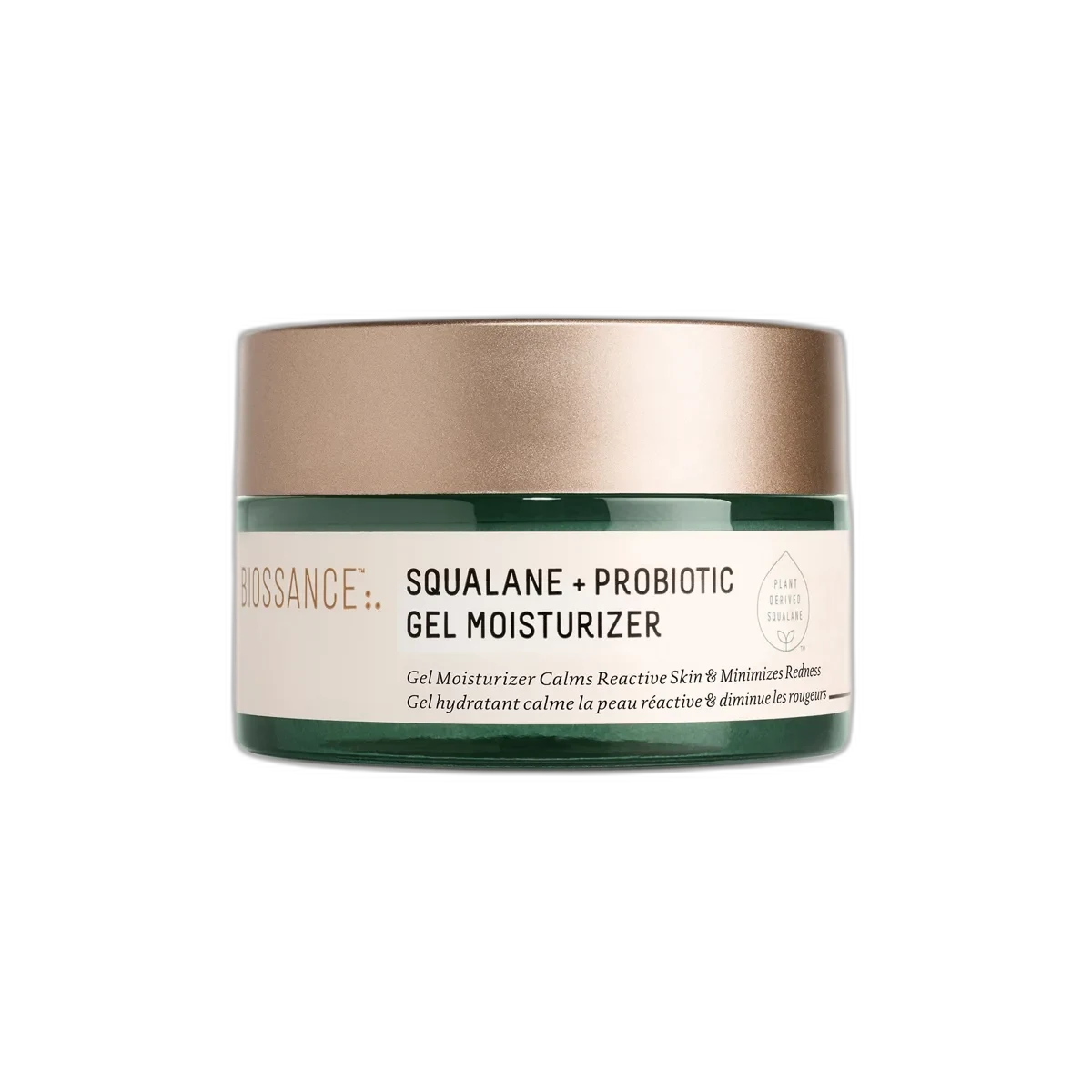
Squalane + Probiotic Gel Moisturizer
Clean Microbiome Innovator
 Verified reviewer
Pros & cons.
- +Genuinely innovative encapsulated multi-strain probiotic technology — not just a token ferment lysate
- +National Eczema Association Seal of Acceptance validates safety on compromised skin
- +Fragrance-free with no essential oils — truly unscented and gentle
- +Lightweight gel absorbs in seconds without greasiness, ideal for oily and combination skin
- +Bisabolol and allantoin provide immediate soothing for redness and irritation
- +Pregnancy-safe, Leaping Bunny certified, vegan, and dermatologist tested
- +2023 reformulation significantly upgraded the probiotic delivery system
- −$54 for 50 ml is premium pricing for a gel moisturizer
- −Jar packaging is less hygienic than pump for a probiotic product
- −Not hydrating enough for dry skin as a standalone moisturizer
- −Full probiotic benefits require 6-8 weeks of consistent use — not instant gratification
- −Contains soy derivatives — caution for soy-allergic individuals
- −Not fungal-acne-safe due to sorbitan oleate and soy sterols
The full review.
Probiotic skincare has spent much of the last decade split between real science and marketing. Many brands label products “probiotic” while including only trace ferment lysate at the bottom of the INCI list. Biossance took a different path with the 2023 reformulation of this gel moisturizer, making it one of the more honest microbiome-focused options available.
The main claim is over one billion active cultures per drop from a seven-strain ferment complex. This includes Lactobacillus, Lactococcus, Saccharomyces, and four other microbial strains cultured with fig and lemon. These are not live bacteria in the traditional sense; the fermentation process creates postbiotic metabolites (enzymes, organic acids, peptides) that influence the skin’s microbiome environment. The 2023 reformulation uses encapsulation technology to keep these cultures stable in the jar and release them upon application. This solves a core probiotic skincare challenge: delivering bioactive compounds to the skin before they degrade.
Biossance’s biotech roots add credibility. The company grew from Amyris, a synthetic biology firm that understands molecular fermentation. Their claim of encapsulated probiotic cultures relies on more than marketing; it uses the same fermentation expertise that produced the brand’s sugarcane-derived squalane.
The other ingredients show clear intent. Bisabolol, an active compound from chamomile, is a reliable anti-inflammatory that works with the probiotic ferment’s microbiome-balancing action. While the probiotics address microbial dysbiosis that causes redness and sensitivity, bisabolol provides immediate topical soothing. Allantoin adds to this calming effect with skin-conditioning and cell-regeneration properties.
Squalane anchors the moisture strategy. At an estimated five to seven percent (third in the INCI), it provides the lightweight barrier support that separates this from the water-and-thickener gel moisturizers common in the oily-skin market. Squalane integrates into the skin’s natural lipid matrix without the grease of plant oils, allowing this gel to satisfy combination skin without triggering the T-zone.
The gel feels cool, lightweight, and absorptive. A pea-sized amount covers the full face and sinks in within thirty seconds, leaving a dewy, non-sticky finish that layers cleanly under sunscreen. The fragrance-free formula has zero scent. In a clean beauty market where lavender and rosemary often replace synthetic fragrance, this lack of scent is a notable feature.
Results follow two timelines. The soothing effects—reduced redness, calmer reactive skin, and less irritation—appear within one to two weeks, driven by bisabolol and allantoin. Deeper microbiome benefits take longer. Biossance advises six to eight weeks for the probiotic cultures to fully influence the skin’s microbial ecosystem, a timeline user reviews generally confirm. Some users report a brief adjustment period in weeks one and two, such as minor textural changes or small breakouts, as the microbiome recalibrates. This is not universal, but it is worth noting.
The National Eczema Association Seal of Acceptance is a significant credential. NEA acceptance requires independent evaluation of how the product performs on compromised, eczema-prone skin. For a probiotic product for reactive skin, this certification validates that the formula supports rather than disrupts a vulnerable barrier.
Limitations: this moisturizer is lightweight by design. Dry skin types will likely find it insufficient as a standalone moisturizer, especially in winter or dry climates. Because it is a gel, it trades richness for weightlessness. If your skin needs more occlusivity, layer a richer cream or facial oil over this. The jar packaging is attractive and recyclable, but less hygienic than a pump. A tube or airless pump would better protect the bioactive compounds from air exposure and finger contamination.
At $54 for 50 milliliters, this is a premium gel moisturizer. K-beauty and drugstore gel moisturizers often sell for $15-25, though few have this specific probiotic technology and clean beauty credentials. The Leaping Bunny certification, NEA acceptance, vegan status, and dermatologist testing add value for clean beauty consumers. Whether these certifications justify twice the price of an alternative is a personal choice.
Biossance survived corporate changes—Amyris’s 2023 bankruptcy and the subsequent THG acquisition—and kept its product lineup and certifications. For a brand selling biotech-driven skincare, this continuity matters. The Squalane + Probiotic Gel Moisturizer shows the brand’s core identity: biotechnology applied to a real skin concern, delivered in a clean format, and priced for consumers who value science and ethics.
Formula
PM routine
Ingredient analysis.
Full INCI list
Water/Aqua/Eau, Glycerin, Squalane, Lepidium Sativum Sprout Extract, Sodium Acrylates Copolymer, Caprylic/Capric Triglyceride, Bisabolol, Phospholipids, Hansenula/Kloeckera/Lactobacillus/Lactococcus/Leuconostoc/Pediococcus/Saccharomyces/Fig/Lemon Ferment, Sodium Hyaluronate, Chondrus Crispus Extract, Allantoin, Glycine Soja (Soybean) Sterols, Linoleic Acid, Capryloyl Glycerin/Sebacic Acid Copolymer, Diheptyl Succinate, Cellulose Gum, Lecithin, Sorbitan Oleate, Isoeicosane, Chitosan, Sodium Phytate, Caprylyl Glycol, Phenoxyethanol, 1,2-Hexanediol, Citric Acid
Skin match.
The science.
The Science
Dermatological research now focuses on the skin microbiome. Studies in the Journal of Investigative Dermatology show that skin surface microbial diversity directly affects barrier function, immune response, and susceptibility to acne, eczema, and rosacea. Products that support microbiome balance instead of just sterilizing the skin surface shift skincare toward an ecology-based approach.
The multi-strain ferment in this product produces postbiotic metabolites during fermentation. Research in the British Journal of Dermatology (2019) shows that topical Lactobacillus ferment lysate significantly improves skin barrier function and reduces transepidermal water loss in subjects with atopic dermatitis. This works by modulating antimicrobial peptide expression and immune signaling on the skin surface, favoring commensal (beneficial) bacteria over pathogenic species.
Bisabolol, derived from Matricaria chamomilla, has documented anti-inflammatory properties that inhibit cyclooxygenase and lipoxygenase pathways. A study in the Journal of the European Academy of Dermatology and Venereology shows significant reductions in erythema and scaling when bisabolol is applied to irritated skin. This supports its role as a soothing agent that adds immediate surface-level anti-inflammatory relief to the probiotic's microbiome-level action.
Research shows topical squalane application increases skin hydration and elasticity without disrupting the microbiome. Unlike some emollients that create anaerobic conditions favoring pathogenic bacteria, squalane's non-occlusive properties maintain the aerobic environment that supports beneficial skin organisms. This helps optimize microbial balance.
References
- Lactobacillus ferment lysate improves skin barrier function in atopic dermatitis — British Journal of Dermatology (2019)
Dermatologist Perspective
Dermatologists increasingly target the skin microbiome therapeutically, and this gel moisturizer uses that research. Board-certified dermatologists note that a multi-strain probiotic approach is more nuanced than single-strain products because skin microbial diversity associates with healthier barrier function. The National Eczema Association acceptance provides clinical reassurance that the formula is safe for compromised skin, which benefits from microbiome-supportive care. Dermatologists typically recommend this for patients with reactive, redness-prone skin who want a lightweight moisturizer that supports the skin's natural ecology rather than suppressing it. It complements, but does not replace, targeted treatments like prescription anti-inflammatories or retinoids.
Where it fits in your routine.
Cleanse skin and apply serums or treatments first. Use a pea-sized amount from the jar, ideally with a clean spatula for hygiene. Apply to the face and neck using gentle upward and outward motions. Wait 30 seconds for absorption before applying sunscreen (AM) or sleeping (PM). Use morning and evening. For dry skin, layer a thicker cream or facial oil over this gel at night. Consistent use for 6-8 weeks provides full microbiome-balancing benefits.
At $54 for 50 ml, this gel moisturizer costs more than most in its category. Encapsulated probiotic technology and clean beauty certifications set it apart from cheaper gel moisturizers, but users must decide if microbiome benefits justify the price over a $15-20 alternative. The NEA Seal of Acceptance, Leaping Bunny certification, and biotech-derived probiotic technology add value for consumers who prioritize these attributes. A travel size (15 ml) is available for trial. Using it twice daily, the 50 ml jar lasts 2-3 months. This makes the monthly cost about $18-27 — a reasonable price for a primary moisturizer if the probiotic and soothing benefits work for your skin type.
Oily, combination, and sensitive skin types want a lightweight, fragrance-free moisturizer that hydrates and supports microbiome health. It works well for redness-prone, rosacea-prone, or reactive skin that flares from heavier products. It also suits pregnant individuals looking for a certified-clean, NEA-accepted moisturizer.
Dry skin types needing thick, occlusive moisture will find this gel insufficient alone. People with a confirmed soy allergy must patch test because of soy-derived ingredients. Those prone to fungal acne should watch for sorbitan oleate and soy sterols. Budget-conscious shoppers can find effective gel moisturizers at a third of this price, but they lack the probiotic technology and certifications.
Product details.
This lightweight, slightly opaque gel has a smooth, lotion-like slip. Encapsulated probiotics give the reformulated version a subtle white-ish appearance. It absorbs within 30 seconds and leaves no sticky, tacky, or greasy residue. A pea-sized amount covers the entire face.
Fragrance-free with no discernible scent. It is unscented and contains no essential oils or botanical fragrances.
A glass jar with a screw-top lid uses Biossance's signature green-toned clean design. The outer carton uses FSC-certified sugarcane paper. The jar is recyclable but less hygienic than a pump; finger-dipping introduces bacteria to this probiotic product. A spatula would help.
The gel feels cooling and soothing on first application. Redness-prone skin feels calmer within minutes. The texture melts into the skin fast and leaves a comfortable, dewy base. Some users see mild adjustment in the first 1-2 weeks—minor breakouts or texture changes—as the probiotic cultures interact with the skin's existing microbiome. This usually resolves within two weeks.
2-3 months with twice-daily use.
12 months
spring summer
The backstory.
Biossance originally launched this probiotic gel moisturizer in 2018 as part of its mission to prove that biotech-derived ingredients could outperform traditional formulations. The 2023 reformulation represented a significant upgrade — the original used a simpler probiotic ferment, while the new version employs encapsulated live cultures from seven bacterial and yeast strains cultured with fig and lemon. The product holds the National Eczema Association Seal of Acceptance, indicating it has been evaluated for safety on compromised skin — a meaningful distinction for a probiotic product targeting reactive skin types.
About Biossance
Established Brand (5–20 years)Amyris, a biotechnology company that developed sugarcane-derived squalane, launched Biossance in 2016. The brand is Leaping Bunny and PETA certified, and this product has the National Eczema Association Seal of Acceptance. The formula uses encapsulated probiotic technology after a 2023 reformulation. THG acquired the brand after Amyris's 2023 bankruptcy.
Common myths.
Probiotic skincare puts live bacteria on your face.
This product contains fermented cultures from seven microbial strains, but skincare 'probiotics' work differently than dietary probiotics. Fermentation produces metabolites (postbiotics)—enzymes, peptides, and organic acids—that support the skin's microbiome balance. The encapsulated cultures in this formula stay stable in the jar and release benefits upon application.
Gel moisturizers are not real moisturizers — they are just water.
This gel uses squalane (a lipid emollient), glycerin (a humectant), hyaluronic acid, and phospholipids — all real moisturizing ingredients. The gel format delivers these without the heavy waxes and occlusives found in traditional creams. For oily and combination skin types, a well-formulated gel moisturizer provides hydration without the pore-clogging risk of heavier textures.
FAQ.
Is this moisturizer hydrating enough for dry skin?
This gel moisturizer alone lacks sufficient hydration for most dry skin types. The lightweight gel texture works best for oily and combination skin. If you have dry skin but want the probiotic benefits, layer a thicker cream or facial oil over this gel at night, or use it as a hydrating step beneath your regular moisturizer.
Will I experience a purging period?
Some users report a 1-2 week adjustment period when first using this product. Minor breakouts or texture changes occur as the probiotic cultures interact with the skin's existing microbiome. This usually resolves on its own and differs from an allergic reaction, which involves persistent redness, itching, or swelling.
Is this safe during pregnancy?
Yes. Biossance lists this product in their pregnancy-safe skincare lineup. It has no retinoids, no salicylic acid, and no ingredients flagged as concerning during pregnancy or breastfeeding.
Can I use this with retinol?
Yes. This gel moisturizer works well over a retinoid serum. The squalane, bisabolol, and allantoin buffer retinoid irritation, and the probiotic cultures support the microbiome that retinoids disrupt. Apply your retinoid first, let it absorb, then follow with this moisturizer.
Does this product contain live bacteria?
The reformulated version contains encapsulated ferment cultures from seven microbial strains. These are not traditional live bacteria; the fermentation process produces beneficial metabolites (postbiotics) that support skin microbiome health. Encapsulation technology maintains the stability and activity of these cultures in the product.
Is this safe for people with soy allergies?
This product contains Glycine Soja (Soybean) Sterols and soy-derived Lecithin. If you have a confirmed soy allergy, patch test carefully before full-face application or consult your dermatologist. Topical soy exposure carries lower risk than dietary exposure, but sensitivity varies by individual.
What the community says.
"Lightweight gel absorbs quickly without heaviness or greasiness"
"Effectively calms redness and irritation"
"Does not clog pores or trigger breakouts"
"Refreshing cooling sensation on application"
"Works well layered under sunscreen and makeup"
"Fragrance-free and truly gentle"
"Price is high for a gel moisturizer at $54 for 1.69 oz"
"Full probiotic benefits take 6-8 weeks to manifest"
"May not be hydrating enough for dry skin as a standalone moisturizer"
"Jar packaging raises hygiene concerns versus pump"
"Brief adjustment period possible in first 1-2 weeks"
"Contains soy derivatives — concern for soy-allergic individuals"