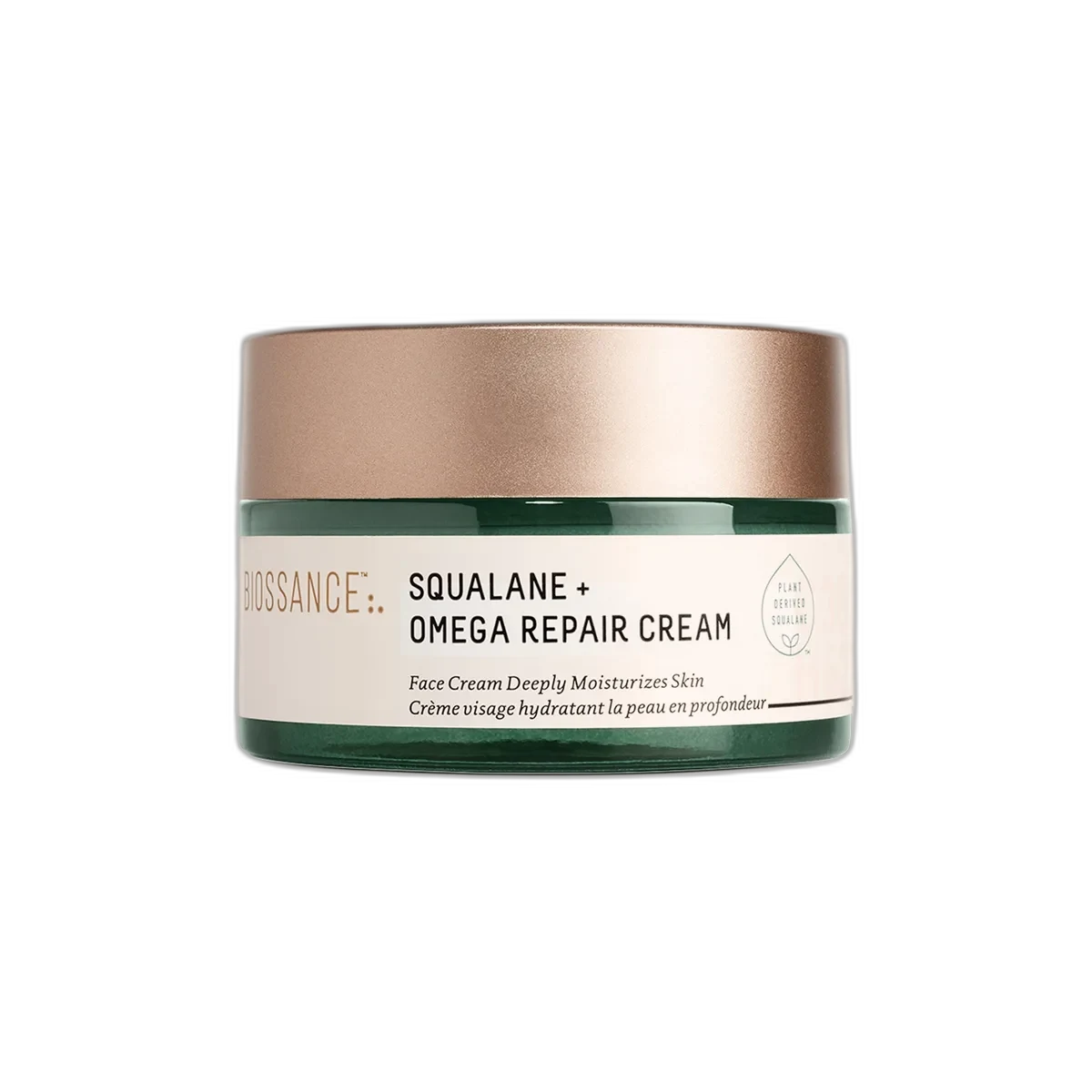
Squalane + Omega Repair Cream
Barrier Repair Gold Standard
 Verified reviewer
Pros & cons.
- +Biomimetic lipid system with squalane, ceramide NP, and omega fatty acids mirrors natural barrier composition
- +National Eczema Association Seal of Acceptance — independently verified for sensitive skin safety
- +Completely free of fragrance, alcohol, silicones, parabens, and sulfates
- +Whipped texture absorbs quickly without heavy or greasy residue despite rich ingredients
- +Clinical study showed 100% barrier function improvement within one week of use
- +Vegan and cruelty-free with sustainably sourced sugarcane-derived squalane
- +Jumbo 100ml size available at significantly better per-ml value
- −$60 for 50ml is premium pricing for a formulation using accessible ingredients
- −Too rich for oily skin types, especially during warmer months
- −Jar packaging exposes product to air and bacteria with each use
- −Can pill when layered over certain water-based serums if not fully absorbed first
- −Results are maintenance-focused — excellent barrier repair but not dramatically transformative
The full review.
The origin story matters because it differs from most clean beauty brands. Biossance did not start because a founder had a bad reaction to a moisturizer. It started with Amyris, a publicly traded biotechnology company that uses synthetic biology to produce squalane — a lipid naturally present in human skin — from renewable sugarcane. Amyris originally developed this technology with the Bill & Melinda Gates Foundation for pharmaceutical applications. The shift from biotech to beauty happened when Amyris realized their lab-grade squalane could anchor a skincare line built on scientific credentials rather than marketing mythology.
The Omega Repair Cream is Biossance’s bestseller and shows the brand’s philosophy: use fewer, better ingredients, back them with clinical data, and skip everything unnecessary. The ingredient list has 23 entries — roughly half what many comparable moisturizers use — and every one has a specific functional purpose. There are no fillers, no fragrance, no silicones, and no unnecessary botanical extracts for label appeal.
The formulation architecture is a textbook lipid barrier repair system. Squalane is the primary emollient — a stable, oxidation-resistant lipid that mimics the squalene naturally present in human sebum. Unlike many plant oils that sit on the skin surface, squalane integrates into the stratum corneum’s lipid matrix, reducing transepidermal water loss without clogging pores. Ceramide NP — one of the most well-studied skin-identical ceramides — reinforces the structural mortar between corneocytes. The trio of omega fatty acids (linoleic, oleic, and linolenic acid) provides the building blocks the skin needs to synthesize more ceramides.
This is a biomimetic approach to barrier repair, not just a marketing story about lipids. The skin’s natural barrier uses a specific ratio of ceramides, cholesterol, and fatty acids. The Omega Repair Cream delivers ceramide NP and fatty acid precursors to support ceramide production, while squalane fills the role that the skin’s own squalene plays in maintaining lipid fluidity. Clinical results support this: in a 28-day study of 35 women, 100% showed improved skin barrier function within one week.
Texture
The texture is a surprise. A cream focused on barrier repair could be heavy, greasy, and occlusive — as many barrier repair products are. The Omega Repair Cream is different, with a whipped, mousse-like consistency that looks thick in the jar but melts into a lightweight, non-greasy film on warm skin. It absorbs within about thirty seconds, leaving a natural dewiness instead of a shiny, slippery residue. It performs well under makeup — no pilling, no greasiness, and no separation.
Scent
The fragrance-free formulation is more than a checkbox claim. It has no essential oils, no botanical fragrance extracts, and no masking agents. The cream has essentially no scent, which damaged, sensitive, or eczema-prone skin needs. The National Eczema Association Seal of Acceptance is meaningful here — it requires independent evaluation of the formula, not just self-certification.
Shea butter provides the occlusive element, sealing the hydration that glycerin and sodium hyaluronate draw into the skin. The olive-derived emulsifiers (sorbitan olivate, cetearyl olivate) create a stable emulsion without common irritants found in many conventional emulsifier systems. Jojoba esters add a conditioning layer that improves spreadability without increasing comedogenicity. Acai sterols (Euterpe oleracea) add plant lipids and antioxidant protection.
Best for
This cream delivers on its promises for dry, sensitive, and barrier-compromised skin. Skin texture and hydration improve within the first week, and barrier-repair benefits compound with sustained use. This moisturizer makes other products in a routine work better — a well-repaired barrier absorbs serums more effectively and tolerates actives like retinol with less irritation.
Not ideal for
This is likely too rich for daily use on oily skin. The squalane and shea butter create a noticeable lipid layer that, while non-comedogenic, can feel heavy on skin that already produces enough sebum. Combination skin types can use it as a nighttime cream and use something lighter during the day.
The Omega Repair Cream is not a glamorous product. It does not promise overnight transformation or contain the latest trending active. It is a carefully constructed lipid delivery system that does what skin needs most — maintains the barrier that keeps moisture in and irritants out. In a market that chases novelty, a product that does the basics well is radical.
Ingredient analysis.
Full INCI list
Water/Aqua/Eau, Caprylic/Capric Triglyceride, Squalane, Glycerin, Butyrospermum Parkii (Shea) Butter, Sorbitan Olivate, Cetearyl Olivate, Cetearyl Alcohol, Cetyl Palmitate, Jojoba Esters, Euterpe Oleracea Sterols, Phenoxyethanol, Sorbitan Palmitate, Ceramide NP, Carbomer, Tocopherol, Ethylhexylglycerin, Sodium Hydroxide, Sodium Gluconate, Sodium Hyaluronate, Linoleic Acid, Oleic Acid, Linolenic Acid
Skin match.
The science.
The Science
The Omega Repair Cream formulation follows current stratum corneum lipid biology. The skin barrier's intercellular lipid matrix consists mainly of ceramides (approximately 50%), cholesterol (25%), and free fatty acids (10-20%), organized in a lamellar structure that controls water permeability and defense against external irritants.
Squalane is a hydrogenated derivative of squalene—a natural component of human sebum that makes up approximately 12% of skin surface lipids. Squalene has several roles: it lubricates, supports lipid barrier fluidity, and acts as an antioxidant that quenches singlet oxygen from UV exposure. Biossance's sugarcane-derived squalane is molecularly identical to hydrogenated human squalene, so it matches the skin's lipid environment. Research in the International Journal of Cosmetic Science confirms topical squalane application reduces transepidermal water loss (TEWL) and improves skin smoothness in clinical settings.
Ceramide NP (N-palmitoyl sphinganine) is one of nine ceramide subclasses in human skin. This non-hydroxy fatty acid ceramide contributes to the barrier's lamellar structure. Clinical studies, including research in the Journal of Investigative Dermatology, show that topical ceramide NP combined with fatty acids and cholesterol restores barrier function in compromised skin better than ceramide alone—which justifies combining ceramide NP with omega fatty acids.
Linoleic acid (omega-6) is critical here. It is a direct precursor to ceramide 1 linoleate (ceramide EOS), a key long-chain ceramide in the barrier. Linoleic acid deficiency—common in atopic dermatitis and other barrier disorders—links directly to impaired ceramide synthesis and increased TEWL. By providing exogenous linoleic acid and preformed ceramide NP, the formula supports barrier repair through immediate ceramide supplementation and increased endogenous ceramide production.
The brand's clinical study (28 days, 35 women ages 36-60) showed 100% improvement in barrier function (measured by TEWL reduction) within one week and 94% improvement in visible fine lines in that same period. While the brand-funded study was small, these results match expected outcomes for a lipid barrier repair formulation based on published literature.
Dermatologist Perspective
Board-certified dermatologists often recommend squalane-based, ceramide-containing moisturizers for patients with barrier dysfunction, such as those with eczema, rosacea, and post-procedure sensitivity. Dermatologists note that the Omega Repair Cream's mix of squalane, ceramide NP, and essential fatty acids follows the evidence-based approach to barrier repair by providing structural lipids and lipid precursors. The National Eczema Association seal provides independent third-party validation for clinical settings. Dermatologists value the fragrance-free, minimal-ingredient approach for patients who react to complex ingredient lists in other moisturizers. The cream is a common recommendation as a complementary moisturizer for patients on retinoid therapy to help mitigate retinoid-induced dryness and irritation.
Where it fits in your routine.
Apply a pea-sized amount to a clean face and neck every morning and evening. Use it as the final step before sunscreen (AM) or the last step (PM). For more hydration, apply over a hyaluronic acid serum on damp skin. Press the cream into the skin instead of rubbing to preserve the lipid film structure. Use a thicker layer at bedtime to use it as an overnight sleeping mask. When using with retinoids, apply the retinoid first, wait 5 minutes, then apply the cream.
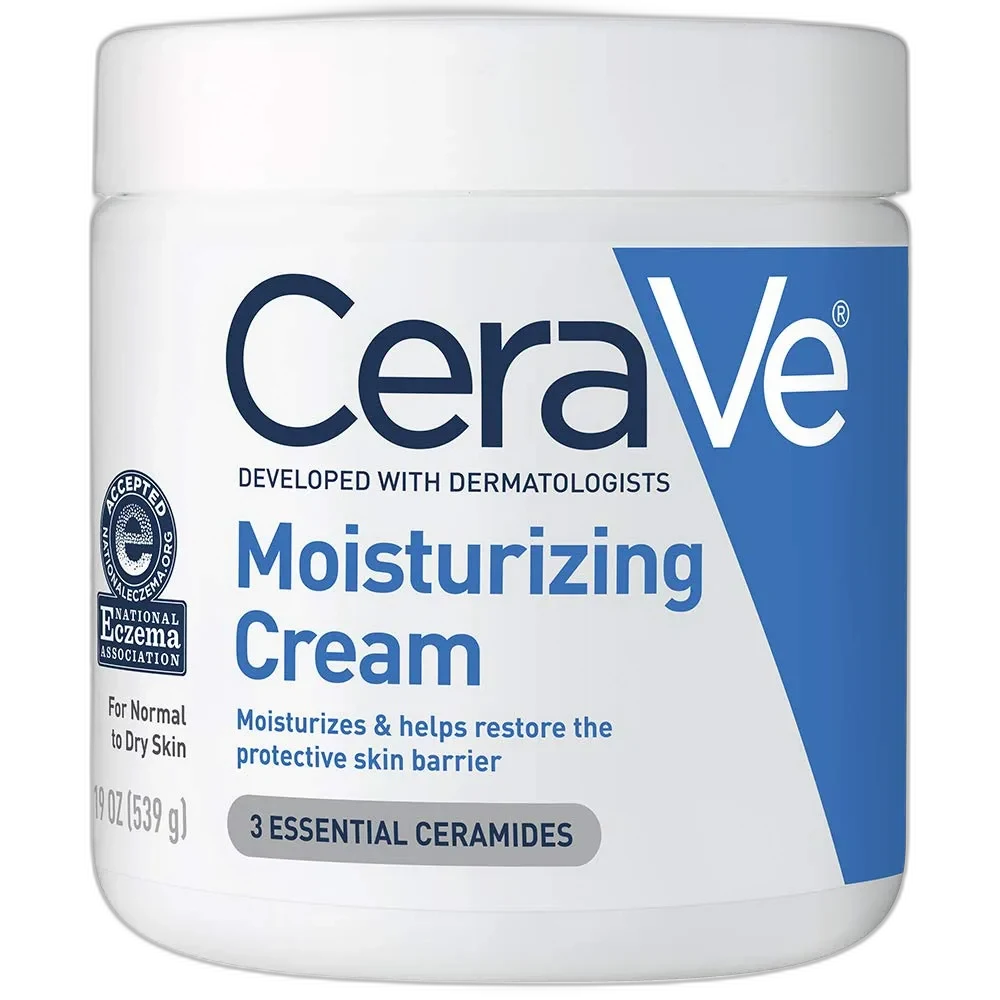
At $60 for 50ml ($1.20/ml), the Omega Repair Cream sits in the mass-premium moisturizer tier. The ingredients are high-quality but not exotic; CeraVe and Vanicream offer comparable formulations for less. Biossance pricing covers biotech-grade squalane purity, a lack of cost-saving fillers, clean formulation certifications, and clinical testing. The 100ml jumbo size at $85 ($0.85/ml) saves 29% and is the best option for regular users. For those with eczema or severely compromised barriers who struggle to find tolerable moisturizers, the premium is justified by the near-zero irritation risk.
This moisturizer suits people with dry, dehydrated, sensitive, or barrier-compromised skin who want a fragrance-free, minimally formulated option with proven barrier repair. It works for eczema patients, post-procedure care, retinoid users needing a soothing buffer cream, and anyone irritated by other moisturizers.
Oily skin types who find thick creams too heavy for daily use. Budget-conscious consumers who find similar ceramide-squalane formulations for less. Anyone who prefers lightweight gel moisturizers or matte finishes.
Product details.
Completely fragrance-free — no added scent, no essential oils, no detectable ingredient odors
50ml glass jar with a screw-top lid uses Biossance's signature green branding. A 100ml jumbo size ($85) also exists for better per-ml value. Finish dewysatinnon-greasy
The cream has a lightweight, whipped consistency that is thicker than it looks. It melts from a cream to an almost-oil texture on application, spreads easily, and absorbs within 30-60 seconds. Skin feels softer, smoother, and plumped immediately. It leaves no greasy residue, only a natural, healthy-looking dewiness. Sensitive skin types experience no stinging, tingling, or irritation.
2-3 months with twice-daily facial application (pea-sized amount per use)
12 months
All Year
The backstory.
Biossance emerged from Amyris, a biotechnology company that developed a method to produce squalane from renewable sugarcane rather than harvesting it from shark liver oil — the traditional source. This biotech origin story is not just marketing: the sugarcane fermentation process produces a highly pure, stable form of squalane that is molecularly identical to human skin squalene but resistant to oxidation. The Omega Repair Cream became the brand's flagship product, demonstrating that 'clean beauty' and genuine scientific sophistication could coexist in the same jar.
About Biossance
Established Brand (5–20 years)Biossance launched in 2016 as the consumer skincare arm of Amyris, a public biotechnology company that uses synthetic biology to make sugarcane-derived squalane. The brand uses real biotech; its squalane production technology started in partnership with the Gates Foundation for pharmaceutical use. Biossance has operated for nearly a decade and has increasing clinical testing on its formulations.
Common myths.
Squalane and squalene are the same thing
Squalene (with an 'e') is the unsaturated form in human sebum. It is beneficial but oxidizes fast, which makes it comedogenic and pro-inflammatory. Squalane (with an 'a') is the stable, hydrogenated form used in skincare. Biossance's squalane comes from sugarcane via biofermentation; it is vegan, sustainable, and oxidation-resistant.
Clean beauty products trade efficacy for ingredient purity
A clinical study shows 100% of participants improved barrier function within one week — results that match or exceed many conventional moisturizers. The simple formula is a strength: fewer ingredients mean fewer potential interactions and irritants, and every ingredient has a specific barrier-repair function.
FAQ.
Is the Biossance Squalane + Omega Repair Cream good for eczema?
Yes — this cream has the National Eczema Association Seal of Acceptance. Independent evaluations show it is suitable for eczema-prone skin. The fragrance-free, alcohol-free formula uses squalane, ceramide NP, and omega fatty acids to repair the barrier without common irritants. Many eczema patients use it as their primary facial moisturizer.
Can I use the Omega Repair Cream with retinol?
Yes — this pairing works well. Apply your retinol or retinoid first, wait a few minutes for absorption, then layer the Omega Repair Cream on top. The squalane, ceramide NP, and fatty acids buffer retinoid irritation by reinforcing the barrier. Some users also 'sandwich' their retinol by applying a thin layer of this cream before and after the retinoid.
Is the Biossance Squalane Omega Repair Cream worth $60?
The formula works well — squalane, ceramide NP, omega fatty acids, shea butter, and hyaluronic acid sit in a fragrance-free, vegan, eczema-approved base. But these ingredients are common and inexpensive; similar formulations cost less. You pay for Biossance's biotech-grade squalane purity, clean beauty certifications, and clinical testing. The 100ml jumbo size at $85 has better per-ml value.
Will the Omega Repair Cream break me out?
The formula is non-comedogenic and lacks common acne triggers. Squalane is a thick emollient that does not clog pores. Unlike many plant oils, its molecular structure mimics skin lipids, so it integrates instead of sitting on the surface. However, the cream is thick enough that very oily, acne-prone skin types may find it too heavy for daily use, especially during warmer months.
What is the difference between the 50ml and 100ml sizes?
The formula is identical. The 50ml jar costs $60 ($1.20/ml) and the 100ml jumbo costs $85 ($0.85/ml) — a 29% savings per ml. If you like the product, the jumbo size offers better value. Both have a 12-month period after opening.
Can I use the Omega Repair Cream during pregnancy?
Yes — the formula lacks retinoids, salicylic acid, or other ingredients flagged for pregnancy avoidance. All ingredients are pregnancy-safe. The gentle, fragrance-free formula works well for the increased skin sensitivity many experience during pregnancy.
What the community says.
"Deeply hydrating without feeling heavy or greasy"
"Fragrance-free and gentle enough for the most sensitive skin"
"Visible improvement in skin barrier and moisture within the first week"
"Whipped texture absorbs quickly and works beautifully under makeup"
"National Eczema Association accepted — genuinely safe for eczema-prone skin"
"$60 for 50ml is premium pricing for a relatively simple formulation"
"Can feel too rich for oily skin types during warmer months"
"Some users report pilling when layered over certain serums"
"The jar packaging exposes the product to air and bacteria"
"Results are more about maintenance than dramatic transformation"