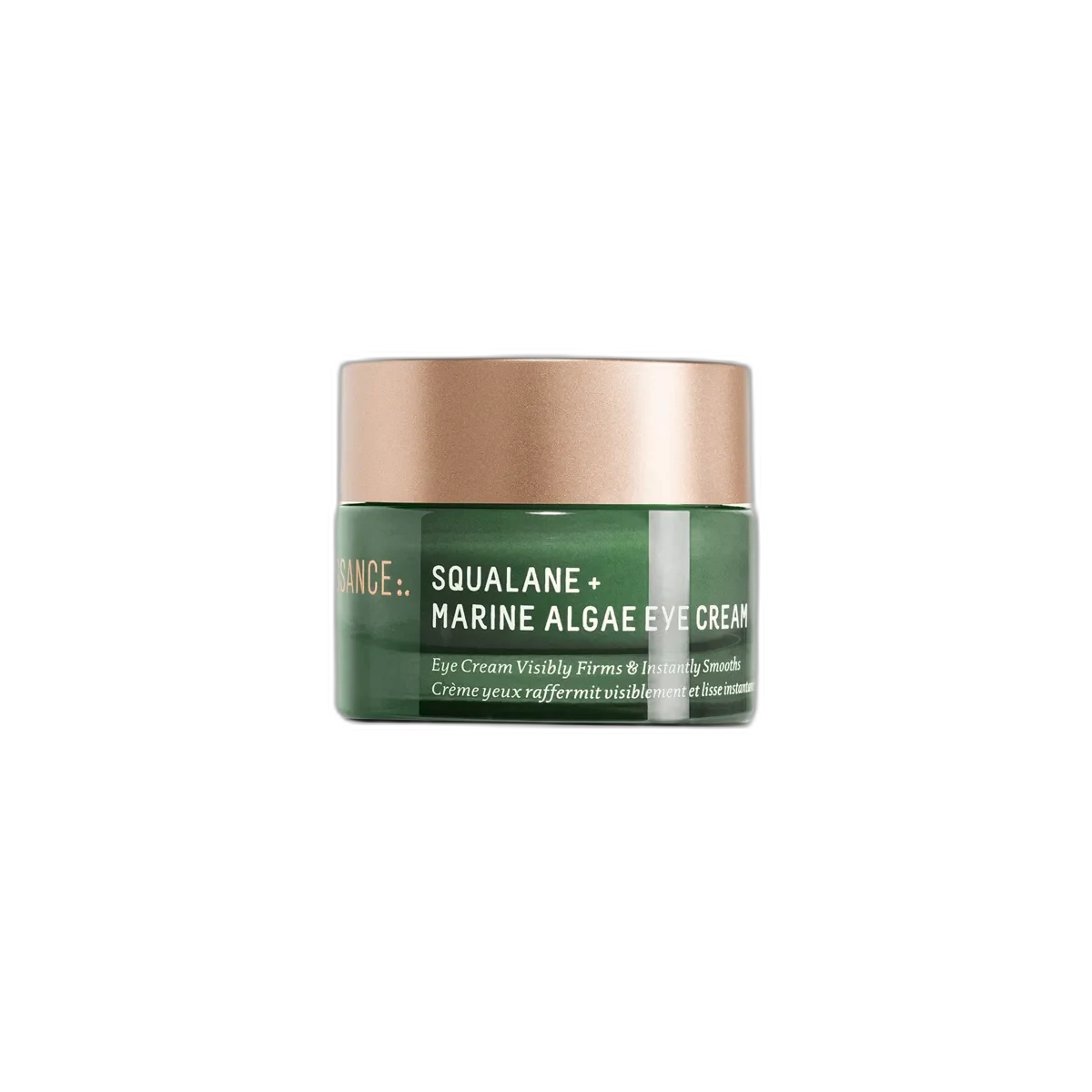
Squalane + Marine Algae Eye Cream
Clean Beauty Eye Award Winner
 Verified reviewer
Pros & cons.
- +Genuinely fragrance-free with no essential oils — rare in the clean beauty space
- +Pregnancy-safe and National Eczema Association accepted — safe for the most cautious users
- +Multi-pathway anti-aging: paracress for expression lines, peptide for collagen, astaxanthin for antioxidant defense
- +Silky whipped texture absorbs instantly without greasiness or pilling under makeup
- +Impressive certification stack: Leaping Bunny, EWG Verified, NEA, Sephora Clean
- +Multiple award winner: Allure Best of Beauty 2020, Glamour Best Eye Cream 2021
- −$56 for 15 ml is expensive — significantly higher than many comparable eye creams
- −Jar packaging is less hygienic than tube or pump and exposes actives to air
- −Limited effectiveness on dark circles caused by pigmentation or vascular factors
- −Not fungal-acne-safe due to several emulsifier ingredients
- −Small jar depletes in 2-3 months with twice-daily use
- −Occasional astaxanthin-related color changes can concern users unfamiliar with the ingredient
The full review.
About Biossance
Biossance’s origin resembles a Silicon Valley biotech pitch more than a beauty brand. Its parent company, Amyris, launched in 2003 with Bill and Melinda Gates Foundation funding to develop synthetic artemisinin, an antimalarial drug. During this process, they found their fermentation platform produces squalane from sugarcane. This offers a sustainable alternative to the shark liver-derived squalane the cosmetics industry used for decades. Biossance launched in 2016 to bring this tech to consumers; this eye cream, introduced in 2019, is one of the brand’s most decorated products.
Formula
The formula is truly clean. It contains twenty-one ingredients and has no fragrance, no essential oils, no synthetic dyes, no silicones, no sulfates, and no parabens. It is EWG Verified, has the National Eczema Association Seal of Acceptance, and is pregnancy-safe. This is a restrictive ingredient palette for an anti-aging product, yet it earned Allure Best of Beauty 2020 and Glamour’s Best Eye Cream 2021, showing the formula performs despite these constraints.
How it Works
Three distinct pathways drive the active ingredients. Spilanthes acmella, or “paracress” (the “toothache plant”), contains spilanthol. This compound causes a tingling sensation on mucous membranes, which is why some cuisines use the plant. In topical skincare, spilanthol temporarily relaxes facial muscle micro-contractions, softening expression lines through a mechanism similar to, but milder than, injectable neurotoxins. This is a logical, targeted inclusion for the eye area, where crow’s feet and squint lines stem from repetitive muscle movement.
Palmitoyl tripeptide-5 targets structural aging by signaling the skin to produce more collagen. This peptide mimics thrombospondin-1, a protein that activates TGF-beta, a growth factor critical to collagen synthesis. While paracress addresses dynamic wrinkles, this peptide rebuilds the dermal architecture beneath. The two work together to address aging from two angles without redundancy.
Dunaliella salina, the marine algae on the label, produces astaxanthin, a carotenoid pigment the algae uses for UV protection. As an antioxidant, astaxanthin shows high potency in singlet oxygen quenching studies. Its inclusion provides free radical defense for the exposed periorbital area. This antioxidant layer matters because oxidative stress drives premature aging around the eyes, where skin is thin and lacks sebaceous gland protection.
Biossance’s signature squalane provides the moisturizing base. This squalane comes from sugarcane fermentation rather than shark liver and is chemically identical to the squalene human skin naturally produces for its lipid barrier. It absorbs without greasiness or heaviness, creating a moisture seal for the hyaluronic acid and panthenol. The vehicle is elegant: caprylic/capric triglyceride and jojoba esters create a silky texture, while sorbitan olivate and cetearyl olivate form a gentle emulsion system.
Texture
The texture earns immediate affection. It is silky and whipped—not thick—melting on contact and absorbing within seconds. It leaves no visible residue, no film, and does not interfere with makeup. The lack of fragrance is notable; it is genuinely unscented, not “fragrance-free” with hidden essential oils. This is a meaningful distinction for people with eye areas reactive to botanical scents common in clean beauty.
Results
Results build predictably. The immediate effect is hydration and subtle plumping that smooths fine lines. Panthenol’s anti-inflammatory properties reduce puffiness within the first one to two weeks. Improvements in fine lines from paracress and the peptide emerge more slowly; expect visible softening of expression lines in four to eight weeks, with continued improvement at twelve weeks.
Not ideal for
This cream does not correct dark circles. If your under-eye circles stem from hyperpigmentation, vascular congestion, or deep-set bone structure, this formula lacks the pigment-targeting or vasoconstrictive ingredients to address them. It hydrates and plumps the area, which can reduce shadowing from thin skin, but dedicated dark circle treatments using vitamin C, caffeine, or vitamin K work better for that specific concern.
Price
The price is significant. At $56 for 15 milliliters, this is a premium eye cream. The jar format is attractive but less hygienic than a tube or airless pump, and it potentially exposes the astaxanthin to oxidation every time it opens. A 3 ml mini at Sephora allows for a trial, which is the responsible recommendation before buying the full size.
Certifications
The certifications are impressive: Leaping Bunny certified cruelty-free, EWG Verified (meeting strict ingredient safety criteria), National Eczema Association accepted (evaluated for safety on compromised skin), vegan, and Sephora Clean. For consumers who prioritize these labels, the $56 buys more than just the product.
Final Thoughts
Biossance survived its parent company’s bankruptcy and operates under THG ownership with its formulations and certifications intact. For an eye cream that must justify a premium price through performance, the combination of innovative actives, rigorous certification, and award history makes a reasonable case—if your primary concerns are hydration, fine lines, and puffiness rather than dark circles or deep wrinkles.
Ingredient analysis.
Full INCI list
Water (Aqua), Caprylic/Capric Triglyceride, Squalane, Glycerin, Sorbitan Olivate, Cetearyl Olivate, Jojoba Esters, Glyceryl Stearate SE, Panthenol, Hydroxyethyl Acrylate/Sodium Acryloyldimethyl Taurate Copolymer, Cetyl Palmitate, Spilanthes Acmella Flower Extract, Palmitoyl Tripeptide-5, Sorbitan Palmitate, Dunaliella Salina Extract, Astaxanthin, Sodium Hyaluronate, Phenoxyethanol, Ethylhexylglycerin, Tocopherol, Citric Acid
Skin match.
The science.
The Science
Spilanthes acmella flower extract contains spilanthol, an alkylamide compound that relaxes subcutaneous muscle contractions. In vitro studies in the International Journal of Cosmetic Science show spilanthol inhibits subcutaneous muscle cell contraction in a dose-dependent manner. This makes it a topical alternative to injectable muscle relaxants for expression-line reduction. The effect is more subtle and reversible than neurotoxin injections and requires consistent topical application for cumulative results.
Astaxanthin, derived from Dunaliella salina marine algae in this formula, is one of the most potent natural antioxidants. Research in Marine Drugs (2018) shows astaxanthin's singlet oxygen quenching activity is about 6,000 times greater than vitamin C and 800 times greater than CoQ10. Topical application improves skin elasticity, moisture content, and wrinkle depth. This is especially relevant for the periorbital area, where UV-induced oxidative stress hits thin, minimally protected skin.
Palmitoyl tripeptide-5 stimulates TGF-beta through thrombospondin-1 mimicry to activate the fibroblast collagen synthesis pathway. Data in the Journal of Cosmetic Dermatology shows measurable increases in type I collagen production in treated skin, with visible wrinkle reduction in clinical subjects over 8-12 weeks. Combining this peptide with spilanthol addresses both the dynamic (muscle-driven) and static (structural) components of periorbital wrinkles.
Squalane does more than moisturize. As a skin-identical lipid, it integrates into the stratum corneum's lipid matrix without disrupting barrier function. This matters for periorbital skin, which has fewer sebaceous glands and higher transepidermal water loss than the rest of the face.
References
- Astaxanthin: sources, extraction, stability, and biological activities — Marine Drugs (2018)
Dermatologist Perspective
Dermatologists often recommend this eye cream for patients needing retinoid-free anti-aging options—specifically pregnant and breastfeeding patients, those with eczema or perioral dermatitis, and individuals irritated by retinol-based eye products. Board-certified dermatologists note the paracress and peptide combination provides a clinically reasonable alternative to retinoids for mild to moderate periorbital aging, though effects are more subtle. EWG Verification and National Eczema Association acceptance indicate a safe ingredient profile. Dermatologists typically recommend this alongside daily sunscreen and may suggest pairing it with a retinoid on the face (avoiding the eye area) for patients wanting more aggressive anti-aging treatment.
Where it fits in your routine.
Use a small amount (half a pea-sized portion) on your ring finger. Dot the cream around the orbital bone area — under the eye, at the outer corner, and along the brow bone. Pat the cream into the skin with light tapping motions until absorbed; do not drag. Apply morning and evening after serums but before moisturizer. Use sunscreen in the AM. Keep the jar tightly closed to protect the astaxanthin from oxidation, and use clean, dry fingers.
At $56 for 15 ml, this eye cream sits in the premium price tier. The cost reflects its certification stack (EWG Verified, NEA, Leaping Bunny), its actives (paracress, marine algae astaxanthin), and its pregnancy-safe clean formulation. Still, K-beauty and Western brands offer peptide-based eye creams for $20-35, and the jar format lacks a pump or tube at this price. The 3 ml mini at Sephora (~$15) works well for trials. Using it twice daily makes the full jar last 2-3 months, costing about $19-28 per month—high, but fair for a single, essential eye cream. The value is highest for users requiring award-winning anti-aging performance, pregnancy safety, and strict clean certifications.
This eye cream works for anyone wanting clean, certified, pregnancy-safe anti-aging actives. It suits users with sensitive periorbital skin, those avoiding retinoids, and clean beauty enthusiasts seeking Leaping Bunny, EWG, and NEA certifications. It targets fine lines, dehydration, and puffiness.
Shoppers on a budget can find comparable peptide eye creams for half the price. Use this if you primarily want to address dark circles, as this formula does not target pigmentation or vascular darkness effectively. Choose this if you prefer hygienic pump or tube packaging over jar format. If a retinal or retinol eye cream already works for you without irritation, the retinoid will likely outperform this formula for wrinkle reduction.
Product details.
Thick but lightweight cream with a silky, whipped consistency. It is dense enough to feel nourishing but absorbs quickly without a greasy residue or film. It spreads easily using little product.
Unscented. It has no added fragrance or essential oils. Some users notice a faint, neutral ingredient scent that is barely perceptible.
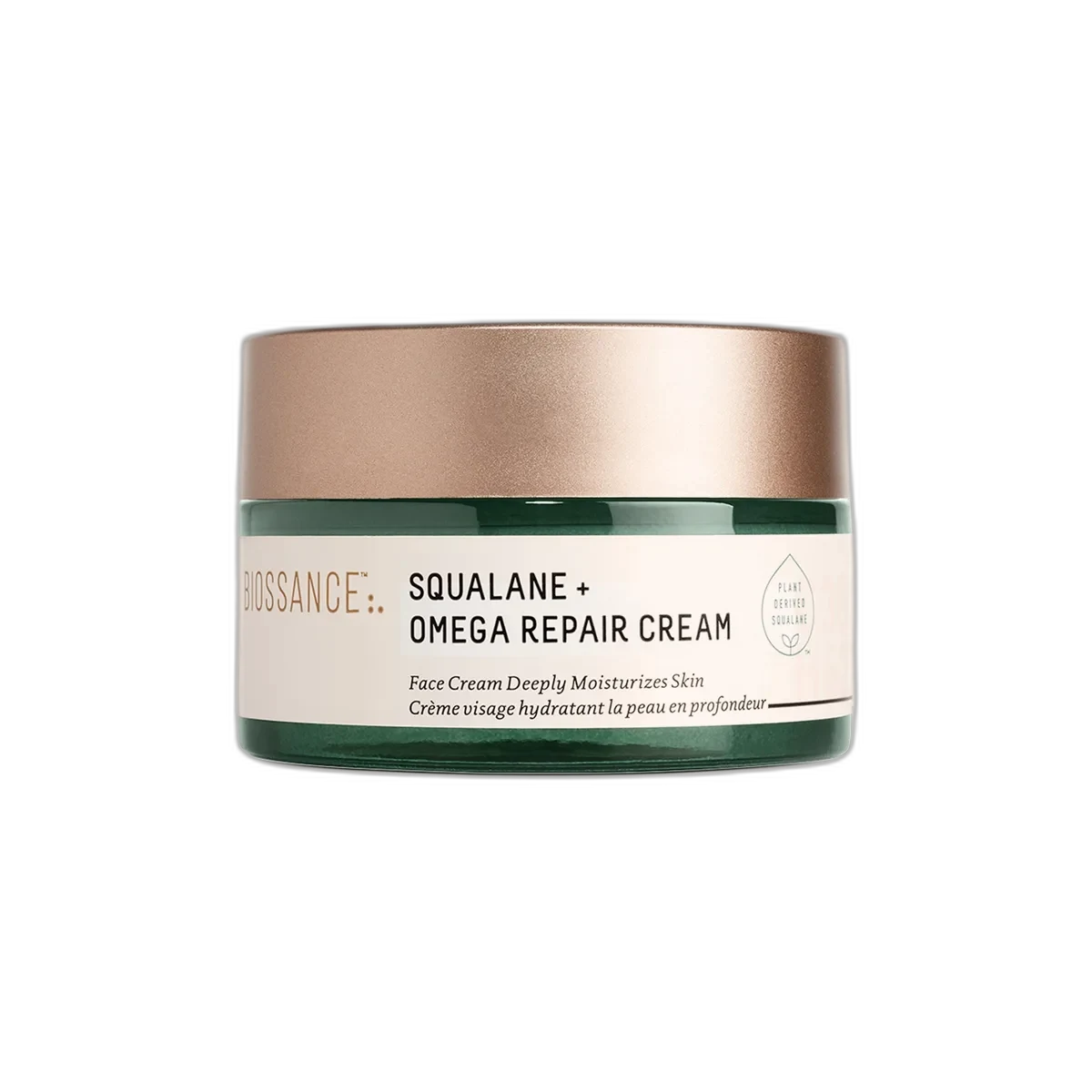
A small green glass jar with a screw-top lid matches Biossance's brand aesthetic. It uses recyclable materials. The jar format requires finger-dipping, which is less hygienic than a pump or tube, but the small opening limits contamination. Sephora sells a 3 ml mini version for trial.
The cream melts into the under-eye area with a silky feel on first use. It causes no tingling, stinging, or adjustment period. The area feels plumped and moisturized immediately. Most users see less dryness and smoother fine lines within the first few applications.
Use twice daily for 2-3 months; a small amount works per application.
12 months
All Year
The backstory.
Biossance developed this eye cream to showcase how their biotechnology-derived squalane could anchor a sophisticated anti-aging formula without relying on retinoids, fragrance, or other potential irritants. The inclusion of Dunaliella salina — a pink marine algae that produces astaxanthin as a defense against UV radiation — reflects the brand's interest in biomimetic ingredients that mirror nature's own protective mechanisms. The product quickly became one of the brand's most-awarded formulas, winning Allure Best of Beauty in 2020 and Glamour's Best Eye Cream in 2021.
About Biossance
Established Brand (5–20 years)Biossance was launched in 2016 by Amyris, a biotechnology company specializing in sugarcane-derived squalane. The brand is Leaping Bunny certified, EWG Verified, and holds the National Eczema Association Seal of Acceptance for this product. Following Amyris's 2023 bankruptcy, Biossance was acquired by THG and continues selling through Sephora and its own channels.
Common myths.
You need retinol in an eye cream for it to be anti-aging.
Retinoids work, but they aren't the only way to get anti-aging results around the eyes. This cream uses paracress to relax expression-related micro-tensions, palmitoyl tripeptide-5 to stimulate collagen, and astaxanthin as a potent antioxidant. These three mechanisms address aging without the irritation or pregnancy restrictions of retinoids.
Clean beauty eye creams cannot deliver real results.
This formula has no fragrance, no essential oils, and no synthetic preservatives except phenoxyethanol — but published research supports its active ingredients (paracress, peptide, marine algae). The Allure and Glamour awards and the National Eczema Association acceptance show the formula works beyond its clean positioning.
FAQ.
What is paracress and how does it work?
Paracress (Spilanthes Acmella) is a flowering plant. Its extract contains spilanthol, a compound that temporarily relaxes facial micro-tensions. This softens expression-related fine lines around the eye area — specifically crow's feet and squint lines — via a topical mechanism called 'natural Botox,' though the effect is subtler and needs consistent application.
Will this help with dark circles?
This eye cream hydrates, smooths fine lines, and reduces puffiness better than it treats dark circles. The squalane and hyaluronic acid plump the under-eye area to improve shadowing from thin skin. Dark circles from hyperpigmentation or vascular issues require targeted ingredients like vitamin C, vitamin K, or caffeine.
Why does the product sometimes have green spots?
The green-tinged spots occasionally visible in the cream come from astaxanthin, a potent carotenoid antioxidant from Dunaliella salina marine algae. Astaxanthin is naturally pink-red and oxidizes over time, which causes minor color variation. This does not affect the product's safety or efficacy.
How long does the jar last?
Apply a small amount (half a pea-sized portion per use) twice daily. The 15 ml jar lasts about 2-3 months. The thick, concentrated formula means a little goes a long way.
Is Biossance still reliable after the Amyris bankruptcy?
Yes. Biossance's original parent company Amyris filed for Chapter 11 bankruptcy in 2023, but THG (The Hut Group) acquired the brand. Biossance still operates, sells through Sephora and its own website, and keeps its product lineup and certifications. The formula and manufacturing remain the same after the acquisition.
What the community says.
"Deeply hydrating without feeling heavy or greasy"
"Reduces puffiness noticeably"
"Silky whipped texture absorbs quickly"
"Works well under makeup without pilling"
"Gentle enough for sensitive periorbital skin"
"A little goes a long way — small amount covers both eyes"
"Expensive for the size — $56 for 0.5 fl oz"
"Mixed results on dark circles — better for hydration and fine lines"
"Jar packaging is less hygienic than tube or pump"
"Does not produce dramatic anti-aging results for deep wrinkles"
"Small jar does not last long with twice-daily use"
"Occasional green spots from astaxanthin oxidation"
Featured in.
People also looked at.