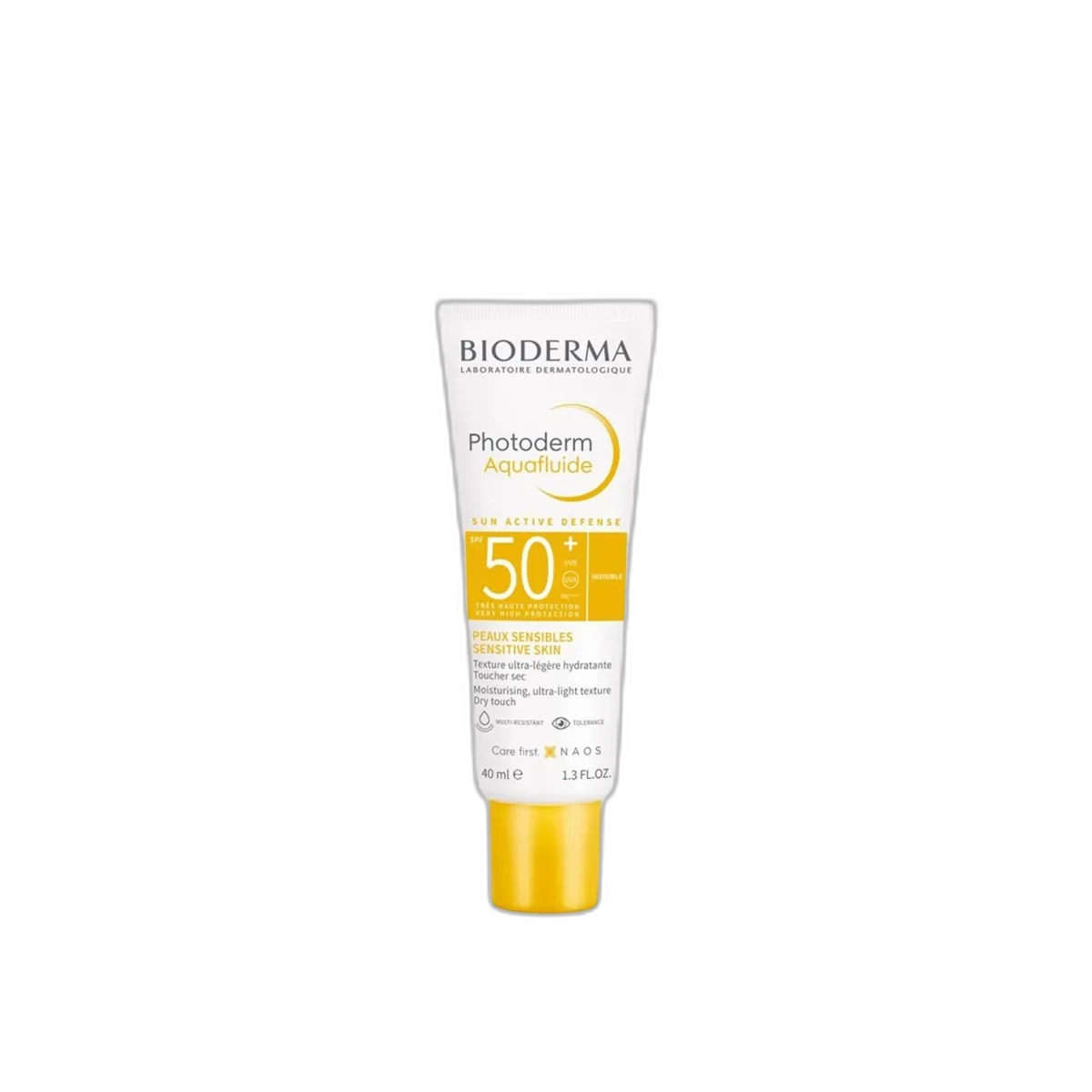
Photoderm Aquafluid SPF 50+
European Pharmacy MVP
 Verified reviewer
Pros & cons.
- +Ultra-light water-like texture that makes daily SPF 50+ genuinely pleasant to wear
- +PPD 26 (PA++++) provides excellent UVA protection with four modern European UV filters
- +Completely invisible finish with no white cast on any skin tone
- +Silicone-free formula achieves matte finish through innovative starch and cellulose system
- +Cellular BIOprotection with ectoin adds biological defense layer backed by published research
- +Fragrance-free with SkinSAFE 100 hypoallergenic rating for sensitive skin compatibility
- +Layers seamlessly under makeup without pilling or interfering with foundation
- −40ml tube is small and depletes in 6-8 weeks with daily face-only application
- −Premium price point makes it one of the more expensive daily sunscreens per milliliter
- −Can sting eyes during heavy sweating as the fluid texture migrates easily
- −Very dry skin types may find the mattifying system too drying without adequate moisturizer underneath
- −Not widely available in US brick-and-mortar stores — often requires online ordering
The full review.
Most sunscreens act as bouncers. They stand at the skin’s door and deflect UV rays. Bioderma’s Photoderm Aquafluid does this too, but it also employs an internal security team—a cellular defense system that protects biological machinery from the damage that slips through.
Bioderma calls this ecobiology. It has been the brand’s philosophy since pharmacist-biologist Jean-Noël Thorel founded the company in 1977 in Aix-en-Provence. Nearly five decades later, the Photoderm range is a respected sunscreen line in European pharmacy culture, and the Aquafluid is its lightest, most elegant version.
About Bioderma
The texture is the first thing you notice. It feels less like “sunscreen” and more like “slightly thickened water.” The fluid pours from the tube with a runny consistency that makes SPF 50+ protection seem unlikely. But it works, using a four-filter chemical system of modern UV protection. Tinosorb S provides broad-spectrum UVA and UVB coverage and photostabilizes the Avobenzone. DHHB (Uvinul A Plus) adds UVA protection. Iscotrizinol provides UVB defense. Together, they deliver a PPD of 26, or PA++++—the highest UVA rating.
The real innovation is the layer underneath the filters. Ectoin, an extremolyte compound from bacteria in extreme environments, preserves intracellular glutathione—the antioxidant cells use to neutralize free radicals. A 2024 study in the Journal of Cosmetic Dermatology confirmed that the ectoin and mannitol combination in Bioderma’s Cellular BIOprotection system reduced DNA strand breaks and preserved Langerhans cell functionality under UV radiation. Simply put: UV energy that passes the filters does less damage because your skin’s defense systems function properly.
Application is pleasant for a high-SPF product. A slight white cast lasts about thirty seconds—enough to see where you applied it—before it vanishes into the skin. The modified corn starch and microcrystalline cellulose system provides a matte, dry-touch finish that controls oil without any silicones. Achieving a lightweight, matte SPF 50+ without silicones is difficult. Most competing fluids use dimethicone or cyclopentasiloxane for slip and setting. Bioderma uses starch, cellulose, and emulsion chemistry instead.
The finish is invisible. Once set, there is no white cast on any skin tone, no greasy sheen, and no sticky residue. It sits under makeup without pilling, making it a pleasant daily-wear sunscreen. The fragrance-free formula means no perfume, and the SkinSAFE 100 hypoallergenic rating shows how gentle this chemical sunscreen is.
There are limitations. The 40ml tube is small. Using two finger-lengths for your face daily lasts six to eight weeks, making the cost-per-use premium. If you apply it to your face, neck, and ears as dermatologists recommend, it lasts even less time. The 30ml pocket format is convenient for travel but offers worse value.
The product can sting eyes if it migrates during heavy sweating, a common issue for chemical sunscreens with this fluid texture. It is water-resistant, but it is designed for daily urban and outdoor wear rather than ocean swimming. Very dry skin types may find the mattifying system drying without a moisturizer, though the glycerin and xylitol in the formula provide hydration support.
Value depends on context. At roughly $27-30 for 40ml, it is not cheap. However, it is a European pharmacy sunscreen with modern UV filters not yet approved by the FDA, a cellular protection system backed by published research, and a texture that hides SPF 50+. You pay for filtration technology and formulation elegance that drugstore options lack. Whether the premium is worth it depends on how much you value the daily experience of wearing sunscreen. For people with oily or combination skin who dislike heavy, greasy formulas, this makes daily SPF easier.
The Photoderm Aquafluid shows what happens when a fifty-year-old brand with scientific roots applies its philosophy to this category. It does more than block UV; it respects skin biology.
Ingredient analysis.
Full INCI list
Water, Dibutyl Adipate, Diethylhexyl Butamido Triazone, Diethylamino Hydroxybenzoyl Hexyl Benzoate, Dicaprylyl Carbonate, Diisopropyl Sebacate, Bis-Ethylhexyloxyphenol Methoxyphenyl Triazine, Corn Starch Modified, Glycerin, Polyglyceryl-6 Stearate, 1,2-Hexanediol, Microcrystalline Cellulose, C20-22 Alkyl Phosphate, C20-22 Alcohols, Caprylyl Glycol, Polyglyceryl-6 Behenate, Cellulose Gum, Ectoin, Xylitol, O-Cymen-5-Ol, Xanthan Gum, Rhamnose, Sodium Hydroxide, Butyl Methoxydibenzoylmethane, Tocopherol, Propylheptyl Caprylate
Skin match.
The science.
The Science
The Photoderm Aquafluid's four-filter UV system uses Tinosorb S (Bis-Ethylhexyloxyphenol Methoxyphenyl Triazine), DHHB (Diethylamino Hydroxybenzoyl Hexyl Benzoate), Iscotrizinol (Diethylhexyl Butamido Triazone), and Avobenzone (Butyl Methoxydibenzoylmethane). Tinosorb S is vital here; it works as a broad-spectrum filter and a photostabilizer. It absorbs excited-state energy from Avobenzone, which stops the photodegradation that makes Avobenzone unreliable alone.
The Cellular BIOprotection system distinguishes this formula from conventional high-SPF products. A 2024 study in the Journal of Cosmetic Dermatology by Fontbonne et al. tested the in vivo and in vitro effects of combining ectoin and mannitol with UV filters. Researchers found the combination preserved intracellular glutathione levels, reduced UV-induced DNA strand breaks from oxidative stress, and kept Langerhans cells — the skin's frontline immune cells — functional. In the in vivo study with 10 subjects, the combination showed better protection against squalene oxidation and preserved catalase activity than UV filters alone.
This dual-layer approach — physical filtration plus cellular defense — fills a gap in conventional sunscreen formulation. Even top UV filters let some UV energy through, especially at application edges or as the sunscreen degrades during the day. By keeping the skin's antioxidant and immune systems functional, the ectoin provides a safety net.
References
- Positive and ecobiological contribution in skin photoprotection of ectoine and mannitol combined in vivo with UV filters — Journal of Cosmetic Dermatology (2024)
Dermatologist Perspective
Dermatologists often recommend Bioderma's Photoderm range as a reliable pharmacy-channel sunscreen with strong UVA protection. The PPD 26 rating puts this product in the upper tier of daily-wear sunscreens. Its fragrance-free, silicone-free formulation works for patients with sensitive or reactive skin. Board-certified dermatologists value the modern European filter system — filters like DHHB and Tinosorb S offer better UVA protection than many filters approved in the US market. The ultra-light texture also solves a common barrier to daily sunscreen compliance: cosmetic inelegance.
Where it fits in your routine.
Apply two finger-lengths (approximately 1/4 teaspoon) to your whole face. Use this as the final step of your morning skincare routine, after moisturizer and before makeup. Let the product set for 1-2 minutes before applying cosmetics. Reapply every two hours if you swim, towel off, sweat heavily, or have prolonged sun exposure. For best results, apply to clean dry skin. The fluid texture spreads easily — press gently instead of rubbing to ensure even coverage.
At roughly $27-30 for 40ml, Photoderm Aquafluid is a premium daily sunscreen. A 30ml pocket size exists, but the per-milliliter price is similar. The cost covers the European UV filter system (including filters not available in US-made sunscreens), the published-research-backed Cellular BIOprotection technology, and the elegant silicone-free texture. Bioderma's nearly five decades of dermatological expertise and pharmacy-channel credibility justify the price. You pay for formulation technology most brands at this price range cannot match, not marketing.
People with oily or combination skin who dislike heavy, greasy sunscreens will like this. It works for daily urban wear, under makeup, and for anyone wanting maximum UVA protection in a light texture.
People with very dry skin may find the mattifying system uncomfortable without a thick moisturizer underneath. The fluid texture migrates too easily for sunscreen used during beach days or extended water activities. Small tube size affects the price for budget-conscious buyers.
Product details.
Ultra-light aqua-fluid feels like water on the skin. This runny consistency spreads easily and absorbs in seconds, leaving a dry-touch matte finish.
Fragrance-free. Most users smell nothing, though some notice a faint chemical base smell that vanishes immediately.
Slim white squeezable plastic tube with a screw cap uses Bioderma's Photoderm blue and orange colors. A capless 30ml pocket format also exists. The packaging is 100% recyclable.
The fluid feels lightweight and watery on first application. It leaves a slight white cast for 30-60 seconds before it blends invisible. The mattifying effect starts within 1-2 minutes. Results are immediate and require no adjustment period.
Apply the recommended two finger-length amount to your face daily for 6-8 weeks.
12 months
All Year
The backstory.
Bioderma's Photoderm range was born from the brand's founding philosophy of ecobiology — working with the skin's natural mechanisms rather than against them. The Aquafluid represents the lightest expression of this philosophy, designed for people who hate the feel of sunscreen but need maximum protection. The Sun Active Defense reformulation added the ectoin-based cellular protection system backed by published research.
About Bioderma
Legacy Brand (20+ years)Pharmacist-biologist Jean-Noël Thorel founded Bioderma in 1977 in Aix-en-Provence, France. The brand belongs to the NAOS Group. Bioderma develops products with dermatologists, allergologists, and toxicologists, and conducts all R&D and manufacturing at its French facility.
Common myths.
Chemical sunscreens protect against UVA damage less effectively than mineral sunscreens.
This product's four-filter chemical system has a PPD rating of 26 (PA++++), providing excellent UVA protection. DHHB and Tinosorb S provide strong, photostable UVA defense that matches or exceeds many mineral formulations.
Matte sunscreens always feel drying and tight on the skin.
This formula uses modified corn starch and microcrystalline cellulose to absorb oil, while glycerin and xylitol keep skin hydrated. It mattifies without the tightness some matte sunscreens cause.
FAQ.
Does Bioderma Photoderm Aquafluid leave a white cast?
The product shows a slight white cast for 30-60 seconds during blending, but dries invisible on all skin tones. The all-chemical filter system leaves no zinc oxide or titanium dioxide residue.
Is Bioderma Photoderm Aquafluid good for oily skin?
This is a top sunscreen for oily skin. Modified corn starch and microcrystalline cellulose control oil and leave a matte dry-touch finish without silicones. It works well as a mattifying makeup base.
What is Bioderma's Cellular BIOprotection technology?
This biological defense system uses ectoin, an extremolyte that preserves intracellular glutathione and protects Langerhans immune cells from UV damage. Research in the Journal of Cosmetic Dermatology (2024) shows this combination reduces DNA strand breaks and oxidative stress more than UV filters alone.
Can I use Bioderma Photoderm Aquafluid under makeup?
The ultra-light fluid texture absorbs fast. It leaves a matte, non-greasy base that works well under makeup. Users report no pilling or interference with foundation application.
Is Bioderma Photoderm Aquafluid safe during pregnancy?
This product uses chemical UV filters generally considered safe during pregnancy. It has no retinoids, no hydroquinone, and no ingredients flagged as pregnancy concerns. Always consult your healthcare provider for personalized advice.
How does the UVA protection compare to other sunscreens?
With a PPD of 26 and PA++++ rating, this product offers excellent UVA protection. The four-filter system uses DHHB and Tinosorb S, two of the strongest UVA filters in European sunscreens, and Tinosorb S stabilizes the Avobenzone to prevent degradation.
How long does a 40ml tube of Bioderma Photoderm Aquafluid last?
Applying two finger-lengths daily for full face coverage makes the 40ml tube last 6-8 weeks. A 30ml pocket size exists for travel. The cost per application exceeds drugstore options because of the premium European filter system.
What the community says.
"Ultra-lightweight water-like texture absorbs in seconds"
"Invisible finish with zero white cast on all skin tones"
"Excellent oil control and matte finish throughout the day"
"Fragrance-free and gentle enough for sensitive skin"
"Works beautifully as a makeup base without pilling"
"High UVA protection with PPD 26 rating"
"40ml tube feels small and runs out quickly with daily use"
"Premium price point for the amount of product"
"Can sting eyes if it migrates during sweating"
"Slight initial white cast that takes a moment to blend"
People also looked at.