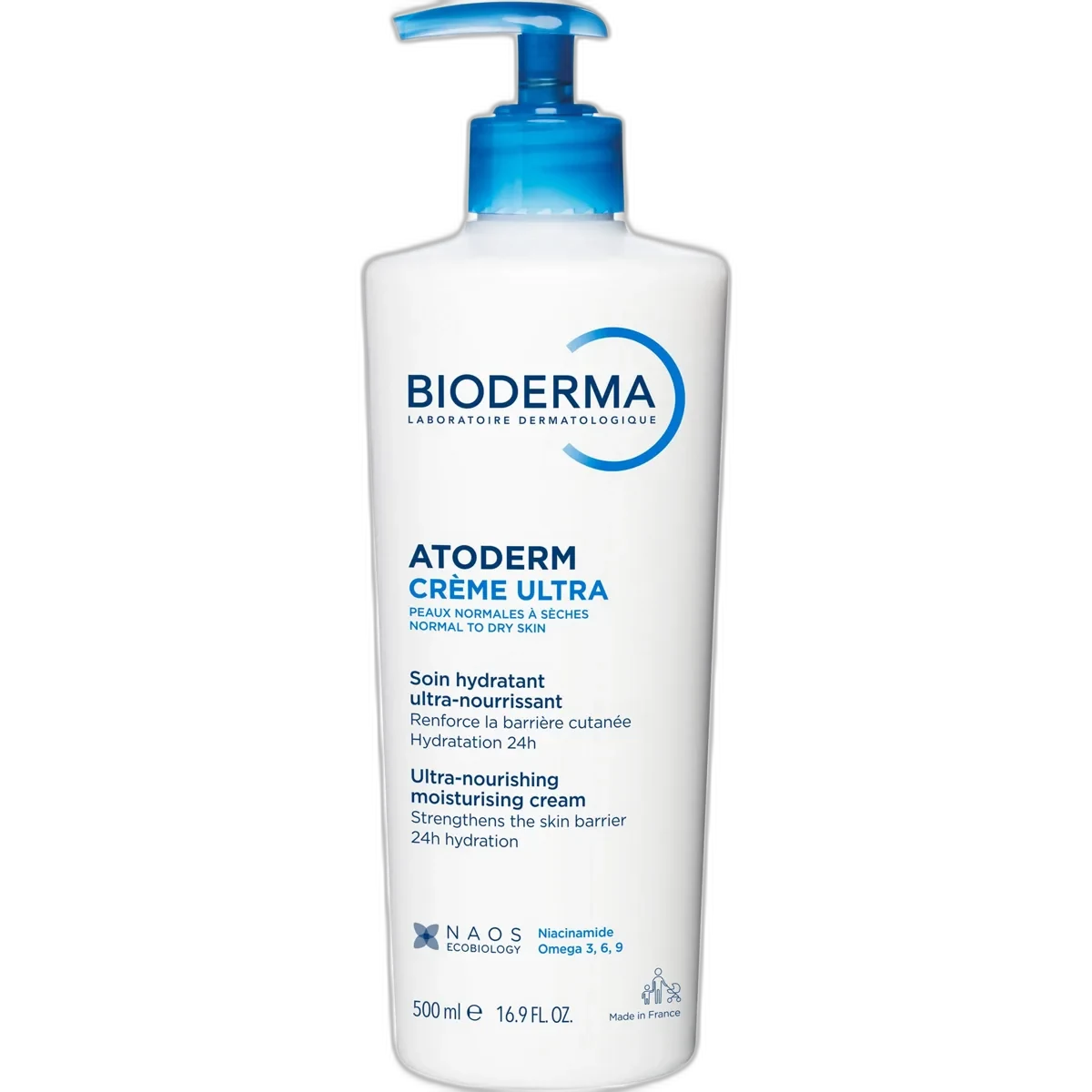
Atoderm Crème Ultra
Budget-Friendly Barrier Builder
 Verified reviewer
Pros & cons.
- +Skin Protect Complex stimulates endogenous ceramide production rather than adding topical ceramides
- +Sugar complex promotes aquaporin synthesis for deep structural hydration
- +Exceptional value — 500 ml pump for under $24 with 2-3 months of daily use
- +Fragrance-free formula with no detectable scent for truly sensitive skin
- +Clinically validated in a published randomized controlled trial on atopic skin
- +Suitable for the whole family including babies and during pregnancy
- +24-ingredient formula is lean for the level of sophistication it delivers
- −Slight initial tackiness on application that takes 30-60 seconds to resolve
- −Niacinamide appears low in the INCI order, raising concentration questions
- −Contains mineral oil which some consumers philosophically prefer to avoid
- −Too rich for oily skin types, especially for facial use in warm weather
- −500 ml pump bottle occasionally malfunctions according to user reports
The full review.
The philosophy behind this cream is more interesting than the cream itself looks, which is perhaps the most Bioderma thing imaginable. While competitors race to list ceramides on their front labels, Bioderma’s Skin Protect Complex takes a fundamentally different position: don’t add ceramides. Stimulate the skin to make its own.
The mechanism centers on niacinamide — not novel in skincare, but deployed here with specific intent. Published research in the British Journal of Dermatology demonstrates that topical niacinamide increases ceramide synthesis 4.1 to 5.5 fold, free fatty acid synthesis 2.3 fold, and cholesterol synthesis 1.5 fold. These are the three lipid classes that comprise a healthy skin barrier, and the Skin Protect Complex triggers production of all three simultaneously. It’s the difference between bringing groceries and teaching someone to farm.
The sugar complex working alongside the niacinamide is where the formula gets genuinely clever. Xylitol, mannitol, rhamnose, xylitylglucoside, and fructooligosaccharides are not just humectants — they promote aquaporin synthesis. Aquaporins are the protein channels that facilitate water flow between skin cells, and their expression is often reduced in dry, eczema-prone skin. By boosting these channels rather than simply depositing water on the surface, the formula addresses dehydration at a structural level that glycerin alone cannot reach.
The base formula supporting these actives is refreshingly straightforward. Mineral oil provides the occlusive seal — pharma-grade, inert, and chosen specifically because it won’t sensitize compromised skin. Rapeseed seed oil contributes omega fatty acids that mineral oil by nature cannot. Glycerin handles immediate humectancy. The total ingredient count is twenty-four, which is lean for a cream this effective.
Texture is where this product wins its daily-use argument. The cream is rich enough to feel nourishing — this is not a watery lotion that evaporates before it can do anything — but lightweight enough to absorb without the greasy residue that makes many body creams impractical. There’s a brief tackiness on application that resolves within a minute, and then the skin simply feels soft. Fragrance-free means fragrance-free: no detectable scent whatsoever, which is a genuine relief for anyone whose skin stings at the mere suggestion of parfum.
A 2023 randomized controlled study published in PMC using Bioderma Atoderm products specifically demonstrated significant improvements in SCORAD scores, quality of life metrics, transepidermal water loss, and skin water content versus controls. This isn’t generic niacinamide research being borrowed for marketing — it’s product-specific clinical validation, and it’s a rarity in the under-$25 body cream category.
The honest caveat is that niacinamide appears low in the INCI order — around position twenty of twenty-four — which raises questions about its concentration. Bioderma doesn’t disclose percentages, and at such a low listing position, the amount may be modest. The clinical data supports the formula’s efficacy as a complete system, but how much heavy lifting the niacinamide specifically contributes versus the glycerin, mineral oil, and rapeseed oil doing conventional moisturizing work is genuinely unclear.
For oily skin, this cream may feel too rich, particularly in humid conditions. The mineral oil base creates meaningful occlusion that oily skin types often find suffocating on the face. Body application is more universally tolerable, but even there, the slight tackiness in humid weather can be noticeable.
The value argument is essentially unassailable. Five hundred milliliters of a fragrance-free, pharmacy-brand body cream with proprietary barrier-repair technology for under twenty-four dollars. That’s two to three months of twice-daily face-and-body use at roughly thirty cents per day. The 200 ml tube at nineteen dollars offers proportionally less value but works well for travel or facial-only use.
Bioderma doesn’t market with the urgency of its competitors. There’s no celebrity face, no viral TikTok moment, no dramatic before-and-after gallery. The Atoderm Crème Ultra sits on pharmacy shelves with the quiet confidence of a product that knows its science is sound, its price is fair, and its users will come back for the 500 ml pump when the first one runs out. For dry, sensitive skin that needs consistent, gentle, biologically thoughtful care, this unassuming French cream makes an unexpectedly sophisticated case for itself.
Texture
Texture is where this product wins its daily-use argument. The cream is rich enough to feel nourishing — this is not a watery lotion that evaporates before it can do anything — but lightweight enough to absorb without the greasy residue that makes many body creams impractical. There’s a brief tackiness on application that resolves within a minute, and then the skin simply feels soft.
Scent
Fragrance-free means fragrance-free: no detectable scent whatsoever, which is a genuine relief for anyone whose skin stings at the mere suggestion of parfum.
Best for
For dry, sensitive skin that needs consistent, gentle, biologically thoughtful care, this unassuming French cream makes an unexpectedly sophisticated case for itself.
Not ideal for
For oily skin, this cream may feel too rich, particularly in humid conditions. The mineral oil base creates meaningful occlusion that oily skin types often find suffocating on the face.
Ingredient analysis.
Full INCI list
Aqua/Water/Eau, Paraffinum Liquidum/Mineral Oil, Glycerin, Brassica Campestris (Rapeseed) Seed Oil, Sodium Polyacrylate, Pentylene Glycol, Cetearyl Alcohol, 1,2-Hexanediol, Caprylyl Glycol, Acrylates/C10-30 Alkyl Acrylate Crosspolymer, Sodium Citrate, Xylitol, Cetearyl Glucoside, Mannitol, Tocopherol, Rhamnose, Xylitylglucoside, Helianthus Annuus (Sunflower) Seed Oil, Anhydroxylitol, Niacinamide, Glucose, Fructooligosaccharides, Caprylic/Capric Triglyceride, Laminaria Ochroleuca Extract
Skin match.
The science.
The Science
Published evidence supports the Skin Protect Complex mechanism. A landmark study by Tanno et al. in the British Journal of Dermatology (2000) shows that topical niacinamide increases ceramide synthesis 4.1-5.5 fold, free fatty acid synthesis 2.3 fold, and cholesterol synthesis 1.5 fold in the stratum corneum. It also reduces transepidermal water loss in subjects with dry skin. This research shows niacinamide does more than supplement barrier lipids — it biologically upregulates the enzymes that produce them.
The sugar complex component targets aquaporin-3 (AQP3), the main water channel protein in keratinocytes. Xylitol and its glucoside derivative promote AQP3 expression, which improves transcellular water transport in the epidermis. This mechanism provides structural hydration that surface-applied humectants cannot match — like building a better container instead of just filling one with water.
A 2023 randomized controlled study in PMC evaluated Bioderma Atoderm products (including the niacinamide-containing emollients combined with cleansing gel) in mild atopic dermatitis patients. The treatment group showed improvements in SCORAD scores, Dermatology Life Quality Index scores, transepidermal water loss measurements, and skin water content compared to controls. This provides product-specific clinical validation for the ecobiology approach.
References
- Nicotinamide increases biosynthesis of ceramides as well as other stratum corneum lipids to improve the epidermal permeability barrier — British Journal of Dermatology (2000)
- A single-center, randomized, controlled study on the efficacy of niacinamide-containing body emollients in mild atopic dermatitis — PMC/Dermatology (2023)
Dermatologist Perspective
Dermatologists value the Atoderm Crème Ultra's biological approach to barrier repair. This aligns with the fact that healthy skin depends on endogenous lipid production, not just topical supplementation. Board-certified dermatologists note that niacinamide's ability to stimulate ceramide, fatty acid, and cholesterol synthesis makes it a highly efficient barrier-repair ingredient. The fragrance-free, hypoallergenic formulation has a minimal ingredient count and is frequently recommended for patients with contact dermatitis history or those managing mild-to-moderate atopic dermatitis. The accessible price point improves compliance, which matters when patients must apply moisturizer twice daily over their entire body.
Where it fits in your routine.
Apply a generous amount to clean, slightly damp face and body skin, morning and evening. The 500 ml pump dispenses easily for efficient full-body application. A small amount works for facial use — let it absorb for one minute before applying sunscreen or makeup. Apply immediately after bathing to seal in moisture. The whole family can use this daily, including babies and during pregnancy.
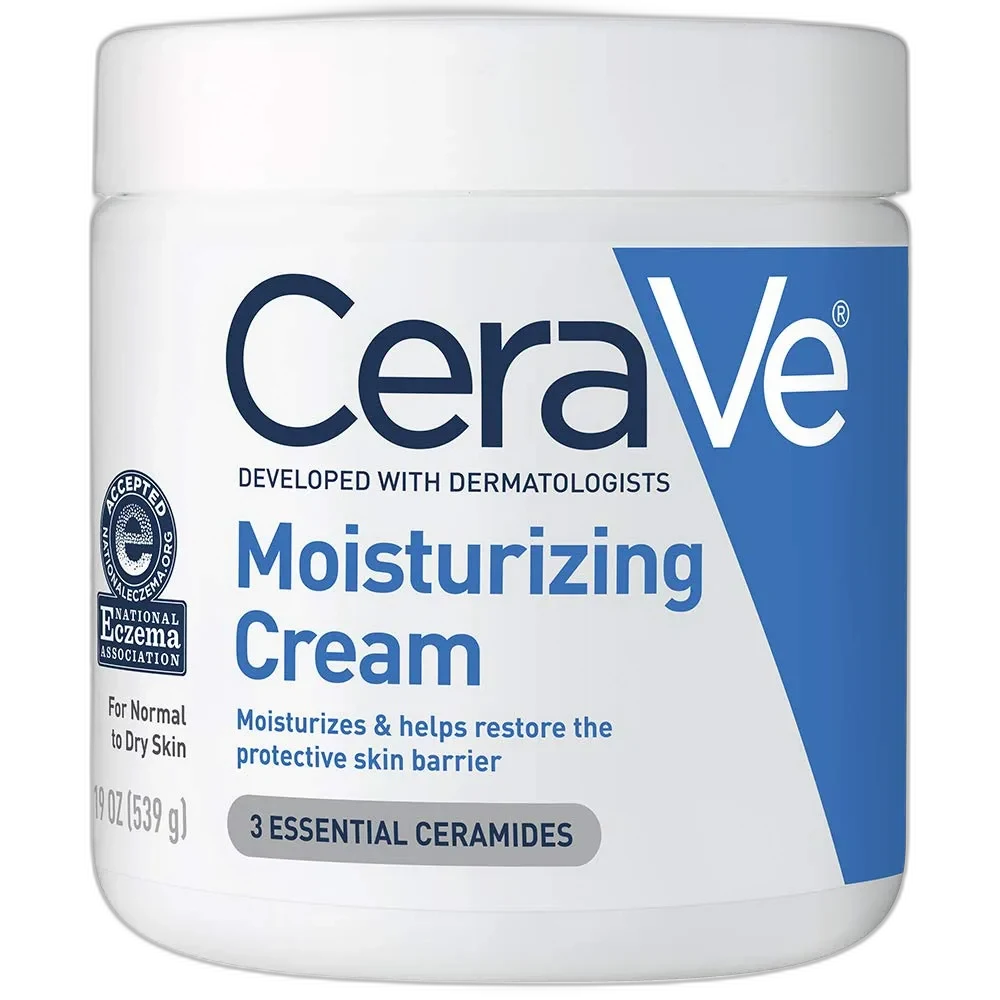
At about $24 for 500 ml, this is a top cost-effective pharmacy-brand body cream — roughly $0.30 per day if applied to face and body twice daily. The 200 ml tube at $19 costs more per unit and works better as a travel or trial size. Compared to CeraVe Moisturizing Cream (16 oz for ~$19), the Bioderma uses a different scientific approach at a similar price, with the Skin Protect Complex acting as a differentiator. The value increases with its clinical validation — few body creams under $25 have a published randomized controlled trial supporting their specific formulation.
People with dry, sensitive, or eczema-prone skin who want an effective, affordable daily moisturizer. It works well for families needing one safe body cream, budget-conscious users who want quality ingredients, and those preferring biological barrier repair over topical ceramide supplementation.
Oily skin types will find this too thick for the face and sticky on the body. Those needing strict fungal acne-safe products should look elsewhere. Users committed to mineral oil-free skincare need an alternative, though dermatological evidence shows mineral oil is a safe, effective occlusive.
Product details.
Thick but lightweight cream that balances nourishment and wearability. The creamy emulsion consistency spreads easily over large body areas. It absorbs without a heavy residue, though it feels slightly tacky before it fully absorbs.
Fragrance-free with no scent besides a faint, neutral cream base. This is one of the most unscented body creams on the market.
White pump bottle (500 ml) or squeeze tube (200 ml) uses Bioderma's blue branding and the orange Atoderm accent stripe. The 500 ml pump is better—it is hygienic and allows easy one-handed dispensing for body application. The look is clean and clinical.
The cream feels comforting and nourishing, with a thick texture that absorbs lightly. Dry skin feels less tight immediately. A slight tackiness lasts 30-60 seconds before the cream absorbs. There is no stinging, no fragrance, and no adjustment period — this is a straightforward moisturizing experience designed to offend no one.
2-3 months with twice-daily face and body application for the 500 ml size
12 months
All Year
The backstory.
The Atoderm line has been Bioderma's answer to dry and atopic skin for over two decades, but the Crème Ultra reformulation around 2019 marked a meaningful shift. Under NAOS Group's ecobiology philosophy — which frames skincare as working with the skin's natural biology rather than overriding it — the formula was redesigned around the Skin Protect Complex. The idea was to move beyond passive moisturization toward active biological repair, using niacinamide and sugars to trigger the skin's own recovery mechanisms rather than simply providing a lipid bandage.
About Bioderma
Legacy Brand (20+ years)Pharmacist-biologist Jean-Noël Thorel founded Bioderma in 1977. The brand follows the NAOS Group's ecobiology philosophy. Bioderma has nearly five decades of dermatological skincare experience and develops products with dermatologists. It is a staple in French pharmacies worldwide and has its own biometrology research laboratory in Lyon.
Common myths.
Adding ceramides to a moisturizer repairs the skin barrier best.
Bioderma's approach challenges this assumption. Their Skin Protect Complex uses niacinamide to stimulate the skin's own ceramide production instead of adding exogenous ceramides topically. Research in the British Journal of Dermatology shows niacinamide increases ceramide synthesis 4.1-5.5 fold — a more sustainable approach to barrier repair than topical supplementation alone.
A $24 body cream lacks the efficacy of premium pharmacy-brand competitors.
A published randomized controlled trial shows Bioderma Atoderm products improve SCORAD scores, quality of life, transepidermal water loss, and skin water content versus controls. Science ignores the price tag — and the 500 ml size offers more product per dollar than most competitors.
FAQ.
Can Bioderma Atoderm Crème Ultra be used on the face?
Yes — Bioderma designs this for both face and body use. The fragrance-free, lightweight formula absorbs well on the face without feeling heavy. However, oily or acne-prone facial skin may find the formula too thick; use it on the body instead.
Is Bioderma Atoderm Crème Ultra good for eczema?
Yes. A published randomized controlled trial using Bioderma Atoderm products shows significant improvements in SCORAD scores and skin barrier function. The Skin Protect Complex stimulates endogenous ceramide production. This addresses the barrier deficiency underlying eczema instead of just masking symptoms.
What is Bioderma's Skin Protect Complex?
A proprietary combination of niacinamide and a sugar complex (xylitol, mannitol, rhamnose, xylitylglucoside) works biologically instead of topically. The niacinamide stimulates skin production of ceramides, fatty acids, and cholesterol, while the sugars boost aquaporin synthesis to improve water flow between skin layers.
Is Bioderma Atoderm Crème Ultra safe during pregnancy?
Yes. Bioderma recommends Atoderm products for pregnancy and breastfeeding. The formula is fragrance-free and lacks retinoids, salicylic acid, or other ingredients typically contraindicated during pregnancy.
How does Bioderma Atoderm Crème Ultra compare to CeraVe Moisturizing Cream?
Both target dry, sensitive skin using different methods. CeraVe adds ceramides to the formula for topical supplementation. Bioderma uses niacinamide to stimulate the skin's own ceramide production—a biological strategy instead of a supplemental one. Both work; your choice depends on texture preference and budget.
Does Bioderma Atoderm Crème Ultra contain fragrance?
No. This fragrance-free formula has no added scent or masking fragrance. It has almost no detectable odor and is one of the most unscented body creams available.
Is the 500 ml or 200 ml size better value?
The 500 ml pump bottle at approximately $24 has better per-unit value than the 200 ml tube at approximately $19. The pump format is more hygienic and practical for body application. The 200 ml tube works best for travel or facial-only use.
What the community says.
"Deeply moisturizing without feeling heavy or greasy on most skin types"
"Excellent value with the large 500 ml pump bottle"
"Fragrance-free formula suitable for the whole family including babies"
"Effective at calming eczema-prone and very dry skin"
"Absorbs well and leaves skin soft and supple throughout the day"
"Slight tackiness on initial application that takes a moment to subside"
"Contains mineral oil which some consumers prefer to avoid"
"May be too rich for oily or combination skin types in warm weather"
"Niacinamide appears low in the INCI list, questioning its active concentration"
"500 ml pump bottle occasionally malfunctions"